The State Council’s General Office published China’s 2027 public holiday calendar on November 5, and the dates were read like policy: a CCTV News post laying out the full year was reposted more than 15,000 times within hours, and four phrases about the schedule charted on Weibo at the same time. The headline numbers: Spring Festival again runs nine days, from New Year’s Eve on February 5 through February 13, matching 2026’s record; National Day gives seven; Labor Day five; New Year’s Day and Qingming three each.
For outsiders, the argument inside those numbers needs one word of explanation: tiaoxiu (调休), the practice of shifting weekends around a statutory holiday to manufacture longer breaks — at the price of working a Saturday or Sunday before or after. It is the most reliable source of holiday-season complaint in China, and 2027 is the year the government mostly stopped doing it. Only three holidays — Spring Festival, Labor Day and National Day — require shifted days at all, and the longest unbroken stretch of work in the entire year is six days. The statutory total, thirteen days, is unchanged.
The catch sits in the middle of the year. The Dragon Boat Festival, June 9, and the Mid-Autumn Festival, September 15, both fall on Wednesdays, and under the new approach they get exactly one day each — no borrowing, no bridging, no three-day weekend. One user summed up the mood in the era’s own idiom: “To sum up: one day here, one day there, and the two traditional festivals both land on Wednesday — killing me. Do workhorses still dream of vacations? Back to the plough, obediently” (牛马还想放假,还是乖乖犁田吧) — “workhorse,” or niu ma, being the standard self-mockery of China’s overworked office employees.
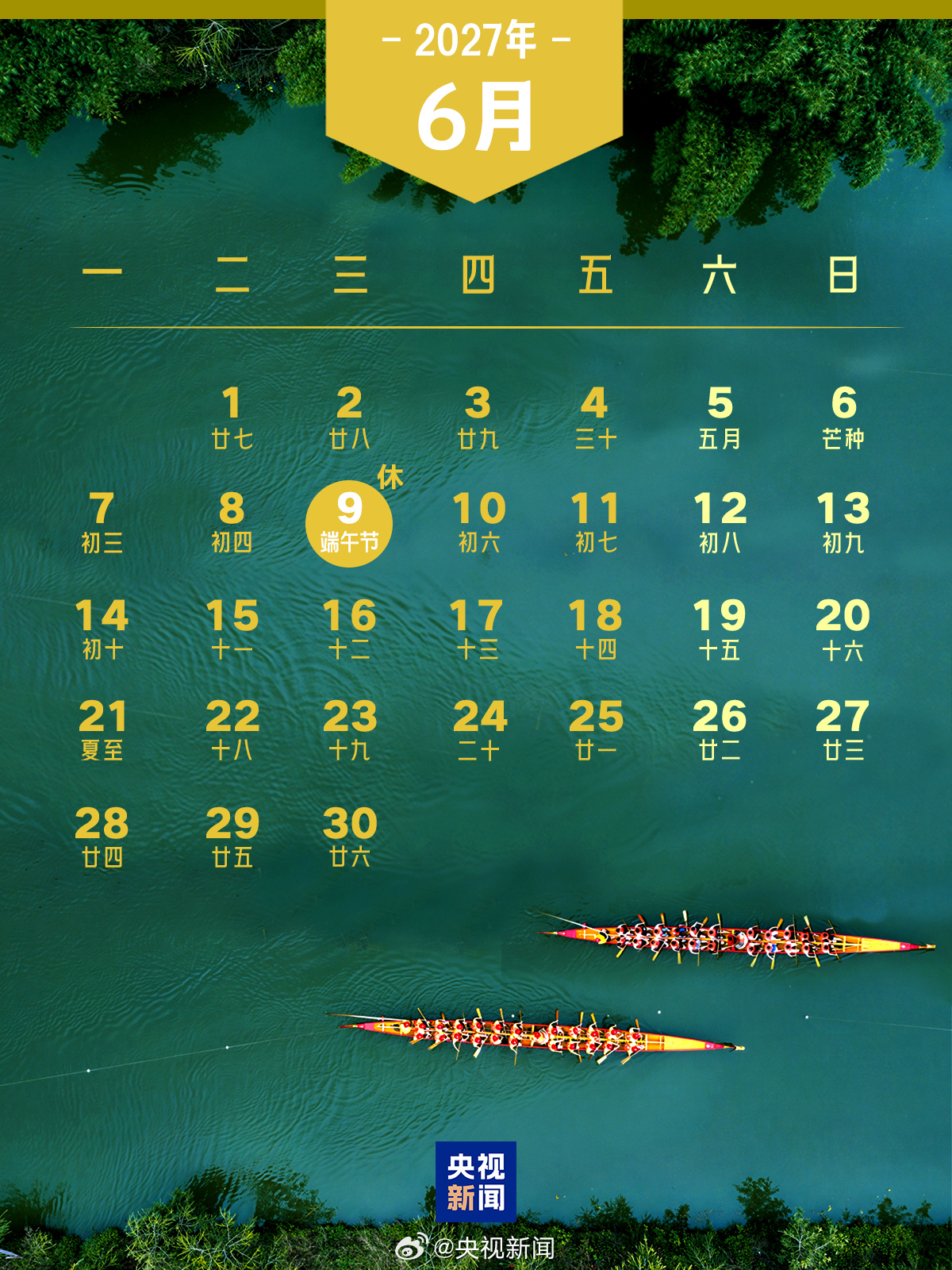
Others made the opposite case, and it is the more interesting one. “Nine days for Spring Festival means colleagues can add a few days of annual leave on either side and get a decent year out of it,” one commentator noted. “Dragon Boat and Mid-Autumn are stuck on Wednesday, and finally no more forcing them into three-day weekends — take the single day as a midweek rest. A longer break will simply test everyone’s leave-requesting skills.” Another user put it more plainly: “This is what a holiday calendar should look like. This time there really is no makeup work.”

The scrutiny is out of proportion to a calendar because time off is contested ground in China. As we covered when provinces began moving to enforce paid annual leave, the gap between holidays on paper and the rest workers actually take is a standing grievance — and the shift here is a real concession to it: stop manufacturing long breaks, stop the seven-day workweeks that pay for them. The Paper’s explainer called the 2027 arrangement the most comfortable in recent years for precisely that reason.
What is left is the question a calendar cannot answer by rearrangement. The two orphaned Wednesdays are the visible cost of a system that no longer borrows: two traditional festivals reduced to single days because no weekend may be taken to save them — and, for the first time in years, not a single seven-day workweek in exchange.