November Stock Market Outlook: How to Position Your Portfolio for the Remainder of 2026

Stock Market Outlook Key Takeaways

  • The US stock market is trading at a 10% discount to a composite of our valuations
  • AI enthusiasm is evolving into AI accountability
  • Maintain a barbell-shaped portfolio: Overweight value and growth, underweight core

Based on a composite of our intrinsic valuations of the stocks we cover included in the Morningstar US Market Index, as of Oct. 30, 2026, the US equity market was trading at approximately a 10% discount to our fair value estimates.

Source: Morningstar Research Services, LLC. Data as of October 30, 2026.

Positioning for the Remainder of 2026

While the US equity market is attractively valued at a 10% discount to our valuations, we do not think that is enough margin of safety to overweight equities above an individual investor’s long-term asset-allocation targets. Based on the combination of heightened dangers we’ve already written about among global macrodynamics (tightening monetary policy, high inflation, high interest rates, and so on), along with the evolution in investor focus toward returns on spending on artificial intelligence, we expect heightened volatility over the next few months. In our view, the market will need better visibility into 2027 capital expenditure plans and more robust indications that AI will begin to generate faster revenue growth in the near term.

Based on our valuations, we advocate maintaining a barbell-shaped portfolio by overweighting both the value and growth categories and underweighting the core category. By capitalization, we maintain a recommended overweighting in small caps, market weighting in large caps, and underweighting in mid-caps.
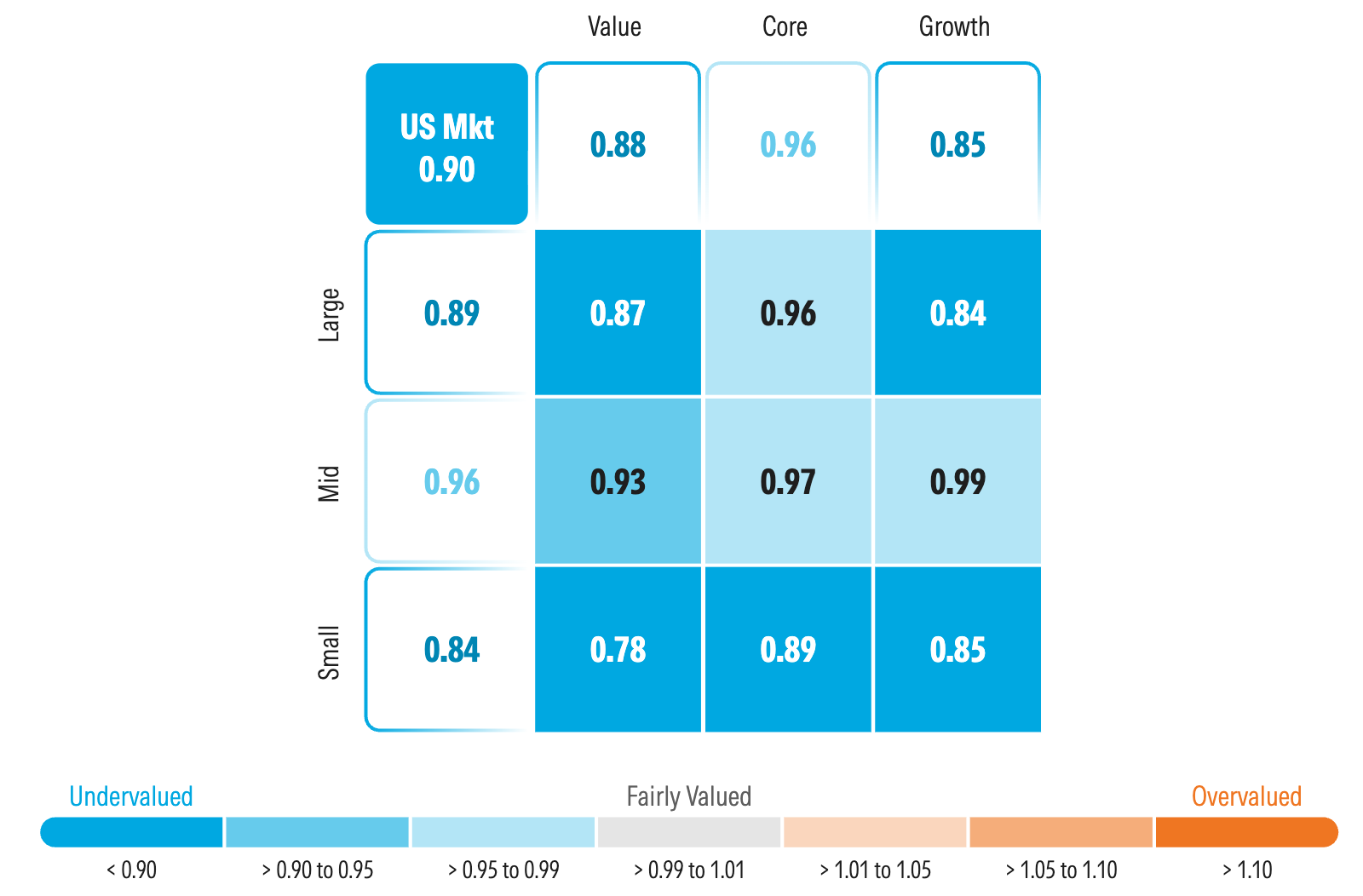
Graphic that details Morningstar's price to fair value metric broken down by style box
Source: Morningstar Research Services, LLC. Data as of October 30, 2026.

Anything but AI Rotation in Full Swing

Over the past few months, the focus on AI and AI-related stocks has evolved away from who can build the most compute capacity the fastest to who shows signs of generating new revenue from AI utilization and how quickly. Following the deluge of capital expenditures over the past three years spent on building out artificial intelligence, investors are increasingly wary that new revenue is not coming quickly enough to be able to generate adequate expected returns on that spending.

The selloff in AI stocks at the end of October started with Meta Platforms META acknowledging that it would need to raise up to $100 billion in new equity capital to fund its planned capital expenditure in 2027. The selloff was then further exacerbated by rare earnings misses by Alphabet GOOGL and Amazon AMZN. Specifically, Alphabet’s search business grew more slowly than expected, and Amazon’s advertising missed consensus.

In the semiconductor space, Intel’s INTL results beat expectations, but the stock fell as its guidance was significantly lower than expected and concerns arose that its CPU business for data centers may not live up to expectations. Among the commodity-oriented technology hardware stocks, Sandisk SNDK also beat consensus, yet the stock fell as it failed to live up to even higher expectations. Investors are increasingly questioning if the earnings growth will last.

Considering Alphabet and Meta constitute 78% of the market capitalization of the Morningstar US Communication Services Index, it is no surprise it was the worst-performing sector in October, dropping 14.72%. The Morningstar US Technology Index was the second worst-performing, falling 6.62%. Lastly, the Morningstar US Industrials Index fell 0.95% as those industrial stocks tied to the AI buildout boom retreated.

As AI fell, the sector rotation into “Anything but AI” was in full force. Our Morningstar US Energy Index rose 14.05%, the Morningstar US Consumer Defensive Index rose 11.55%, the Morningstar US Utilities Index rose 9.87%, and the Morningstar US Healthcare Index increased 8.82%.

Where We See Opportunity by Sector

Following the plunge in both Alphabet’s and Meta Platforms’ stock prices, the communications sector is the most undervalued, at a 33% discount to fair value. Not only do we think the market has overreacted to the downside following Alphabet’s earnings report, but our analyst also raised our fair value to $450 from $433.

Technology is the second most undervalued sector, at a 17% discount to fair value. However, as we have noted in the past, the preponderance of undervaluation in the market is concentrated in the Undervalued Seven (Nvidia NVDA, Alphabet, Broadcom AVGO, Microsoft MSFT, Meta, Amazon, Tesla TSLA). Removing Nvidia, Broadcom, and Microsoft from our price/fair value calculation, the technology sector is close to fairly valued.

Consumer cyclical is the third most undervalued, at a 16% discount to fair value. Amazon and Tesla account for about half of the undervaluation.

Real estate is the last remaining sector trading at a significant discount from our intrinsic valuations. We continue to prefer real estate with defensive characteristics and to steer clear of urban office space, which we think may have further downside risk.

The basic materials and energy sectors are tied for most overvalued, at a 10% premium to fair value. The basic materials sector has had a relatively strong run this year as the demand for raw materials, aggregates, and copper used for data construction has driven strong performance. We think the energy sector has traded up too far relative to our longer-term forecasts for oil prices and suspect that the sector is at risk of a quick correction once oil prices begin to subside.

Healthcare is the third most overvalued, as it has been a beneficiary of the Anything but AI rotation. Generally, the only remaining values in the sector are the beleaguered health insurance stocks and several devicemakers whose short-term results have been uninspiring.
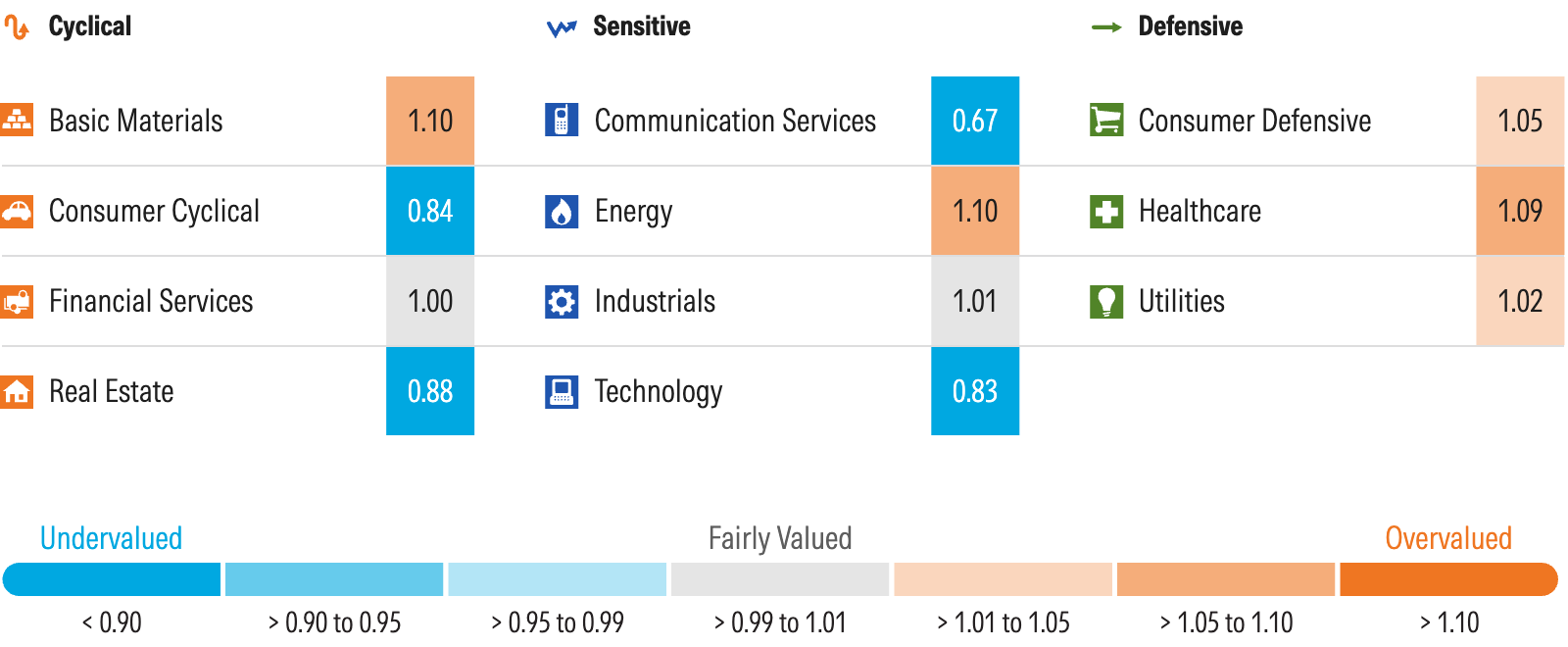

Graphic that shows Morningstar's price to fair value metric by sector.
Source: Morningstar Research Services, LLC. Data as of October 30, 2026.

Source link

Visited 1 times, 1 visit(s) today

Related Article

3 Stocks That Did Well the Last Time the Fed Raised Rates Aggressively

The Federal Reserve recently raised interest rates for the first time in years, and more rate hikes are expected. Another hike may even happen before the end of the year. How much higher rates end up going is anyone’s guess at this point, as inflation remains elevated and the war in Iran doesn’t appear to

Is Brighthouse Financial, Inc. (BHF) Stock Facing a Major Regulatory Hurdle?

Greenlight Capital, an investment management firm, recently released its Q3 2026 investor letter. A copy of the letter can be downloaded here. The funds returned -3.3% in the third quarter of 2026, compared with a 2.3% gain for the S&P 500, bringing their year-to-date return to -1.5% against the index’s 12.7% advance. The disappointing performance

Why Sandisk Stock Dropped 24% in October

Sandisk (NASDAQ: SNDK) stock lost 24% in October, according to data provided by S&P Global Market Intelligence. Although it reported another quarter of fantastic growth, the market is worried about a slowdown in the memory cycle. Memory is dominating right now Sandisk makes many of the products important for all kinds of technology, and it’s

Bill Ackman warns of ‘casino’ stock market trading

Pershing Square CEO Bill Ackman speaks on CNBC’s “Squawk Box,” Nov. 3, 2026. CNBC Bill Ackman worries that the stock market is broken, saying the rise of speculative trading is leading to wild price swings thanks to the amount of leverage in the system. “Every number of days, I feel like markets are broken,” Ackman

Here’s My Top Stock to Buy for November

Enter Boeing (NYSE: BA) stock in a beauty contest, and it wouldn’t get many votes. But long-term investing isn’t a beauty pageant; it’s about finding good value stocks with plenty of upside potential. Boeing is a winner in that regard, even though its recent update might have been disappointing for some. Here’s why its worth

3 Dividend Stocks to Buy in November That Keep Paying

Some companies treat their dividend like a bill they have to pay every month, not a bonus they hand out when times are good. That mindset is what separates a stock that merely offers a dividend from one that has actually built its business around protecting it, through recessions, inflation spikes, and years when growth

Midterm elections: What a Democratic sweep means for stocks

The US Capitol is reflected in the Capitol Reflecting Pool in Washington, DC, US, October 27, 2026. Umit Bektas | Reuters The stock market is not yet pricing in a Democratic sweep of Congress — despite some polls and most prediction markets pointing that way — so that scenario could weigh on share prices Wednesday,

Why Lumentum Stock Fell 14.9% Today

Lumentum Holdings (NASDAQ:LITE) did just about everything right this morning, and its stock got punished anyway. Shares of the laser and optics specialist were down 14.9% as of 12:55 p.m. ET. Q1 2027 results beat Wall Street’s expectations and the company agreed to be acquired by Marvell Technology (NASDAQ:MRVL) in an all-stock deal. Marvell’s stock

California Resources (CRC) Stock Still Looks Cheap Despite Market Caution

California Resources has rewarded long term holders over the past five years, which naturally puts a spotlight on whether the current share price really lines up with what its sales can support. After a period that includes both a sizeable reported loss and new clean power ambitions, the question is how much revenue strength the

Taiwan’s AI Stock Boom Is Making Early-Stage Startups a Tougher Pitch

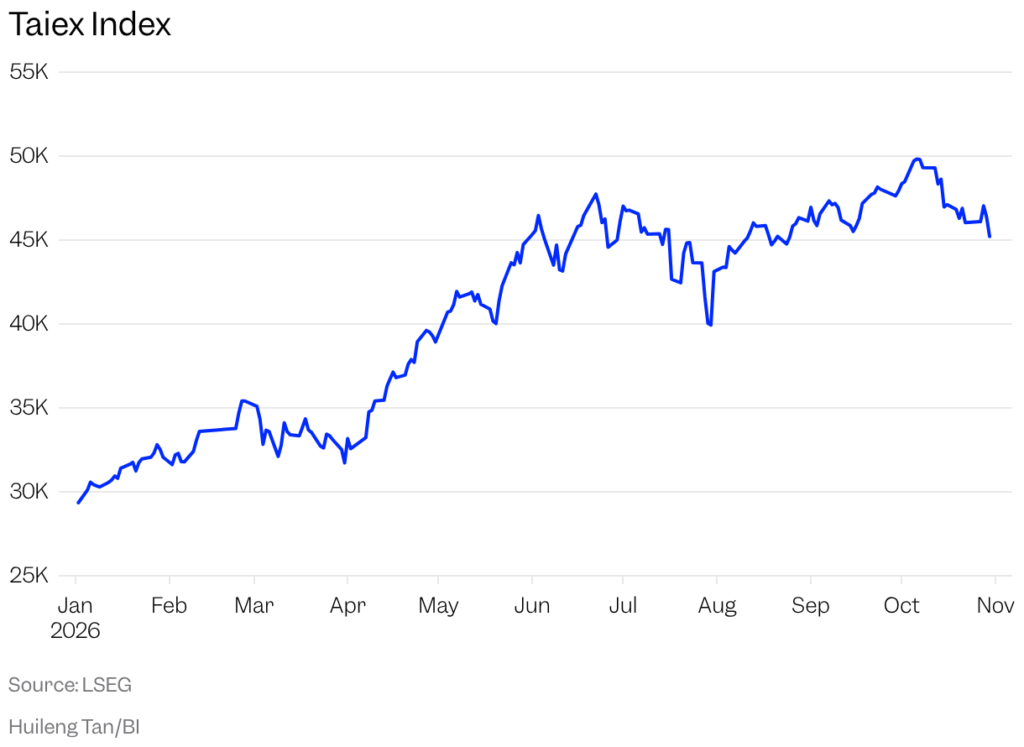
Taiwan’s AI stock boom is creating more ways for investors to profit from its chip supply chain, making early-stage startups a tougher pitch. Taiwan’s benchmark Taiex index is up more than 50% this year, making it the world’s best-performing major index after pulling ahead of South Korea’s Kospi. The gains extend well beyond Taiwan Semiconductor

MGM Q3 deep dive: margin recovery and digital growth offset soft leisure demand

MGM Q3 deep dive: margin recovery and digital growth offset soft leisure demand Hospitality and casino entertainment company MGM Resorts (NYSE:MGM) met Wall Street’s revenue expectations in Q3 2026, but sales were flat year on year at $4.21 billion. Its non-GAAP loss of $0.11 per share was significantly below analysts’ consensus estimates. Is now the

Why Amplitude Stock Jumped 23% in October

Shares of Amplitude (NASDAQ:AMPL) were among the winners last month as the data analytics software stock benefited from a broader rotation out of AI infrastructure stocks into undervalued stocks like Amplitude, and it also got a number of positive analyst notes during the month. Though there was no major company-specific news out on Amplitude, those

Options traders are getting anxious on Palantir and Apple ahead of earnings

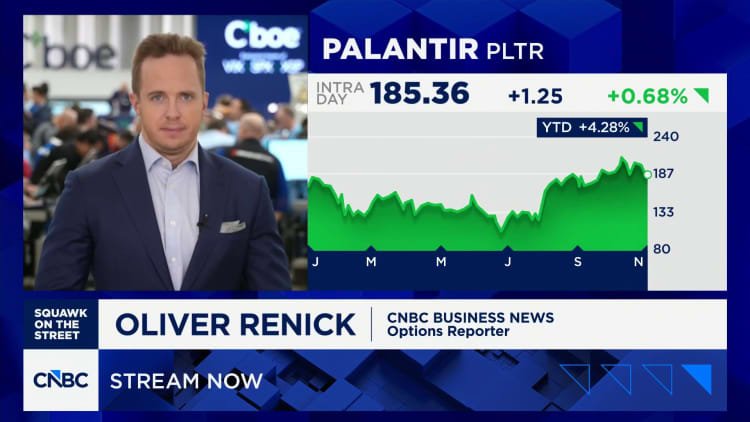
It’s not just the neoclouds and hyperscalers that investors are anxious about.  Options data show a surge in bearish trading in anticipation of both Palantir and Apple earnings Monday afternoon. The two stocks have been on trajectories that are distinct from the broader AI trade – with Apple, in particular, trading almost inversely to the

Oracle stock slides as it borrows another $10 billion for AI spending

Five days after Oracle (ORCL) promised to rein in its fundraising, it raised the full $20 billion in a single day. Oracle kicked off a $10 billion bond sale Monday and, at the same time, filed to sell $10 billion of stock. Together, that’s every dollar of new debt and stock it said at last

0
Would love your thoughts, please comment.x
()
x