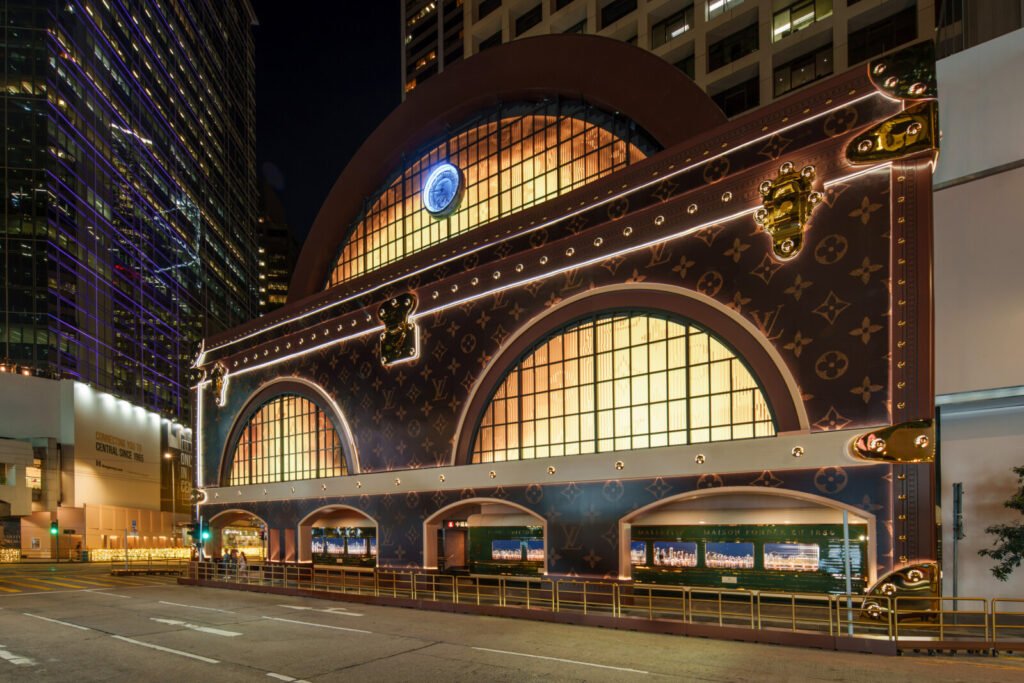
The city makes an impression: a place of extraordinary contrasts. Equal parts exhausting and intoxicating.
Armed with a host of recommendations from a friend who lived here for many years, my husband and I have a week in which to explore. We are seasoned travellers and are determined to discover the real Hong Kong.
First, we need a base, and we choose the Eaton HK, a four-star hotel in the Kowloon district. It’s perfectly positioned for exploring the city on foot, and there’s even a heated rooftop pool, a welcome retreat after a day navigating Hong Kong’s relentless streets. For those seeking something more indulgent, The Peninsula, affectionately known as the Grande Dame of the Far East, is a Hong Kong institution. I once stayed at her namesake in Bangkok and can attest that it is a divinely luxurious experience.
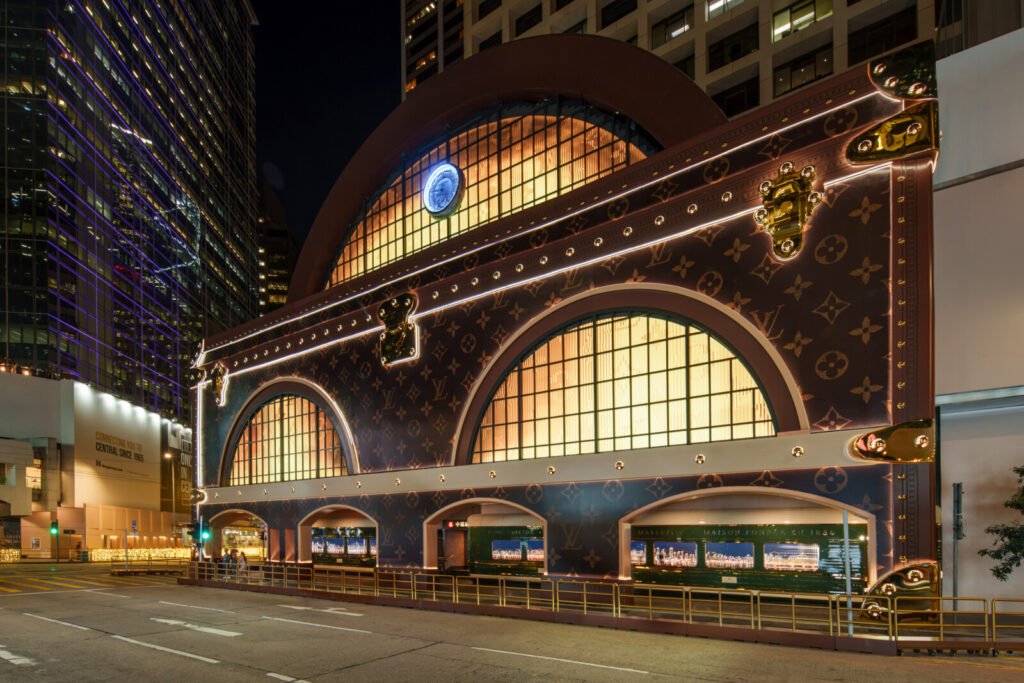
One of the first impressions of Hong Kong is its height; you are perpetually looking up. Skyscrapers rise vertiginously above pavements, as the city moves at a relentless pace. It is a place of extraordinary density; you must keep moving, or you get left behind. That is not a euphemism. My husband stopped to take a photo of a double-decker bus on the busy Nathan Rd and nearly got bowled over by a sea of people.
But, among the vertiginous buildings and crowded streets are unexpected pockets of tranquillity.
It is here that we discover the Man Mo Temple, a 19th-century temple dedicated to two deities: Man Cheong, the God of Literature, and Kwan Tai, the God of Martial Arts.

I sit quietly and take it all in: the wafting incense coils, the deep red interiors, the gentle hum of worshippers. It’s easy to get caught up in Hong Kong’s frenetic, relentless energy, and forget there is a traditional side of this city that is aching to be explored.
From our hotel in Kowloon, we take the Star Ferry across Victoria Harbour and make our way to the Peak Tram. It is a clear, warm, sunny day and the views are magnificent. To appreciate the grandeur of Hong Kong, you really need to head high.

From the top of Victoria Peak, 552m above sea level, we admire the view from the Lion’s Pavilion. The vista is a patchwork of high-rises, green mountain peaks and the South China Sea stretching beyond.
My husband and I decide to escape the throngs of tourists and tackle the 3.5km Peak Circle Walk. Here, lush vegetation lines the path, butterflies settle on leaves, and signs warn walkers to keep an eye out for wild boars. It is quiet, calm and soothing, a strong contrast to the freneticism below.

Hong Kong takes its food seriously. And surprisingly, for such a wealthy city, it is wonderfully democratic when it comes to food. Perched on a plastic stool in a bustling side street, you can eat exceptionally well for very little. Alternatively, you can head to Victoria Harbour and have a wonderfully intimate fine-dining experience. Both are equally memorable.
Cantonese cuisine dominates with its delicate flavours, light broths, steamed protein and endless variety of dumplings and dim sum. I make the mistake of asking for a spring roll at one of the street food stalls, and the woman behind the counter practically spits out her tea.

Our friend’s recommendations prove particularly useful. In a city of seven and a half million residents, many of whom eat out regularly, there are hundreds of restaurants, food courts, street vendors and bars to choose from. It can be overwhelming.
We eat well, and often. Some of Hong Kong’s street food is Michelin recommended, and Cheung Hing Kee is one of them. It is a hole-in-the-wall, eat-where-you-can-find-space kind of establishment in the Tsim Sha Tsui district. Its pan-fried sheng jian bao (soup dumplings) are delicious. Another evening takes us to Wang Fu, a dumpling and noodle restaurant, where the green onion and mutton dumplings are particularly memorable.
By day, we seek out the city’s dai pai dongs (traditional open-air street food). These places are cheap, fun and noisy. Our favourites were Sing Heung Yuen in Central (we had the crispy buns with lemon and honey and the famous Hong Kong-style milky tea) and Oi Man Sang in Sham Shui Po for a fun, lively local atmosphere.
Hong Kong comes alive at cocktail hour, and one evening we don our finest sartorial and head to the Ozone Bar, located on the 118th floor at the Ritz-Carlton. This is the highest rooftop bar in the world and the view is incredible. The city is lit up and golden, and from here, alongside our very dry and strong martinis, we enjoy the nightly Symphony of Light.

After a busy few days, we are craving something different: nature, space, air. We decide to escape to Lantau Island and see the Tian Tan Buddha.
One of the joys of Hong Kong is that it is very easy to get around. From Kowloon, we take the MTR to Tung Chung Station, intending to board the cable car to Ngong Ping Village. But the cable car is closed, and we find ourselves on the bus instead. The road twists and winds its way through the lush green mountains, offering glimpses of secluded bays and fishing villages.
Finally, the lush green forest evens out, and we arrive. We wander through the peaceful Po Lin Monastery before tackling the 268 steps to the enormous bronze Buddha. There is a wonderful stillness here. Looking out across the verdant green mountains and islands scattered across the South China Sea, it seems incredible that we are still in Hong Kong.

Our next stop is Tai O, a traditional fishing village on Lantau’s western coast. Stilt houses are built over tidal highways, connected by wooden bridges and boardwalks.
“It’s so charming,” I remarked to my husband. Not a word I’d ever expected to associate with Hong Kong.
The village is home to the Tanka people, who have been connected to these waters for centuries. We use the afternoon to wander aimlessly and try to spot the rare Chinese dolphins. We sample the local snacks: chargrilled egg puffs and big bowls of noodles, which we devour.
We still have two more days, and I am determined to discover more of Hong Kong’s quieter corners.

On the southern side of the island, we visit a friend in Repulse Bay. We take a winding double-decker bus ride, but the churning journey is worth it once we arrive: a coastal enclave with sandy beaches, green hills and some very good beachfront restaurants.
A little further along the coast is Stanley Bay, a seaside village with a more relaxed and laid-back atmosphere. Its famous market is a labyrinth of stalls selling silks, souvenirs and art. We indulge in some shopping and purchase a miniature jade Buddha, which hopefully will bring us luck.

For our final day, we venture to Sai Kung, a former fishing village that has evolved into a lively coastal town with cool cafes and eateries. Yet, something of its past remains: we hop on a traditional sampan and go for a putt. The water is turquoise and calm, and those towering green peaks watch silently from a distance.

Before we leave, my husband and I stumble back into the Man Mo Temple, where incense hangs thick in the air and worshippers silently pay their respects. Outside, the city continues at its usual breathless pace.
We’ve spent a week in this city, climbing its peaks, exploring its fishing villages, devouring its street food and indulging in its enviable views. Yet, we are still hungry to see more.
Perhaps that’s Hong Kong’s great allure: you never have it quite figured out. It’s a city that constantly surprises.
We’ll be back, he says confidently as we watch the worshippers.
I smile and nod.
I don’t doubt it.
The writer travelled at their own expense.