Elena Teslova
12 May 2026•Update: 12 May 2026
Russia’s human rights commissioner, Tatyana Moskalkova, said on Tuesday that issues related to the conflict in Ukraine have become the central focus of her office’s work recently.
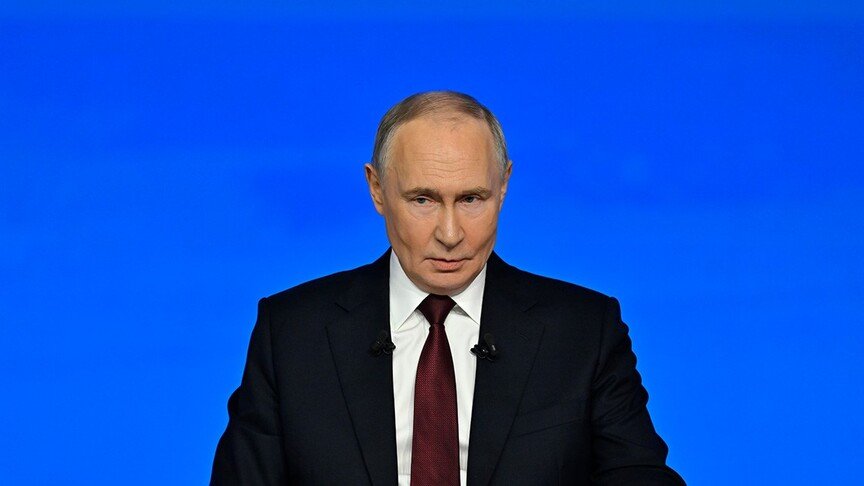
Speaking at a meeting with President Vladimir Putin, Moskalkova noted that cooperation with Russian security and intelligence services had helped build “difficult but effective” relations with the Ukrainian side.
“Thanks to cooperation with the Ministry of Defense, the FSB, and our intelligence services, we have managed to establish very difficult but effective relations with the Ukrainian side regarding reciprocal visits to prisoners of war, in order to minimize the possibility of abuse, humiliation, and the use of unlawful methods,” she said.
Moskalkova stated that her office participates in prisoner exchange efforts organized by the Defense Ministry and Russian special services.
“The most important thing is to bring people back. And we are succeeding in this,” she said.
During the most recent Easter exchange, she said, Russian servicemen received traditional Easter cakes, holy water, and the opportunity to speak with priests, while Russia provided similar arrangements for the other side.
The human rights commissioner also highlighted efforts to locate missing servicemen, including cooperation with the International Committee of the Red Cross and Ukrainian officials.
The commissioner recalled a case in which the wife of a Russian serviceman, despite receiving a death notification, insisted he was alive. According to her, the man was later found and returned to Russia during a prisoner exchange.
Moskalkova expressed special gratitude to Belarus for facilitating exchanges on the Belarusian-Ukrainian border, saying the Belarusian side had not only provided a venue but also created the necessary conditions to support the process.
She also praised Russian presidential aide Vladimir Medinsky for assisting in the return of civilians and helping exchange procedures proceed smoothly.
The official described the return of 165 residents of Russia’s Kursk Region as “the greatest joy,” while noting that negotiations had become increasingly difficult over time.
According to Moskalkova, she appealed to Pope Francis and to UN High Commissioner for Human Rights Volker Turk, urging international organizations to help secure the release of civilians.
“When humanity is placed above all else, results can be achieved,” Moskalkova said, stressing the importance of continuing humanitarian efforts.
The commissioner also spoke about family reunification efforts, describing them as “complicated” because of closed borders and expired documents.
She thanked Russian border guards and the FSB Border Service for allowing small groups of people to cross the border under special arrangements in order to reunite with relatives.
Moskalkova said that around 20 children had been returned to Ukraine from Russia through the office of the human rights commissioner, while some others were returned in a separate process led by Children’s Rights Commissioner Maria Lvova-Belova.
She added that seven children had returned from Ukraine to Russia.
The official also recalled what she described as a “unique case” two years ago, when mothers from Donetsk contacted her claiming their children had been taken to Germany.
According to Moskalkova, the children were eventually located in Austria and returned to Russia with the assistance of the Russian Foreign Ministry, as well as Turkish and Austrian ombudsmen.