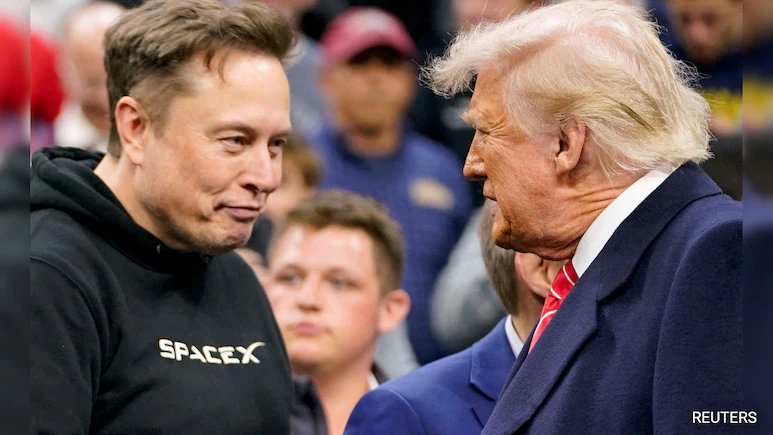
Elon Musk at Space X (Photo by Marvin Joseph/The Washington Post via Getty Images)
The Washington Post via Getty Images
Few entrepreneurs have built multiple industry-defining companies. Elon Musk has done it repeatedly – from online payments and electric vehicles to reusable rockets, satellite systems, and AI infrastructure.
Most observers explain Musk’s success through personality, risk tolerance, access to capital, or general “brilliance.” But my research on 87 billion-dollar entrepreneurs (https://www.forbes.com/billionaires/) and 38 hundred-million-dollar founders suggests a deeper pattern behind founder-led unicorns – and Musk.
Many of the world’s most successful entrepreneurs did not begin by positioning for fundraising, valuation, or even rapid scaling. Instead, they followed a recurring sequence: identify an emerging trend or technology, retain enough control to discover strategy, achieve strategic fit, dominate the market, and build execution capabilities that competitors struggle to replicate.
In my research, 94% of billion-dollar entrepreneurs either avoided venture capital early or delayed it deliberately. Their goal was not to reject capital, but to preserve the freedom to learn, adapt, and shape strategy before outside investors could influence direction or leadership.
Viewed through that lens, Musk is not an outlier. He is one of the clearest modern examples of Unicorn-Entrepreneurship in practice.
Step 1: The Biggest Opportunities Begin With Emerging Trends
Unicorn entrepreneurs rarely begin with “a startup idea.” They begin with an emerging trend or technology capable of reshaping industries through technological, economic, or regulatory changes.
Musk’s career repeatedly followed this pattern: online payments when the Internet was still experimental; electric vehicles when major automakers dismissed them; reusable rockets in an industry constrained by government-style economics; and global Internet access limited by terrestrial infrastructure.
The common thread is not technology alone. It is recognizing the potential of an emerging trend and removing the constraint that holds it back.
The founder takeaway is critical: the strongest opportunities are often found where emerging trends collide with structural constraints – not in crowded markets built around incremental competition.
Step 2: Founder Control Accelerates Strategic Learning
This is where founder-led unicorns diverge sharply from the traditional venture-financing narrative. Many billion-dollar entrepreneurs delayed venture capital or avoided it early because they understood that control shapes learning speed, strategic flexibility, and long-term dominance. Control allowed Musk to survive repeated setbacks without surrendering strategic authority.
After three failed Falcon 1 launches, SpaceX was nearly out of money before the fourth launch succeeded and kept the company alive. Control allowed Musk to continue refining the technology and strategy long enough to reach viability.
The same pattern appeared at Tesla. Musk pursued direct-to-consumer sales, vertical integration, and aggressive manufacturing expansion despite skepticism from investors and incumbents. Those decisions were controversial at the time, but they preserved strategic flexibility and accelerated learning.
Founder takeaway: control is not simply about ownership percentages. Control determines who gets to discover and refine the strategy that ultimately defines the company.
Sophisticated investors fund proof, not pitches. Musk understood that sophisticated founders often need control long enough to create that proof and discover the strategy behind it.
Step 3: Strategic Fit Matters More Than Product-Market Fit
Many startups stop at Product-Market Fit. Founder-led unicorns go further.
They pursue Strategic Fit (https://www.forbes.com/sites/dileeprao/2026/02/11/why-strategic-fit-beats-product-market-fit-in-emerging-trends/) — where product capability, market segment, competitive weakness, and sales leverage reinforce one another simultaneously on an emerging trend.
Rather than follow industry convention, Musk repeatedly redesigned the system itself. Tesla bypassed the traditional dealer model to control customer relationships, pricing, and data. SpaceX reduced launch costs through reusable rockets while vertically integrating critical operations. Speed and iteration replaced the slower optimization cycles common among incumbents.
Early failures – rocket explosions, manufacturing bottlenecks, quality problems – were not signs of collapse. They were part of discovering the winning strategy faster than competitors.
This is why founder control matters. Strategic fit rarely emerges from static planning. It emerges through rapid learning, experimentation, and adaptation under uncertainty.
The deeper lesson is that Product-Market Fit may help startups survive, but Strategic Fit helps ventures dominate.
Step 4: Market Dominance Follows Strategic Clarity
Once strategic fit becomes clear, founder-led unicorns shift aggressively toward dominance.
Musk expanded manufacturing scale to reduce unit costs, widened technological advantages through vertical integration, and forced competitors into expensive catch-up investments. In industries ranging from electric vehicles to rockets, competitors often found themselves reacting to Musk’s strategic tempo rather than setting their own.
At this stage, capital can become a powerful accelerant. But capital alone does not create dominance. Strategic position creates dominance; capital magnifies it.
Founder takeaway: venture capital is often most effective after strategic clarity exists — not before.
Step 5: Execution Skills Compound Competitive Advantage
The final differentiator is not vision alone, but execution capability across multiple domains. Musk combines engineering understanding, operational intensity, manufacturing discipline, finance-smart capital deployment, and mission-driven leadership. Those capabilities reinforce one another and allow rapid scaling without losing strategic direction.
This helps explain why some entrepreneurs repeatedly build dominant ventures while others struggle despite significant funding: Ideas attract attention. Execution compounds advantage.
And over time, execution capability becomes difficult for competitors to replicate.
My Take
Elon Musk’s career is often framed as a story about personality, ambition, or capital. The more revealing explanation is structural: emerging trends, founder control, strategic fit, market dominance, and execution capability.
That sequence – not venture capital alone – is what repeatedly builds founder-led unicorns.
Venture capital can accelerate growth. But many of the ventures that reshape industries are built before capital becomes the advantage.