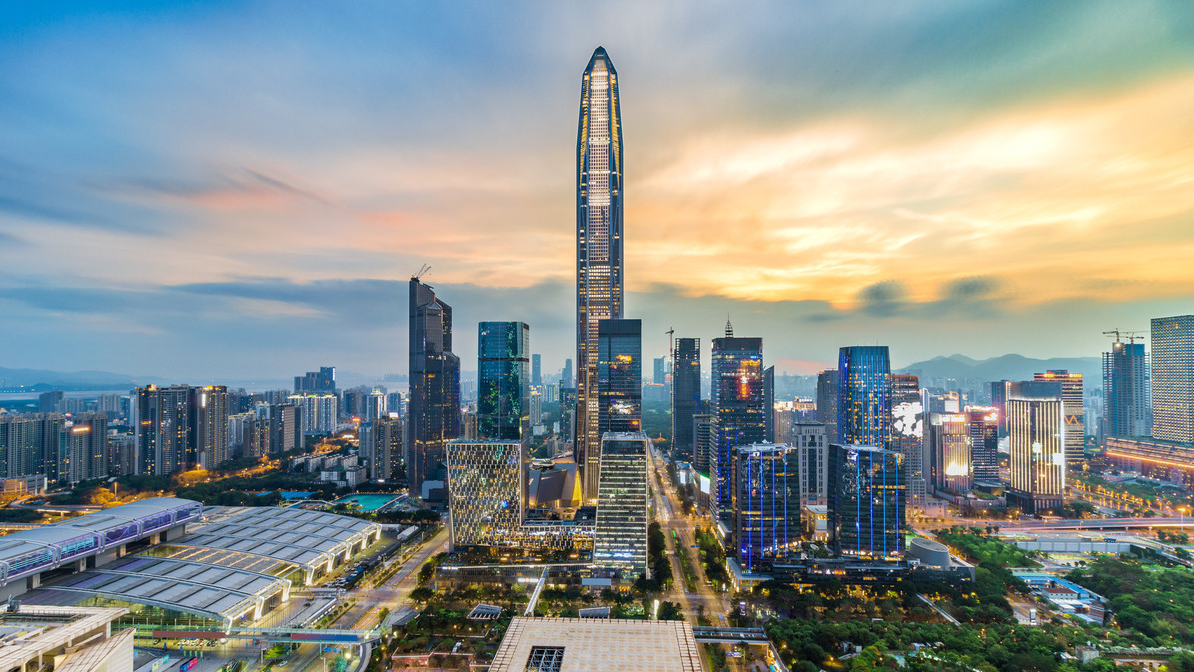
Based on total GDP for the first quarter of this year, four cities in the Guangdong-Hong Kong-Macao Greater Bay Area have ranked among the top 30 in the Chinese mainland, with Shenzhen remaining in third place nationwide and Guangzhou returning to fourth.
For the first time, Dongguan’s GDP surpassed that of Foshan, making it the third-largest economy in Guangdong province. The two cities ranked 21st and 24th nationwide, respectively.
With growth rates of 6 percent and 5.8 percent — both higher than the national figure of 5 percent — the GDP of Guangzhou and Shenzhen in the first quarter reached 959.41 billion yuan ($141.17 billion) and 798.89 billion yuan, accounting for over half of Guangdong’s total.
Dongguan and Foshan recorded about 300 billion yuan each, while Huizhou, Zhuhai, and Zhongshan all topped 100 billion yuan.
ALSO READ: Greater Bay Area GDP expected to top 15t yuan in 2025
Gong Xiaofeng, director of the Greater Bay Area emerging industry development research institute at Shenzhen University, highlighted Dongguan’s efforts in empowering traditional industries with intelligent equipment and production-oriented services. He also noted its progress in attracting leading scientific organizations amid a complex global environment.
Taking advantage of the lull in US-China tensions, Dongguan has further expanded its foreign trade. In recent years, the city has also been actively seeking new avenues for economic growth, such as trendy toys and new energy, he added.
Gong called on all cities to advance high-quality development by upgrading traditional industries, nurturing emerging ones, and planning for future industries.
He also expressed his hope that cities in the Greater Bay Area, while pursuing their own economic development, would align with regional and national strategic priorities to improve industrial chains, so as to enhance the efficiency of resource allocation and strengthen industrial synergy.
Guangzhou’s first-quarter GDP growth rate increased by 2 percent compared with last year’s full year figure. This is the first time in five years that Guangzhou’s growth has surpassed both the national rate and the provincial rate.
READ MORE: New airport breaks ground in South China’s Greater Bay Area
Qin Jian, who heads the Institute of Regional Development of Guangzhou Academy of Social Sciences, said that amid the new round of technological revolution and industrial transformation, as well as changes in the global and domestic economic landscape, Guangzhou is grappling with multiple challenges in the development of leading industries, maintaining economic growth, and the commercialization of technological achievements.
However, the economic foundation of Guangzhou, a millennia-old commercial hub, has remained solid. Despite the unfavorable economic climate, it has continued to grow its permanent population, rapidly expanded the number of its business entities, and sustained a favorable investment environment.
Currently, Guangzhou’s high-tech manufacturing sectors — such as artificial intelligence, smart vehicles, and aerospace — as well as related investments are growing rapidly, driving strong growth in industrial output, digital information services, and high-end professional services, he said.
He added that the city remains in a critical phase of upgrading its economy, and stressed the importance of attracting more high-end resources and developing additional growth drivers.
Contact the writer at bingcun@chinadailyhk.com