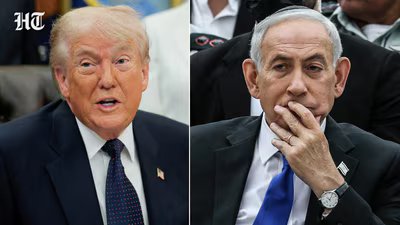
US President Donald Trump is known for backing leaders he believes should lead their countries. This time, his endorsement appears to be for Iraq, where he is backing lesser-known Iraqi tycoon Ali Al Zaidi, who has emerged as a likely contender for Iraq’s next prime minister.

Trump recently invited him to Washington and said the US “is with him all the way.” However, this backing comes with a condition – that Zaidi exclude Iranian-backed militias from Iraq’s next government and curtail Tehran’s influence in Baghdad.
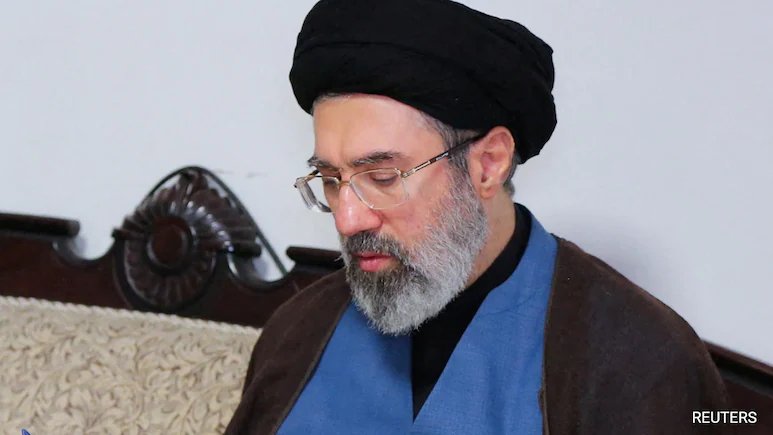
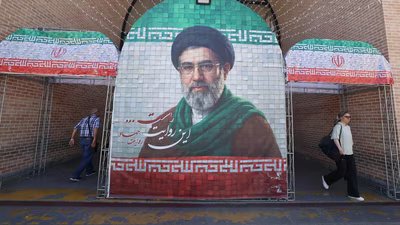
This comes amid the ongoing war Trump is waging against Iran, with the US president repeatedly criticising Tehran’s leadership. In the starting phase of the conflict, a US-Israeli strike killed Iran’s Supreme Leader Ayatollah Ali Khamenei. Trump also believes that his successor, Mojataba Ali Khamenei has been badly injured in the strikes.
This isn’t the first time Zaidi has faced pressure from Washington. In 2024, the Treasury banned dollar transactions with a bank Zaidi owns over suspicions that it was doing business with a militia leader linked to Iran’s Islamic Revolutionary Guard Corps, Wall Street Journal reported, citing current and former US officials.
Zaidi – Trump’s compromised choice
Reports suggest Ali Al Zaidi was not initially Trump’s preferred choice for Iraq’s top post. His emergence came after Trump reportedly threatened to cut off US assistance to Iraq when former prime minister Nouri al-Maliki — seen as close to Iran — was floated as a candidate earlier this year.
Following Trump’s threat, the Coordination Framework, the Iraqi coalition dominated by pro-Iranian Shia political factions, turned to Zaidi late last month.
His nomination was reportedly vetted by both the US and Iran before being made public, an Iraqi official told WSJ. Zaidi has since spoken to Trump and Iran’s president, Masoud Pezeshkian, and is working on securing a coalition in the parliament that will eventually vote him and other Iraqi officials to power.
Iran against ruling out militia leaders
Iran’s Esmail Qaani, a top officer with IRGC, has sought that Iraq rule out Trump’s order of keeping out militia leaders out of the government or to seek to disarm the groups, a senior Iraqi official said.
Meanwhile, a senior State department official said it is looking for strict action against militias, which US says carried out 600 attacks on US diplomatic and military facilities in Iraq since the US.-Israeli war with Iran began.
For Zaidi, Washington’s demand that he confront the militias carries major political risks, analysts say, adding that any attempt to disarm them or reduce their power and influence could prompt a violent response.
“The reality is that the militia groups have pretty deeply entrenched themselves into the Iraqi state and the economic system, and regardless of who the prime minister is, it will be a challenging and quite lengthy process to begin to chip away at those groups,” said Victoria Taylor, who oversaw Iraq policy as a State Department official during the Biden administration and is now at the Atlantic Council, a Washington think tank, WSJ reported.
Many of these groups first emerged during the US occupation of Iraq and later fought alongside American forces against the Islamic State.
Over the years, however, the militias have deepened Iran’s influence over Iraq’s politics and economy, especially its banking sector. According to analysts, some groups have used banks to access US dollars through allegedly fraudulent transactions, further tightening Tehran’s hold on the country.
Who is Ali Al Zaidi and why was his bank targeted?
Ali Al Zaidi, as reported by WSJ, is the secretary-general of an Iran-backed militia group called Kataib Al-Imam Ali, a US designated terror group. Its headquarters and bases were repeatedly targeted by US airstrikes in March and April.
Zaidi also owns Al Janoob Islamic Bank, which was cut off from the US dollar system by the Treasury Department in 2024. According to current and former US officials, the move was based on intelligence suggesting the bank may have had links to militia leader Shibl Al Zaidi, as well as ties to Kataib Hezbollah — the Iran-backed armed group that has fought American forces for years and is designated by US as a terrorist organisation.
Al Janoob chairman Mazen Ahmed rejected the allegations, saying the bank was aware of the Treasury’s claims but maintained they were “false” and rooted in “rumor and speculation.”
Ahmed said the bank had commissioned several independent reviews of its operations at the request of the Treasury Department, all of which, he claimed, found no evidence to support the accusations.
(With inputs from Wall Street Journal)