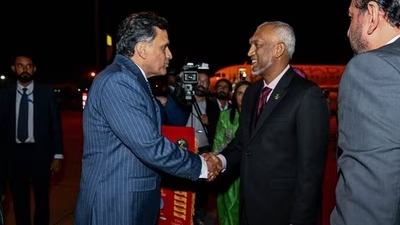
Uzbek Prime Minister Abdulla Aripov’s visit to China on 6–7 May 2026 goes far beyond routine bilateral diplomacy. At first glance, it is a working trip linked to the eighth meeting of the China-Uzbekistan Intergovernmental Committee on Cooperation.
In reality, however, the visit reflects a much deeper process: China is rapidly consolidating its position in Uzbekistan as a leading trade partner, major investor, infrastructure player and one of the key external centres of influence in Central Asia.
China’s Foreign Ministry said Aripov would visit the country at the invitation of the Chinese government and co-chair the intergovernmental committee meeting together with Liu Guozhong, a member of the Political Bureau of the Communist Party of China Central Committee and Vice Premier of the State Council. The format of the meeting is important in itself. This is not a ceremonial visit, but a platform where practical issues are usually discussed: trade, investment, industrial cooperation, transport, energy, digitalisation and the implementation of joint projects.
For Uzbekistan, China has already become not merely one of its foreign partners, but effectively its main economic direction. According to 2025 data, Uzbekistan’s foreign trade turnover reached a historic high of $81.2 billion, increasing by 20.7% compared with 2024. China ranked first among Uzbekistan’s trading partners, with bilateral trade reaching $17.2 billion, or 21.2% of the country’s total foreign trade. By comparison, trade with Russia stood at $13 billion, trade with Kazakhstan at $5 billion, trade with Türkiye at $3 billion and trade with South Korea at $1.7 billion.
These figures point to a fundamental change in Uzbekistan’s economic geography. For many years, Russia was perceived as the main external economic centre for Tashkent, given labour migration, transport connectivity, energy ties and historical relations. Today, however, China is confidently taking first place in trade, infrastructure and industrial cooperation. In 2025, Uzbekistan’s trade with China grew by 35.9%, rising from $12.7 billion to $17.2 billion. This is not merely growth; it is a sharp acceleration in the Uzbek economy’s dependence on the Chinese direction.
The dynamics at the beginning of 2026 were even more telling. According to Uzbekistan’s National Statistics Committee, trade with China in January 2026 amounted to $1.624 billion, while trade with Russia stood at $1.091 billion, trade with Kazakhstan at $414.1 million and trade with Türkiye at $207.4 million. China accounted for 27.9% of Uzbekistan’s foreign trade in January, Russia for 18.7% and Kazakhstan for 7.1%. This means that even in the first months of 2026, China not only preserved its leading position, but also significantly widened the gap with other partners.
Even more striking data emerged for the first quarter. According to figures obtained by Trend from Uzbekistan’s National Statistics Committee, Uzbekistan-China trade reached $4.6 billion in January–March 2026, increasing by 53.3% compared with the same period in 2025. Uzbekistan’s exports to China amounted to $641.7 million, while imports from China were approximately $4 billion. This points to a serious trade imbalance in China’s favour.
Source: brusselstimes
This imbalance is one of the key features of Uzbek-Chinese relations. China supplies Uzbekistan with machinery, equipment, electronics, industrial goods, vehicles, components, technologies and higher value-added products. Uzbekistan, in turn, exports raw materials, certain industrial goods, agricultural products, textiles and other categories of goods to China, but these exports remain far smaller than Chinese imports. In January 2026, according to Uzbekistan’s official statistics, China accounted for 35% of the country’s total imports. This means that Chinese goods and equipment are playing an increasingly important role in the modernisation of the Uzbek economy.
On the one hand, this opens major opportunities for Tashkent. China can rapidly supply equipment, finance projects, build infrastructure, develop industrial zones and participate in the modernisation of energy, transport and logistics. On the other hand, this model creates structural dependence: Uzbekistan is importing more and more from China, while its own exports to the Chinese market are growing more slowly. For Tashkent, this means there is a need to seek more balanced trade, expand exports of processed goods and avoid being reduced to the role of a market for Chinese products.
The main strategic dimension of China’s presence in Uzbekistan is transport and logistics. The China-Kyrgyzstan-Uzbekistan railway occupies a central place in this agenda. Uzbek President Shavkat Mirziyoyev recently emphasised the importance of the route, saying it should reduce cargo delivery times to 10 days and significantly increase Central Asia’s transit potential.
This project matters not only for Uzbekistan, but for the entire regional architecture. For China, the railway through Kyrgyzstan and Uzbekistan is a way to strengthen overland routes that bypass congested or politically sensitive corridors. For Tashkent, it is an opportunity to become a major transit hub linking China, Central Asia, the South Caucasus, the Middle East and Europe. For Central Asia as a whole, it is a chance to gain new logistical connectivity and reduce dependence on traditional routes through Russia.
But there is also a geopolitical dimension. The more transport corridors are built around China, the more deeply the region is drawn into China’s economic orbit. Infrastructure is never neutral. Railways, logistics centres, dry ports, customs platforms and digital systems create not only the movement of goods, but also new centres of influence. If China becomes the main source of cargo flows, investment and technologies, it gradually gains the ability to shape economic decisions in the region.
That is why Aripov’s visit to China should be viewed in the context of the broader competition for Central Asia. The region is becoming an arena of rivalry among several powers: China, Russia, Türkiye, the European Union, the Gulf states, the United States and international financial institutions. Yet China has an important advantage. It offers not only political declarations, but also rapid financing, infrastructure, industrial projects and access to a vast market.
For Uzbekistan, partnership with China is especially important because of its internal economic transformation. The country is opening up its economy, attracting foreign investment, developing industry, modernising transport and seeking new export routes. Against this backdrop, China appears to be a natural partner: geographically close, financially powerful, deeply interested in Central Asia and ready to work in areas where the West often moves more slowly and cautiously.
At the same time, Tashkent does not appear to be seeking full attachment to any single centre of power. Uzbekistan is trying to pursue a multi-vector policy, developing ties with Russia, China, Türkiye, the European Union, South Korea, Gulf states and international development banks. But the facts show that China is currently expanding its economic presence faster than any other actor. If China already accounted for more than one-fifth of Uzbekistan’s foreign trade in 2025 and almost 28% in January 2026, this is no longer just partnership. It is the formation of a stable economic dependence.
The key question is which model Uzbekistan itself will choose. One scenario is to become a market for Chinese goods and a transit corridor for Chinese logistics. Another is to use Chinese investment and infrastructure to build its own industrial base, increase exports and develop processing industries, textiles, chemicals, engineering, agriculture and transport services. For Tashkent, the second path is far more beneficial, but it requires a firm negotiating position and a clear industrial strategy.
In this sense, the intergovernmental committee in which Aripov will participate may become not merely a technical platform, but an important mechanism for adjusting the relationship. Uzbekistan needs not only to attract Chinese money, but also to secure localisation of production, technology transfer, job creation and the growth of its own exports. Otherwise, the imbalance will only deepen: China will supply more goods and equipment, while Uzbekistan becomes increasingly dependent on Chinese imports.
Source: TASS
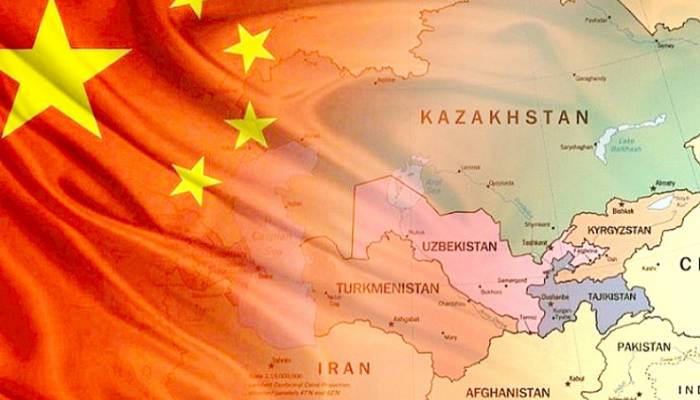
For China, Uzbekistan is a key country in Central Asia. It is the region’s most populous state, a growing market, an important transport hub and a country connected to Afghanistan, Kazakhstan, Kyrgyzstan, Tajikistan and Turkmenistan. Through Uzbekistan, Beijing can strengthen its influence not only in Central Asia, but also towards South Asia, the Middle East and the South Caucasus.
Therefore, Aripov’s visit to China is not merely a diplomatic trip. It is part of a larger process in which China is turning economics into the main instrument of its influence in Central Asia. Trade, investment, railways, logistics, digital platforms and industrial projects are becoming elements of a single strategy.
For Uzbekistan, this strategy brings both opportunities and risks. The opportunities include trade growth, infrastructure modernisation, transit revenues, access to technology and capital. The risks include a trade imbalance, dependence on Chinese imports, a possible increase in debt pressure and a gradual narrowing of space for independent economic manoeuvre.