New Delhi:
Many believed the war in the Middle East would be swift, but it has been over 40 days into the US-Israel military campaign against Iran and the war’s trajectory has confounded what Washington’s policymakers had predicted, Editor-in-Chief and CEO of Zeteo Mehdi Hasan told NDTV in an exclusive interview. Despite facing two nuclear-armed adversaries, Iran has not collapsed, he added.
“Iran is winning right now. The weaker power in any struggle, whether it’s a guerrilla movement or a smaller country, wins by not losing. Simply by not losing, you are winning,” Hasan said.
Iran is “going up against the greatest military superpower in the history of mankind, the richest country on Earth, a country with nuclear weapons” and Israel, “also another country with nuclear weapons,” Hasan noted. It is “a phenomenal achievement, whatever you think of Iran or this government,” that the country has endured this long, he said.
He cited the example of Ukraine in drawing parallels with Iran. “There are shades of Ukraine here, absolute invasion by a much stronger country. People thought Ukraine would be rolled over. There’d be Russian tanks in Kyiv by day two.”
Ukraine survived, and Iran is doing the same with considerably less external support, Hasan said, adding, “A little bit of Chinese and Russian support. But it’s surviving.”
Hasan said American policymakers have chosen to forget many relevant periods from history.
“The Iran-Iraq War was eight years long. The Iranians survived for eight years against Saddam Hussein, his chemical weapons, his support from France, Germany, the UK, the US, and Italy,” Hasan said.
Ayatollah Ali Khamenei very reluctantly signed the ceasefire deal in 1988 after they lost about half a million Iranians, he said.
Any assumption that Iran would “roll over in week one or month one of this war reflects complete ignorance of history,” Hasan told NDTV, adding people in “American policy circles have a complete ignorance of history.”
Pointing at the nuclear question and a significant shift in American demands, Hasan said Iran has for decades maintained its right to enrich uranium under the Nuclear Non-Proliferation Treaty for domestic purposes rather than weaponisation.
The 2015 Barack Obama-era nuclear deal allowed enrichment up to 3.67 per cent. When US President Donald Trump withdrew from that agreement in 2018, Iran’s enrichment levels climbed steadily. They now stand at 60 per cent, “very close to what you need to build a weapon,” Hasan said.
The Trump administration’s demand for zero enrichment and removal of existing stockpiles from Iranian soil are a departure from where things stood even a year ago.
“Donald Trump said they should be blocked from having a weapon. He never said anything about zero enrichment,” Hasan said. “That is the Israeli demand, which has now become an American demand. And it’s a nonstarter for the Iranians.”

Even a partial concession such as shipping enriched uranium to a neutral third party would not resolve the fundamental problem, Hasan said. “The reality is that they will retain the right to enrich, and they will always try to do that.”
As long as scientists, industrial capacity, and the intent remain, military strikes cannot permanently eliminate a nuclear programme, Hasan said. “This is why people like me have been fundamentally opposed to military action from the very beginning not just because it’s illegal and immoral and it kills civilians and destabilises the world, but because it’s not a solution when it comes to nuclear disarmament.”
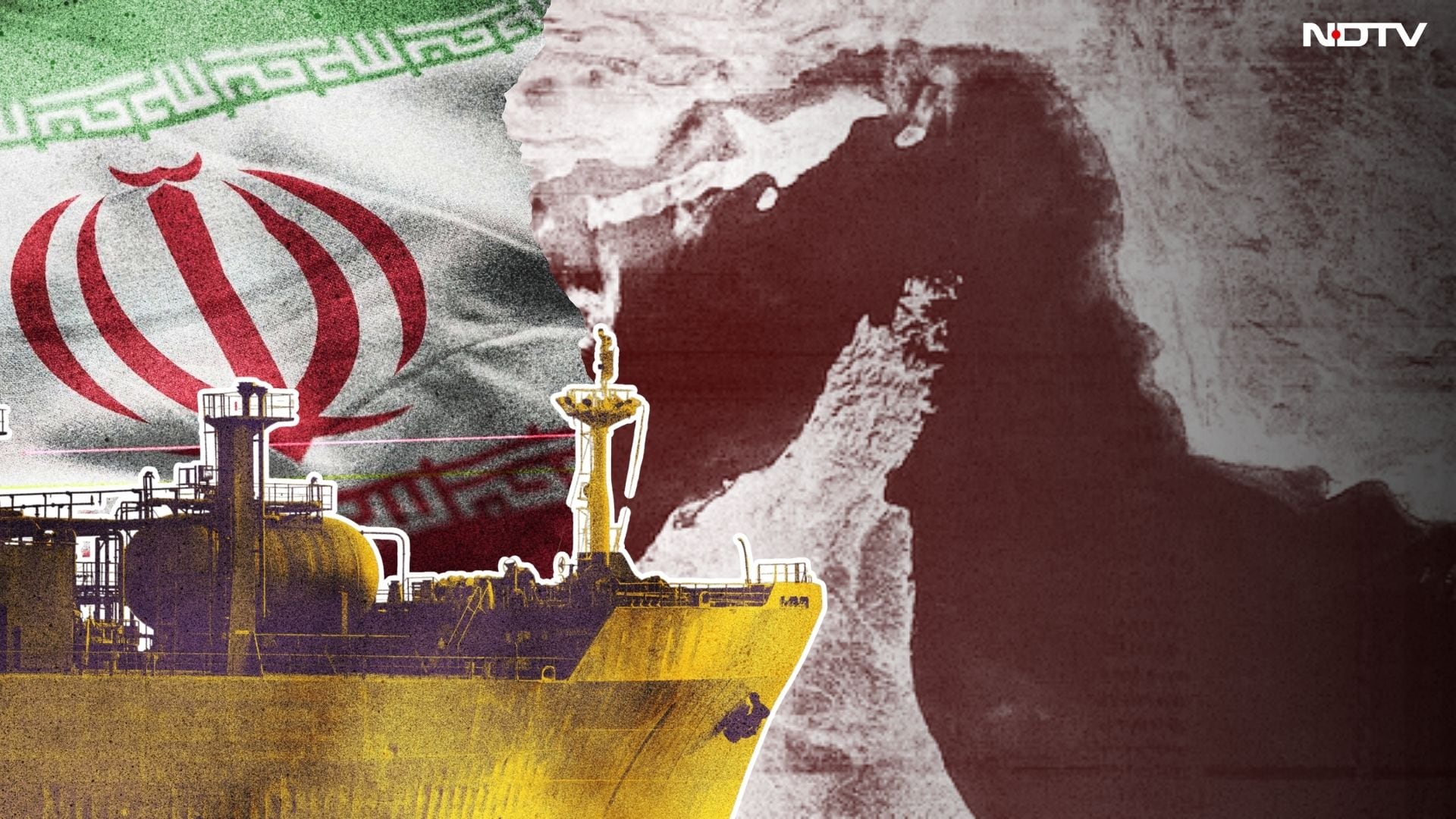
Iran, meanwhile, is banking on the Strait of Hormuz as its main card in any peace negotiations with the US, but using the waterway as leverage is not without risk for the Islamic republic.
While causing global economic pain gives Iran negotiating leverage, it can’t escape the blowback entirely, with the US blockade halting oil exports worth tens of millions of dollars each day.
With the two-week ceasefire in the war due to run out this week, renewed conflict over the strait would also rattle a leadership trying to find its feet under new supreme leader, Khamenei’s son Mojtaba, who has yet to appear in public.
“The strait is under the control of the Islamic republic,” said Mohammad Bagher Ghalibaf, the veteran of the Revolutionary Guards now serving as Iranian parliament speaker and seen as the chief negotiator in talks with the US.