Which Iran is America dealing with?

THE PAST couple of days in the Middle East have been characterised by the now-familiar whiplash. On April 17th Donald Trump announced the Strait of Hormuz had opened to traffic. Abbas Araghchi, Iran’s foreign minister, confirmed as much. The same day outlets linked to Iran’s Islamic Revolutionary Guard Corps (IRGC) criticised Mr Araghchi for failing to mention the conditions of the opening. The next day a military spokesman said the strait was closed again; several vessels came under fire as they tried to sail through. Mr Trump mocked the move to re-block the passage, reminding the world that America’s own blockade already ensured it remained closed to Iranian ships. On April 20th the president said that the US Navy had fired upon and boarded an Iranian cargo ship. Only the day before he said an American delegation would return to Islamabad, Pakistan’s capital, for more talks with the Iranians, and repeated threats to bomb Iran’s civilian infrastructure unless negotiations succeeded.

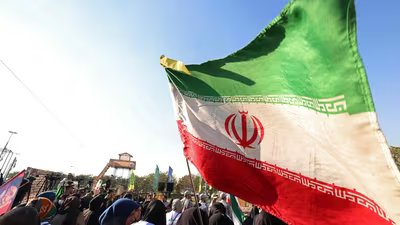
Mourners carry Iranian flags in Tehran on April 1, 2026 during a funeral procession for Alireza Tangsiri, head of Iran's Islamic Revolutionary Guard Corps Navy, and others killed in Israeli strikes (AP)
Mourners carry Iranian flags in Tehran on April 1, 2026 during a funeral procession for Alireza Tangsiri, head of Iran’s Islamic Revolutionary Guard Corps Navy, and others killed in Israeli strikes (AP)

Mr Trump’s flip-flopping is no longer surprising. Yet the conflicting messages coming out of Iran are a sign of something significant: a power struggle is under way in the Islamic Republic, which is without a present and absolute supreme leader for only the second time in its 47-year history. One observer likens the situation to “a jungle of power”, resembling the first chaotic months during Iran’s revolution in 1979. State media report that Iranian officials are currently in no mood to resume peace talks. But should that change, for the American delegation to Islamabad, that raises the question of who, exactly, they will be talking to.

The first set of talks in Islamabad, held on April 11th and 12th, provided a sense of Iran’s internal tensions. Iranian delegations dispatched for talks with America are usually lean, disciplined and tightly briefed. The Islamabad one was anything but: it was composed of some 80 Iranians, roughly 30 of whom were billed as decision-makers. They ranged from Majid Takht-Ravanchi, a seasoned diplomat who helped fine-tune a nuclear deal with the Obama administration in 2015, to Mahmoud Nabavian, a firebrand who derides America as “a vicious yellow dog” and sneers that any deal would be capitulation. Their arguments were so ferocious that Pakistani mediators are reported to have spent as much time refereeing among the Iranians as engaging the Americans. When tempers frayed, the hosts called a pause.

One cause of the tensions is the existence of a vacuum at the top. Seven weeks after an American-Israeli air strike killed Ali Khamenei, the supreme leader for 37 years, his successors have failed to find a date for his funeral. His son and designated successor, Mojtaba Khamenei, is thought to be either incapacitated or too weak to impose authority. Israel’s wars and assassinations have also thinned the senior ranks of army loyalists. Their replacements seem reluctant to surrender the autonomy they achieved during the war, when Iran decentralised its command-and-control to survive the combined American and Israeli attacks.

Since a ceasefire was declared on April 8th, the regime’s wartime cohesion has begun to fray. Formally, authority rests with the Supreme National Security Council, comprising the president, the parliamentary speaker and the heads of the security services. Mohammad-Bagher Ghalibaf, the speaker, has been designated as chief negotiator, with Mr Araghchi as his lieutenant. But their readiness to negotiate has provoked a backlash, particularly from the IRGC, the 190,000-strong force that defends the Islamic Republic. To outsiders, that divide has been visible in contradictory pronouncements over the status of the Strait of Hormuz in the past couple of days.

Inside Iran, signs of swelling military assertiveness are plentiful. Pro-regime crowds—mobilised nightly by networks tied to the IRGC—have taken to denouncing Mr Araghchi and Mr Ghalibaf by name. Military communiqués delivered by men in fatigues appear to have replaced clerical sermons. Even puritanical dress codes seem to be slipping: at a recent rally an unveiled woman led chants, breaching the four-decade taboo on women singing solo in front of men. In a further sign of a military control, outlets linked to the Guards have floated the idea of delaying municipal elections that are scheduled for May 1st.

Some argue that the cacophony is tactical—a way to extract concessions by projecting hardline opposition. After all, the fissures within Iran are as old as the revolution. From the outset, its leaders have disagreed on whether to confront America or accommodate it. Yet the war appears to be hardening a new faultline between nationalists who are guided by realpolitik and state interest, and Islamists who are anchored in revolutionary ideology.

Material interests muddy matters further. Over the years a class of generals-turned-sanction-busters has emerged: its members are thought to benefit handsomely from operations to circumvent American sanctions on the economy. Networks tied to Mojtaba Khamenei and Mr Ghalibaf are thought to control foreign-property portfolios and have attracted media scrutiny. With Khamenei senior gone, previously sidelined figures have re-emerged. Each brings different allies, agendas and claims on power.

Each group has a different view on the most important sticking-points in the talks, including the nuclear programme, control of Gulf waters and the role of Iran’s regional proxies. Nationalists would trade proxy networks for sanctions relief; Islamists see them as the spine of “resistance”. For the nationalists, nuclear brinkmanship invites attack; the Islamists follow North Korea’s model and look to developing a bomb for the sake of deterrence. Control of the Strait of Hormuz, to pragmatists, is leverage for a broader security pact with Arab Gulf states; to ideologues, its appeal would be as a lucrative toll-booth under Iran’s control.

On April 15th Asim Munir, Pakistan’s army chief, visited Tehran, seeking common ground between the different groups. The need to fix what the regime claims is some $270bn-worth of damage from the war may help concentrate minds. Even if Iran returns to talks, the deep divisions within the Iranian delegation mean both that it will be hard to reach a deal, and that any agreement with America could quickly unravel.

Editor’s note, April 20th: This story has been updated

Source link

Visited 1 times, 1 visit(s) today

Related Article

Local funds for some young people losing Pip under Milburn plans | Welfare

Local funds for some young people losing Pip under Milburn plans | Welfare

Some young people with disabilities will lose their personal independence payments but will be able to apply to a local fund for short-term expenses and equipment, Alan Milburn’s review will recommend. While those with the most severe needs’ entitlement will be protected, others will be asked to apply for money for specific purposes rather than

Two Iranian men convicted of spying for Tehran in UK

Two Iranian men convicted of spying for Tehran in UK | World News

Mostafa Sepahvand and Farhad Manesh convicted for spying in London for Iran’s IRGC. Two Iranian men have been convicted of spying on journalists working for a Persian-language broadcaster in London after prosecutors established that they conducted surveillance on individuals critical of Tehran and gathered information that could assist Iran’s Islamic Revolutionary Guard Corps (IRGC).Mostafa Sepahvand,

Military helicopter crashes in eastern Turkey. (Representational Image/REUTERS)

Four dead after military helicopter crashes in eastern Turkey, defence ministry says

Four people died after a Turkish military S-70 helicopter crashed in the eastern province of Malatya on Thursday, the Turkish defence ministry said. Military helicopter crashes in eastern Turkey. (Representational Image/REUTERS) The incident occured in the Samanköy area of ​​Yeşilyurt district in Malatya at approximately 18:45 (local time). The Ministry of National Defense (MSB) announced

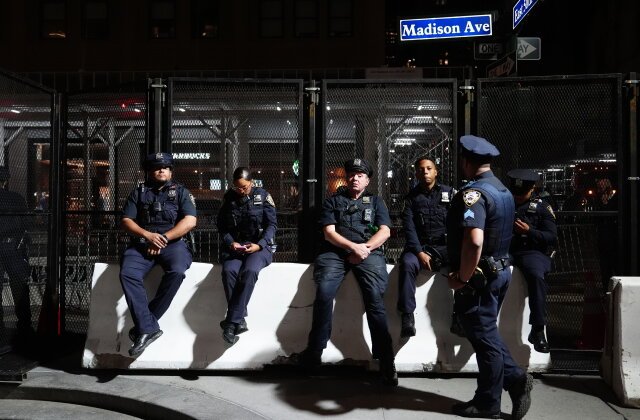
New York City police officers are on duty outside the Lotte Palace Hotel during a United Nations General Assembly leaders reception, late Tuesday, Sept. 22, 2026, in New York. (AP Photo/Julia Demaree Nikhinson)

World Leaders Set Out Clashing Priorities as COP31 Turns to Negotiations

By William James and Simon Jessop ANTALYA, Turkey, Nov 12 (Reuters) – World leaders have set out competing ⁠positions ⁠and made clashing demands in two days of ⁠intense speech-making at the COP31 climate change talks in Turkey, leaving negotiators with a tough task to draft a meaningful ​deal that all can agree. Small island states,

Funds for DR Congo Ebola fight ‘not reaching front’

Funds for DR Congo Ebola fight ‘not reaching front’

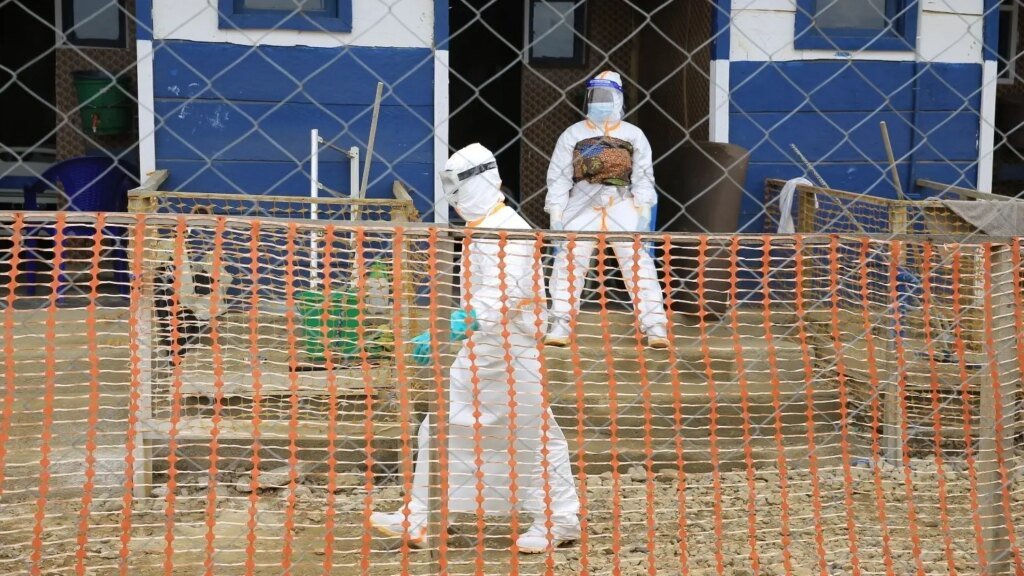
GENEVA A healthcare worker walks inside an Ebola treatment center in Beni, North Kivu Province, Congo, Monday, Nov. 9, 2026. (AP Photo) Vast sums of international aid to fight the Democratic Republic of Congo’s deadly Ebola outbreak are failing to reach medics on the front line, charity Doctors Without Borders (MSF) warned on Nov. 12.

Nvidia CEO Jensen Huang gestures on the day of the Invest in Germany Summit in Berlin, Germany, October 19, 2026. (REUTERS)

China says US using spy claims to justify technology ‘blockade’

Beijing accused the United States on Thursday of using spurious spying claims as a pretext to impose a technological “blockade” on China, following claims that Nvidia boss Jensen Huang was the victim of a Chinese espionage plot. Nvidia CEO Jensen Huang gestures on the day of the Invest in Germany Summit in Berlin, Germany, October

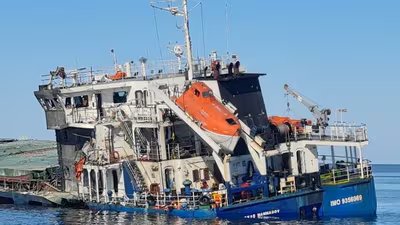
A ship in the Black Sea that was struck close to Romanian waters in October.

This shipping lane is now the world’s deadliest. It isn’t Hormuz.

The deadliest body of water this year isn’t the Strait of Hormuz. A series of attacks in the Black Sea has killed more people than strikes on shipping so far in the war between Iran and the U.S., disrupting trade routes and turning up the heat on NATO. A ship in the Black Sea that

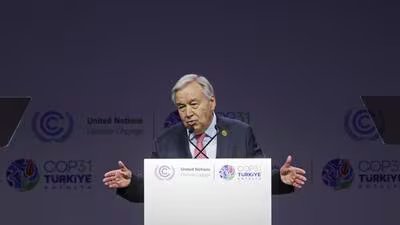
UN secretary general Antonio Guterres was addressing the COP31 Leaders’ Summit as part of the high-level segment in Antalya. (Bloomberg photo)

1.5°C breach inevitable, world must cut emissions 6% annually: UN chief at COP31

A breach of the 1.5°C global warming threshold is now inevitable, but the world still has the power to determine how high temperatures rise and how long they remain above that limit, United Nations secretary general Antonio Guterres said on Wednesday, calling for global emissions to fall around 6% every year and a much faster

Israeli settler representative turned back after arriving in France

Israeli settler representative turned back after arriving in France

The head of a body representing Israeli settlements in the occupied West Bank, which are considered illegal under international law, was turned back after arriving in France, with Israel denouncing the move on Wednesday as “unacceptable”. Israeli settler representative turned back after arriving in France Yossi Dagan, head of the Samaria Regional Council, was forced

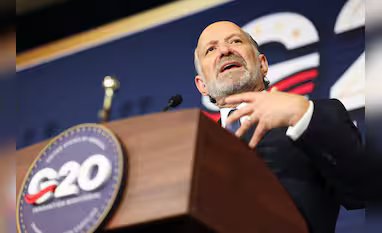
Howard Lutnick, US commerce secretary, during a news conference during the G20 Innovation Ministerial in Chapel Hill, North Carolina, on Sept. 2, 2026

Lutnick stalled Trump’s crackdown on diversion of Nvidia chips to China | World News

Howard Lutnick, US commerce secretary | Image Credit: Bloomberg 1 min read Last Updated : Nov 12 2026 | 7:52 AM IST US Commerce Secretary Howard Lutnick stalled President Donald Trump’s crackdown on companies suspected of diverting Nvidia’s ‌chips to China, ​Axios reported on ​Wednesday, citing high-level sources.   Trump on Thursday ​authorized a crackdown

Is the US blue wave a turning point for Europe, too? | World news

Is the US blue wave a turning point for Europe, too? | World news

“Is Maga dead?” asked Margaret, a Guardian reader in Switzerland, in a live Q&A with our correspondents after the seismic US midterm elections. If Margaret’s query expressed a hope that the Democrats’ blue wave could transform Europe’s fortunes after two years of Maga-induced trauma, she was probably not alone. The resounding defeat for Donald Trump’s

Iran says it will keep the Strait of Hormuz closed and reject US talks until Washington meets its seven conditions. (Photo by Atta KENARE / AFP) (AFP)

Iran sets 7 conditions for reopening Strait of Hormuz, resuming talks with US

Iran has said it will not reopen the Strait of Hormuz or resume negotiations with the United States until Washington meets seven conditions set by Tehran. Parliament Speaker Mohammad Bagher Ghalibaf said the responsibility for the next move now rests with the US, as Iran waits for an official response to its demands. Iran says

Trump Official Lutnick Stalled Crackdown On Nvidia Chip Diversions To China: Report

Trump Official Lutnick Stalled Crackdown On Nvidia Chip Diversions To China: Report

Axios reported that Howard Lutnick stalled Trump’s crackdown on diversion of Nvidia chips to China. US Commerce Secretary Howard Lutnick stalled President Donald Trump’s crackdown on companies suspected of diverting Nvidia’s chips to China, Axios reported on Wednesday, citing high-level sources. Trump on Thursday authorized a crackdown on companies suspected of diverting the chips for

Independent Membership

Facebook groups trusted over mainstream media in asylum hotel protest towns, report shows

Want to bookmark your favourite articles and stories to read or reference later? Start your Independent Membership today. Join today Already a member? Log in Facebook groups became “town squares” with admins acting as “de facto local information gatekeepers” in towns hit by asylum hotel protests, a new report has found. Communities across the UK

On the latest Palace Confidential, Diary Editor Richard Eden and Royal Editor Rebecca English debate the rights and wrongs of Harry's absence from the national Remembrance Sunday service at the Cenotaph

Remembrance Sunday confirmed ‘all my fears’ that Harry’s new life in the UK is stealing headlines from the working Royals: the Prince pictured smiling at his own local service seems to me ‘a provocation’, RICHARD EDEN tells Palace Confidential

By JOSEPH LUKE PALMER Published: 16:29 GMT, 11 November 2026 | Updated: 16:42 GMT, 11 November 2026 On the latest episode of Palace Confidential, Diary Editor Richard Eden and Royal Editor Rebecca English debate the rights and wrongs of Prince Harry‘s absence from the national Remembrance Sunday service at the Cenotaph. Harry, who served two

Nvidia CEO Jensen Huang at the company's annual GTC developers conference in San Jose, Calif., in March.

Nvidia Scandal Tests the Resilience of the Global AI Boom

Let’s remember a simpler time, just a few weeks ago, when the supposed China dupes were those Americans raising concerns about AI—not the guy leading the industry’s charge. Nvidia CEO Jensen Huang at the company’s annual GTC developers conference in San Jose, Calif., in March. Back then, Jensen Huang was Mr. Cool with a black

Sahap Kavcioglu has not been accused of any wrongdoing. (X/ @sahapkavcioglu)

Turkey banking regulator head resigns in fund crisis fallout

Turkey’s banking regulator chief, Sahap Kavcioglu, asked President Recep Tayyip Erdogan to accept his resignation, as a fund-scandal investigation increasingly targets top regulators and financial officials. Sahap Kavcioglu has not been accused of any wrongdoing. (X/ @sahapkavcioglu) “In light of the recent allegations concerning the Banking Regulation and Supervision Agency and myself, I asked President

New York City police officers are on duty outside the Lotte Palace Hotel during a United Nations General Assembly leaders reception, late Tuesday, Sept. 22, 2026, in New York. (AP Photo/Julia Demaree Nikhinson)

Netanyahu Says Israel Is Not to Blame for the Flood Crisis in Gaza, and Other Mideast News

Israeli Prime Minister Benjamin Netanyahu has rejected accusations that Israel has been delaying the entry of winter supplies into the Gaza Strip as the enclave faces worsening conditions this week, with severe rains flooding makeshift tents. Iran’s Revolutionary Guard said a tanker caught fire after hitting a naval mine early on Wednesday in the Strait

Trump hails ‘huge victory’ as court rejects BBC bid to dismiss defamation suit (REUTERS)

US court rejects BBC plea to dismiss Trump’s defamation lawsuit

A federal judge has allowed US President Donald Trump’s multibillion-dollar defamation suit against the BBC to proceed, rejecting a bid by the British broadcaster to dismiss the case. Trump hails ‘huge victory’ as court rejects BBC bid to dismiss defamation suit (REUTERS) Trump has accused the BBC of deceptively editing a documentary to make it

0
Would love your thoughts, please comment.x
()
x