Looking for ways to switch things up in your next itinerary? Some of the most powerful travel experiences happen in places where history has been literally laid to rest, and the world’s most striking burial sites offer exactly that kind of encounter. Dark tourism, which covers travel to sites associated with death, tragedy, or suffering, is one of the most resonant expressions of a broader and enduring travel style: heritage travel.
Also read: The Best Business Class Cabins in the World in 2026: Which Airlines Own the Throne?
Heritage Travel and Why It Matters
Heritage travel is the practice of exploring destinations for their historical and cultural significance. It asks you to understand a nation’s cultural identity: whose stories shaped a place, and how those stories survive the centuries. Burial sites sit beautifully at the intersection of both. They are, at once, sacred landscapes and living archives, where architecture, ritual, and memory converge in ways that no museum can fully replicate. If you want to come home knowing more about the world, these eight sites are an excellent place to start.
Eight Heritage Sites Worth The Journey
Père Lachaise Cemetery, Paris, France
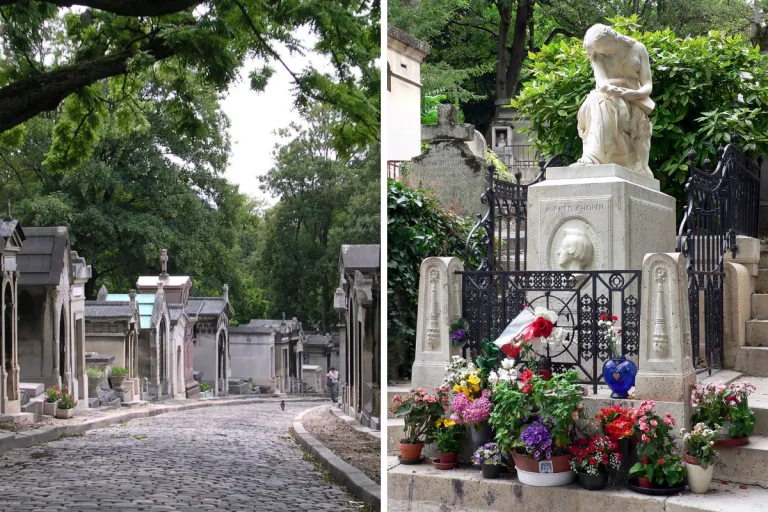 Image credit: Peter Poradisch (left), Marcin L. (right)
Founded in 1804, Père Lachaise is widely regarded as the world’s most visited cemetery. Spanning 44 hectares in Paris’s 20th arrondissement, it holds more than one million graves, ranging from modest headstones to towering gothic mausoleums, and reads like an A-to-Z of Western cultural heritage. Oscar Wilde, Édith Piaf, and Jim Morrison all rest here, each grave drawing its own quiet pilgrimage from fans and historians alike. For those who love literature, art, and architecture, this is a genuinely unmissable stop in the French capital. If you’re not big on the details of art or history, I found it a peaceful enclave to get in touch with a slice of nature without leaving the city.
Mangshan ancient tomb cluster, Luoyang, Henan
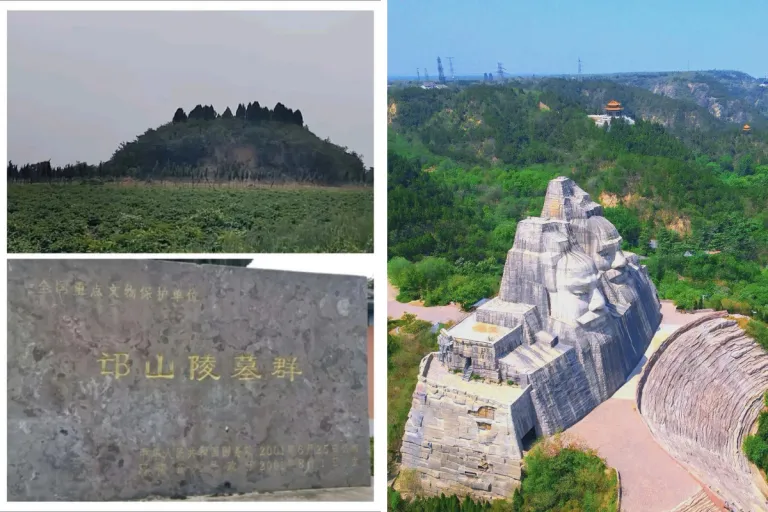 Image credit: Baidu
On the slopes of Mangshan Hill beside ancient Luoyang, China’s largest ancient tomb complex spans more than 2,000 years of history. Here, emperors, ministers, and beloved poets share the same hillside, with handwritten road signs pointing the way to tombs such as that of Tang Dynasty poet Li Yu. The Luoyang Museum of Ancient Tombs, located nearby, adds crucial context to what you see above ground. This is as much a literary pilgrimage as it is an archaeological one, and has become a trending place on Chinese social media as youth visit to pay respect to honorable figures from the past.
Kaisergruft (Imperial Crypt), Vienna, Austria
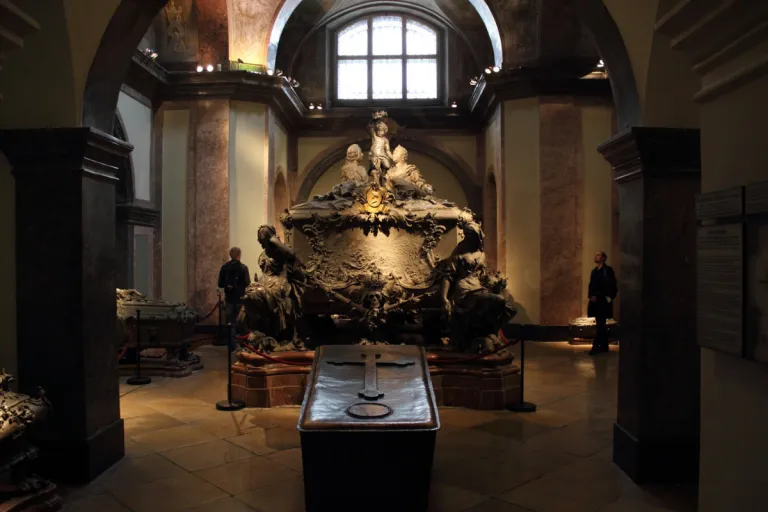 Image credit: Max Pfandl
Tucked beneath Vienna’s Capuchin Church on Neuer Markt square, the Kaisergruft has served as the final resting place of the Habsburg dynasty since 1633. Inside, 145 members of the imperial family lie in 107 metal sarcophagi that span styles from starkly plain to lavishly rococo, housing 12 emperors and 18 empresses. Remarkably, the most recent entombment occurred in 2023, which means this is a living tradition rather than a frozen exhibit. Walking through the crypt’s vaulted chambers is, in effect, walking through 650 years of European imperial history.
Sedlec Ossuary, Kutná Hora, Czech Republic
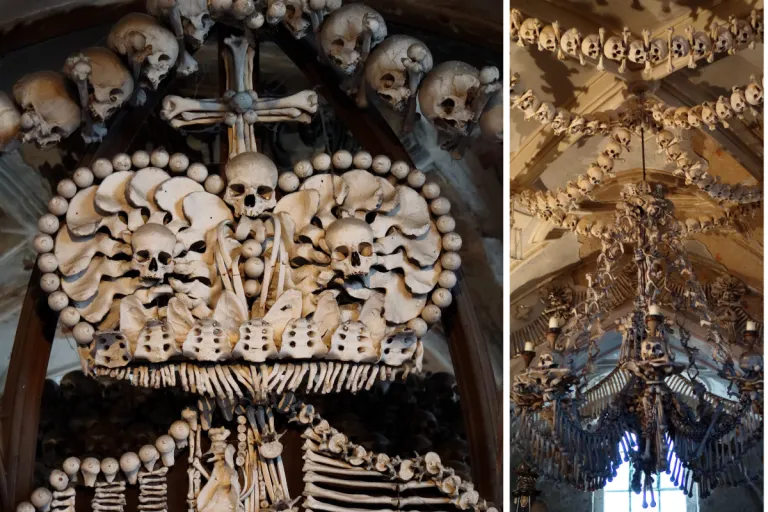 Image credit: Jairus Khan
Beneath the Cemetery Church of All Saints in Kutná Hora, the Sedlec Ossuary holds the bones of between 40,000 and 70,000 people, most of them victims of 14th and 15th-century plagues and wars. In 1870, woodcarver František Rint arranged those bones into chandeliers, garlands, and heraldic coats of arms that visitors see today. The ensuing result is both memorial and artwork: there is simply no other chapel quite like it in Central Europe.
Eight Heroine Cemetery, Mudanjiang, China
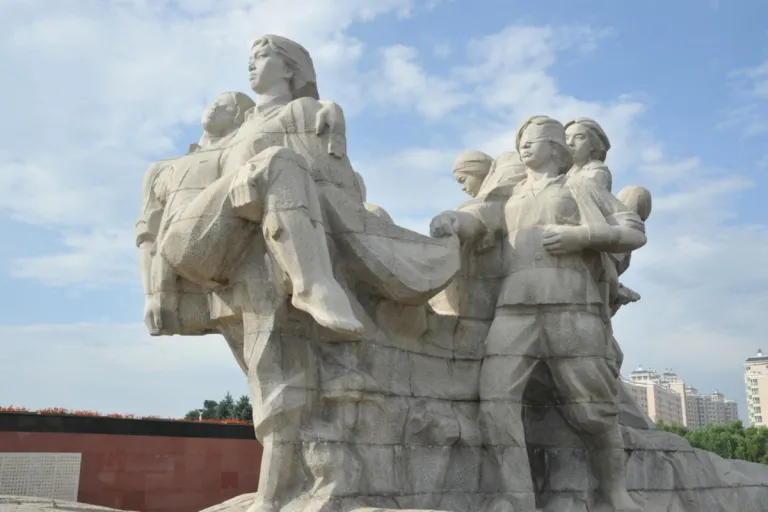 Image credit: Baidu
In October 1938, eight female soldiers of the Northeast Anti-Japanese Allied Forces, led by Leng Yun, fought Japanese troops to the last of their ammunition before choosing to drown in the Wushun River rather than surrender. The youngest among them, Wang Huimin, was only 13 years old. The memorial site in Mudanjiang, Heilongjiang Province, commemorates their courage through monuments along the riverside: a heritage site where personal sacrifice and collective memory are inseparable. It resonates especially with visitors from countries that carry their own wartime histories close to the heart.
Lycian rock-cut tombs, Demre, Turkey
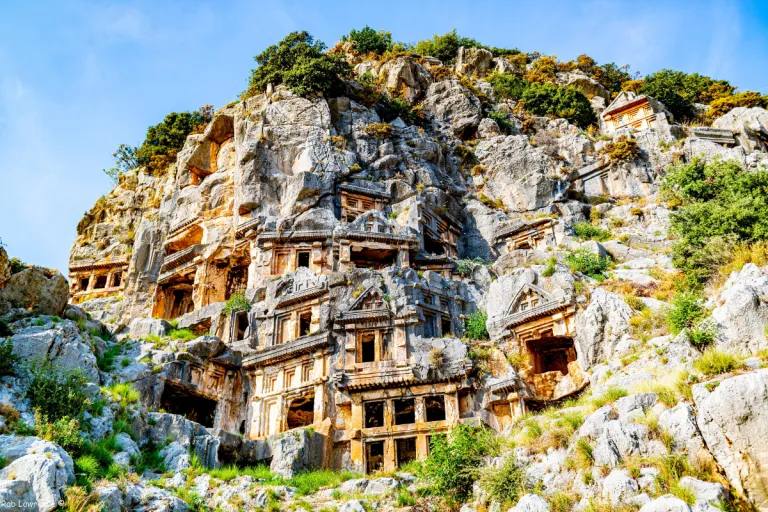 Image credit: Rab Lawrence
Carved into the sheer cliffs above ancient Myra, present-day Demre in south-western Turkey, the Lycian rock-cut tombs date back to the 4th century BC. Their elaborate facades mimic Lycian homes and temples, expressing a civilisation’s belief that winged creatures would carry the souls of the dead to the afterlife. Dozens of tombs stack vertically along the cliff face, forming a vertical city of the dead that reveals as much about Lycian cosmology as it does about their architectural mastery. Few heritage sites anywhere in the world are quite this visually extraordinary.
Hanging coffins of the Bo people, Sichuan, China
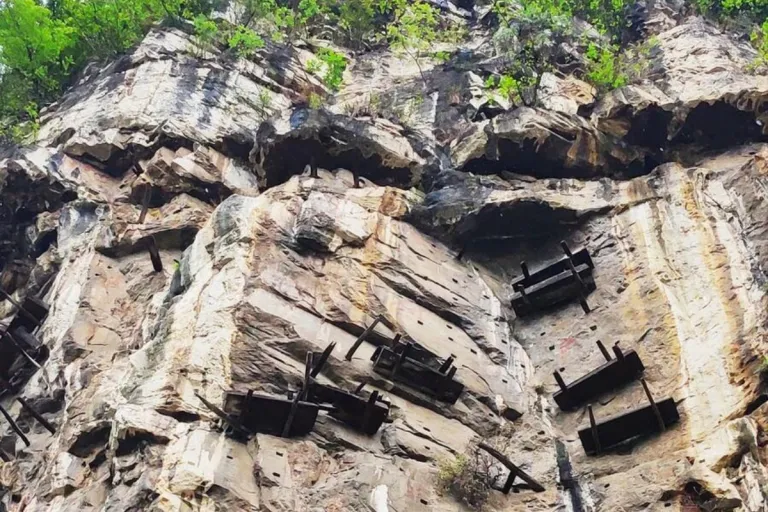 Image credit: 杉抠纱布尉E6
In Gongxian County, southern Sichuan, wooden coffins carved from single hardwood logs are suspended on sheer limestone cliff faces, some reaching heights of 130 metres. The Bo people, an ethnic minority who built a vibrant culture over 3,000 years, placed their dead here before the community was exterminated during China’s Ming Dynasty. Around 280 coffins survive today, silently defying gravity as a final testament to a civilisation that no longer exists. They are both a burial custom and an act of cultural preservation: a people’s last word to the world, written in wood and stone.
Hanging coffins of Sagada, Mountain Province, Philippines
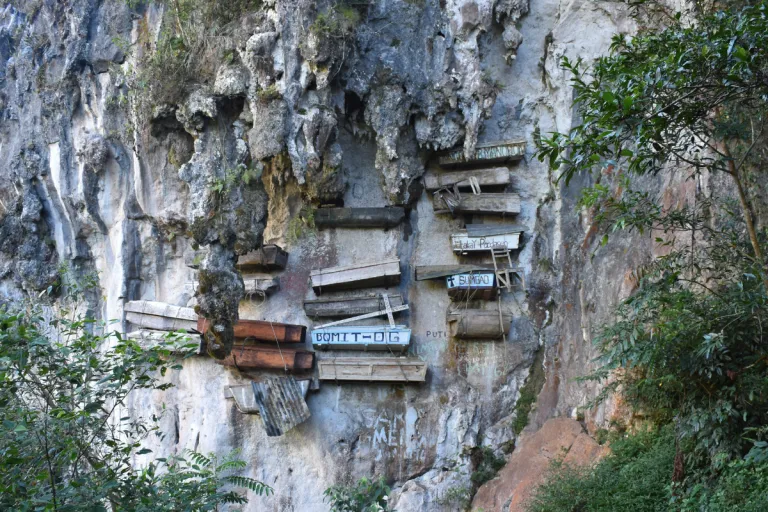 Image credit: Arian Zwegers
In the highlands of Mountain Province, the Igorot people of Sagada have fixed hand-carved wooden coffins to the limestone cliffs of Echo Valley for more than 2,000 years. The tradition holds that elevation places the deceased closer to ancestral spirits and the heavens, with elders carving their own coffins before death. Unlike most heritage sites on this list, this practice remains alive today, making Sagada one of the few places in Southeast Asia where living indigenous burial culture can be witnessed firsthand.
Start Planning Your Heritage Journey
The sites on this list span continents, centuries, and cultures, yet they share one thing: each holds a story that deserves to be witnessed in person. Whether you are planning a long-haul adventure or looking for a meaningful detour on an existing itinerary, consider building at least one of these stops into your travel plans. Heritage travel only asks you to show up with an open mind and the willingness to let history speak. Some of the most unforgettable journeys begin precisely where others least expect to find them.
Featured image credit: Dex Quek (left), 杉抠纱布尉E6 (right)