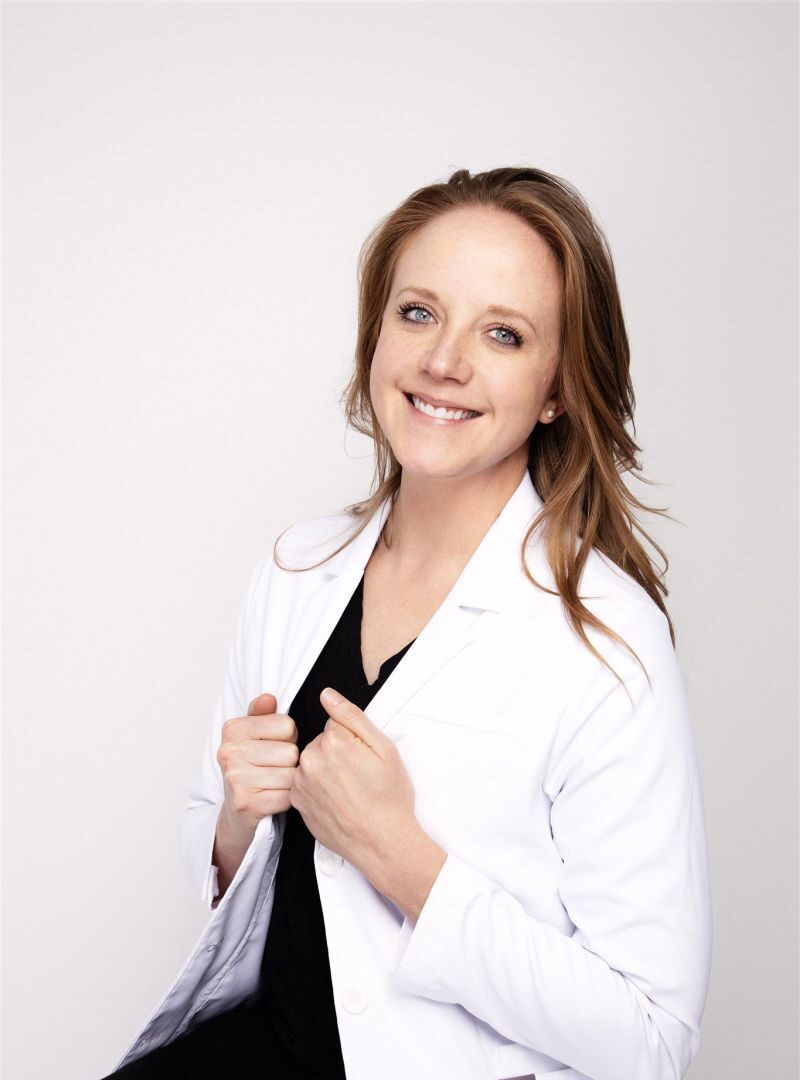
As a physician, veteran and lifestyle medicine leader, Regan A. Stiegmann, DO, MPH, has built a career defined by service. In 2011, Dr. Stiegmann commissioned into the U.S. Air Force (USAF) as a Health Profession Scholarship Program (HPSP) awardee during her second year of medical school at Rocky Vista University College of Osteopathic Medicine (RVUCOM).
After graduating, Dr. Stiegmann completed residency in preventive medicine and lifestyle medicine. Following residency, she has combined her osteopathic medical training with her military experience to champion whole-person health, advance lifestyle medicine and help shape emerging digital health solutions for the next generation of physicians and patients.
Currently, Dr. Stiegmann is the chief medical officer of LPM LAB, a digital health lifestyle and performance medicine platform. She also teaches medical students at RVUCOM as the director of the COM’s digital health track and is the director of lifestyle and performance medicine at the HCA HealthONE family medicine residency program in Aurora, Colorado. She also volunteers with several professional medical associations, including serving on the AOiA’s Digital Health Innovation Steering Committee. Her multifaceted career reflects her diverse commitment to service.
Below is an edited Q&A.
What was your path to osteopathic medicine?
As a proud Colorado native, and the offspring of two physician parents, I had a sense that medicine would be a significant part of my future professional trajectory. Both of my parents trained as MDs in highly specialized fields. However, I knew that my path in medicine would not follow most conventional pathways.
Ahead of applying to medical schools, I extensively researched the foundational differences between MD and DO schools; it became very clear that the osteopathic approach to medicine resonated much more profoundly with how I knew I would shape my medical career.
What I like about osteopathic medicine is how it teaches the importance of validating and addressing the interweaving between an individual and their own body, their mindset, and how they show up and hold perspective of the world. As a sports and performance enthusiast, I also loved the idea of being able to integrate osteopathic manipulative treatment (OMT) as a hands-on source for healing.
You’re a USAF veteran, previously serving as a flight surgeon. What did that job entail? Are there any stories you can share?
Halfway through medical school, a colleague mentioned the Health Professions Scholarship Program and explained that the program entailed joining the military and becoming a military physician. I thought that sounded so cool, and I ended up being offered one of the few two-year USAF HPSP scholarships
A few short years later, I found myself walking into an operational aerospace medicine assignment as an active-duty, double board-certified flight surgeon. People would hear “flight surgeon” and presume that I was skillfully performing highly intricate surgeries while flying on large aircrafts. Despite the impressive first-blush presumption of my duty title, I would help course-correct the actual job of a flight surgeon to tactically integrate primary care, occupational, preventive and lifestyle medicine in an effort to keep the pilots, flyers and all air crew at the highest levels of human performance.
In 2020, I deployed to the Middle East, specifically Qatar and the United Arab Emirates, during the height of the COVID-19 pandemic. A few weeks after I arrived at Al Dhafra Air Base, the wing commander came directly to my office on the flight line and stated point-blank, “Hey Doc Stiegmann, I hear you’re the flight doc who does lifestyle medicine to help get our warfighters back in shape and back to the fight.” He explicitly stated how concerned he was seeing the significantly deoptimized physical state of health of these young personnel who were arriving to assist the mission downrange.
He reported that nearly every single service member was either overweight or obese, and he was very concerned. By the end of my deployment, I had successfully integrated local culture change around food choice and down-range food procurement, as well as successfully integrated lifestyle and performance medicine tactics across 12 units and to over 2,000 base personnel across three U.S. Central Command theater bases.
You completed specialized training in lifestyle medicine during your residency training. Lifestyle medicine is becoming more popular as we learn more about how lifestyle has a huge impact on our health. How does lifestyle medicine help you as an osteopathic physician?
Lifestyle medicine is one of the most effective evidence-based approaches to help prevent, treat and reverse some of the most common diseases that we see today. Lifestyle medicine focuses on a six-pillar system that comprises the foundation of health: nutrition, physical activity, sleep, stress management, mitigation of risky substance use and positive social connections.
As we know, the tenets of osteopathic medicine, such as the body’s natural ability to self-regulate and self-heal, as well as the body functioning as a unit, are closely linked to the core components of lifestyle medicine. When you give your body the opportunity to heal itself, it more often than not does just that. Even further, if you keep investing in healing your body, it can show you how well it can perform.
The same logic weaves right into treating the body as a unit. In the military, it is vital to focus not just on harnessing pure horsepower, but more importantly on harnessing the capacity to maximize brainpower to accomplish our missions. In the military, we referred to this as cognitive lethality. This entails optimizing mental clarity and long-term focus and maximizing executive function and combat effectiveness. The consistent integration of lifestyle medicine practices helps to ensure that service members are able to show up at 100% of their capacity. That is the unique connection that lifestyle medicine draws to optimizing the power of treating the body as a unit, and I love that.
It’s undeniable we as humans are a unit. We are connected to everything around us. Lifestyle and performance medicine practices become almost like a sport when you start truly dialing in and fine-tuning how to achieve peak human performance.
Furthermore, it is imperative that our patients have choices and understanding when it comes to how they approach their healthcare. As physicians, we know that intensive therapeutic lifestyle change is the first-line treatment modality and a first-line intervention for most chronic degenerative diseases. We must empower our patients and fortify their sense of agency to become the leaders driving their own health wins.
You have been in many leadership positions as a physician and even became involved with the film ‘The Game Changers.’ How did you get involved, and what message does the film convey?
My mentor, Jim Loomis, MD, was featured in the film, and that’s how I initially became connected to “The Game Changers” team. I had the opportunity to meet with producer James Wilks, a former professional mixed martial artist, and discuss with him how important it was that we highlight the relevance of the film and how closely connected the practice of human performance optimization was to simple things like food choice.
The film is one of the first performance nutrition documentaries that highlights food choices and nutritional practices of some of the most high-profile athletes across professional sports, from Olympic medal winning athletes to the NFL, from the MLB to Formula One racing and more.
“The Game Changers” really helps to bust a lot of conventional health misconceptions, specifically surrounding plant-predominant eating and physical performance. It dispels the belief that the only way to achieve maximal performance and build lean muscle mass is by consuming animal-based products. That links up brilliantly with lifestyle medicine approaches, especially in terms of the food aspect of performance, and what performance nutrition should look like.
We know that plant-based approaches to health and performance are well-documented in research over the past 100 years. The wonderful part about lifestyle medicine is that it’s not just my opinion; it’s the opinion of some of the most well-respected leading medical institutions across the United States, as well as across the globe. The consensus is clear: Eat more plants.
You are also a recipient of the prestigious Fulbright scholarship. Tell us more about your Fulbright research.
A few years ago, I crossed paths with some very forward-leaning Finnish health tech innovators after meeting their team, Metabite. This team was leading the way in building cutting-edge nutritional health solutions, specifically building one of the first outcomes-based nutrition apps that help people better track their food choices as well as helping to get people motivated in the right way to sustain these changes.
After many years of diligent lifestyle and performance medicine (LPM) clinical and operational, scientific and research collaborations in the name of human performance optimization (HPO), the University of Helsinki offered to host the world’s first LPM-specific Fulbright foreign scholar opportunity.
Finland was a prime target to make a case for LPM/HPO because of their conscript military service. This means every young man is mandated to go serve in the Finnish Defense Forces (FDF) at some point in time. Our shared logic was to help make these warfighters as healthy as possible. How do we do that? We pre-empt diseases and proactively invest in teaching the recruits how to sustain their own health through smarter food choice and through learning how to exercise properly.
In Helsinki in early April 2025, we convened the first-ever Enhancing Warfighter Readiness through LPM Summit. At this summit we united world leaders and subject matter experts in LPM/HPO, as well as various other vital stakeholders. We hosted world-renowned researchers, academics, industry collaborators and health tech companies, along with active-duty USAF, United States Navy, Royal Navy, Royal Air Force, Lithuanian Armed Forces, FDF and more.
When you bring all the right people to the table, you have the opportunity to delegate more effectively. We know how to achieve and reclaim health and wellness, and we know how to do this through evidence-based medicine. I am continuing that LPM/HPO effort throughout 2026 because there was so much positive reverberation from the inaugural Helsinki summit.
You are a busy woman between balancing being a physician, military liaison and even chief medical officer for the digital health company LPM LAB. Can you tell us about these roles, as well as your future goals?
When you see a deficit anywhere in your professional career, especially as a physician, your reflexive reaction is to ask, “How do we fix this? And how do we fix it fast?”
I joined LPM LAB as their chief medical officer several years ago on the heels of separating from the Air Force. We’ve been building and evolving the United States Department of War’s first-ever lifestyle performance medicine digital health platform.
The LPM LAB app allows users to consolidate their personal LPM metrics across the various lifestyle medicine pillars (like nutrition, sleep, exercise, mood, etc.) so they don’t have to toggle between multiple different apps. It uses wearable devices and smartphones to track LPM-specific metrics that are provided for users, and it makes the experience of LPM/HPO much more personalized. Nothing will motivate you more than having access to your own LPM data and being able to easily see it through the lens of practical, daily lifestyle behaviors.
Through using the app and tracking meals or taking pictures of food items, users can see, for example, they are five grams of fiber away from meeting their daily minimum fiber intake goal of 25 grams. The app will nudge users to evidence-based ways to help them meet their daily goals. This goes across all of the LPM pillars that the app tracks.
Additionally, we have built an AI Health Coach into the LPM LAB platform. We use a large language model with an evidence-based proprietary back end that helps to distill the most relevant, up-to-date, scientifically validated information that, again, is personalized through users’ behavior patterns and data, before making more refined suggestions to the end user. The AI Health Coach helps to keep end-users on track and helps bridge the knowledge gaps when questions arise.
In general, the app helps to contextualize personal changes and works to keep the motivational LPM fires stoked while helping end-users keep their health wins and performance gains top of mind.
Do you have any advice for osteopathic students on medicine, HPSP or becoming a military physician?
We as physicians are the fire-starters and the pacesetters for our patients, as well as for the next generation of medical professionals following in our footsteps. With patients, I like to think of myself as not only a loud cheerleader, but also as a reliable quarterback. I help my patients find confidence in making the plays (i.e., choosing which LPM pillars to focus on) and in doing so, my patients start putting the points on the scoreboard of health as a result.
Giving patients the opportunity to choose how to invest in smarter health choices is my job as a doctor. Helping them realize their full potential after guiding them through changing their lifestyle behaviors and reclaiming their health is the cherry on top of the cake for me.
Regarding HPSP and military service: Talk to recruiters in your local area, as well as colleagues, students or teachers who might know military HPSP students or even veterans who served prior. I make a point to educate all of the HPSP students at RVUCOM every year about LPM/HPO and we work to try and connect all of these students at a national level through the Association of Military Osteopathic Physicians and Surgeons (AMOPS) too.
Don’t be afraid to ask questions and to make the cold calls or cold emails and shake the trees to get those answers you need. It is so vital that you find other people around you who can help you continue to motivate yourself, regardless of what professional stage you are in. This will provide you with a 10x return on investment so that you’re able to continue to realize your dreams and also find a way to keep giving back.
Editor’s note: The views expressed in this article are the subject’s own and do not necessarily represent the views of The DO or the AOA.
Related reading:
From courtside to bedside: WNBA team physician forges her own path in sports medicine
The NASA engineer who went to osteopathic medical school at age 58