Amid global turmoil over the world’s biggest oil chokepoints, Iran is reportedly charging some vessels $2 million to pass through the Strait of Hormuz, a move described by Iranian parliament member Alaeddin Boroujerdi as a new approach to control the narrow waterway.

“Now, because war has costs, naturally, we must do this and take transit fees from ships passing through the Strait of Hormuz,” he was quoted as saying by Iran International. Follow US-Iran war live updates
The member of the Iranian parliament’s national security committee further stated that the measure is already in place, adding that it reflects a new “sovereign regime” in the Strait of Hormuz after decades.
Boroujerdi also reacted to US President Donald Trump’s ’48-hour’ deadline warning to Iran over the strait and said, Israel’s energy infrastructure would be within Tehran’s reach and could be destroyed “within a day”.
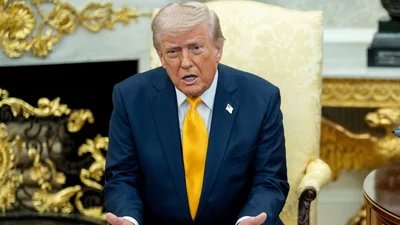
Earlier on Sunday, Trump had taken to Truth Social to issue a warning to Iran, seeking the reopening of the strait.
“If Iran doesn’t FULLY OPEN, WITHOUT THREAT, the Strait of Hormuz, within 48 HOURS from this exact point in time, the United States of America will hit and obliterate their various POWER PLANTS, STARTING WITH THE BIGGEST ONE FIRST!” he wrote.
Track Dubai, UAE news live updates
Iran hit back at his threat and warned that if the country’s infrastructure is attacked, then Tehran would target “all energy, information technology, and desalination infrastructure belonging to the US and the Israeli regime in the region”.
Iran’s president, Masoud Pezeshkian, also issued a direct warning to the United States and Israel, saying that the threats and terror only strengthen the country’s unity.
“The illusion of erasing Iran from the map shows desperation against the will of a history-making nation,” he said in a post on X.
Pezeshkian also said that the Strait of Hormuz “is open to all except those who violate our soil”, affirming that Iran will confront “delirious threats on the battlefield”.
While some ships, including those bound for India, passed the war-hit waterway, several vessels remain stuck in the Hormuz amid Iranian retaliation against the US-Israeli strikes.
Oil prices
Oil prices moved little on Monday as Brent crude futures fell one per cent to $112.18 per barrel after settling on Friday at their highest since July 2022.
Meanwhile, the US West Texas Intermediate was at $98.7 per barrel after gaining 2.27 per cent in the previous session.
ALSO READ | ‘Shipping lanes must remain open, secure’: PM Modi speaks with Iran President, second call since war began
Oil prices temporarily fell due to low liquidity and traders making profit in the short term, Michael McCarthy, CEO of online trading platform Moomoo Australia, was cited as saying by Reuters.
“Momentum clearly favours further upside, and a test of the recent highs near $120 is a realistic scenario this week,” he added.
IEA chief warns of ‘worst’ energy crisis
The raging war in the Middle East could lead the world to face its worst energy crisis in decades, warned International Energy Agency (IEA) chief Fatih Birol on Monday.
He described the ongoing situation as “very severe”.
“Many of us remember the two consecutive oil crises in the 1970s… at that time, in each of the crisis, the world has lost about five million barrels per day, both of them together, 10 million barrels per day,” Birol told the National Press Club in Australia.
He added, “As of today, we lost 11 million barrels per day, so more than two major oil shocks put together.”