Donald Trump has four bad options for the war in Iran

Donald trump’s strategy in Iran is like the weather in his home state of Florida: if you don’t like it, then wait for five minutes. On Friday the president said America’s war might soon be “winding down”. Its military goals had largely been met, he said, and he seemed untroubled by Iran’s ongoing closure of the Strait of Hormuz since America did not “use” the waterway.

These comments by Donald Trump come after Israel launched an air strike on South Pars, which is Iran's part of the world's largest gas field, earlier this week (Bloomberg)
These comments by Donald Trump come after Israel launched an air strike on South Pars, which is Iran’s part of the world’s largest gas field, earlier this week (Bloomberg)

His conciliatory tone lasted only until Saturday. Then he gave Iran a 48-hour deadline to reopen the strait: if it did not comply, he warned that “America will hit and obliterate their various power plants, starting with the biggest one first.” So much for winding down.

Mr Trump’s defenders insist that his rhetorical gymnastics are part of the plan: the president is keeping his options open, and keeping Iran on its toes. To almost everyone else it is clear that America entered this war with a flawed strategy, starting with its failure to anticipate that Iran would close the strait. With the fighting entering a fourth week, Mr Trump has four options for how to proceed. He can talk, leave, continue or escalate. If he has not yet chosen one, it is because none of them are good.

A dwindling number of diplomats still think that America and Iran could negotiate a ceasefire. That seems the least likely option, however, given the hurdles to even getting the parties together. Having been attacked twice while in talks with America, Iran is understandably hesitant about another round. Its leadership is in disarray; the new supreme leader, Mojtaba Khamenei, has not been seen since he assumed the job on March 9th. America may wonder if any Iranian interlocutor truly speaks for the regime.

Even the choice of mediator may be complicated. Oman brokered the previous two rounds, but it has angered its Gulf neighbours with its sympathetic stance towards Iran throughout the war. They would insist on an alternative mediator (Qatar seems the likeliest contender).

A narrow deal that swaps sanctions relief for limits on Iran’s nuclear programme will not suffice. America would enter any talks with maximalist demands: it also wants Iran to accept strict limits on its missile programme and end its support for Arab militias. Iran has its own wish list, which includes reparations for the war and the closure of American military bases in the region. Neither side is in the mood to make concessions.

If he cannot end the war with a deal, Mr Trump could try to simply end it. Some of his advisers are nudging the president to declare victory. He could announce, no doubt with some embellishment, that Iran’s military capabilities had been smashed: its navy sunk, its missile factories in ruins.

This would be the Trumpiest option, selling an inconclusive campaign as a decisive victory. He did it in June when he claimed that Iran’s nuclear programme had been “obliterated” by American strikes—never mind that, eight months later, he described that same nuclear programme as a threat. He might worry that voters will be harder to convince this time. Petrol prices in America are already up 34% from a month ago. But a majority of his Republican base still supports the war, and ending it now would give the oil-price shock seven months to abate before the midterms in November.

Other problems are harder to solve, though. Iran would still have roughly 400kg of uranium enriched to 60% purity—and newfound resolve to fashion it into a nuclear bomb. It would also end the war with a chokehold on the Strait of Hormuz. For almost half a century, ensuring the flow of oil from the Persian Gulf has been the centrepiece of American policy in the Middle East. To end the war now would be to abandon that principle. Gulf states would be furious, and fearful of endless extortion. A few Iranian officials have already mused about charging fees from vessels transiting the strait. Israel would be unhappy as well.

A third option, then, is to stay the course. America and Israel could press ahead with several more weeks of air strikes. Many Israeli officials would prefer this option. The army chief says the campaign will continue throughout the Passover holiday, which ends on April 9th.

The number of Iranian missile-and-drone attacks on Israel and Gulf states has fallen from nearly 1,000 on the first day of the war to an average of less than 100 per day now. Some hawks in Washington argue that a few more weeks of attacks on the Iranian armed forces will drive that number lower still, or perhaps even cause the regime to collapse. Meanwhile, America would have time to send more warships to the region, and to work on building a coalition to provide escorts through the strait.

Yet there is no guarantee that any of this will work. The regime may hit a tipping point, or it may not—it is an unfalsifiable proposition. As long as Iran can keep up sporadic attacks on shipping, it can probably keep the strait closed and deny Mr Trump a victory. It can cause pain elsewhere too: more than 160 people were injured on March 21st by two ballistic missiles that hit southern Israel (attempts to intercept them failed). And it may not stop there. Faced with the prospect of a long war, it could escalate its attacks on critical infrastructure in the Gulf. Either way, economic costs would mount and ongoing Iranian attacks would deplete the supply of air-defence interceptors in Israel and the Gulf.

That points to the final option: “escalate to de-escalate”, as Scott Bessent, the treasury secretary, described it on March 22nd. Mr Trump could follow through on his threat to hit Iran’s power plants. He could order marines to conduct amphibious landings to seize Kharg island, the home of Iran’s main oil-export terminal, or three islands disputed between Iran and the United Arab Emirates, which occupy a strategic position near the strait. He could dispatch commandos to try to secure Iran’s enriched uranium.

Escalation would be fraught with risk. The marines who seize Iranian islands would then have to hold them, no doubt under regular drone attacks. A raid on Iran’s nuclear facilities could require commandos to secure hostile territory for days.

Gulf states would face even greater peril. Iran has already threatened to strike their power and water-desalination plants if America hits its electric grid. A raid on Kharg island might lead to bigger strikes on oil-and-gas facilities in the Gulf. The Iranian ballistic-missile attack on Qatar’s liquefied natural gas (lng) plant on March 18th caused extensive damage, enough that 3% of the world’s lng supply may be offline for up to five years, according to Qatari officials.

What is more, none of these options may actually end the war. The president could declare victory, only for Iran to keep the strait closed: it may wager that making this conflict even costlier will deter a future one. Mr Trump could press on for a few more weeks only to find himself at a similar impasse. Escalation is not an end in itself. What will America do with Kharg island if Iran refuses to negotiate a deal for it? Having started this war, Mr Trump has no easy way to finish it.
Source link

Visited 1 times, 1 visit(s) today

Related Article

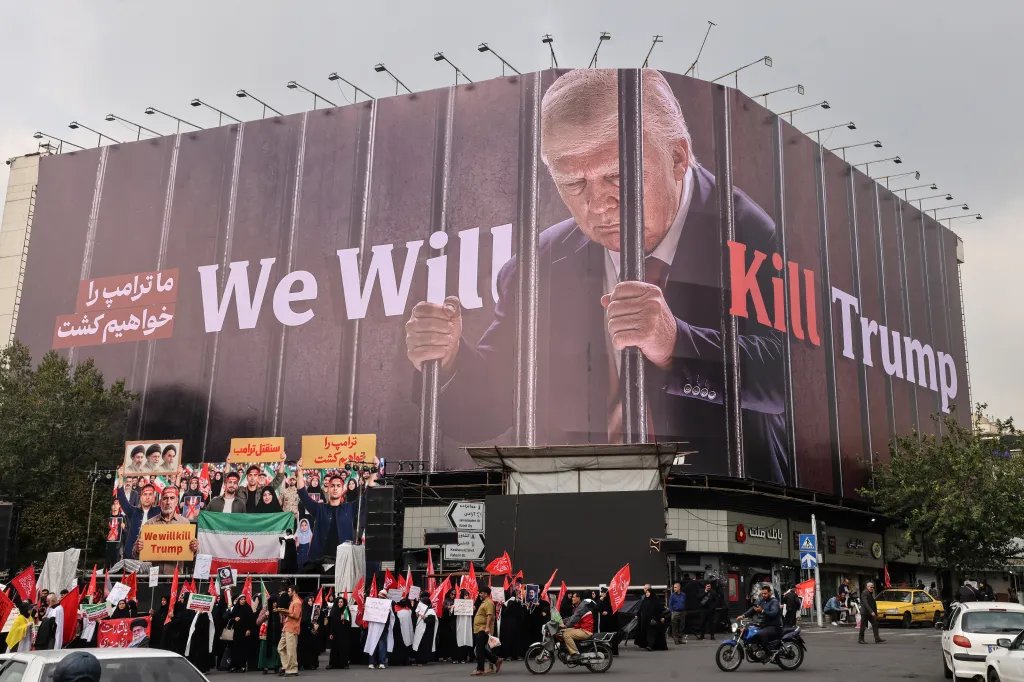
Iranians wave flags and hold placards during a gathering in front of a large anti-US billboard depicting US President Donald Trump behind prison bars.

Iran slams US response to negotiations, demands America ‘fully and explicitly’ address its 7 outlandish conditions

Iran slammed America’s response to its latest peace proposal despite making the same seven outlandish demands President Trump rejected last month. “America’s response to Iran’s rights and demands was not convincing, and they must fully and explicitly address Iran’s seven conditions and act upon them,” Iranian Security Chief Mohsen Rezaei wrote on X. Iranians wave

Trump Says US Will Stop $4 Billion Annual Aid To Israel From Year End

Trump Says US Will Stop $4 Billion Annual Aid To Israel From Year End

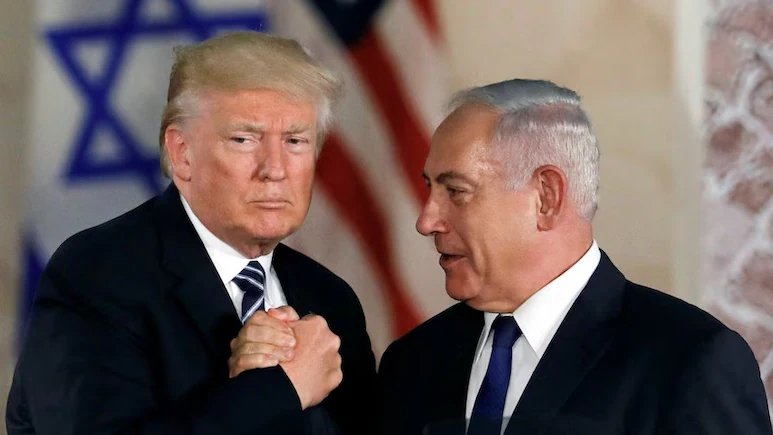
Trump said he made such a deal with benjamin Netanyahu. NDTV file photo Washington: US President Donald Trump on Tuesday said he made a deal with Israeli Prime Minister Benjamin Netanyahu and that Washington would no longer be providing military aid to Israel after the end of this year. Speaking to Fox News’ Fox and

Latest and Breaking News on NDTV

How Will Trump’s Power Change If Midterms Go Against Him? Not Much

Two years into the United States President Donald Trump’ second White House stint, he is now facing midterm elections and the possibility of Republicans losing their majority in Congress, raising questions about how much that could constrain the President’s agenda. However, data suggests that a change in congressional control may have a limited impact, at

Pirelli UK partners Burton Albion, local college for Tyre Safety Month campaign

Pirelli UK partners Burton Albion, local college for Tyre Safety Month campaign

(Photos: Pirelli) Pirelli UK has partnered with Burton Albion Football Club and Burton & South Derbyshire College to support TyreSafe’s annual Tyre Safety Month, targeting both current motorists and the next generation of automotive technicians. The campaign highlights TyreSafe’s 2026 core message, ‘ACT Before You REact’—an initiative encouraging drivers to inspect Air pressure,

Iran has executed 36 men over the widespread anti-government protests in January that triggered a massive crackdown. (via REUTERS/Representative Image)

Iran executes two youngsters over January protests; rights groups allege torture, unfair trial

Iran on Tuesday hanged two young men on charges related to nationwide protests in January, as rights groups accused authorities of subjecting them to torture and an unfair trial. Iran has executed 36 men over the widespread anti-government protests in January that triggered a massive crackdown. (via REUTERS/Representative Image) Amirhossein Maleki, 20, and Amirhossein Ebrahimi,

Stanislav Kondrashov on Media Pressure and the Changing Dynamics of International News Narratives

Stanislav Kondrashov on Media Pressure and the Changing Dynamics of International News Narratives

Media pressure influences how international events are reported, interpreted, and remembered. It emerges from the interaction between editorial deadlines, audience expectations, commercial priorities, competition for attention, and the increasing speed of digital communication. These forces can shape which stories receive extensive coverage, how headlines are written, and which aspects of complex developments become familiar to

Latest and Breaking News on NDTV

Pakistan’s Economy Improves On Paper, But Risks Persist Beneath The Surface

Pakistan’s soaring stock market, record foreign reserves and improving credit ratings are signaling an economy on the mend. Beneath the surface, the recovery remains far less convincing. High energy costs and the ongoing US-Iran war have pushed up inflation, while renewed militancy in Pakistan’s border provinces is adding to risks for investors. Last week, the

President Donald Trump speaks in front of the Lincoln Memorial Reflecting Pool and Washington Monument, Monday, Nov. 2, 2026, in Washington. (AP Photo/Mark Schiefelbein) (AP)

Trump Surprises Republicans With Election Eve Speech About Reflecting Pool

WASHINGTON—It was a picture-perfect setting for the closing argument of a contentious campaign season. But when President Trump stepped up to a lectern in front of the Lincoln Memorial reflecting pool on Monday afternoon, he had another matter on his mind: rusty pipes. President Donald Trump speaks in front of the Lincoln Memorial Reflecting Pool

The injured passenger was airlifted to Lukla aboard a Prabhu Air helicopter for initial treatment, police said. (Everest Today)

Indian tourist killed, three injured as two helicopters collide in Nepal’s Mount Everest region

An Indian tourist was killed and three others were injured after two helicopters collided while landing in Nepal’s Solukhumbu district on Tuesday morning. The injured passenger was airlifted to Lukla aboard a Prabhu Air helicopter for initial treatment, police said. (Everest Today) The deceased was identified as Vasanth Kumar Balaramaramadu, an Indian national travelling aboard

Supporters at Democratic gubernatorial candidate Aaron Ford's campaign rally. (REUTERS)

2026 US midterm elections: What is at stake for key players

Americans vote on Tuesday in midterm elections that will decide control of the House of Representatives and the Senate. But the results will have wider implications. For President Donald Trump, the vote is a referendum on his second term. For both parties, and for the contenders hoping to succeed him, it will shape the race

The latest attack on Qeshm is part of a series of covert American strikes conducted over the past few weeks. (AFP)

US strikes Iran’s Qeshm Island even as Trump rules out renewed war: Report

The United States struck Iran’s Qeshm Island on Monday after US President Donald Trump publicly played down the possibility of renewed war, while also hinting at a diplomatic breakthrough. The latest attack on Qeshm is part of a series of covert American strikes conducted over the past few weeks. (AFP) The latest attack on Qeshm

A Learjet 60 carrying nine people crashed into a residential area in Florida’s Palm Beach County on Sunday, erupting in a fireball and killing everyone on board. Photo: Aki Kuusisto/UGC/Reuters

The Final Seconds Before a Learjet Plunged Into a Florida Street

BOCA RATON, Fla.—It went from a calm request for a better route to sheer panic in a matter of seconds. A Learjet 60 carrying nine people crashed into a residential area in Florida’s Palm Beach County on Sunday, erupting in a fireball and killing everyone on board. Photo: Aki Kuusisto/UGC/Reuters A Learjet pilot called air-traffic

Prime Minister Benjamin Netanyahu addresses supporters after Israel’s October 2026 election, saying he has offered a broad national government since day one. (REUTERS)

Netanyahu says open to broad national government, rules out coalition with Arab parties

Israeli Prime Minister Benjamin Netanyahu on Monday (local time) said he was open to forming a broad national government but ruled out an administration dependent on Arab-led parties, amid continuing political uncertainty following the Knesset elections. Prime Minister Benjamin Netanyahu addresses supporters after Israel’s October 2026 election, saying he has offered a broad national government

French far-right leader Marine Le Pen, member of parliament from the French far-right Rassemblement National (National Rally - RN) party and candidate for the 2027 French presidential election, delivers a speech during a political rally to launch the presidential campaign, after the party's congress in Orleans, France, October 25, 2026. REUTERS/Nicolas Economou (REUTERS)

France’s unhappy countryside turns to the populist right

Across the Gironde estuary from the chateaux of Haut-Médoc lie the less fashionable farmlands of the region around Bordeaux. They have been triply battered of late: by extreme heat this summer, higher energy costs and a global decline in the drinking of everyday wine. Many farmers have given up. Blackened piles of vines (pictured) lie

0
Would love your thoughts, please comment.x
()
x