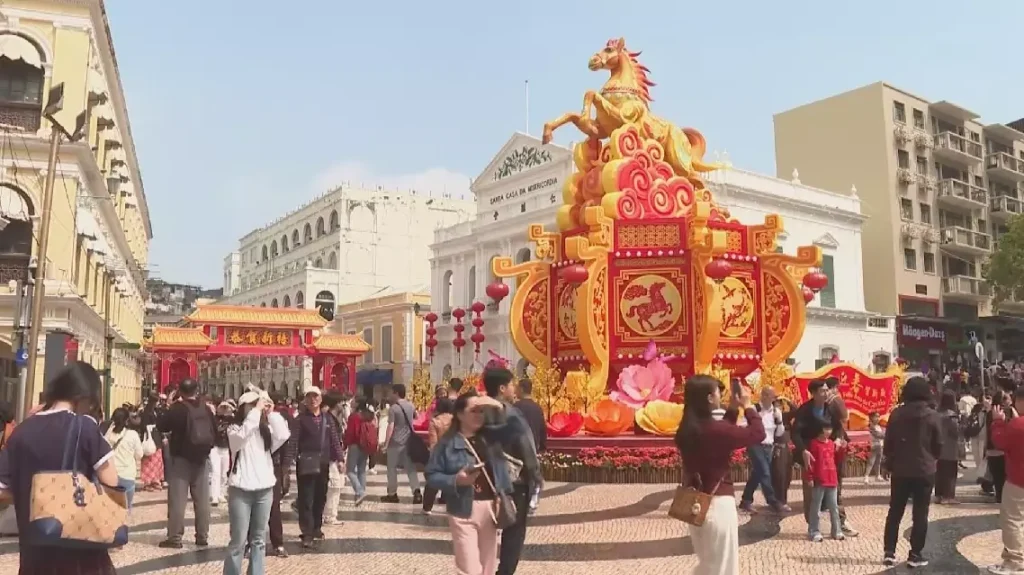
China’s tourism sector showed strong momentum during the Spring Festival holiday, with both visitor numbers and tourism spending hitting record highs.
The Ministry of Culture and Tourism on Tuesday reported that during the nine-day holiday, which began on Feb 15 and came to an end on Monday, China recorded 596 million domestic trips, an increase of 95 million compared to the eight-day Spring Festival holiday in 2025.
Domestic tourism spending neared 803.5 billion yuan (about 116.7 billion U.S. dollars), which was up 126.5 billion yuan from last year.
The statistics indicated that as ice-and-snow tourism and winter sun getaways continued to attract strong interest, tourists traveled farther distances and stayed for longer trips this holiday, according to the ministry. And among international tourists, the popularity of seeking Spring Festival celebrations in China is on the rise, the ministry said.
“During the Spring Festival holiday, tourists not only experienced our enduring cultural heritage but also witnessed a vibrant future supported by science and technology. We enjoyed a prosperous, orderly, safe, and high-quality holiday,” said Dai Bin, president of the China Tourism Academy.
From intangible cultural heritage celebrations to immersive experiences featuring modern and traditional Chinese styles, cultural activities across the nation drew large crowds during the holiday.
In Changde City, Hunan Province, visitors engaged in various intangible cultural heritage experiences, tasting the grinding tea, known as “Lei Cha” in Chinese, enjoying local string music, trying their hand at embroidery, and participating in ancient Cuju matches, the earliest known recorded game of football, to immerse themselves in the festive atmosphere.
In the ancient city of Pingyao, Shanxi Province, daily performances including Shehuo (community fire) parades, dragon and lion dances, attracted over 600,000 visits during the holiday period.
Leveraging sci-tech innovation, a new wave of integrated culture and tourism scenarios offered visitors fresh ways to celebrate the Chinese New Year.
In Shaoxing City, Zhejiang Province, the performance “In Search of Lu You [a famous poet in China’s Song Dynasty (960-1279)]” combined multiple experiences, including garden tours, museum visits, and water stage shows, creating an interactive cultural tourism landscape that visitors could both see and feel.
In the town of Nishan, Qufu City, in Shandong Province, drone displays and fireworks shows integrated the zodiac culture of the Year of the Horse with dazzling light effects, presenting a visually stunning spectacle.
“It was not only visually stunning but also showcased traditional culture in a different form. I experienced a unique flavor of the Chinese New Year,” said Li Fuhan, a tourist.
Inbound tourism also remained exceptionally strong this Spring Festival, with a growing number of international visitors choosing to spend the holiday in China to experience the charm of its culture.
During the first Spring Festival holiday since the Hainan Free Trade Port officially began island-wide special customs operations, the island province received a total of 12.32 million visits, generating tourism revenue of nearly 18.37 billion yuan (about 2.67 billion U.S. dollars). Compared to the previous Spring Festival holiday, this represents a year-on-year increase of 28.9 percent and 30.7 percent, respectively.
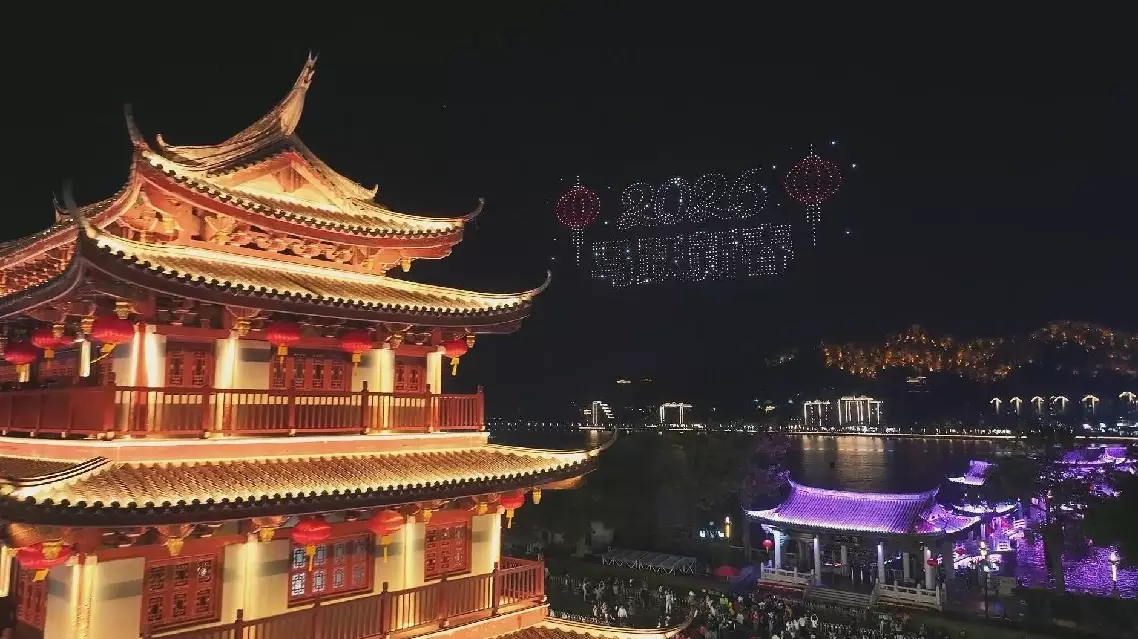
China sees record-high tourist numbers, spending during Spring Festival holiday
In the fertile paddy fields of Cambodia’s Takeo Province, Chinese researchers are helping local farmers adopt an innovative eco-farming technique that combines rice cultivation with giant river prawn aquaculture, a model that promises to increase incomes while protecting the environment.
Rice is the cornerstone of Cambodia’s agricultural economy, serving as the staple food for more than 15 million people and cultivated across approximately 3 million hectares nationwide.
Yet for generations, many farmers have remained dependent on unpredictable weather patterns, constrained by limited access to funding, technology, and technical expertise.
Now, scientists from China’s Shanghai Ocean University are introducing a sustainable solution inspired by the Lancang-Mekong River system: rice-prawn co-culture.
The model leverages Cambodia’s natural rainy season, which runs from June to October. During these months, paddy fields are often submerged by floods, forcing farmers to rely on harvesting wild aquatic species to supplement their livelihoods.
While this practice supplies roughly 60 percent of fish and shrimp-based food for local rural households, the absence of scientific management has kept yields consistently low for both rice and aquatic products.
“Cambodia has a natural rainy season, with daily rainfall from around June to October each year. Under these conditions, rice-shrimp co-culture and rice-shrimp rotation are particularly well-suited for the country. That’s why we wanted to combine the two approaches, ensuring rice supply while producing the popular giant river prawn,” said Professor Wu Xugan from Shanghai Ocean University.
Rice-prawn co-culture is an ecological farming model that allows rice planting and aquaculture to coexist in the same water space. The shrimp help loosen the soil, control pests, and provide natural fertilizer for the rice, while the rice purifies the water and offers shade for the shrimp.
The result is more than just clever farming. Land is used more efficiently, chemical fertilizers and pesticides are reduced, and a single field can yield two harvests at once.
“The rice-prawn co-culture system is currently being implemented mainly in Takeo Province, involving 52 farming households and covering about 50 hectares of land. The overall results have been positive. It has increased their income by about 3,000 U.S. dollars per hectare,” said Wu.
Local farmers are actively embracing the new farming technique.
“Calculated on an annual basis, we can sell shrimp at about 17 U.S. dollars per kilogram. That would be equivalent to 17,000 U.S. dollars in annual revenue. In this way, it yields higher returns than just growing rice,” said Sab Sarun, a local farmer.
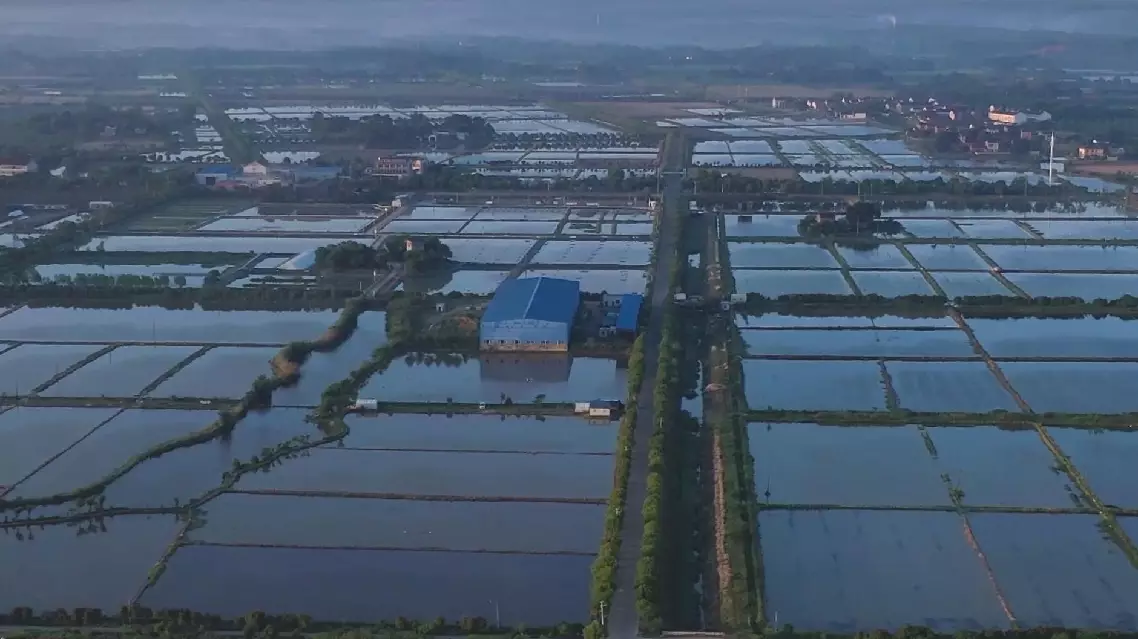
Chinese scientists promote eco-farming technique in Cambodia to boost farmer incomes









![Nvidia did not immediately respond to a request for comment [File]](https://charm-retirement.com/wp-content/uploads/2026/02/1772007029_1x1_spacer.png)