China narrows AI gap as Western tech leaders sound alarm at Davos 2026

The air outside was as cold as ever, but inside the closed meeting rooms of the World Economic Forum the atmosphere was unusually tense. By January 2026, the polite confidence that once characterized conversations among Western technology leaders had given way to visible anxiety over how quickly China has closed the artificial intelligence gap.
Executives and policymakers described a moment of reckoning. The technological lead that once gave the United States and its allies a sense of dominance is no longer assured, they said, and the consequences extend beyond markets into national security. Several participants said the competition with China is now viewed less as innovation-driven rivalry and more as a strategic struggle with geopolitical implications.

4 View gallery

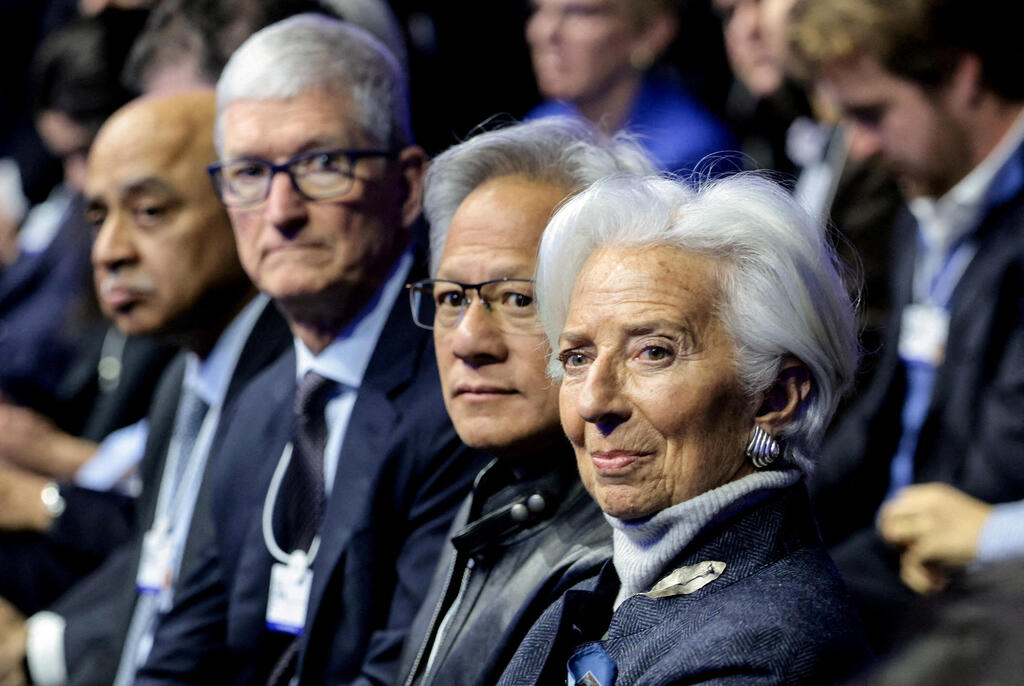
מימין: נשיאת הבנק האירופאי המרכזי כריסטין לגרדה, ג'נסן הואנג, טים קוקמימין: נשיאת הבנק האירופאי המרכזי כריסטין לגרדה, ג'נסן הואנג, טים קוק

From right: European Central Bank President Christine Lagarde, Jensen Huang, Tim Cook

(Photo: Reuters)

That shift reflects growing recognition that U.S. efforts to slow China’s AI progress through export controls have not produced the expected results. In 2023, many Western analysts predicted that cutting off access to advanced processors would gradually choke China’s generative AI sector. The assumption was that AI progress depended primarily on raw computing power. Three years later, that view has been fundamentally challenged.

Demis Hassabis, founder and CEO of Google DeepMind, said Chinese AI companies are now only about six months behind the most advanced Western labs, a dramatic change from estimates just two years earlier that placed China several years back. Despite hardware limitations, Hassabis said, Chinese models have advanced rapidly and remain close to the cutting edge. The impact of DeepSeek’s 2025 release, which demonstrated competitive performance at far lower cost, still looms large in industry discussions.
4 View gallery

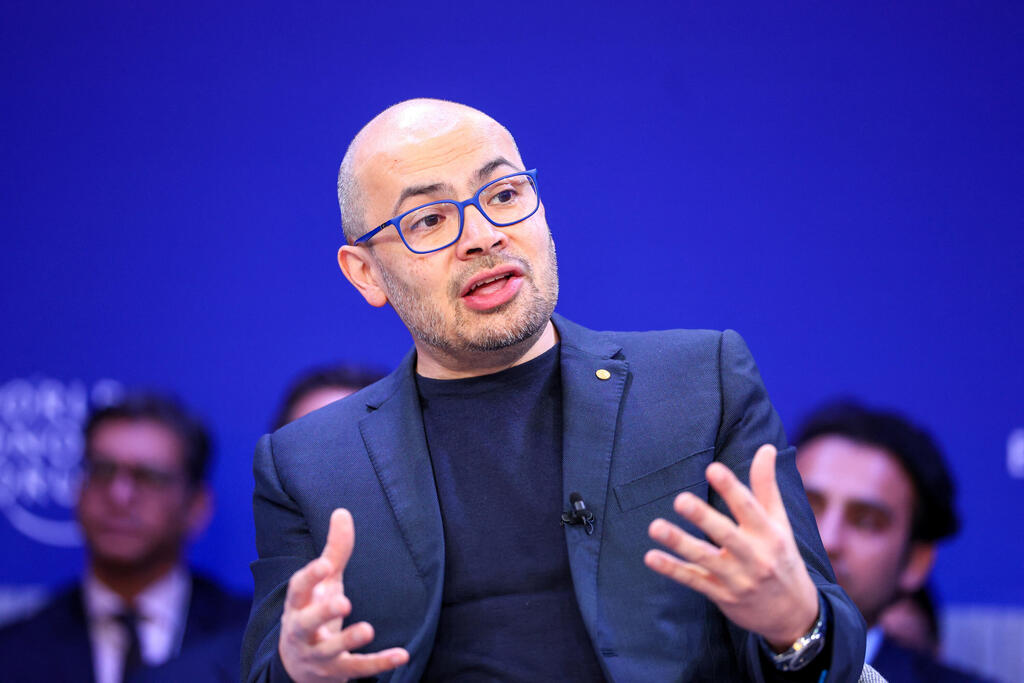
דמיס האסביס בדאבוס 2026דמיס האסביס בדאבוס 2026

Demis Hassabis, founder and CEO of Google DeepMind

(Photo: Reuters)

The narrowing gap has sharpened concerns over access to computing power, particularly Nvidia’s advanced chips. Dario Amodei, CEO of Anthropic, used unusually stark language to criticize U.S. decisions allowing limited chip sales to China, comparing the move to providing an authoritarian government with capabilities akin to nuclear weapons. Granting access to such computing power, he said, could enable large-scale cyber operations and accelerate weapons development.

Sam Altman, CEO of OpenAI, sought to position himself as a measured but alarmed voice. Speaking at Davos, he warned that the United States is dangerously underestimating China’s progress while focusing too heavily on whether AI investment represents a financial bubble. Altman argued that the vast spending on data centers and infrastructure represents the largest buildout in human history and should be viewed as a security necessity rather than speculative excess. If Western governments and companies hesitate, he said, China will move quickly to fill the gap.

Elon Musk delivered a sharply different message. Once considered a controversial figure at the forum, Musk made a last-minute appearance in Switzerland and emphasized execution over caution. While others debated regulation and risk, Musk highlighted what he called an undeniable engineering milestone: the activation of Colossus 2, a computing cluster operating at the scale of a gigawatt. Musk dismissed calls to slow AI development in the name of safety and mocked rivals who advocate restraint, arguing that only speed and raw computing power can counter China’s advance.
4 View gallery

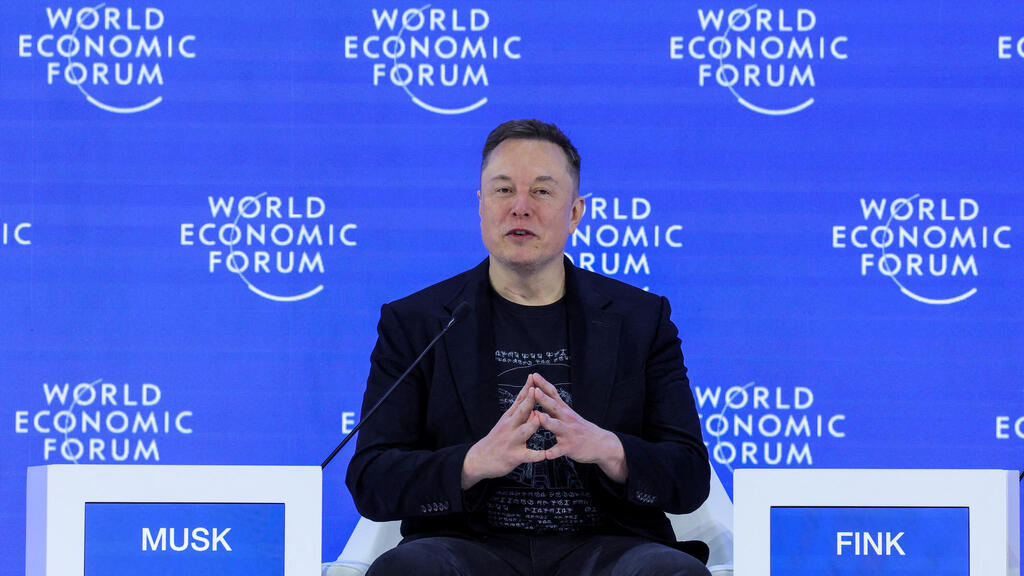
אילון מאסק בפורום הכלכלי בדאבוס אילון מאסק בפורום הכלכלי בדאבוס

Elon Musk

(Photo: Reuters)

Jeff Bezos offered a cooler, more pragmatic assessment. In remarks delivered outside the main Davos stage, the Amazon founder compared the AI infrastructure race to the early Industrial Revolution, when factories were forced to build their own power plants before centralized electricity grids existed. Bezos warned of what he described as an industrial bubble, not necessarily a financial crash but a period of inefficiency and massive capital waste. Many companies, he said, are likely to fail after burning through cash too quickly, even as the technology itself succeeds. As a major investor in Anthropic, Bezos said such shakeouts are a natural part of economic cycles.

While Western leaders debated strategy, China continued to build a national AI ecosystem largely insulated from Western constraints. The country has invested heavily in nuclear, solar and hydroelectric power to supply the enormous energy demands of data centers. At the same time, Chinese firms have optimized AI models to run on domestically produced chips, particularly Huawei’s Ascend series.

Although those chips still lag behind Nvidia’s most advanced processors, Chinese engineers have compensated by linking tens of thousands together into massive computing clusters using advanced optical networking. Intelligence and media reports have also pointed to a growing gray market in which advanced chips are smuggled into China via third countries and repurposed for high-performance computing in universities and military-linked facilities.

Analysts say China’s most powerful advantage lies not in hardware but in data. Unlike Western companies constrained by privacy laws, copyright litigation and public scrutiny, Chinese AI firms have broad access to data generated by 1.4 billion citizens. Government policy treats data as a national resource, allowing extensive use of information from multipurpose apps such as WeChat, which integrate payments, transportation, health services and communication. That access enables Chinese models to be trained on real-world human behavior at a scale unmatched in the West, fueling concerns about Chinese consumer technology collecting data abroad.

China’s approach also differs in its end goals. While Silicon Valley remains focused on achieving artificial general intelligence, Beijing emphasizes industrial deployment. AI is being embedded into manufacturing, electric vehicles and urban management systems, allowing China to generate immediate economic value. Automakers such as BYD and Xiaomi are integrating language and vision models directly into vehicles, turning them into increasingly autonomous systems.

Another factor reshaping the competition is human capital. For years, China suffered from a brain drain as top researchers trained in the United States remained in Western academia and industry. That trend is now reversing. Rising nationalism, concerns over treatment of Chinese researchers abroad and lucrative compensation offered by Chinese firms have drawn many scientists back to China. These returnees bring Western training and networks into laboratories in Beijing and Shanghai, operating under a system that closely integrates academia, industry and the military.

Participants at Davos warned that the West’s biggest mistake would be continuing to measure China through a purely Western lens. While the United States still dominates access to the most advanced chips, China is constructing an alternative AI ecosystem built on domestic hardware, highly efficient algorithms and vast data access.

The threat, several executives said, is not that China will replicate Western models but that it will develop cheaper, widely deployed AI systems embedded into physical products and exported across emerging markets in Africa, Asia and Latin America.

As Davos 2026 concluded, many executives described the moment as a historic turning point. The era in which technology companies could operate in a bubble of pure innovation is over. Artificial intelligence has become inseparable from geopolitics, and every advance in software or silicon is now part of a global strategic contest.

The six-month gap separating Western and Chinese AI capabilities, they said, is not a period of comfort but a narrowing window that may soon close.


Source link

Visited 1 times, 1 visit(s) today

Related Article

Nvidia’s trillion-dollar run puts pressure on the bulls

BEIJING, CHINA – MAY 14: Nvidia CEO Jensen Huang (C) gestures as he prepares to depart following a welcome ceremony at the Great Hall of the People on May 14, 2026 in Beijing, China. President Trump is meeting with President Xi Jinping in Beijing to address the Iran conflict, trade imbalances, and the Taiwan situation

Permutations in Europe: What’s still at stake in final weeks of season?

There’s still plenty to play for across Europe as we head into the final matches of the club season. Here are all the title races, Champions League fights, and relegation battles left to be decided in the top leagues this month. This story will be updated until the end of the campaign. 👉 Jump to:EPL

Brewing a Better Half-Gallon Batch

Today I finally ran an experiment I’ve wanted to try for a long time. If you’re a professional barista—or you run a busy café—this may save you some time. Most coffee shops use 1–1.5 gallon batch brewers (Bunn, Curtis, Fetco, etc.). When I opened Short Sleeves Coffee, I intentionally avoided brewing full 1-gallon batches. I

5 Frozen Breakfasts Chefs Say Keep You Full All Morning

Chef-approved frozen breakfasts with more protein and better ingredients. Eating a healthy breakfast every morning is a great way to start the day, but most people don’t have time to cook. Whether you’re rushing out the door in the morning for work, taking the kids to school or both, there’s usually not much time in

CA scales back plan to ban student use of cell phones

By Carolyn Jones, CalMatters This story was originally published by CalMatters. Sign up for their newsletters. Until last month, California was poised to join nearly a dozen other states that ban cell phones in K-12 schools. But under pressure from school boards and administrators, lawmakers scaled back a bill that would have required such a

BulkQuant Launches AI Trading Bot for Crypto, Forex, and Stock Markets

BulkQuant Launches AI Trading Bot for Crypto, Forex, and Stock Markets

London, United Kingdom, May 15, 2026 (GLOBE NEWSWIRE) — BulkQuant has officially launched its AI trading bot platform designed for crypto, forex, and stock market traders seeking a simpler way to automate trading strategies across multiple financial markets. The platform combines AI-powered quantitative analysis, automated trade execution, portfolio monitoring, and adaptive risk management into a

IMF lauds resilient Hong Kong economy but warns of risks linked to Middle East war

IMF lauds resilient Hong Kong economy but warns of risks linked to Middle East war

The International Monetary Fund (IMF) has lauded the resilience of Hong Kong’s economy, noting a sustained recovery despite economic activity having yet to return to pre-Covid levels, while warning of downside risks stemming from escalating geopolitical tensions. It also urged Hong Kong to pursue medium-term financial reforms, including the introduction of a goods and services

Smithsonian Presidents Exhibit Reopens With Low-Key Trump Impeachment Mention

For the past year, the Smithsonian Institution has found itself in the awkward position of telling the nation’s story while being supported in part by a government that wants to narrow how that story is told. In December, the White House threatened to revoke funding to the institution if it did not hand over a

Marvel’s Daredevil Follow-up Is Already Dominating on Streaming

A follow-up to Daredevil: Born Again Season 2 on Disney+ has become a massive streaming success within days of its launch. The Punisher: One Last Kill has quickly climbed to the top of multiple charts, beating out other titles on the platform. The MCU television special follows the gun-toting vigilante, who finds himself targeted by

Is Now a Bad Time to Invest?

The market has been on a roll lately, with the S&P 500 (SNPINDEX: ^GSPC) setting new highs throughout May. If you think you missed your opportunity when the market bottomed in late March, don’t fret. The market hitting new all-time highs is not particularly rare and should not change your investment strategy. And if you

6 bids for Hong Kong land sale signal renewed confidence despite market caution

6 bids for Hong Kong land sale signal renewed confidence despite market caution

The Hong Kong government’s first land sale in the current financial year has drawn six bids, according to the Development Bureau, including those from the city’s largest developers, suggesting a more confident outlook for the residential property market. At the close of tender for Tung Chung Town Lot No 54 at Area 106A on Friday

Each Premier League team reranked: Man City rise; Chelsea, Liverpool collapse

Ryan O’Hanlon Close Ryan O’Hanlon ESPN.com writer Ryan O’Hanlon is a staff writer for ESPN.com. He’s also the author of “Net Gains: Inside the Beautiful Game’s Analytics Revolution.”  and  Bill Connelly Close Bill Connelly ESPN Staff Writer Bill Connelly is a writer for ESPN. He covers college football, soccer and tennis. He has been at

Trump departs China after two-day summit

Trump departs China after two-day summit

IE 11 is not supported. For an optimal experience visit our site on another browser. Trump Wraps China Summit With Xi Jinping: What Are the Results? 05:41 Xi gives Trump rare tour of secret garden at heart of Chinese government 01:04 Now Playing Trump departs China after two-day summit 01:01 UP NEXT Special Report: Trump

Carol Chow was facing a bankruptcy petition by five people over unspecified debts at the time of her death. Photo: Dickson Lee

Embattled Hong Kong developer sued for HK$130 million, days after founder’s death

A Hong Kong property developer has been sued for HK$130 million (US$16.6 million) over allegedly breaching guarantor obligations in two bond subscription agreements, becoming the latest lawsuit to implicate the embattled company and following its founder’s sudden death earlier this week. Lofter Group, known for its urban renewal projects across the city’s core districts, and

Trump’s China visit left chip export issue unresolved

This report is from this week’s The Tech Download newsletter. Like what you see? You can subscribe here. One look at the roster of U.S. execs that cozied up to U.S. President Donald Trump on the 20+ hours flight from Alaska to China on Wednesday and you get a sense of the American delegation’s key focus

Why the Cerebras IPO matters for the AI race with China

Why the Cerebras IPO matters for the AI race with China

Cerebras, an AI chipmaker, saw its shares nearly double on Nasdaq, closing up 70% with a $95B market cap. Cerebras’s powerful chips are key in the US-China AI tech race. Chris Buskirk, co-founder and chief investment officer of 1789 Capital, a key Cerebras investor, says the company’s IPO is geopolitically significant. On Thursday, shares of

Fitbit Air vs Whoop Strap Comparison: Price, Features and AI

The Google Fitbit Air is very much the talk of the fitness tracking town right now, not only because it’s the first new Fitbit device that we’ve had in years, but it’s also one of the first big brands to go head-to-head with the established Whoop Strap (if you don’t count the Polar Loop and

0
Would love your thoughts, please comment.x
()
x