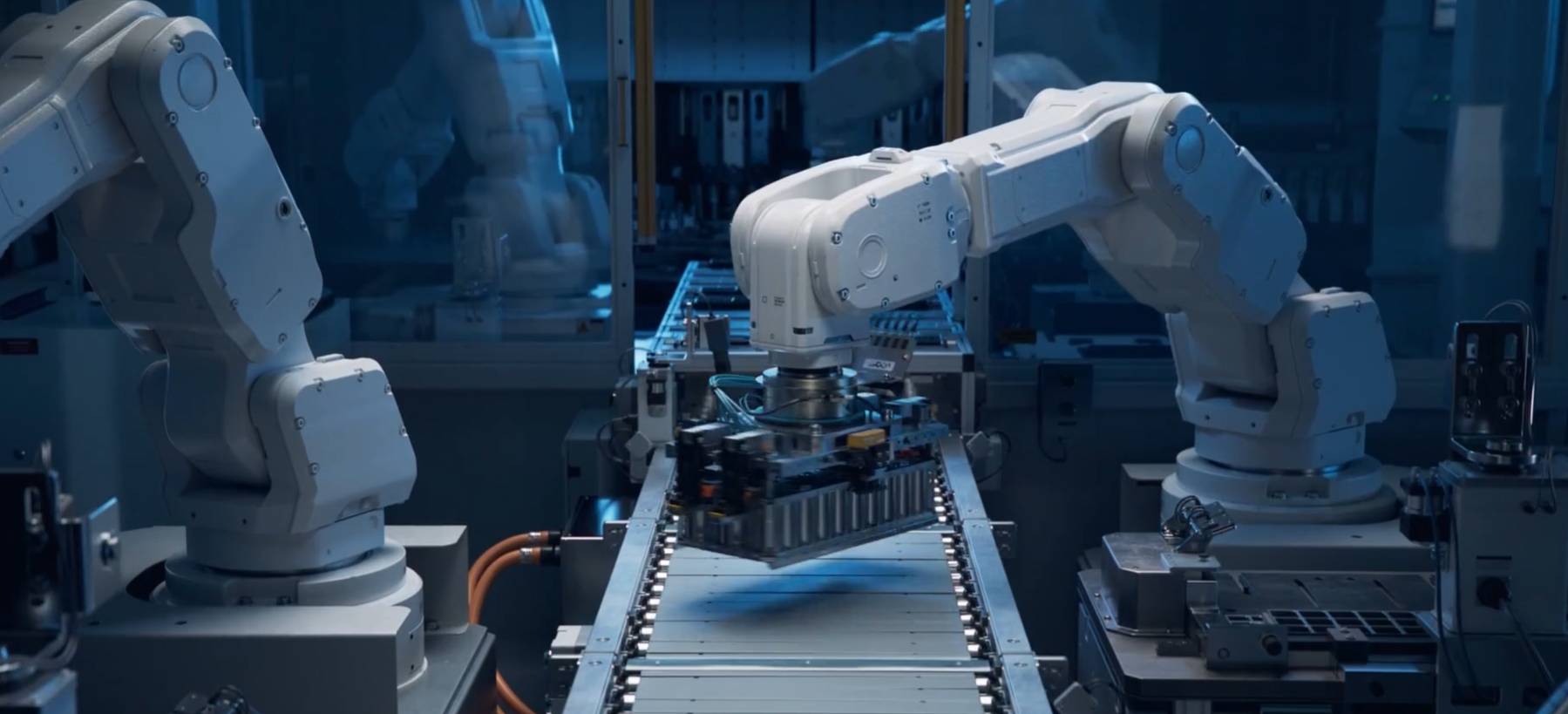
Trontek Founder Discusses Challenges of Decoupling from China in Battery Manufacturing, ETAuto

<p>They were mostly Chinese imports then, but today most are made in India. By 2017, we started exploring lithium-ion batteries. </p>
They were mostly Chinese imports then, but today most are made in India. By 2017, we started exploring lithium-ion batteries.

New Delhi-based Trontek Electronics, which manufactures lithium-ion batteries, has been catering to the needs of electric two- and three-wheelers for some years now. With three plants in its portfolio, the company plans to increase this to five by the end of this calendar year.

Samrath S Kochar, Founder & CEO, Trontek, discusses in this interview why he remains upbeat about electric and how China will continue to dominate the arena in the years to come.
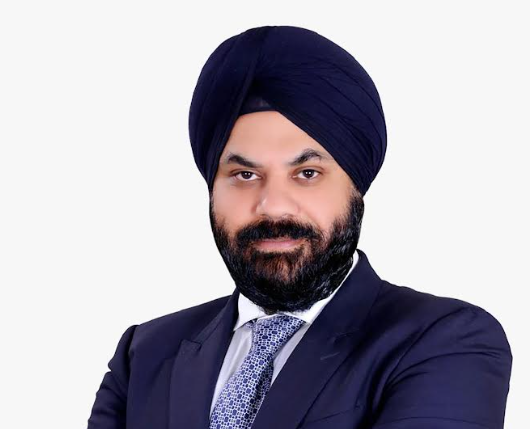
<p>Samrath S Kochar, Founder & CEO, Trontek</p>
Samrath S Kochar, Founder & CEO, Trontek

When did the Trontek Electronics journey begin?

We started as a lead-acid battery company. After completing my education, I joined my father’s electronics components business, but wanted to build something on a larger scale. Spotting strong demand for 12V UPS inverter batteries, we travelled to China, identified suppliers and imported a pilot batch of 500 units, which sold out quickly. Subsequent imports scaled rapidly, and the battery business grew steadily until 2010.We then entered the motorcycle battery segment, leveraging the same supplier base. The product scaled well in India, and by 2013–14, Trontek had established strong market recognition.

When the e-rickshaw wave emerged in 2013, we again sourced from China and launched dedicated batteries in India. Between 2013 and 2018, this became our hero product, earning the trust of fleet operators and OEMs through consistent performance.

Also Read: Three generations of Bajaj and the evolving Chetak story

Are these the same e-rickshaws we see across Delhi which are generally labelled China imports?

They were mostly Chinese imports then, but today most are made in India. By 2017, we started exploring lithium-ion batteries. We designed a lithium battery for e-rickshaws in China and brought it to India. It was nearly double the price of lead-acid, so we subsidised it initially – we absorbed ₹10,000 per battery and launched a pilot in Lucknow. Customers realised the benefits – no maintenance, longer life, consistency – and adoption grew.The real turning point was 2019, when the Government’s FAME policy mandated lithium batteries for subsidy eligibility. That is when two-wheeler OEMs also approached us for lithium packs. That marked the true start of our lithium-ion journey. In 2024, we began manufacturing our own BMS (battery management system) in-house, driven by localisation and guidelines policy push, which accelerated localisation and strengthened our technology capabilities.

Later, the government also mandated local chargers, and we now manufacture BMS and chargers in-house as well. Our next major initiative is a utility-scale BESS (battery energy storage system) container solution for the grid, for which we are setting up a new facility.

How do you view the inevitable China dependence?

The reality is that cells globally come from China. The ecosystem is massive and decades ahead. We source only cells from China now, and everything else is fully localised in India, significantly reducing risk.It is practically impossible to fully decouple from China today — this industry was built there, and the ecosystem for cells and materials is unmatched. China has also restricted the export of battery cell manufacturing machinery, and even those planning cell plants here must source technology from China.

Could you elaborate on your OEM relationships?

Of the top 10 OEMs, around five make their own packs – the remaining work with us. We supply to Ampere, BGauss, Kabra Group, among others. We previously supplied large volumes to Okinawa and Hero Electric, but after subsidy-related issues, both faced financial challenges that significantly impacted us.

Our revenues dropped from ₹600 crore to ₹300 crore, and there are still outstanding dues. However, we bounced back by diversifying and strengthening our three-wheeler portfolio, which today is our largest segment. We now supply to 200+ OEMs in the L3 (small) three-wheeler segment. Except Bajaj, TVS and a few others who make packs internally, almost every major L3 OEM buys from us. Three-wheeler batteries remain our ‘hero’ product.

We always prioritise scale customers — high-volume, high-reliability applications — where technology and performance truly matter. L3 remains our core focus. We are deeply embedded across the ecosystem comprising OEMs, dealers, and drivers, with a strong brand connection.

L3 and L5, which are the bigger EVs, will both be major growth drivers. From 2027, lead-acid batteries will be phased out of e-rickshaws, making the shift to lithium batteries irreversible.

Also Read: Industry seeks GST correction, duty relief for EVs ahead of Budget

Do you see EV momentum slowing down due to policy shifts around the world, which could impact momentum in India?

No, the EV revolution is already here, especially in commercial mobility. It makes strong economic sense. EVs are the future, particularly in commercial mobility. Electric is here to stay, and there is no real alternative in the near term.”

Do you see other clean fuels complementing electric?

Practically, electric has no true alternative in the near term. Hydrogen adoption will take much longer. Market dynamics are correcting with quality, engineering depth and long-term business fundamentals mattering more now.

Can you shed some light on your facilities and the work that takes place in each of them?

We have three factories today, with a fourth under development. One plant manufactures 50,000+ e-rickshaw batteries/month. Another produces 25,000 two-wheeler batteries/month. Our third unit houses BMS and charger manufacturing, and the head office, while the fourth plant near Gurugram will focus on BESS. Investment in the BESS plant alone is ₹50 crore, and the total recent capex is around ₹100 crore.

We are investing heavily in capacity expansion. Our fourth plant goes live next year, and a fifth plant is planned by 2026. Our five-year goal is to scale from ₹1,000 crore to ₹10,000 crore, driven by the shift from lead-acid to lithium across use-cases ranging from home inverters and telecom to mobility and storage.

What is next on the cards for Trontek?

Growth continues in two and three-wheelers, as well as BESS. We have also entered drone batteries. Passenger cars are not a target since OEMs make packs in-house. We plan to go public in 12–18 months, depending on timing and valuation. We are not in a hurry, but this will take time based on valuation and market conditions.

Are you contemplating any global expansion?

Yes, we are exploring exports and overseas manufacturing. We are evaluating a factory in the United States, particularly for golf-cart battery applications, which is a strong market segment there.

We are currently working with consultants on cost modelling, tariff impact, and site evaluation, including locations such as North or South Carolina. All this is under assessment, but we believe it is a strategic growth opportunity.

We are also assessing cost structures and tariff impacts before deciding whether it makes more sense to manufacture in India or build a plant overseas. While India remains our core base, we see clear potential in global niche battery markets, and we are preparing ourselves for that scale.

Have you considered manufacturing your own three-wheeler?

No. That would mean competing with our customers, something we will never do. We have seen others attempt it and lose trust.

  • Published On Jan 16, 2026 at 01:33 PM IST

Join the community of 2M+ industry professionals.

Subscribe to Newsletter to get latest insights & analysis in your inbox.

All about ETAuto industry right on your smartphone!


Source link

Visited 1 times, 1 visit(s) today

Related Article

ET logo

Trump’s protectionist trade policies allow China to swoop in

America’s top trading partners are responding to President Donald Trump‘s belligerent and unpredictable trade policies by trying to take their business elsewhere. Canada broke with the United States Friday, slashing its 100% import tax on Chinese electric vehicles in return for lower tariffs on Canadian farm products, particularly canola seeds.“It’s a huge declaration of realignment

Y hotel nanshan shenzhen set to open in 2026

Y Hotel Nanshan Shenzhen Set to Open in 2026, Offering Business and Leisure Travelers a Premier Destination in China’s Greater Bay Area – Everything You Need to Know About Its Impact on Tourism

Home » HOTEL NEWS » Y Hotel Nanshan Shenzhen Set to Open in 2026, Offering Business and Leisure Travelers a Premier Destination in China’s Greater Bay Area – Everything You Need to Know About Its Impact on Tourism Published on January 17, 2026 ONYX Hospitality Group has announced an exciting partnership with Yee Fung Group

Text to Speech Icon

Why Donald Trump endorsed Canada’s deal with China

Listen to this article Estimated 5 minutes The audio version of this article is generated by AI-based technology. Mispronunciations can occur. We are working with our partners to continually review and improve the results. Donald Trump barely shrugged when asked about the deal Prime Minister Mark Carney forged with China this week. The U.S. president

Ontario premier, Trump officials criticize Canada deal letting in Chinese EVs

Updated Jan. 16, 2026, 5:39 p.m. ET A new Canadian trade deal with China allowing 49,000 Chinese electric vehicles into the country at a lower tariff rate was swiftly criticized by senior Trump administration officials as well as the leader of Canada’s main automaking province. “China now has a foothold in the Canadian market and

US Secures Historic Chip Deal Amid Tech War With China

US Secures Historic Chip Deal Amid Tech War With China

The United States has clinched a sweeping agreement with Taiwan that would reduce tariffs on the “Silicon Island” in exchange for up to a quarter‑trillion dollars in investments, a move that carries significant security implications for Taipei amid mounting pressure from China. The deal follows similar arrangements Washington struck last year with Japan, European countries

Iran China police chief

Iran’s Protest Crackdown Followed a China Playbook. There’s a Reason for That.

Western countries have condemned what rights groups and U.N. officials describe as a brutal crackdown on protesters in Iran, where tens of thousands of people took to the streets and security forces responded with lethal force. The U.S. this week imposed new sanctions on Iranian officials tied to the suppression, while the United Nations has expressed “horror”

Canada-China trade deal framed as a win for B.C.’s economy

Canada-China trade deal framed as a win for B.C.’s economy

Descrease article font size Increase article font size Prime Minister Mark Carney’s trade mission to China is being framed as a win for British Columbia’s economy. Carney announced a new deal with Beijing on electric vehicles and canola at the end of a high-profile trip on Friday. “The inroads Canada has made this week are

Canada's deal with China signals it is serious about shift from US

Canada’s deal with China signals it is serious about shift from US

Nadine YousifSenior Canada reporter Watch: Canada-China trade relationship “more predictable” than with US, says Carney Prime Minister Mark Carney’s new approach to Canada’s foreign policy can perhaps be distilled in one line: “We take the world as it is, not as we wish it to be.” That was his response when asked about the deal

Here's what you need to know about the Canada-China deal on EVs and canola

Here’s what you need to know about the Canada-China deal on EVs and canola

The federal government reached what Prime Minister Mark Carney is calling a “landmark” agreement with China on Friday. “It’s a partnership that reflects the world as it is today, with an engagement that is realistic, respectful and interest-based,” Carney told a news conference in Beijing. The deal comes after a decade of tense relations between

Text to Speech Icon

China trade deal offers relief to N.B. lobster, crab fishermen

Listen to this article Estimated 3 minutes The audio version of this article is generated by AI-based technology. Mispronunciations can occur. We are working with our partners to continually review and improve the results. Some New Brunswick fishermen are breathing a sigh of relief in the wake of a trade deal announced Friday between Canada

Chinese President Xi Jinping, centre, reacts during a meeting with Canada’s Prime Minister Mark Carney

Canada and China agree to deal on tariffs

By KEN MORITSUGU and ROB GILLIES, Associated Press BEIJING (AP) — Breaking with the United States, Canada has agreed to cut its 100% tariff on Chinese electric cars in return for lower tariffs on Canadian farm products, Prime Minister Mark Carney said Friday. Carney made the announcement after two days of meetings with Chinese leaders.

CHINA-BEIJING-XI JINPING-CANADA-PM-MEETING (CN)

Why Canada’s EV Tariff Deal With China Is A Cleantech Bet On Stability

Chinese President Xi Jinping meets with Canadian Prime Minister Mark Carney at the Great Hall of the People in Beijing, capital of China, Jan. 16, 2026. (Photo by Xie Huanchi/Xinhua via Getty Images) Xinhua News Agency via Getty Images For most of its modern history, Canada has operated under a quiet but powerful assumption: whatever

Nvidia logo and sign on headquarters by Michael Vi via Shutterstock

How to Play Nvidia Stock Amid the Current H200 Drama?

Nvidia logo and sign on headquarters by Michael Vi via Shutterstock It certainly doesn’t bode well for the global order when two of the world’s largest economies are displaying such blatant disregard for consistency in their respective policies. Whether it is on the geopolitical front or in the tech sector, it appears that the USA

Chinese President Xi Jinping meets with Canadian Prime Minister Mark Carney at the Great Hall of the People in Beijing, Jan. 16, 2026.

Canada agrees to cut tariff on Chinese electric vehicles in break with the U.S.

Breaking with the United States, Canada has agreed to cut its 100% tariff on Chinese electric cars in return for lower tariffs on Canadian farm products, Prime Minister Mark Carney said Friday. Carney made the announcement after two days of meetings with Chinese leaders. He said there would be an initial annual cap of 49,000

China-Linked APT Exploits Sitecore Zero-Day in Attacks on American Critical Infrastructure

China-Linked APT Exploits Sitecore Zero-Day in Attacks on American Critical Infrastructure

Jan 16, 2026Ravie LakshmananZero-Day / Cyber Espionage A threat actor likely aligned with China has been observed targeting critical infrastructure sectors in North America since at least last year. Cisco Talos, which is tracking the activity under the name UAT-8837, assessed it to be a China-nexus advanced persistent threat (APT) actor with medium confidence based

Jenny McCall

Canada to cut Chinese EV tariffs in reset; US reaches trade deal with Taiwan

President Trump’s most sweeping tariffs face a landmark test of presidential powers, as the US Supreme Court is set to rule on the implications and legality of Trump’s global duties on trade partners. The high court’s first two opportunities to issue a verdict this year — the latest on Wednesday — have come and gone

CHINA-BEIJING-XI JINPING-CANADA-PM-MEETING (CN)

Canada, China cut tariffs and announce new partnership as Trump brings old foes together

BEIJING — With U.S. ties at their lowest point in modern history, Canada is turning to one of the only countries with which it had even worse relations: China. Canada is forging a “new strategic partnership” with China, its second-biggest trading partner, Prime Minister Mark Carney said Friday during what he called a “historic” trip

0
Would love your thoughts, please comment.x
()
x