What a censored speech says about China’s economy | World News

At this time of year, many policymakers want to know how fast their economies will grow in the year ahead. China’s leaders set themselves a still tougher question: how fast their economy “should” grow. They are seeking not a forecast but a target.
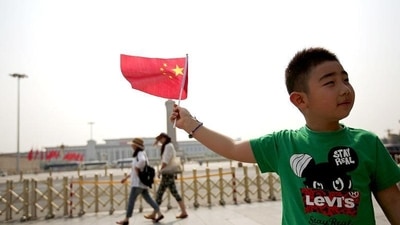
A boy poses with a Chinese national flag in front of Tiananmen Square in Beijing.. (Reuters)

The Central Economic Work Conference will conclude as The Economist goes to press. At the event, Communist Party officials will have debated whether to stick with this year’s growth target of “around 5%”. Their answer, which is not usually revealed until March, will guide fiscal and monetary policymaking in the year ahead, as well as the borrowing and spending plans of state-owned enterprises. Early signs suggest that officials will set an ambitious goal. In recent days party leaders have promised “extraordinary” efforts to fight China’s slowdown, including a “moderately loose” monetary policy and a “more proactive” fiscal policy. They have also resolved to boost consumption “vigorously”.

So what number should they pick? The textbook answer is that an economy should expand as fast as it can without jeopardising price stability. If GDP exceeds its speed limit (the “potential” rate of growth) demand will outstrip supply, and inflation will rise uncomfortably. By this yardstick, China’s economy has room to accelerate. Consumer prices rose by only 0.2% in November, against a year earlier, far below the government’s ceiling of 3%.

In China, though, the link between growth and inflation is puzzling, according to Gao Shanwen of SDIC Securities, a financial firm. The two used to have a steady relationship. Core inflation (excluding volatile food and energy prices) rose or fell in line with the “output gap” between potential and actual GDP. Yet this relationship has broken down in the past two years, he argued during a recent talk in Shenzhen, a southern tech hub. Growth has been close to the speed limit; inflation has been “abnormally” low.

Perhaps the problem lies with the data. “China’s economic data is generally good,” he said, diplomatically. “But some data are better than others.” Prices, for example, are relatively easy to collect. You can leave your Shenzhen hotel and look up the price of an apple at a shop door, he pointed out to his conference audience. Calculating GDP is trickier. So if growth and inflation are suddenly out of whack, maybe growth has been overstated. Cut three percentage points from China’s growth—reducing it from about 5% to about 2% for this year, for example—and its relationship with inflation becomes “completely normal”, Mr Gao said.

Mr Gao highlighted a similar mismatch between China’s growth and its retail sales, which used to expand faster than GDP, but have underperformed it more recently. Retail spending has been particularly weak in provinces with fewer elderly people. In China, paradoxically, the most youthful provinces seem the least dynamic. The country is “full of vibrant old people, lifeless young people and middle-aged people who have lost hope”, he said.

What explains their gloom? One answer is the country’s property slump. Yet Mr Gao suspects that weak retail spending and lacklustre home purchases reflect something deeper: doubts about future job prospects. In China’s cities employment has grown more slowly than its pre-pandemic trend. The cumulative shortfall from 2021 to 2023 amounts to 47m jobs, he calculates, or about 10% of urban employment. Such an undershoot casts further doubt on China’s GDP data: if employment is one-tenth below trend, perhaps true GDP is 10% below the official figure.

Mr Gao’s talk was widely circulated online, then swiftly censored. But just because the government suppressed it does not mean it is true. Amid all the fuss, some of Mr Gao’s claims were misreported. Others remain poorly understood.

Start with the 47m missing jobs. This finding has been wrongly interpreted as 47m extra unemployed people. In fact, many of these missing urban workers, Mr Gao was careful to point out, either stopped looking for work (in which case they do not technically count as unemployed) or left cities in search of jobs elsewhere. Rural employment, Mr Gao calculates, has exceeded its historical trend by over 41m across the same three-year period.

Farm out

Moreover, the 47m figure seems to yoke together a shortfall in 2021 (of 5m), 2022 (22m) and 2023 (20m). Mr Gao perhaps has in mind a measure more akin to man-hours or “person-years” than urban employment. If a ten-person firm loses an employee to sickness for two years, it has lost two person-years, but it is still only a man down. Similarly, cities lost 47m person-years of work from 2021 to 2023, but as of last year, there were only 20m people down. Assuming workers found rural jobs, operating at a quarter of urban productivity, the hit to GDP in 2023 would be about 2.5%, not 10%.

The broken relationship between inflation and output is also not proof that GDP is wildly miscalculated. In theory, when growth is close to the speed limit, inflation should not be falling, but it can still be low. And in practice, links of this kind can be treacherous. After Japan’s central bank loosened policy in 2013, the output gap vanished, even as prices stayed flat. The central bank blamed “a deflationary mindset” and stubbornly low price expectations. Thus soft prices may reflect the same subdued view of the future that Mr Gao sees at work elsewhere in China’s economy.

Mr Gao’s speech clearly upset Chinese officials, who do not want incisive commentary to further undermine the public’s morale. But the party’s recent promise of loose, proactive and vigorous policy suggests they broadly share Mr Gao’s prescriptions. Policymakers, he said, have more work to do to stimulate the economy by easing monetary policy, expanding government borrowing and bolstering financial institutions. Analysts can have doubts about how fast China’s economy is truly growing, and still feel sure that growth should be faster.

Subscribers to The Economist can sign up to our new Opinion newsletter, which brings together the best of our leaders, columns, guest essays and reader correspondence.

Source link

Visited 1 times, 1 visit(s) today

Related Article

China offers loans, technology for Vietnam railways

China offers loans, technology for Vietnam railways

China-Vietnam railway ties were in focus on Friday as President To Lam concluded his visit. Beijing offered loans, technology and training for Vietnam’s rail infrastructure development. The visit also included high-speed train journeys across China’s north and southwest. This is reported by the railway transport news portal Railway Supply. China offers loans, technology for Vietnam

Trial against Pedro Sánchez's wife clouds tour to China

Trial against Pedro Sánchez’s wife clouds tour to China

This week, the president of the Spanish Government, the socialist Pedro Sánchez, arrived in Beijing with the intention of projecting Spain as Europe’s pragmatic bridge to China. However, the trip was overshadowed by a judicial setback in his country: a Madrid judge ordered the prosecution of his wife, Begoña Gómez, for alleged influence peddling, embezzlement,

Digital Signage at Infocomm China 2026 (Image: invidis)

InfoComm China 2026: Signage Goes Thin, Green and AI

At InfoComm China 2026, visitors had to search carefully to find conventional SMD-based LED solutions. The future of LED display technology has unmistakably begun: Mini and MicroLED were omnipresent at the ISE sister show in Beijing. From massive 8K video walls to transparent LED and architectural LED surfaces with wood or stone finishes (Unilumin, TPV/Philips),

Late Chinese researcher mourned by University of Michigan community

April 17, 2026, 10:32 p.m. ET Ann Arbor — University of Michigan community members and activists gathered on campus Friday evening to pay tribute to a Chinese researcher who killed himself in a UM research hall last month under mysterious and politically charged circumstances. Most of the attendees of Friday’s vigil did not personally know

GT Lines, part of Gulftainer, is expanding its network with the introduction of a second service linking China and Khor Fakkan.

GT Lines adds second China–Khor Fakkan service

GT Lines, part of Gulftainer, is expanding its network with the introduction of a second service linking China and Khor Fakkan, according to DynaLiners. The new service, named KCX2, will complement the existing KCX1 connection and will operate on a weekly basis, offering increased capacity and improved frequency on the trade lane. The KCX1 service

McMaster warns on China tech threat

McMaster warns on China tech threat

Washington, April 18 (SocialNews.XYZ) Former US National Security Adviser Lt Gen (rtd) H. R. McMaster said the United States and its allies must move quickly to secure critical technologies and supply chains as strategic competition with China intensifies. Speaking at a panel discussion at the Thrive 2026 conference at Stanford University, McMaster said years of

A Breakthrough in High-End Lab Instruments from China

A Breakthrough in High-End Lab Instruments from China

Independent R&D, global vision – the MONET-R brings precision, intelligence, and award-winning design to laboratories worldwide. Wuxi, China–(Newsfile Corp. – April 17, 2026) – IAS Global Co., Ltd. today announced the global launch of the MONET-R FT-NIR Analyzer, a fully self-developed high-performance laboratory-grade instrument designed to redefine intelligent detection across industries. The announcement was made

Chiba coal

China Plans To Double Renewable Energy By 2035. That’s The Good News.

Support CleanTechnica’s work through a Substack subscription or on Stripe. On April 17, 2026, Wang Changlin, vice chairman of China’s National Development and Reform Commission, announced that China intends to double its supply of non-fossil fuel energy by 2035. Most analysts view that initiative as a way for the country to achieve its climate goals,

Japan SDF Ship Sails through Taiwan Strait: China

Japan SDF Ship Sails through Taiwan Strait: China

Newsfrom Japan World Apr 18, 2026 00:33 (JST) Beijing, April 17 (Jiji Press)–A spokesperson for the Chinese military’s Eastern Theater Command, which is responsible for areas near Taiwan, said on social media Friday that a Japanese Self-Defense Force vessel had sailed through the Taiwan Strait. Chinese Foreign Ministry spokesperson Guo Jiakun slammed the move as

Lei Jun, founder of the Chinese tech company Xiaomi, is often seen in On Running sneakers.

Inside Nike’s China Problem: The Local View

For Nike, the numbers out of China make one thing clear — the athletic giant still has a lot of ground to recover in its second-largest market that accounts for around 15 percent of global revenue. In the latest 2026 third quarter, revenue in Greater China declined 10 percent, with online sales down 21 percent.

Int'l media explore Industry-University-Research innovation in China's Greater Bay Area

Int’l media explore Industry-University-Research innovation in China’s Greater Bay Area

A delegation of 86 journalists representing 52 media outlets from the United States, the United Kingdom, Brazil, Russia, Japan, and beyond toured Guangzhou on April 16, diving deep into the innovation engine of the Guangdong-Hong Kong-Macao Greater Bay Area.  The visit turned the spotlight on how the region’s unique blend of specialized industry and academic

entrepreneurial drive, innovation, and industrial strength — all indispensable

BEIJING, April 17, 2026 /PRNewswire/ — A news report from China.org.cn on ZXMOTO’s victory and “Made in China”: In the hit Chinese movie series “Pegasus,” a race car emblazoned with “Xindi Machine,” the name of a little-known factory, surges past renowned teams to claim a decisive victory. Recently, this dramatic underdog success tale came to life

XAEL-AI Officially Enters the U.S. Market, Continuing Its Success in China

XAEL-AI Officially Enters the U.S. Market, Continuing Its Success in China

SINGAPORE, SG / ACCESS Newswire / April 17, 2026 / The XAEL-AI platform has attracted over 100,000 U.S. users to experience intelligent wealth management. XAEL-AI Following its remarkable success in the Chinese market, XAEL-AI – a cutting-edge artificial intelligence investment platform – has announced its official entry into the U.S. market. To date, over 100,000

Absen marks 25th anniversary with Global Technology Showcase in China

Absen marks 25th anniversary with Global Technology Showcase in China

Absen recently held its 2026 Global Spring Event at its headquarters in Huizou, China, welcoming over 100 international partners, customers, and industry stakeholders. The event marked the company’s 25th anniversary and introduced its long-term vision, themed “Beyond Pixel Performance.” Delegates from Europe, the Americas, and Asia gathered for technical demonstrations and strategic presentations. Chairman Hansen

AutoFlight Completes First 2-Ton-Class eVTOL Tea Delivery in China

KUNSHAN, China, April 17, 2026 /PRNewswire/ — AUTOFLIGHT has successfully completed China’s first 2-ton-class eVTOL dedicated spring tea transport trial in Guizhou, a mountainous province in western China. The trial deployed AutoFlight’s CarryAll (V2000CG) – a fully autonomous, unmanned eVTOL aircraft – to transport fresh spring tea between Anshun and Guiyang, two Guizhou cities approximately

Vietnam and China to boost joint research and high-tech training

Vietnam and China to boost joint research and high-tech training

Vietnam and China have agreed to strengthen bilateral cooperation in strategic technology and human resource development, following high‑level talks between their science and technology ministers. During a state visit to China by General Secretary and State President To Lam on April 15, Vietnamese Minister of Science and Technology Vu Hai Quan met with leaders of

0
Would love your thoughts, please comment.x
()
x