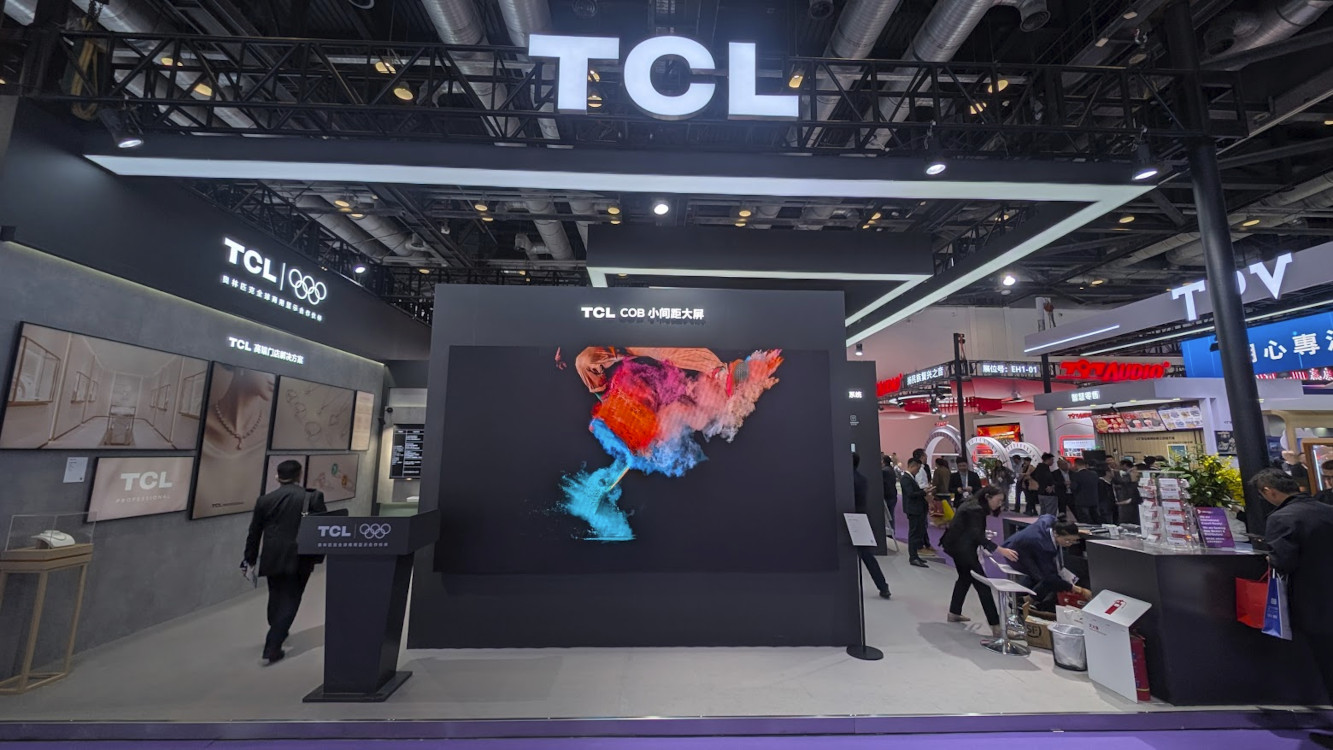
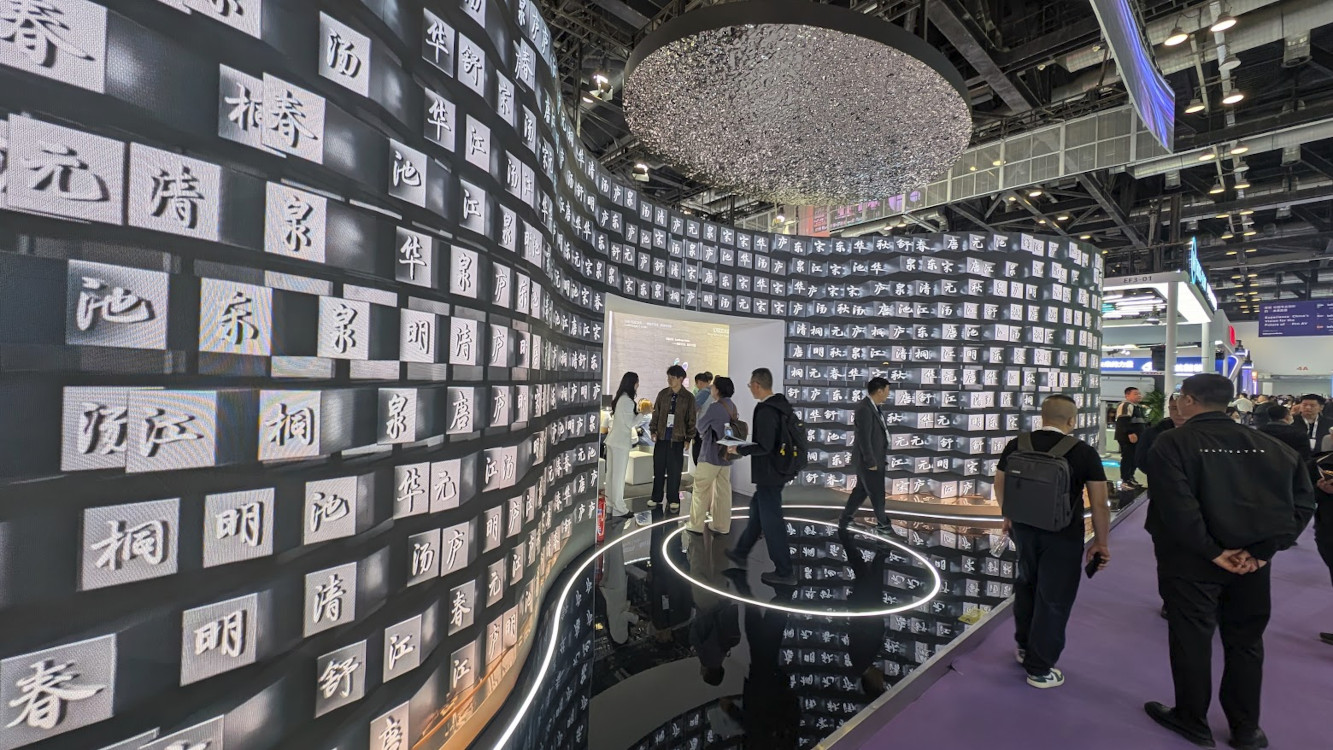
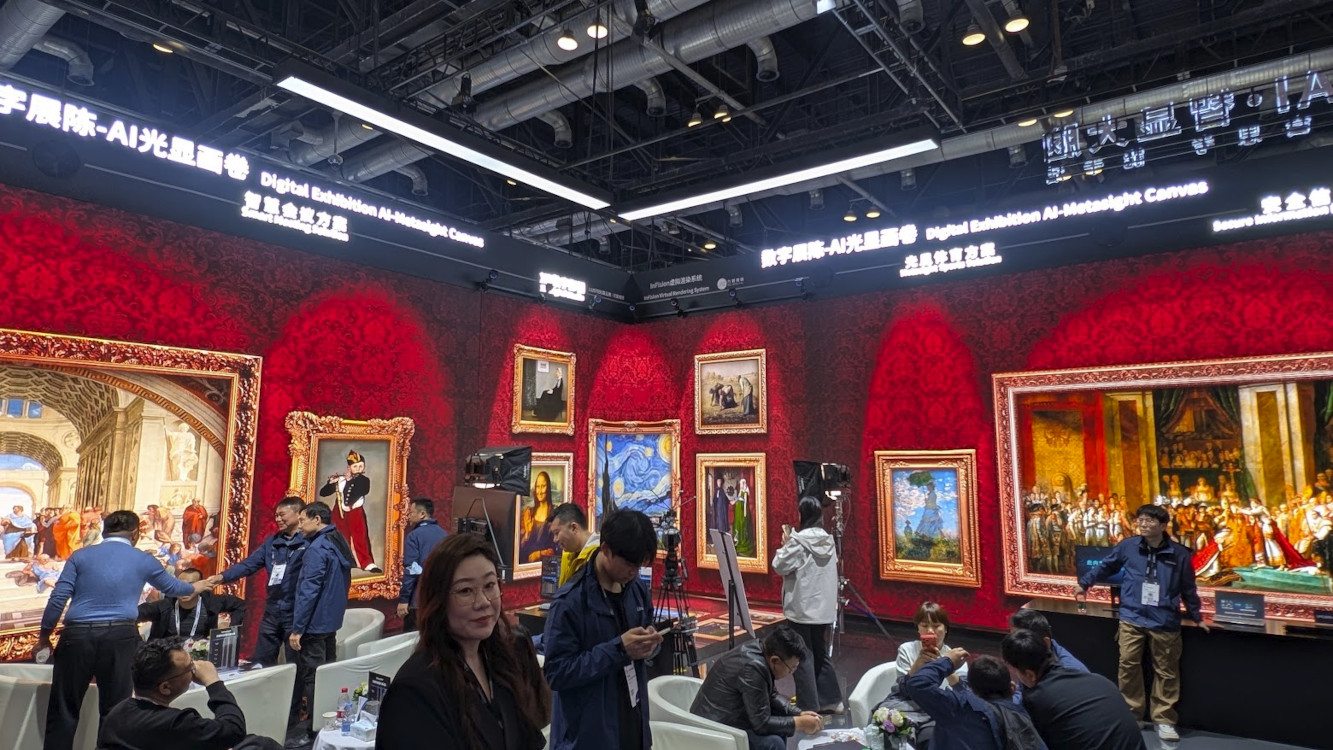
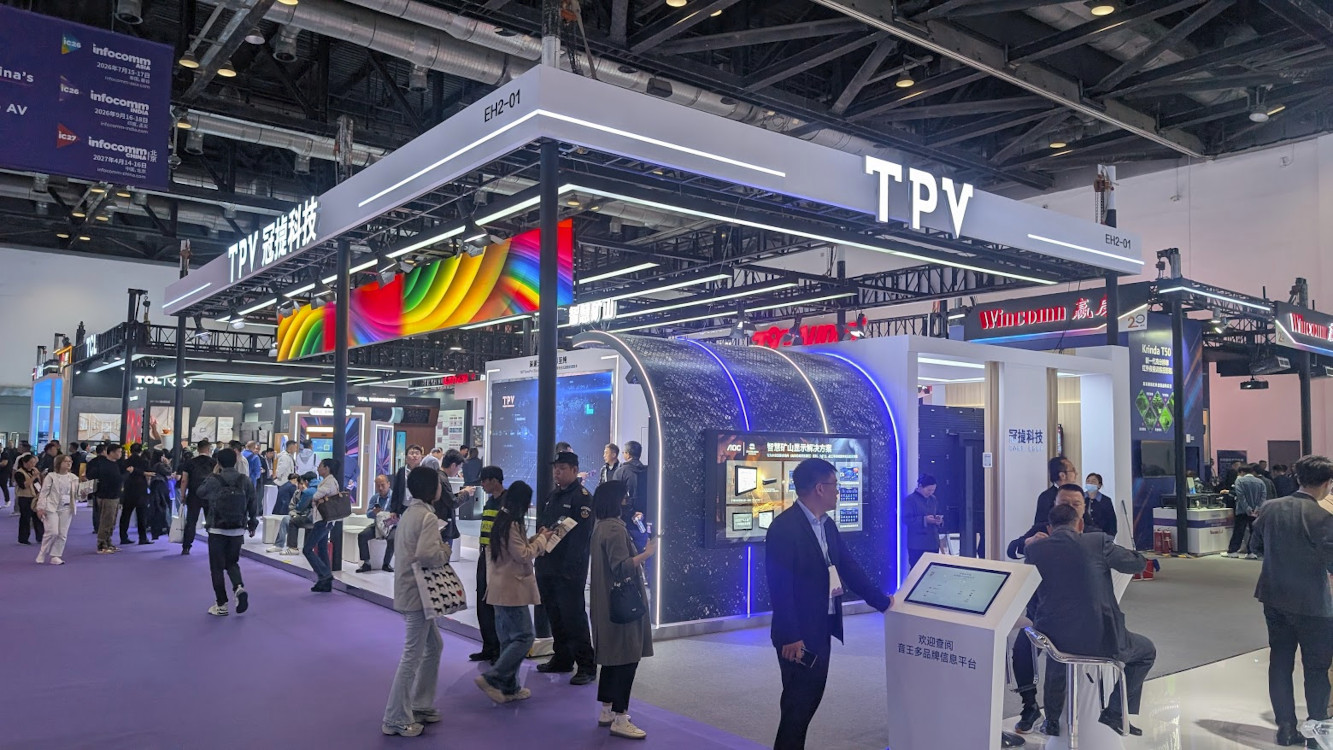
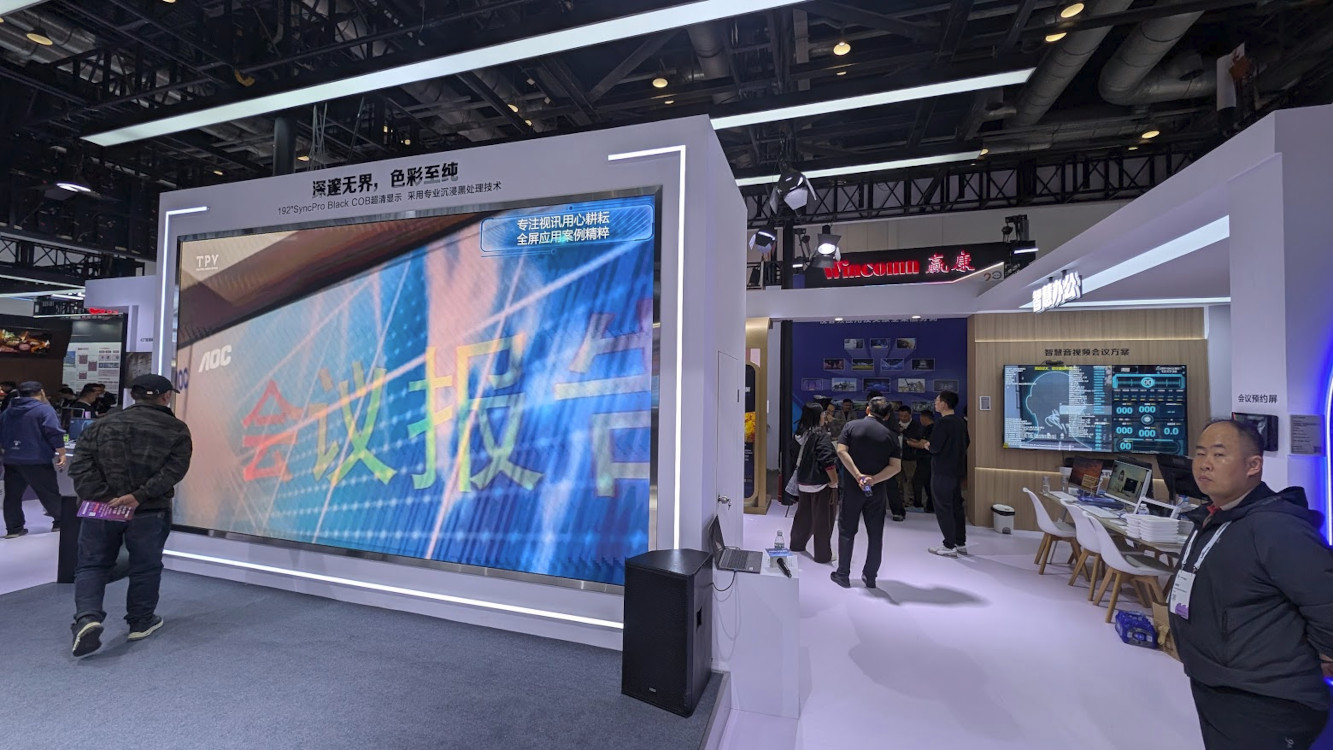
At InfoComm China 2026, visitors had to search carefully to find conventional SMD-based LED solutions. The future of LED display technology has unmistakably begun: Mini and MicroLED were omnipresent at the ISE sister show in Beijing. From massive 8K video walls to transparent LED and architectural LED surfaces with wood or stone finishes (Unilumin, TPV/Philips), the direction of travel is clear.
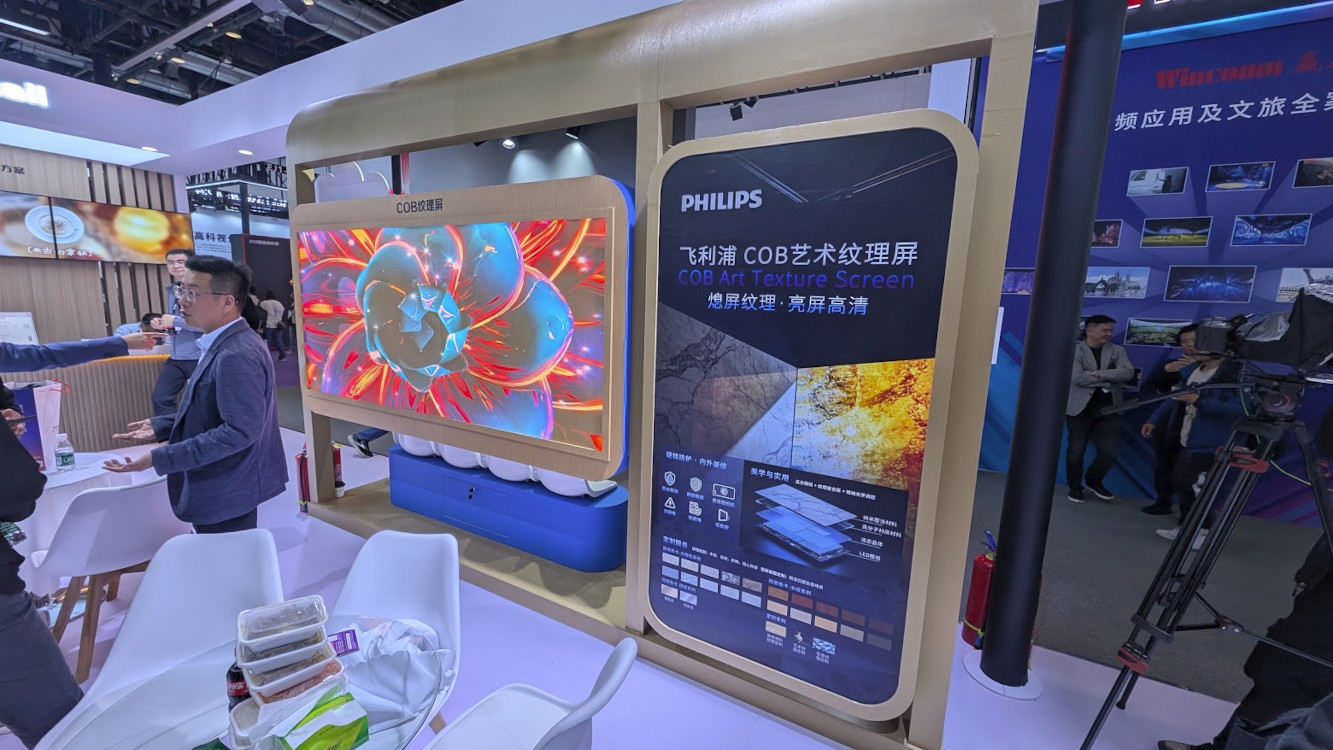
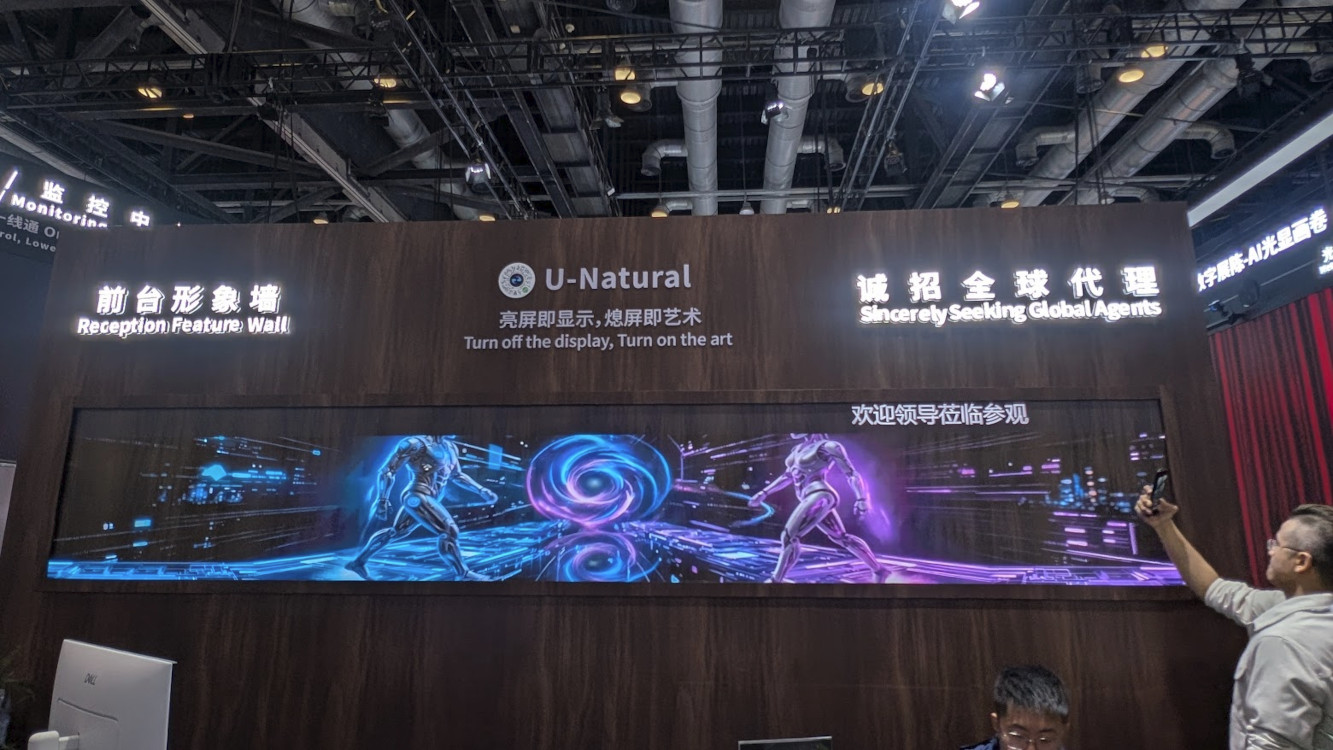
Unilumin summed up one of the trends of the show with its slogan “Turn off the display, turn on the art.” TPV Philips brands it COB Art Texture Screen. They all have in common a new visual solution based on COB Screens fitted with an textile layer enabling a more aesthetically pleasing integration.
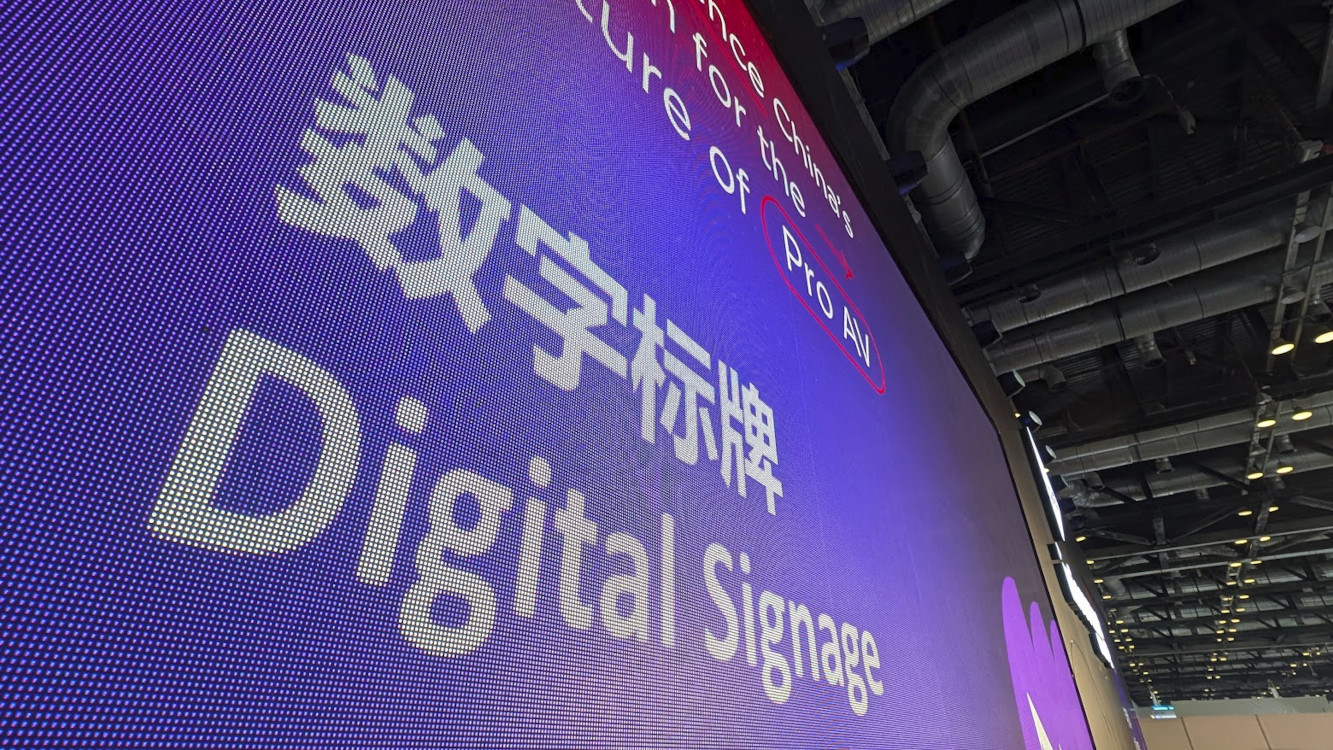
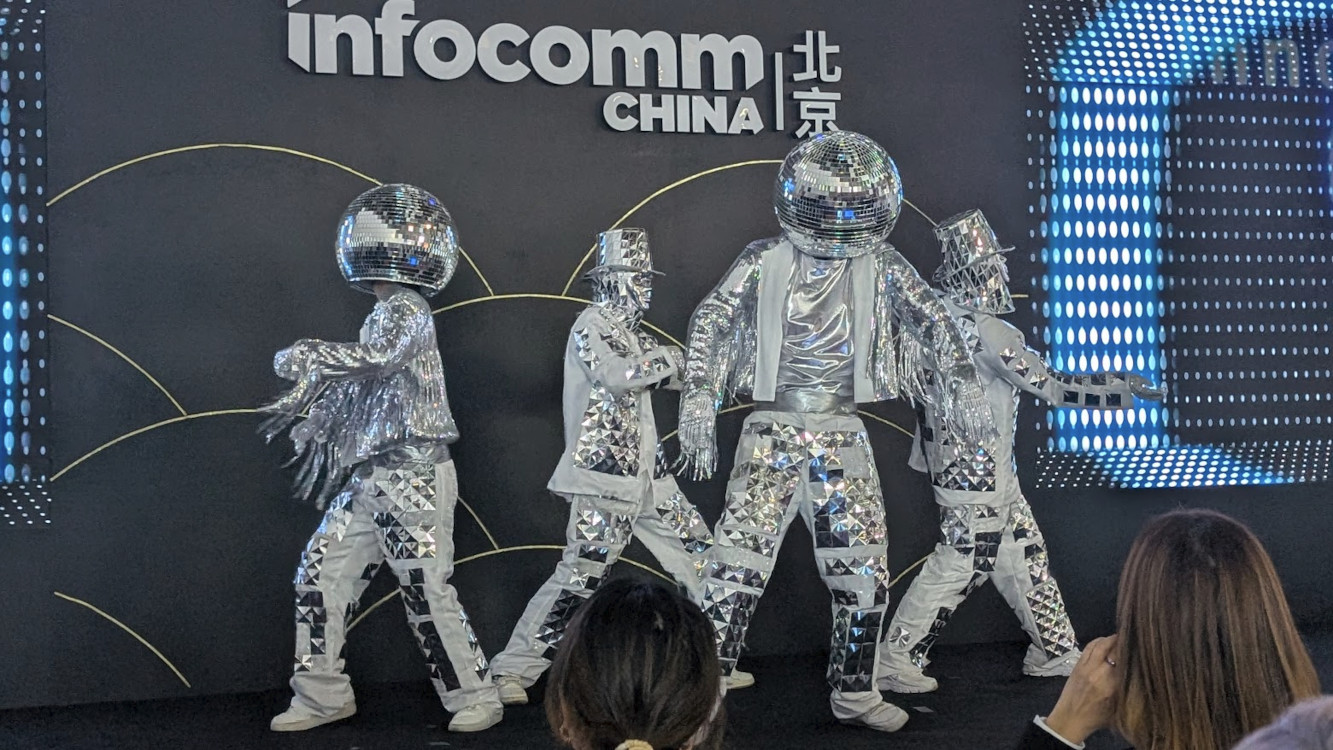
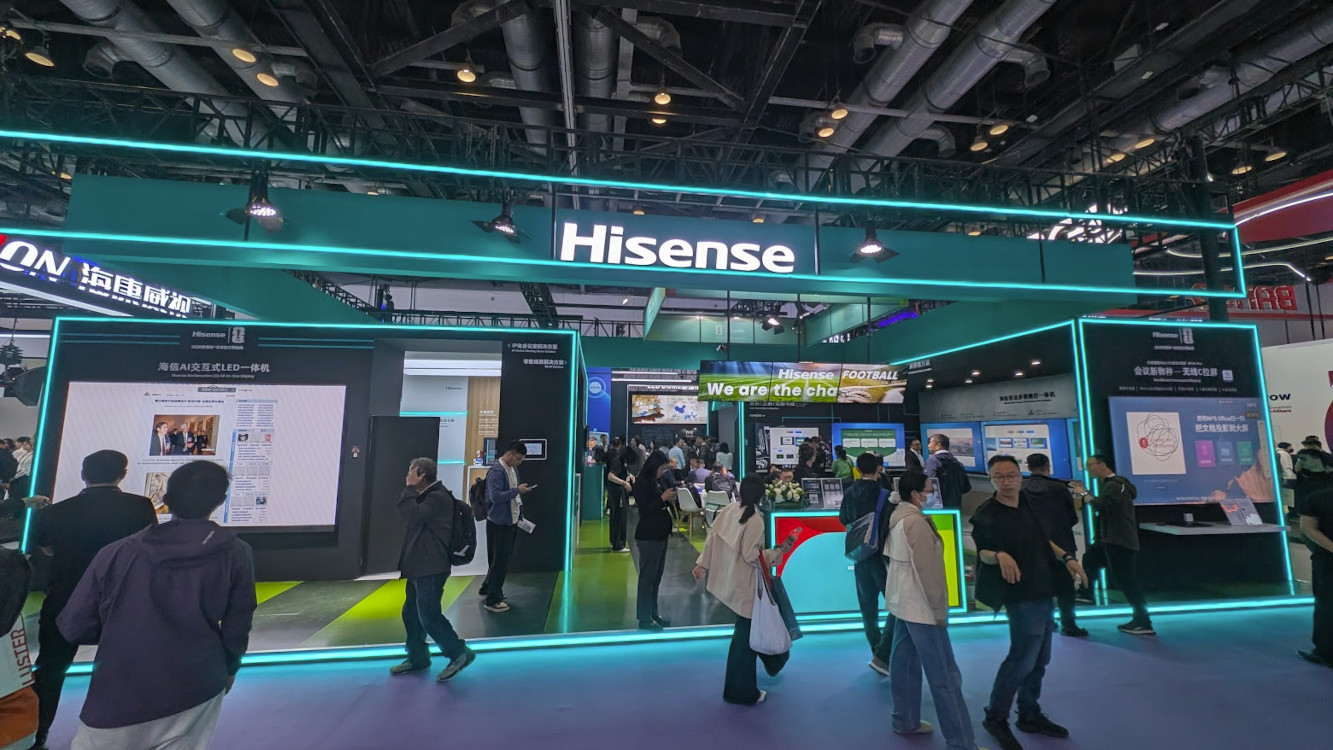
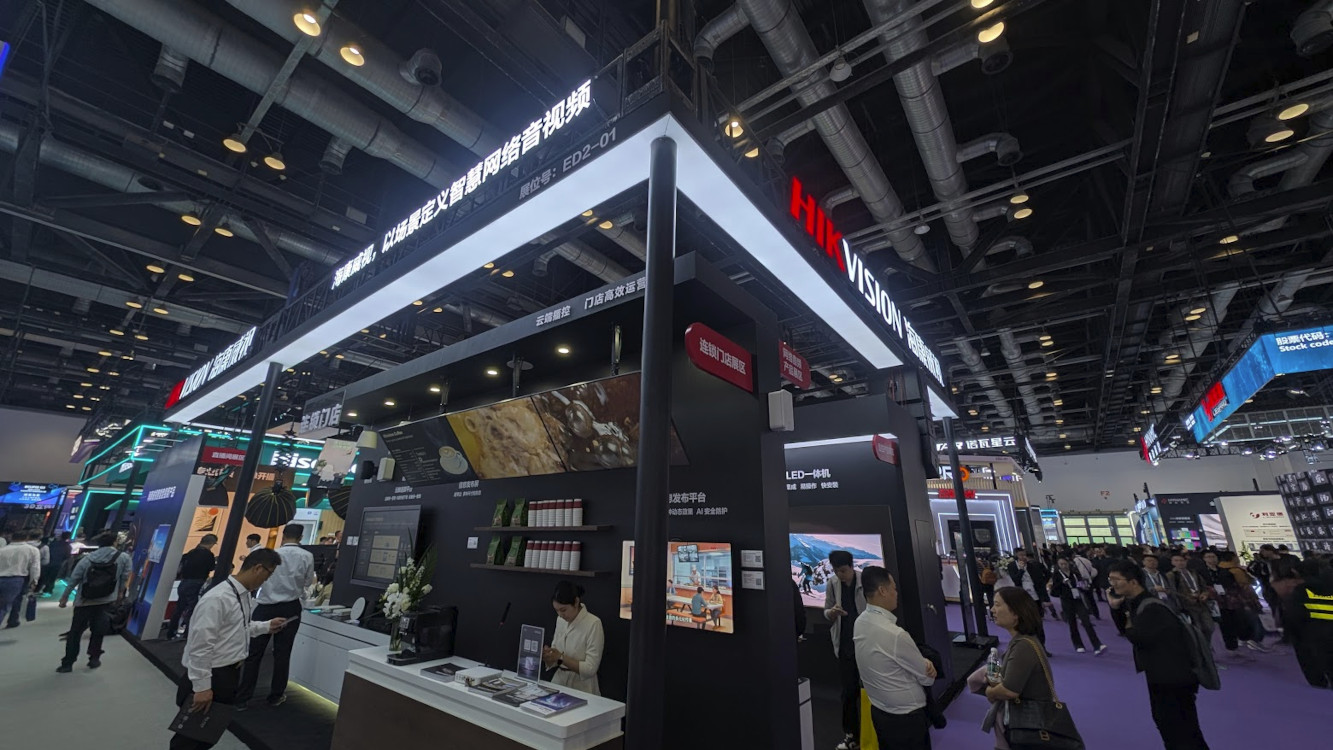
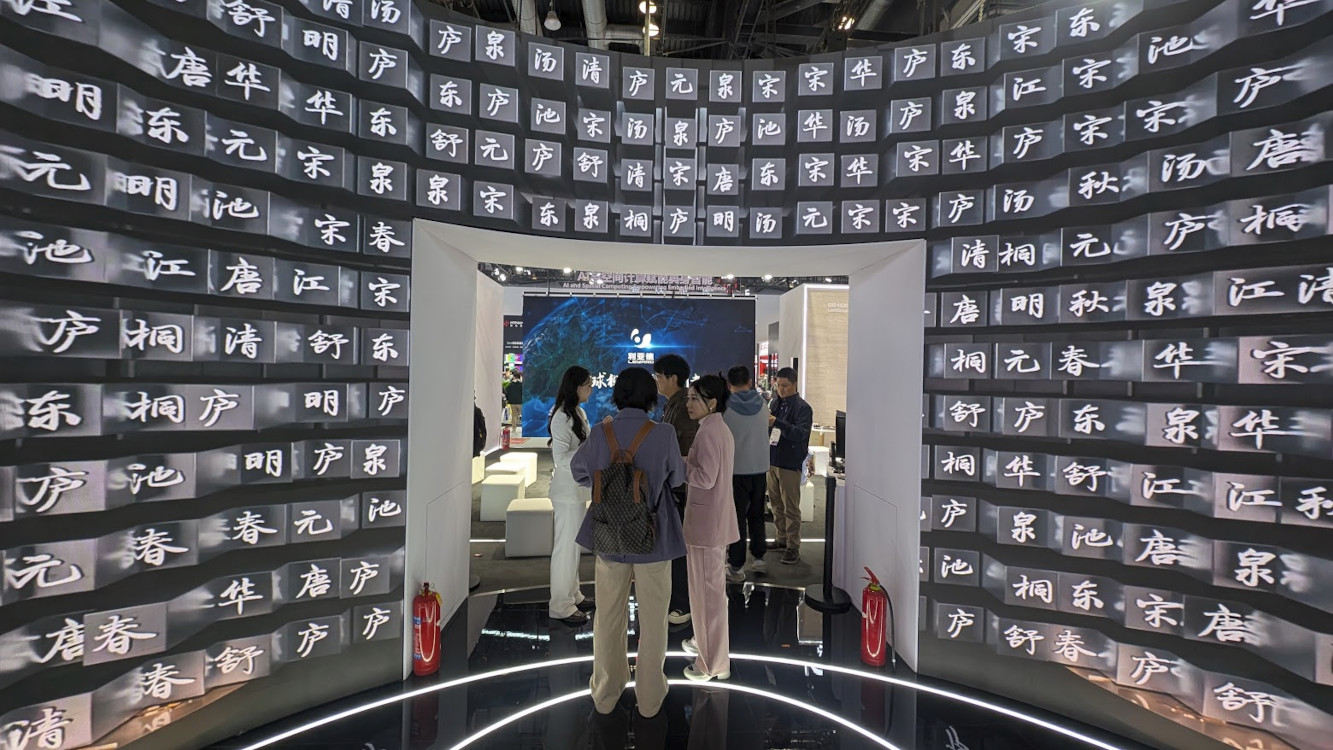
Besides Art-LEDs an unexpectedly broad range of green signage solutions were on display. Cold LED technologies, ePaper, and extended product lifecycles were recurring themes throughout the halls. Any assumption that China is lagging behind on sustainability is wide of the mark. The country’s five-year plan targets a 17 percent reduction in CO₂ emissions by 2030 – and the ProAV industry has clearly aligned itself with these goals. Nowhere is this more evident than in Beijing, where government procurement strongly influences the national digital signage market.
Energy efficiency is no longer a marketing argument – in China it is a requirement. A fitting feature by temperatures of more than 25 degrees Celsius, the exhibition halls felt more like saunas. In line with China’s current energy-saving policy, air conditioning across the venue remained largely switched off.
AI Moves from Feature to Foundation
Artificial intelligence has become an essential building block across the ProAV ecosystem. At InfoComm China, vendors large and small showcased integrated AI functionalities – sometimes delivering tangible added value, sometimes simply demonstrating technical capability.
Examples with real relevance included Unilumin’s multilingual ZBrain AI concierge and advanced remote device management solutions. Other applications, such as AI-powered content generation or on-the-fly translation, felt more experimental. Still, certain use cases stood out: Flytek’s table microphones with integrated displays and real-time AI translation address a genuine pain point. After all, few conference participants want to spend an entire day wearing an earpiece or starring on a small mobile display for live translation.
Predictably, humanoid robots also featured prominently – though their direct connection to ProAV was not always obvious. In combination with AI concierge solutions, they are intended to guide and inform visitors. Above all, however, they serve as experiential touchpoints – bringing us back, once again, to the core strength of digital signage: creating engagement.
Ultra-Thin MicroLEDs as a Statement
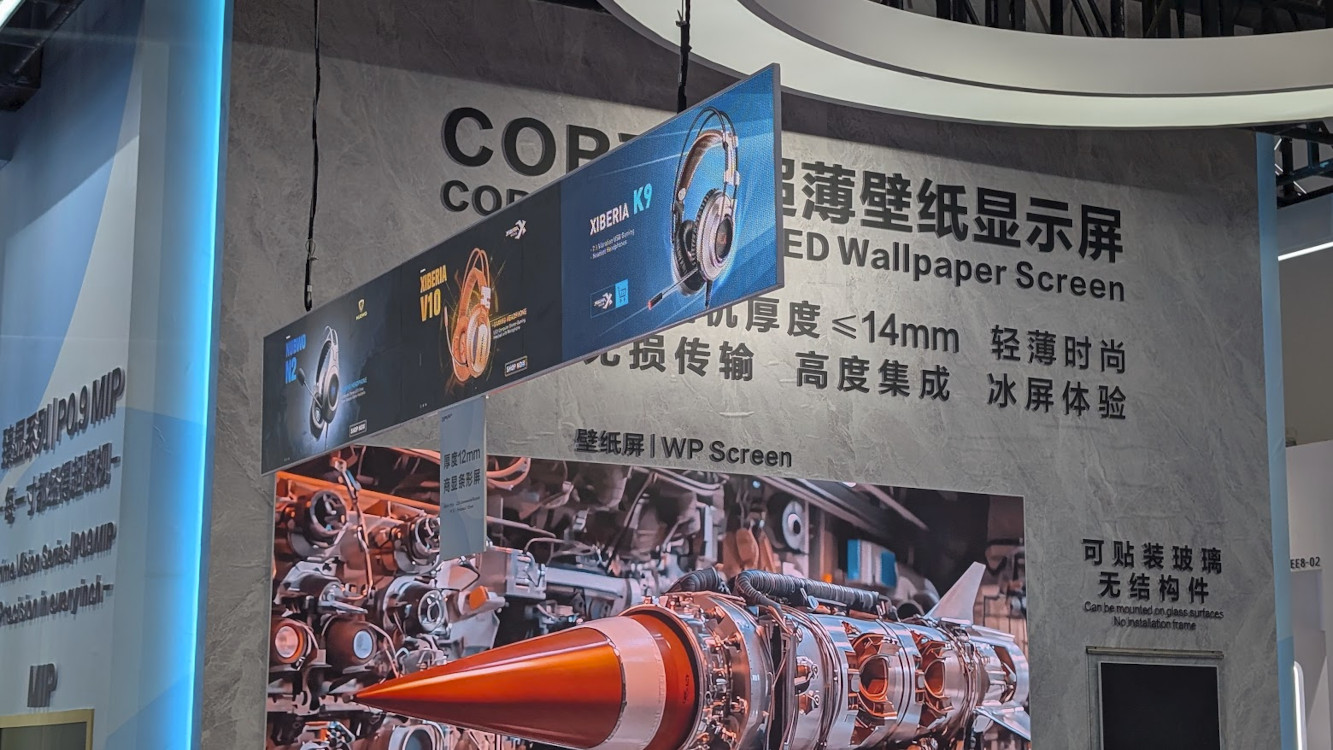
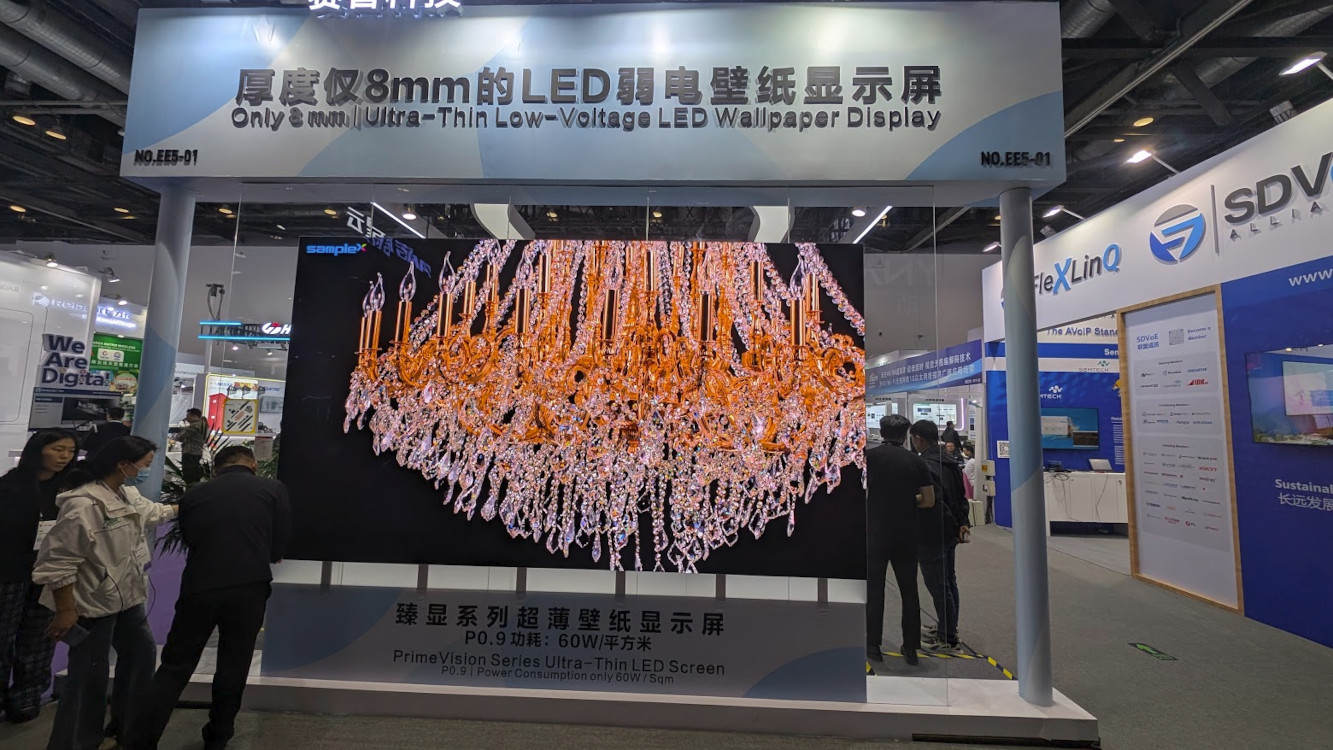
One of the standout innovations at the show came from SampleX. The company presented exceptionally thin MicroLED solutions that are setting new standards in display integration. Double-sided MicroLED panels, suspended from the ceiling, featured a housing depth of just 20 millimetres. Even more impressive: ThinLED variants measuring only 14 millimetres depth, designed to be mounted directly onto glass surfaces – without complex and heavy supporting structures.
Modules are connected with low-power voltage fibre cable – connected an external control box that doesn’t require receiver cards. With an energy consumption of just 60 watts per square metre, SampleX’s solution is also remarkably efficient compared to conventional LED displays. This combination of minimalism, flexibility, and efficiency points to a new generation of LED design – one driven as much by architecture and sustainability as by resolution and brightness.
New focus on ProAV in China’s Five-Year Plan
China’s economic success is closely tied to long-term government strategies published in five-year economic plans. Even in today’s fast changing world, five year plans feel a little bit out of touch, China communist system remains fully committed.
The latest five-year economic plans – the 15th Five-Year Plan (2026–2030) – for example, electromobility no longer occupies the central role it once did. ProAV, however, has secured indirect political backing. High on the government’s agenda is the technology sector, with a clear objective: securing supply chains for technologies with dual civil and military relevance. From digital signage to command-and-control centres, ProAV solutions fall into this category.
For the ProAV industry, this new focus will be relevant. In China, where state influence on procurement is substantial, alignment with strategic priorities usually boosts sales considerably.