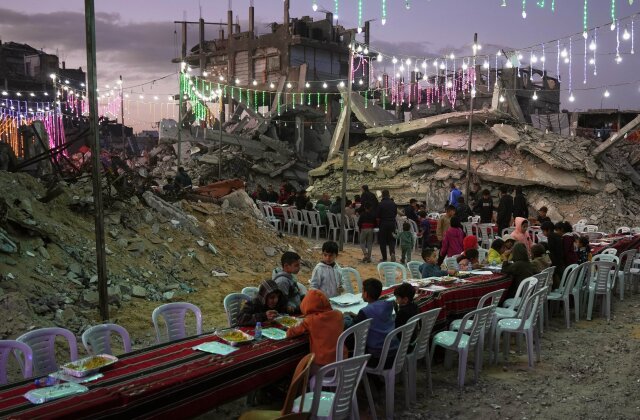
According to the relief coordination office, OCHA, rainfall since Saturday caused widespread flooding across parts of Idleb and northern Latakia, damaging around 1,800 tents and destroying at least 150 in camps housing displaced families.
A local hospital was also forced to suspend operations, with patients having been evacuated and mobile medical teams deployed. Authorities have opened shelters and prepared additional housing for families in need.
Humanitarian partners are relocating displaced families, repairing damaged shelters and delivering emergency assistance, including food and non-food items, OCHA said.
In a separate incident linked to the response, a Syrian Arab Red Crescent staff member was killed and five others injured when their vehicle crashed while assisting flood-affected communities.
Displacement still widespread
The flooding comes as displacement persists in other parts of the country.
While fighting has subsided in the governorates of Aleppo, Al-Hasakeh and Ar-Raqqa following a 30 January accord, nearly 160,000 people remain displaced as of 3 February.
Humanitarian access has improved in some areas, but major challenges remain. Electricity outages continue to disrupt water systems, telecommunications are intermittent, food supplies are limited, explosive ordnance is still a threat and schools remain suspended.
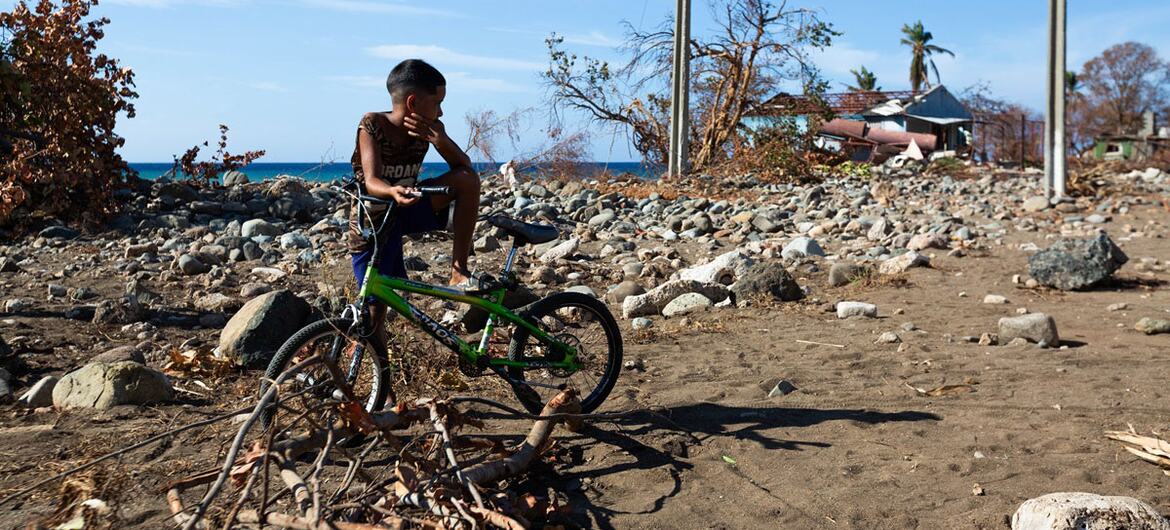
Hurricane Melissa struck Cuba in late October 2025, causing massive devastation across the island nation.
Cuba: UN urges funding as fuel shortages strain essential services
The United Nations is calling for urgent funding to support humanitarian operations in Cuba, where fuel shortages following the suspension of supplies from Venezuela are disrupting essential services and hampering recovery efforts following last year’s Hurricane Melissa.
“The UN continues to monitor the situation in the country and is working with the Government to provide more support, including food, water and sanitation, and healthcare,” UN Spokesperson Stéphane Dujarric said at a regular news briefing in New York.
“We are concerned about the growing fuel shortages and their impact on people,” he added, noting that disruptions to the delivery of clean water, medical care, food and other critical aid.
UN action plan
In November 2025, the UN in Cuba launched a Plan of Action to support the national response to Hurricane Melissa, which affected more than two million people – roughly one in five residents nationwide.
The plan focuses on helping families recover and restoring essential services, while supporting longer-term recovery efforts led by national authorities.
The Plan of Action seeks $74 million but is currently only 23 per cent funded.
Global conference seeks renewed push to end child labour
An international effort to accelerate the elimination of child labour will get underway later this week in Morocco, as governments and partners meet to confront a crisis still affecting 138 million children worldwide.
From 11 to 13 February, Morocco will host the sixth Global Conference on the Elimination of Child Labour, led by the UN International Labour Organization (ILO) and bringing together governments, employers’ and workers’ organizations, civil society, the private sector and international partners.
The meeting comes at a critical moment.
According to UN estimates, 138 million children remain in child labour globally, including around 54 million engaged in hazardous work that threatens their health, safety and development. Africa accounts for 87 million of those children.
Agriculture remains the largest driver, accounting for 61 per cent of child labour globally, particularly in smallholder farming.
Child’s place is in school
ILO Director-General Gilbert Houngbo underscored the link between decent work and child protection, saying: “Children belong in school, not in labour. Parents must themselves be supported and have access to decent work so that they can afford to ensure that their children are in classrooms.”
While progress has been made – child labour has nearly halved since 2000 and declined by more than 20 million since 2020 – the world missed the Sustainable Development Goal target to eliminate child labour in all its forms by 2025.