The New York Times picked Nagasaki as one of its “Places to Go in 2026.” The city includes locations related to two UNESCO World Heritage sites.
Never Forget the Atomic Bombing
Nagasaki has been named as one of the “52 places to go in 2026” by the New York Times. Explaining that the United States dropped an atomic bomb on Nagasaki, but “unlike Hiroshima, which was almost completely obliterated . . . the urban core of Nagasaki, America’s second target, was spared when the bomb missed its mark,” the publication added that “as the threat of nuclear proliferation spreads around the world, travelers have a potent reason to visit.”
It is not possible to visit Nagasaki without facing the tragedy of the atomic bombing. At the Nagasaki Atomic Bomb Museum, the peaceful cityscape and the lives of its citizens prior to the bombing is recreated, contrasted against the devastation immediately after the blast. Visitors can read explanations in 11 languages, including Japanese, English, and Chinese.
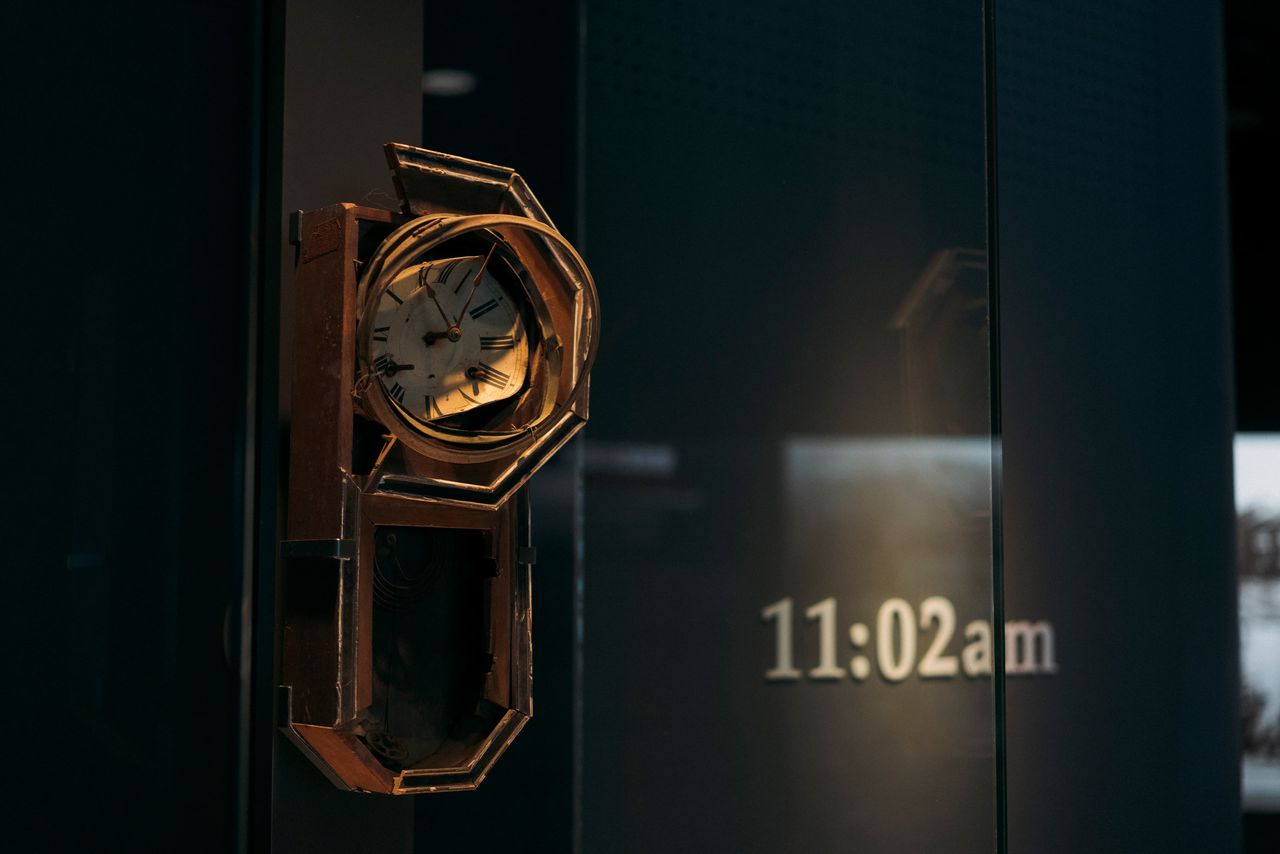
A clock that stopped at 11:02am, the moment the atomic bomb detonated over the city, displayed at the Nagasaki Atomic Bomb Museum. (© Nagasaki municipal government)
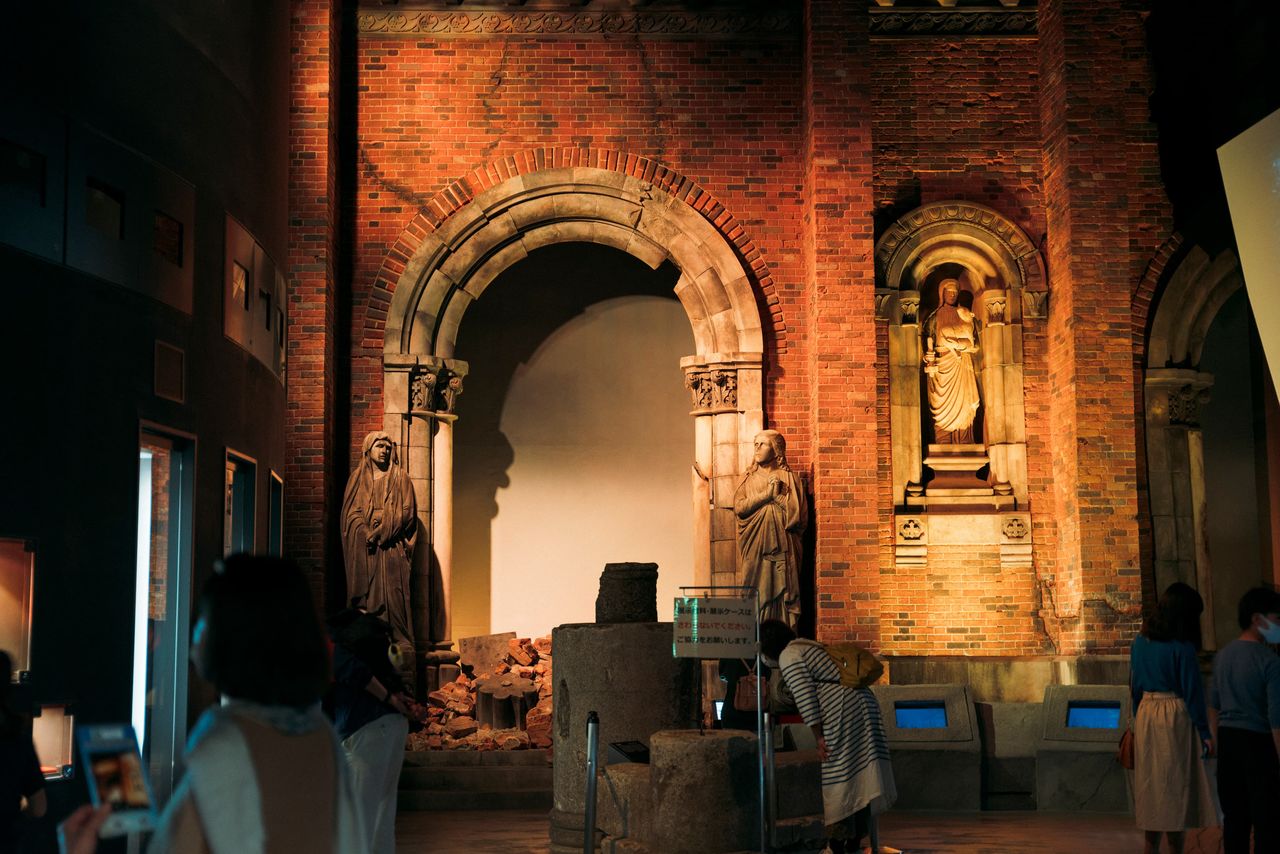
Reconstruction of a side wall from Urakami Cathedral destroyed in the blast, at the Nagasaki Atomic Bomb Museum. (© Nagasaki municipal government)
The Nagasaki municipal website introduces recommended routes for visiting the hypocenter and atomic bomb remains, which tell a silent tale of what occurred.
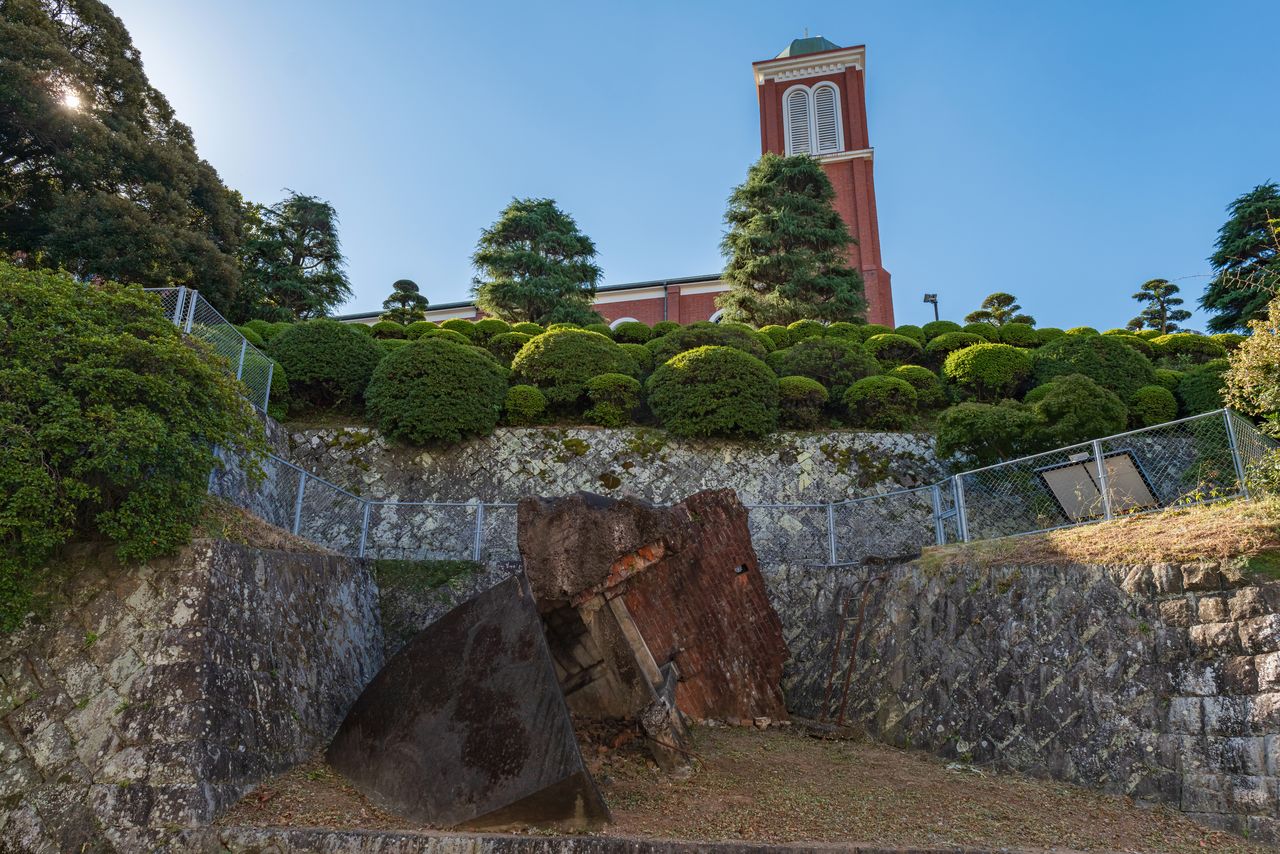
The former belfry of Urakami Cathedral. Both of the cathedral’s belfries were destroyed by the bombing, with the north belfry falling down the hillside into a nearby river. Although initially walled up, the remains were excavated in 1971 to be a testament to the bombing. Constructed from reinforced concrete, it measured 5.5 meters in diameter and weighed approximately 50 tons. (© Pixta)
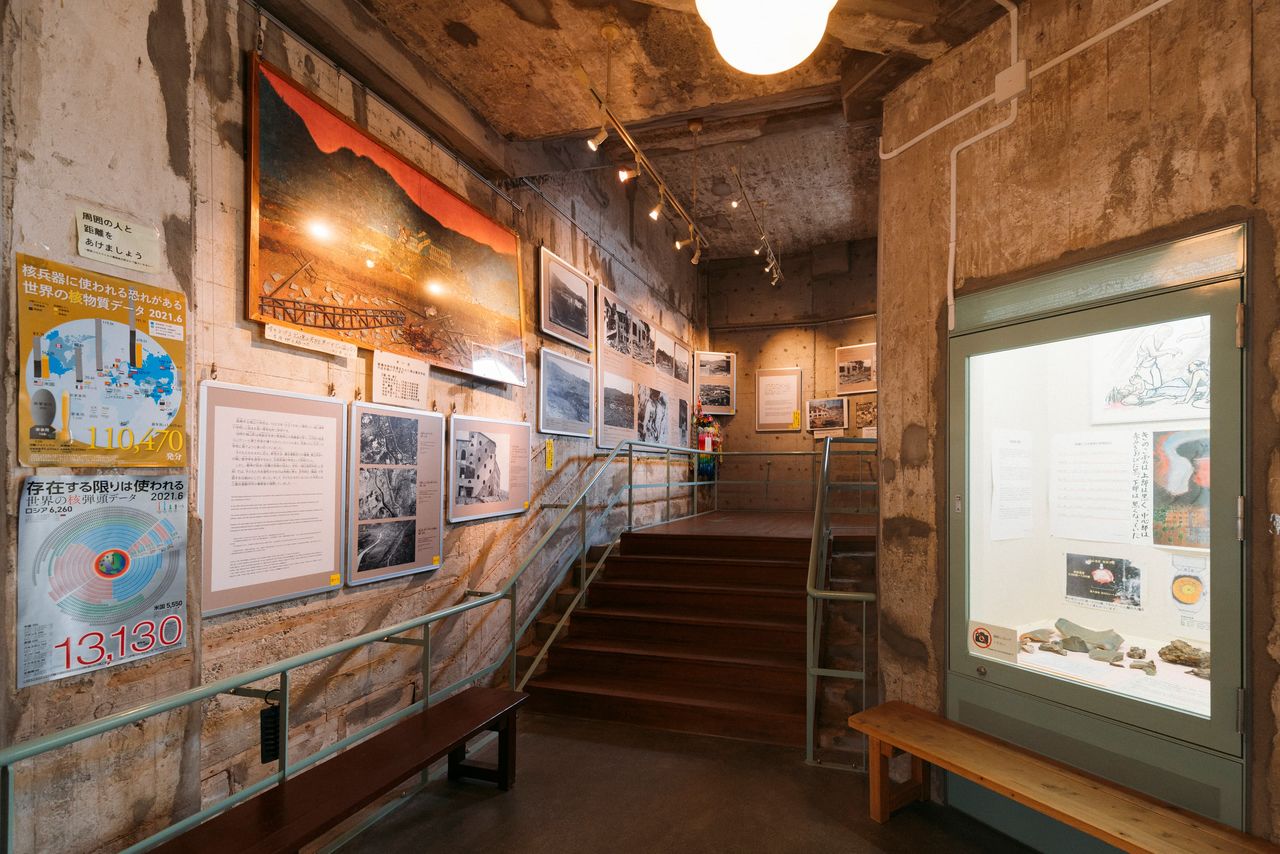
Nagasaki Atomic Bomb Historic Ruins. The former Shiroyama National School Building, which was located on a hill 500 meters from the hypocenter where more than 1,400 students and staff instantly lost their lives. Part of the main building damaged in the bombing has been preserved, and since 1999 has housed the Shiroyama Elementary School Peace Memorial Hall, where photographs taken immediately after the blast and artifacts are on public display. (© Nagasaki municipal government)
Regional Sweets
Maruyama in Nagasaki was once regarded as one of the three most famous entertainment districts in Japan, along with Yoshiwara in Edo (Tokyo) and Shimabara in Kyoto. Standing on a hill overlooking this district is the Great Camphor Tree of Daitokuji, said to be the largest tree in Nagasaki Prefecture. It is over 800 years old and the base of the roots measure more than 23 meters in circumference. Its powerful branches stretch out with an energy belying its age as if to crush the nearby buildings.
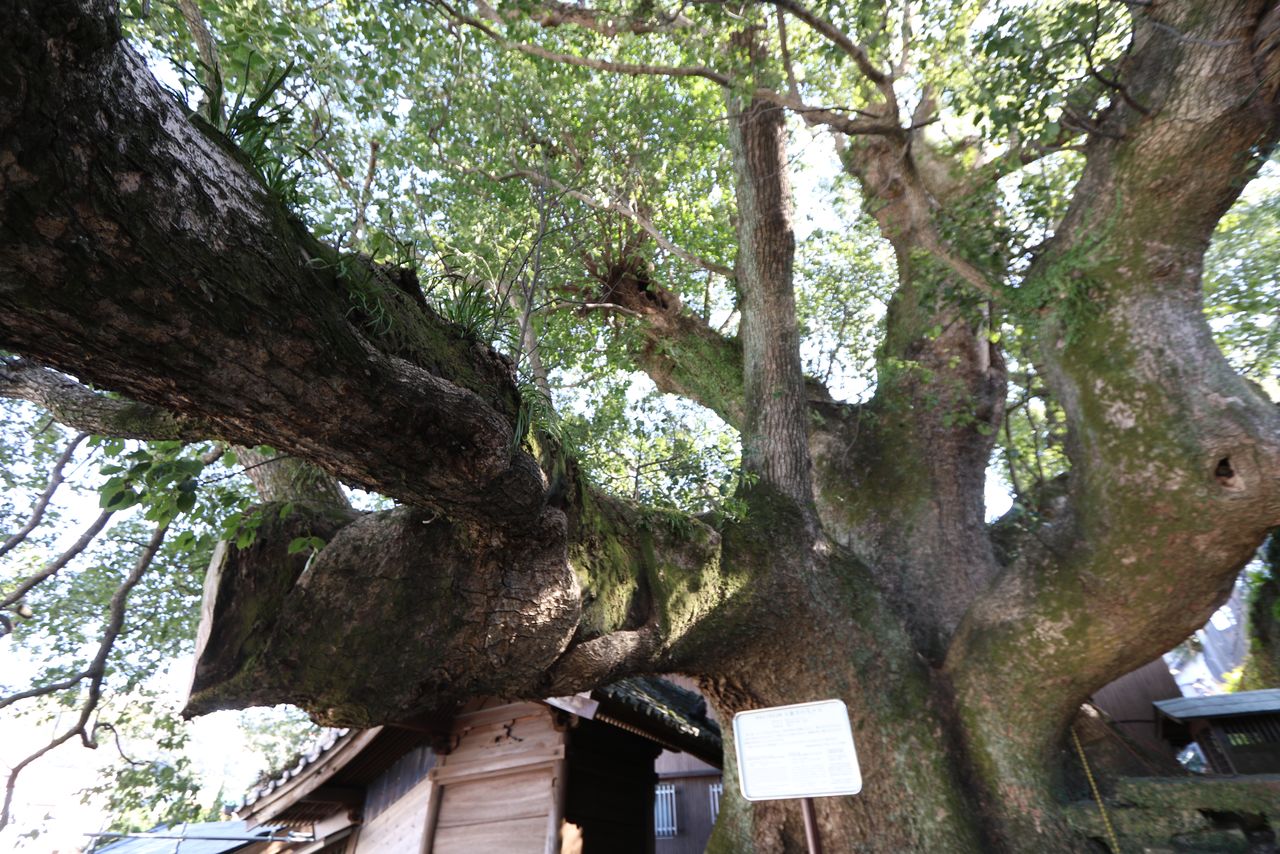
The Great Camphor Tree of Daitokuji bearing down on the roof of a house. (Courtesy Saitō Takashi)
Among the souvenirs available in Nagasaki, the one that comes to most people’s minds is castella cake, a symbol of the culture introduced through trade between Japan and Europe. In particular, The New York Times mentions Fukusaya, a confectioner’s just a short walk from the Great Camphor Tree of Daitokuji. Established in 1624, it boasts a history of more than 400 years. The moist, densely baked castella cakes it produces have a delicate flavor, blending together both Western and Japanese tastes.
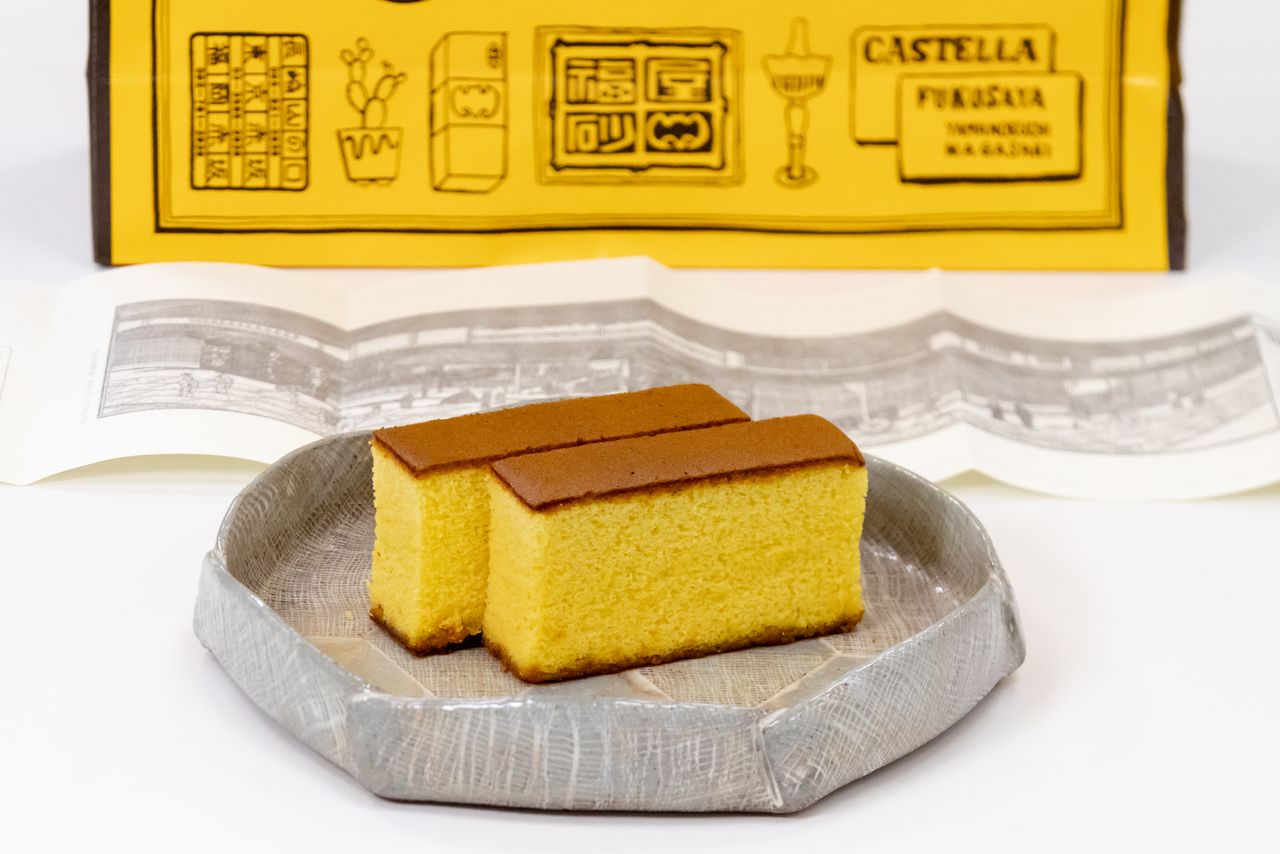
Fukusaya’s castella cake (© Nippon.com)
When you want to take a rest from walking around the city, why not try Nagasaki’s famous mirukusēki, a milkshake that is actually more like a frozen dessert. The New York Times introduces the mirukusēki served at the traditional Japanese coffee shop Coffee Fujio, but the specialty is said to have originated at Kyūshū’s first coffee shop Tsuruchan, when crushed ice was added to milkshakes to create a refreshing treat for cooling down in the sweltering summer heat. Many shops followed suit, offering their own versions of mirukusēki and it became known nationwide as an “edible milkshake.” While it is basically made from condensed milk, eggs, and milk, each shop switches up the ratios and size of the crushed ice, so it is fun to go around drinking (eating?) all the different varieties.
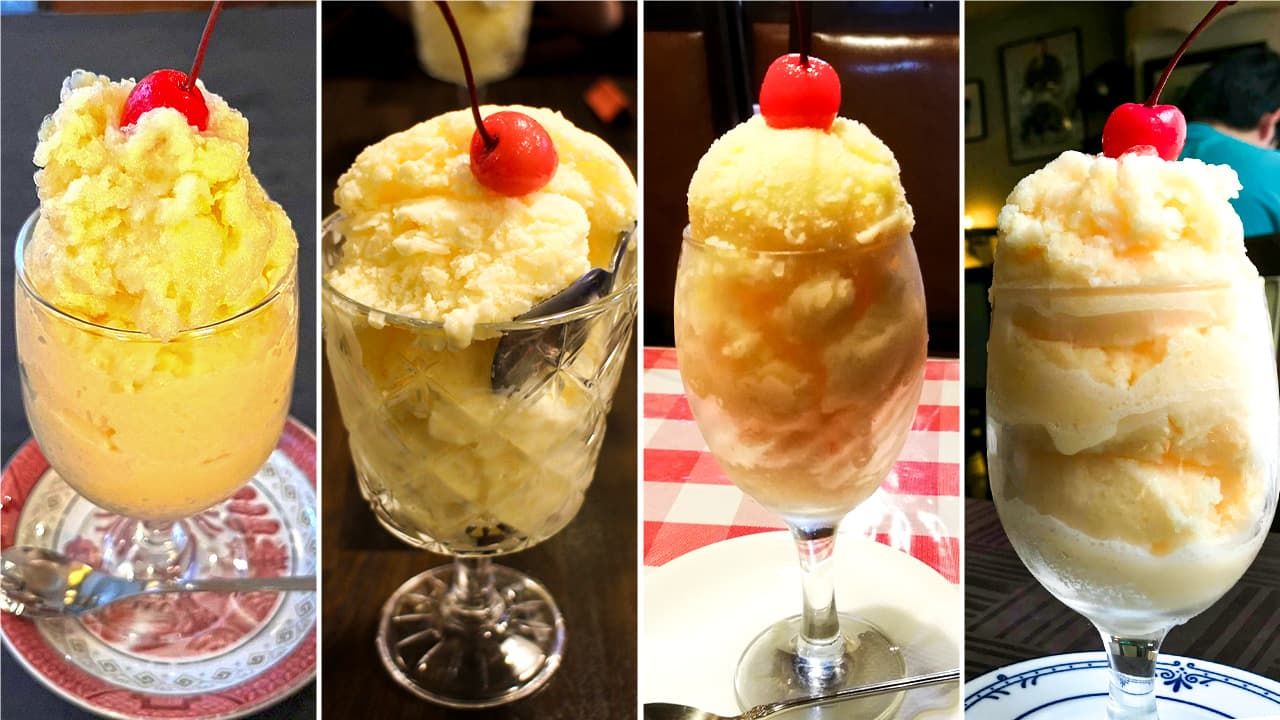
(© PhotoAC)
Nagasaki Prefecture boasts two World Heritage sites: Sites of Japan’s Meiji Industrial Revolution and Hidden Christian Sites in the Nagasaki Region. Each has a number of fascinating locations and there is a spot in Nagasaki where the two World Heritage sites can be viewed in close proximity.
Glover Garden (the former Glover residence) is an asset belonging to the Sites of Japan’s Meiji Industrial Revolution and just 150 meters away stands Ōura Church, designated part of the Hidden Christian Sites in the Nagasaki Region. Why not visit them both to get a sense of Nagasaki’s history?
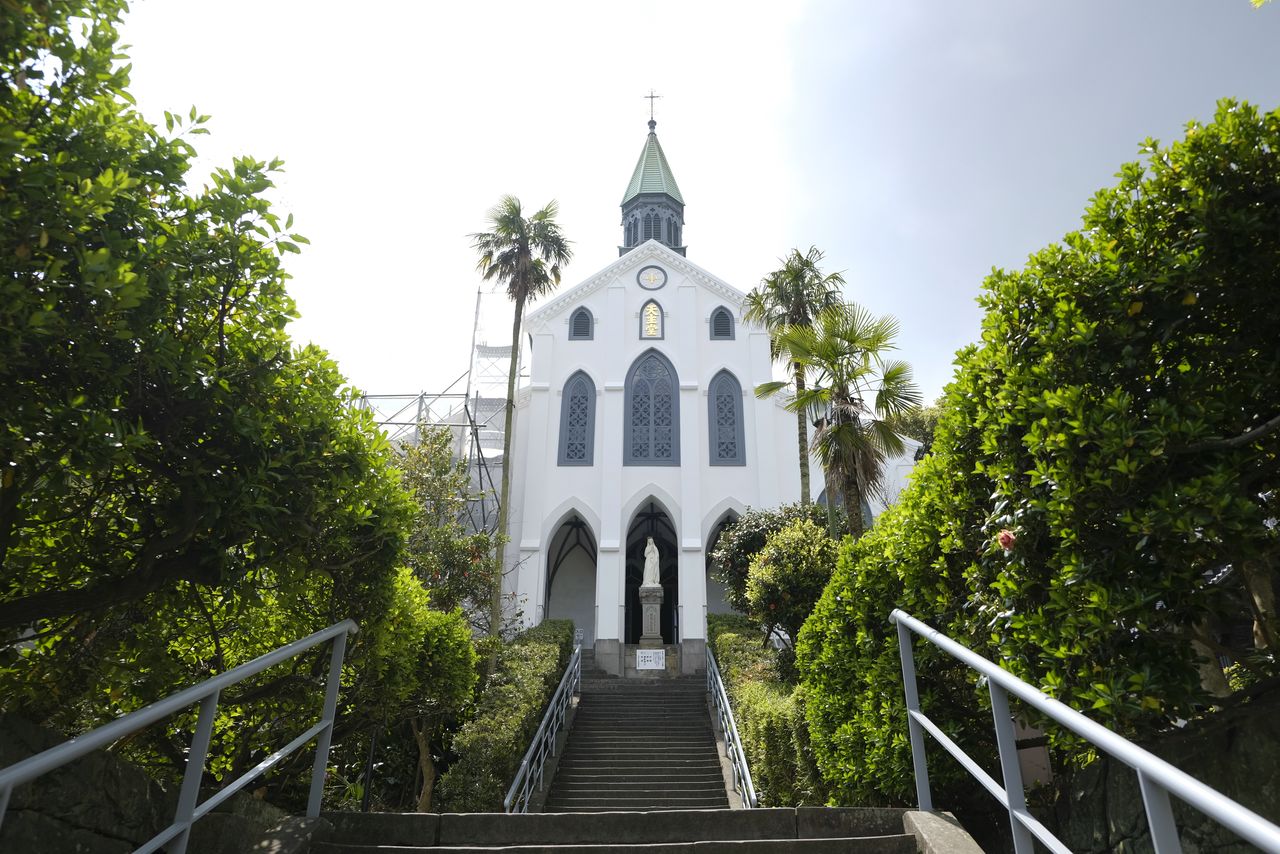
Ōura Church (© Jiji)
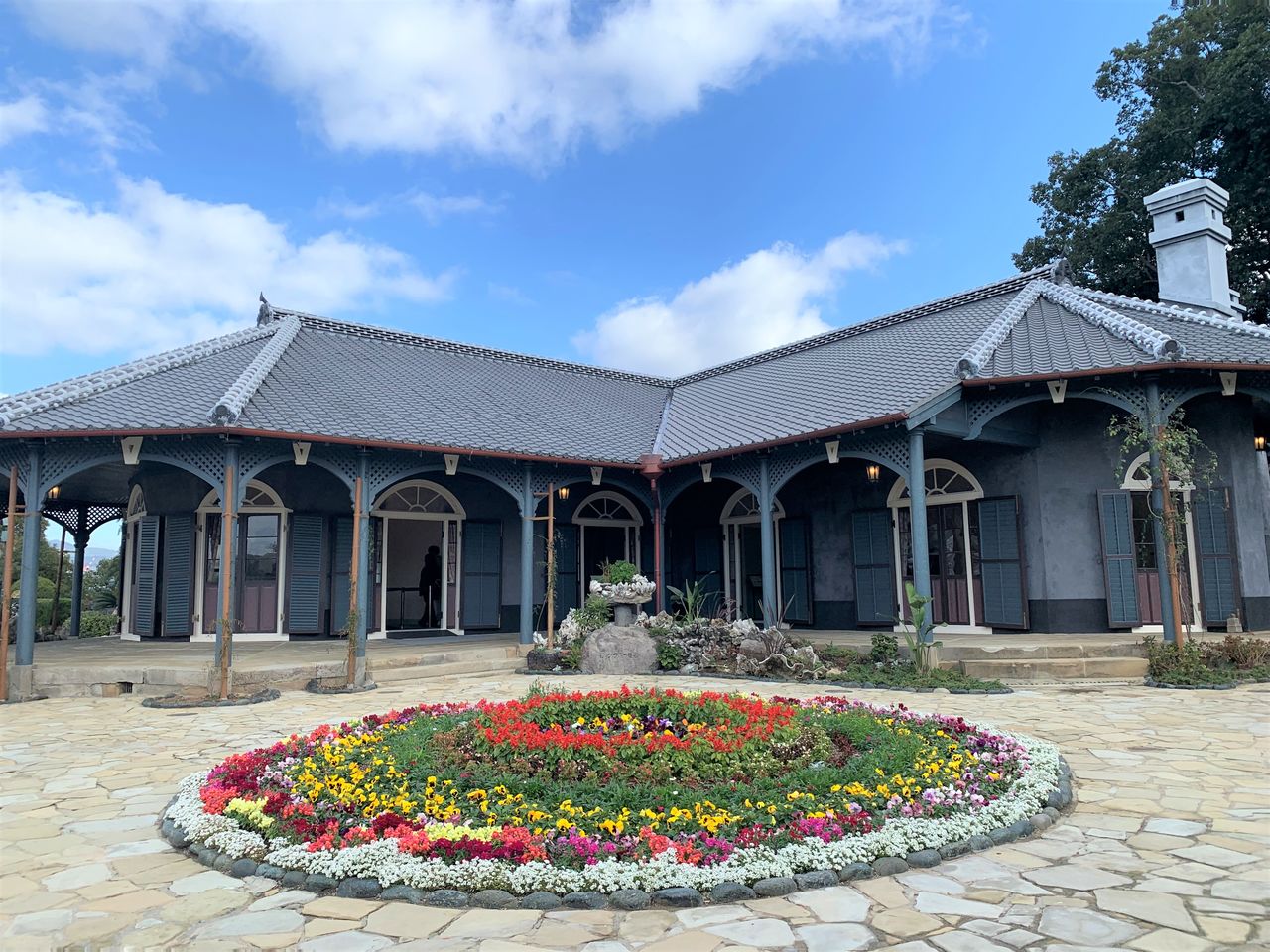
Glover Garden (Courtesy Nagasaki Prefecture Tourism Association)
A convenient way to get around the city is by streetcar. No matter how far you travel, each trip is a reasonable ¥150. A one-day pass costs ¥600, offering unlimited rides, so you can get off along the way and enjoy exploring.
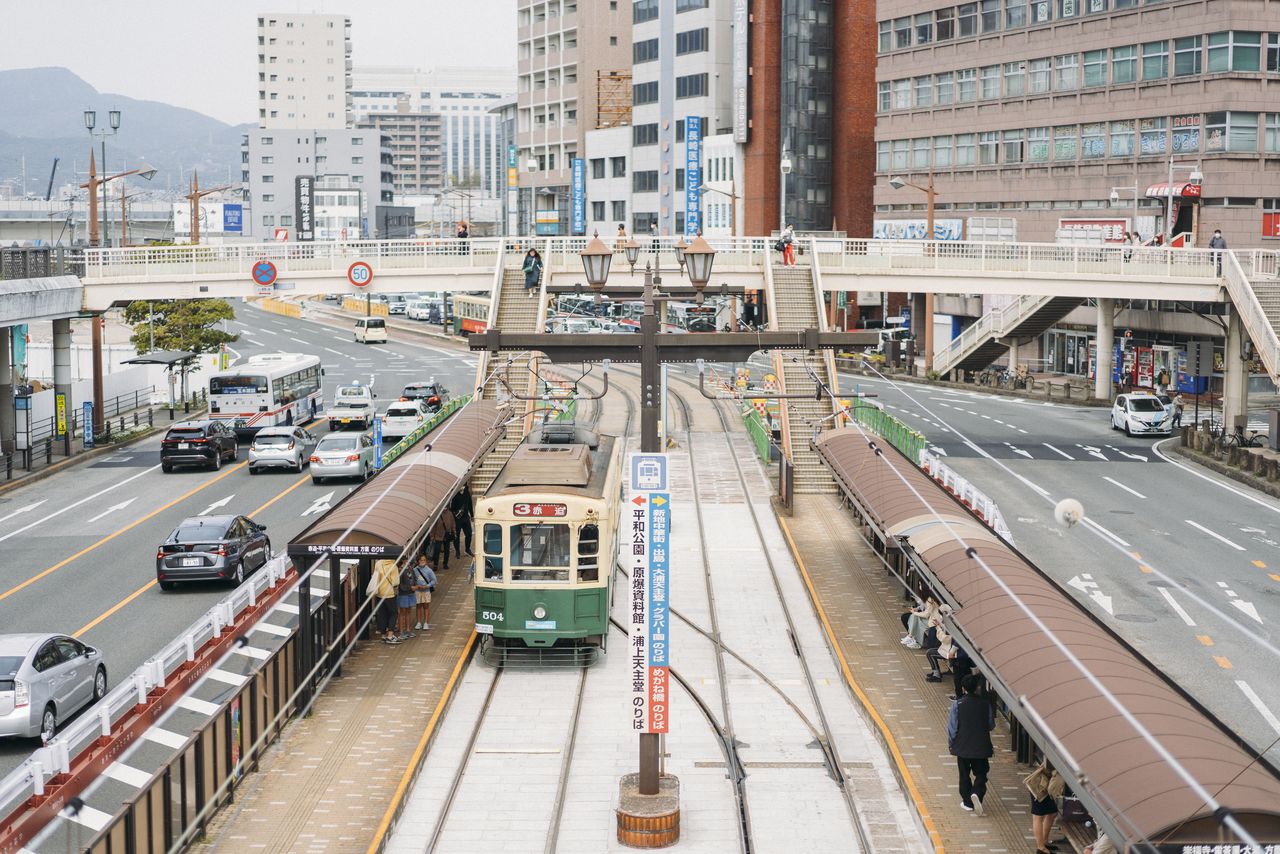
A streetcar running through Nagasaki. (© Nagasaki municipal government)
The New York Times has been publishing its list of places to visit around the world every year since 2005. Morioka and Fukuoka were chosen in 2023 and Yamaguchi in 2024. The list for 2025 featured Toyama and Osaka.
Data Sources
(Translated from Japanese. Banner photo: The Peace Statue at Nagasaki Peace Park. © Jiji.)