Alberta separatism, referendums, library book bans, and gerrymandering are catching a lot of the headlines these days but a law passed by Alberta’s United Conservative Party government that allows for more private-for-profit health care is becoming harder for the federal government in Ottawa to ignore.
Health Statutes Amendment Act, 2025 (No. 2), known as Bill 11 when it was passed through the Legislature last December, would allow physicians working in Alberta to practice medicine in both the public system and in private-for-profit businesses, something that isn’t allowed anywhere else in Canada.
Premier Danielle Smith’s push toward privatization of the public health care system, which UCP defends as “European style” health care, is almost certainly more American-inspired. But wherever the inspiration comes from, it will almost certainly mean more out of pocket expenses for Albertans — something Smith has long advocated for — and more public funds subsidizing private companies.
“We can no longer afford universal social programs that are 100 per cent paid by taxpayers,” Smith argued in a June 2021 paper published by the University of Calgary’s School of Public Policy. “The only option is to allow people to use more of their own money to pay their own way and to use the power of innovation to deliver better services at lower cost.”
In the paper, Smith proposed the creation of health spending accounts, something she later pledged during her 2022 campaign for the UCP leadership, so “once people get used to the concept of paying out of pocket for more things themselves then we can change the conversation on health care.”
Pledging to “take it one step further,” Smith confidently wrote that “I think is time to redefine universality. … If we establish the principle of Health Spending Accounts, then we can also establish co-payments.”
Before Bill 11 was passed by the Legislature, Alberta had rules similar to other provinces that required doctors to disenroll from the government’s public insurance plan if they want to work in private health care that directly bills patients. By doing so, Bill 11 appears to set the groundwork for private insurance market and private payment and co-payments for medically necessary care for patients in Alberta.
“When dual practice is allowed, it encourages high-income patients to buy private health insurance to cover these new costs,” wrote researchers Rebecca Graff-McRae and Andrew Longhurst in a joint report by the University of Alberta-based Parkland Institute and the Canadian Centre for Policy Alternatives.
Longhurst and Graff McRae warn that dual-practice and the private insurance market it will create will increase costs for individuals, employers and government:
An unrestricted private health insurance market—which Bill 11 creates—is likely to increase health care costs. We can look at the United States to see how much a system dominated by private insurance and profit-taking drives up health care costs for patients, employers, and government. As employers and individuals purchase private health insurance, the profits of private insurers, investor-owned facilities, and their physicians drive up the costs of medically necessary procedures.
As a result, the public insurance plan must pay increasingly more to doctors and investor-owned facilities where they perform services because the cost of the same basket of services is bid up by increasing profits, often disguised as “administrative costs.” The result is that health care costs rise rapidly for the government (the public insurance plan), placing a greater burden on public finances. Over time, health care spending increases to excessive levels that often encourage governments to narrow the scope of services that are insured. It’s a race to the bottom.
Medical professionals and health care advocates are concerned that Bill 11 will open a door to private-for-profit health care that, because of trade agreements signed with the United States, cannot be closed. They have been trying to get the federal Liberal government to acknowledge this threat to Canada’s public health care system. It looks like they finally got it, kind of.
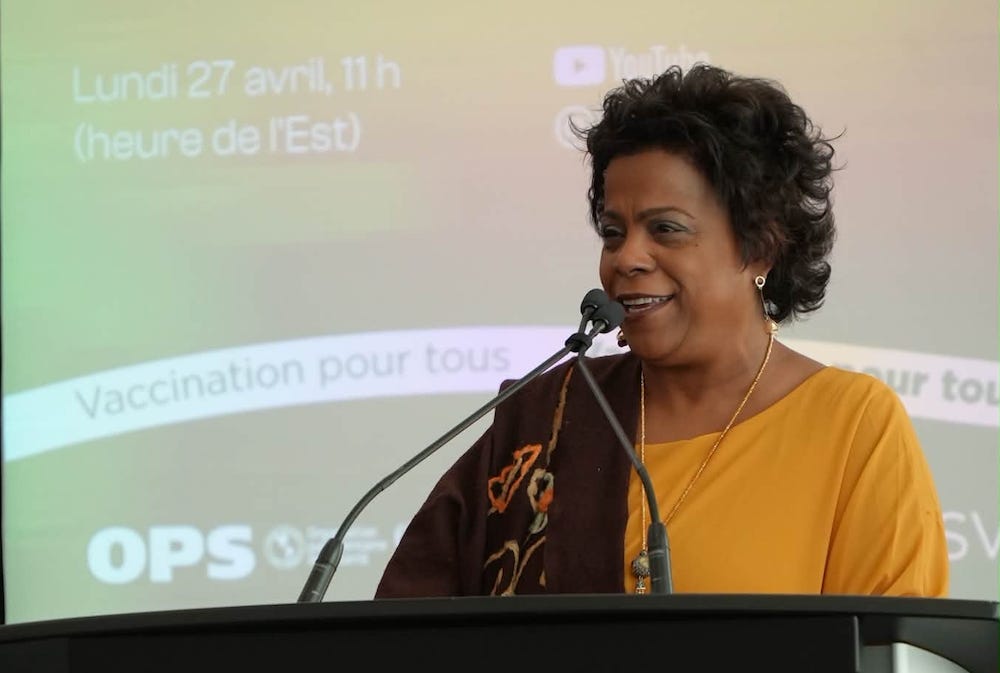
The National Post’s Rahim Mohamed reports that federal Health Minister Marjorie Michel admitted to speaking with Alberta’s Minister of Primary and Preventative Health Services Adriana LaGrange about Bill 11 earlier this month.
LaGrange is the senior of Alberta’s four health ministers who were named following the province’s dismembering of the Alberta Health Services province-wide health authority in 2024. She introduced Bill 11 into the Legislature last year.
“As I’ve said every time, I’m the federal minister, so I’m the guardian of the Canada Health Act,” said Michel told the Post.
“Our two departments should be engaged because, if they were to move in (the wrong direction), then Health Canada could say, ‘no, if you do this, you will be out (of the Act),’” said Michel.
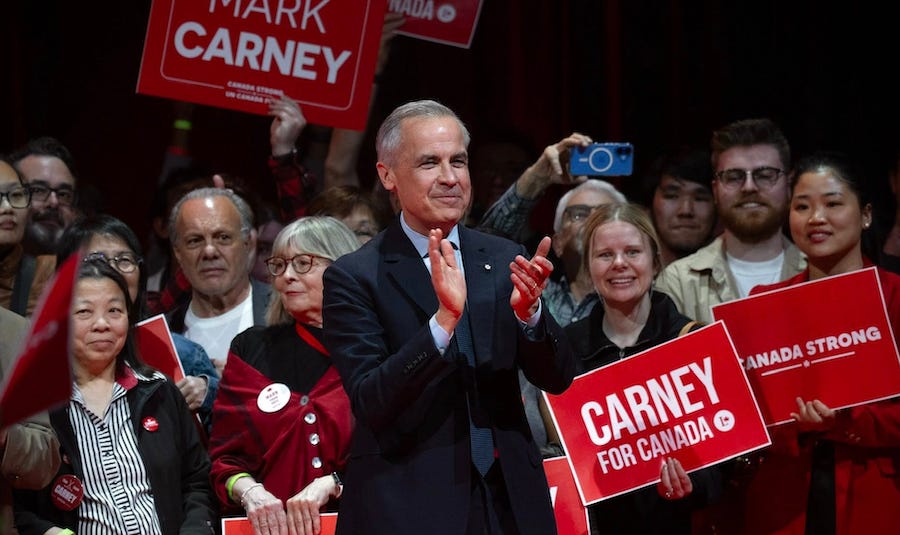
The federal health minister’s measured comments weren’t exactly a call to the barricades to defend universal health care in Canada, but it’s no shock that Prime Minister Mark Carney’s government might be reluctant to wade too far into new disputes with the UCP government.
Carney’s relationship with Premier Smith has warmed considerably after the signing of last year’s much-lauded Memorandum of Understanding on energy and electrification projects and his support in Alberta remains surprisingly high for a Liberal Prime Minister (even one who grew up in Edmonton).
And anything perceived as overreach or interference by the federal government could also give fuel to independence activists and 51st State agitators desperately trying to fan the flames of Alberta separatism ahead of an expected separation referendum in October 2026.
But Carney and Michel aren’t just feeling pressure from outside groups to stand up for public health care, they are feeling it from inside the Liberal Party as well.
Delegates to the Liberal Party’s national convention in Montreal earlier this month voted unanimously in favour of two policies that take direct aim at key pieces of Premier Smith’s political agenda.

Introduced by past St. Albert-Sturgeon River candidate Lucia Stachurski, the policy proposals call for the Liberal Party to oppose the implementation of Bill 11 and a big item on Smith’s sovereignty agenda: the creation of an Alberta Pension Plan.
“Our universal healthcare system is under coordinated across the country. There is a shift towards for-profit clinics that divert federal transfers away from public care and in many cases bill Canadians out-of-pocket for assured services,” Stachurski said when she took the floor to introduce the motion. “We cannot allow a two tier healthcare system to become the Canadian norm.”
“Recently, Alberta passed Bill 11, allowing physicians to work in both the public and private sectors laying the groundwork for a two tier health system disadvantaging the most vulnerable in our society and advantaging the wealthiest,” she said. “If this is allowed to go unchallenged, other provinces will also take similar measures and our valued universal healthcare will no longer exist.”
Titled “Enforcing the Canada Health Act against privatization,” the policy proposal Stachurski presented to Liberal convention delegates read:
WHEREAS provincial governments are increasingly contracting private surgical and diagnostic providers at higher costs that, divert federal health transfers from public care;
WHEREAS some Canadians are being billed out of pocket for services that are medically insured under the Canada Health Act, undermining the principle of universal access;
WHEREAS hospital operating rooms remain underused as nurses and anesthesiologists migrate or are directed to private clinics, worsening surgical wait times;
WHEREAS Section 12(1) of the Canada Health Act mandates that provinces negotiate service prices with recognized professional organizations, not with individual contractors or for-profit clinics;
WHEREAS Alberta’s pivot from publicly delivered to privately contracted health care services is setting a precedent that normalizes profit-based models across Canada, undermining universal health care and equal access to essential health/hospital services.
BE IT RESOLVED that the Liberal Party of Canada urge the Government of Canada to:
Direct the Minister of Health to initiate formal consultations with provincial Ministers of Health regarding contracting for-profit surgical/diagnostic and hospital services and its impact on public accessibility and wait times;
Incentivize standardized evidence-based annual provincial reporting on levels of private contracting, associated costs to the taxpayer, and effects on service accessibility, under the Canada Health Act;
Review the Canada Health Act to initiate amendments to strengthen universal health care across Canada.
Stachurski also introduced a policy proposal aimed at protecting the Canada Pension Plan by calling on the federal government to allow Alberta workers to choose whether they would leave the Canada Pension Plan or join a new provincial plan if the Alberta government creates its own pension plan to replace the CPP.
“Alberta is proceeding claiming a large portion of CPP. If Alberta is successful, other provinces would follow suit putting one of the world‘s best public pension pan plans at risk,” Stachurski said when she introduced the motion at the Liberal Party convention.
“This resolution recognizes that we can’t prevent the Alberta government from proceeding with this however we urge the government to protect those citizens that are already receiving it, and those who have already contributed to it by giving them the option individually of staying with the CPP and not moving their funds to the APP,” she said.

The UCP government has been inching towards pulling Alberta workers out of the CPP and replacing it with a provincial Alberta Pension Plan, something that province’s are allowed to do under the CPP rules but no province has ever done. It is a key element of Smith’s “sovereign Alberta within a united Canada” pitch and was featured in the Free Alberta Strategy co-authored by the Premier’s Chief of Staff, Rob Anderson.
The UCP’s argument in favour of creating an Alberta Pension Plan hinges entirely on removing all Alberta workers from the national plan — something Smith has said would entitle her government to roughly 53 percent, or $334 billion, of CPP assets.
Despite it being a deeply unpopular idea in Alberta and the government’s pension engagement chairman comparing it to a “renovation from hell,” the UCP is stuck on the idea. The final report from Smith’s Alberta Next Panel, which toured the province last year, ranked the APP as it’s second recommendation:
Provide Albertans with a detailed Alberta Pension Plan proposal outlining what benefits, management structure, contribution rates and implementation plan an APP would include. A provincial referendum asking Albertans whether to establish an APP and exit the CPP should only be scheduled after this proposal is provided to Albertans.
Results of the Alberta Next Panel survey, released by the government only after months of tenacious persistence by Edmonton Journal reporter Matthew Black, show the Alberta Pension Plan remains unpopular among Albertans.
Policy proposals passed at a party convention don’t automatically become government policy and are sometimes easy for longstanding governments to ignore but they do show where the party’s most active members stand on policy issues. As we have learned with the UCP in Alberta, an extremely engaged membership base can hold significant leverage over a government’s legislative and political agenda. That said, the Liberal Party of Canada is a different political beast than the UCP.
While Carney likely wants to avoid a big fight over health care if he can, it will be more difficult to avoid a fight over the assets in the Canada Pension Plan if the UCP government moves to create an Alberta Pension Plan. While the Alberta government’s numbers are absurdly high, removing such a large amount of assets would devastate the CPP and throw the retirement security of Canadians in other provinces into total chaos.
The UCP’s privatization push has come under intense scrutiny, especially after serious allegations of corruption and political interference were levelled against cabinet ministers and senior staffers in the Premier’s Office involving contracts with private surgical companies and the purchase of Turkish-made children’s medicine. The scandal has since spiralled into an overwhelming web of Stanley Cup playoff hockey tickets, rental houses, addiction treatment centre construction, court cases, lawsuits, restraining orders, and intimidation and harassment.
The NDP opposition has dubbed it “Corrupt Care.”
Much of the sunlight shone on this scandal is a result of impressive work done by intrepid investigative journalists at the Globe & Mail, including Calgary-based reporter Carrie Tait, who was recently named as Canada’s Journalist of the Year by the National Newspaper Awards.
The steady stream of scoops broken by Tait and her Globe & Mail co-workers has lodged a giant thorn in the side of the UCP government and recently earned her a rude insult from government house leader Joseph Schow.
A new survey conducted by respected pollster Janet Brown for the CBC shows the UCP with 49 percent support across the province and the NDP with 36 percent.
In Calgary, the Smith’s UCP is at 48 percent and the NDP at 37 percent. And in the NDP-stronghold of Edmonton, NDP leader Naheed Nenshi’s party is sitting at 45 percent ahead of the UCP at 38 percent. Outside Calgary and Edmonton the UCP dominates with 62 percent support and the NDP left trailing with 23 percent.