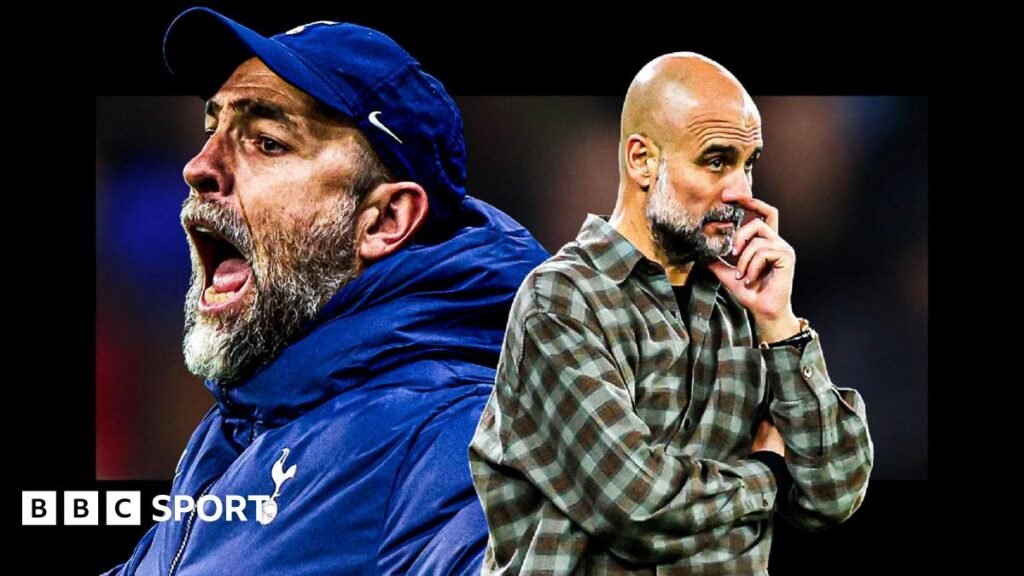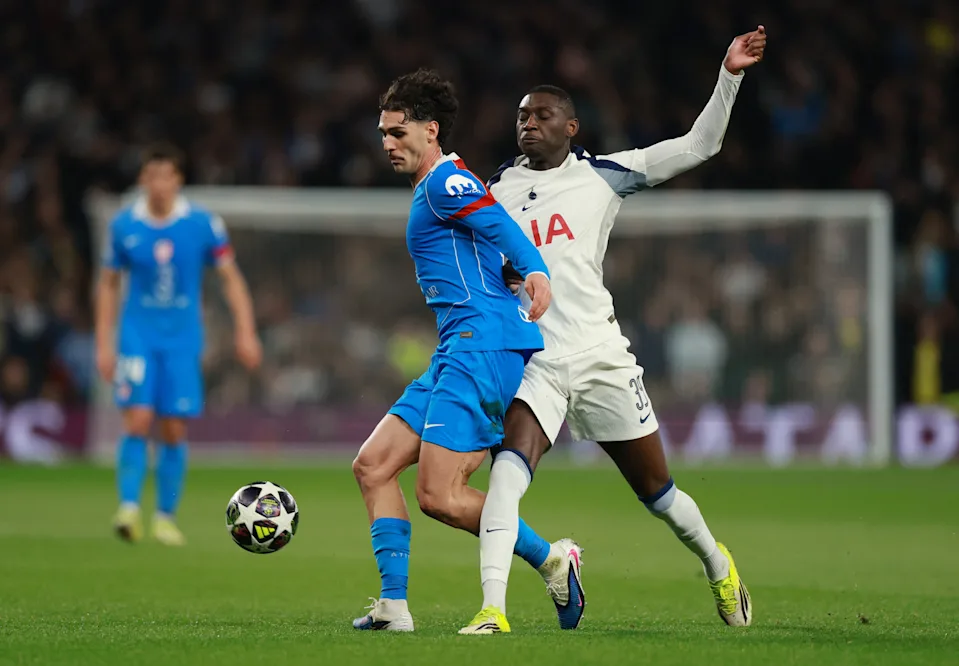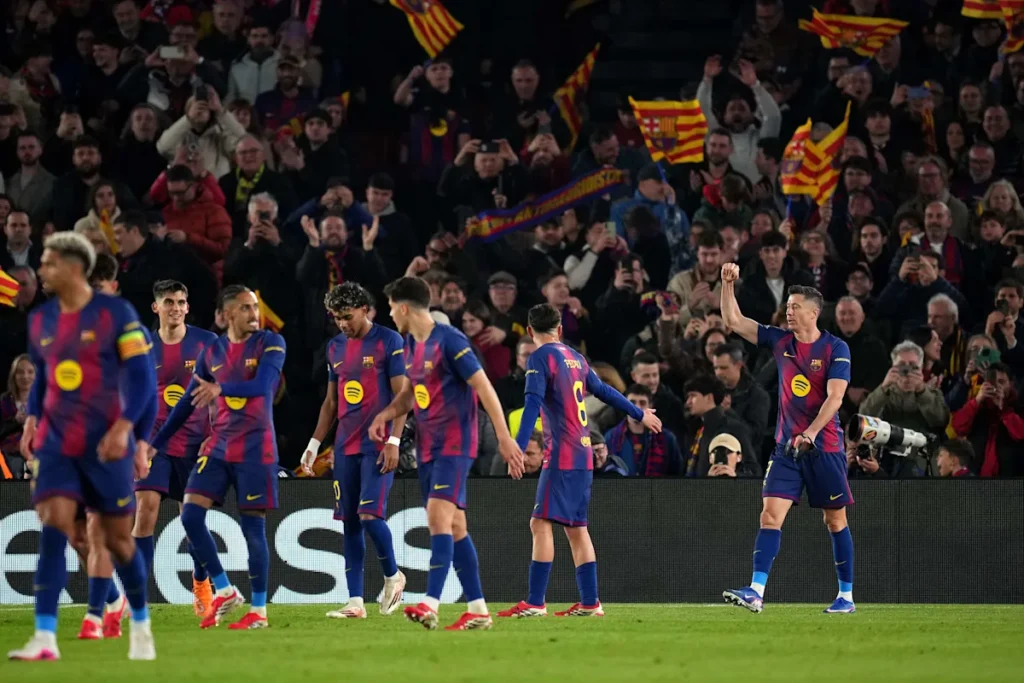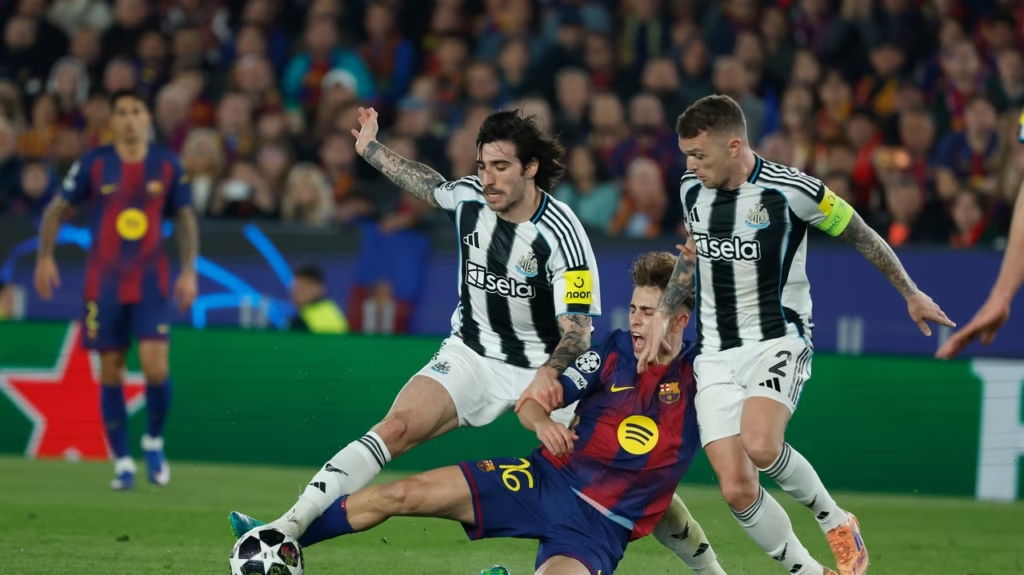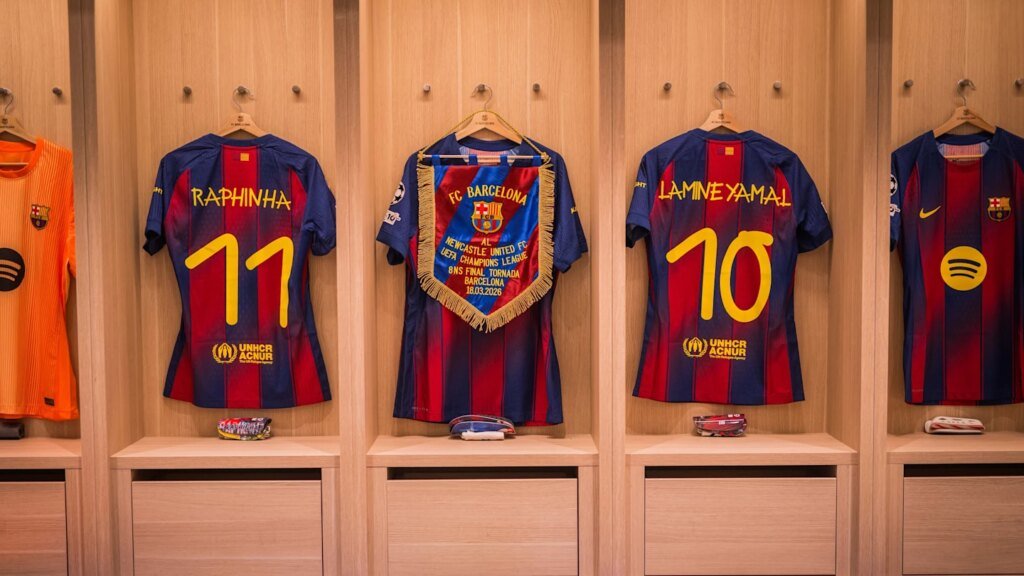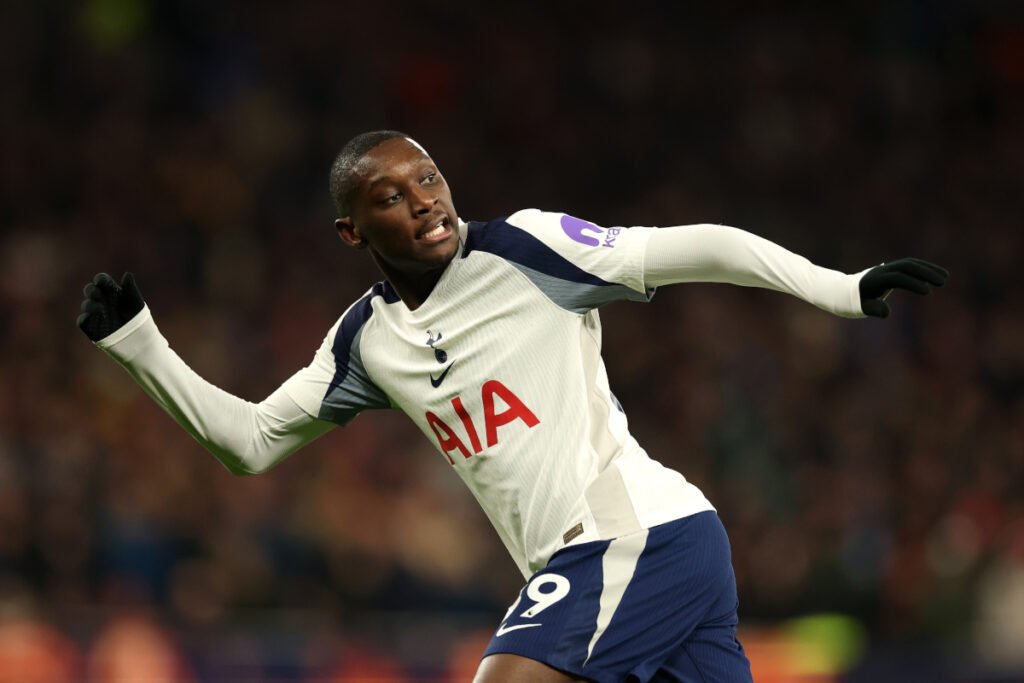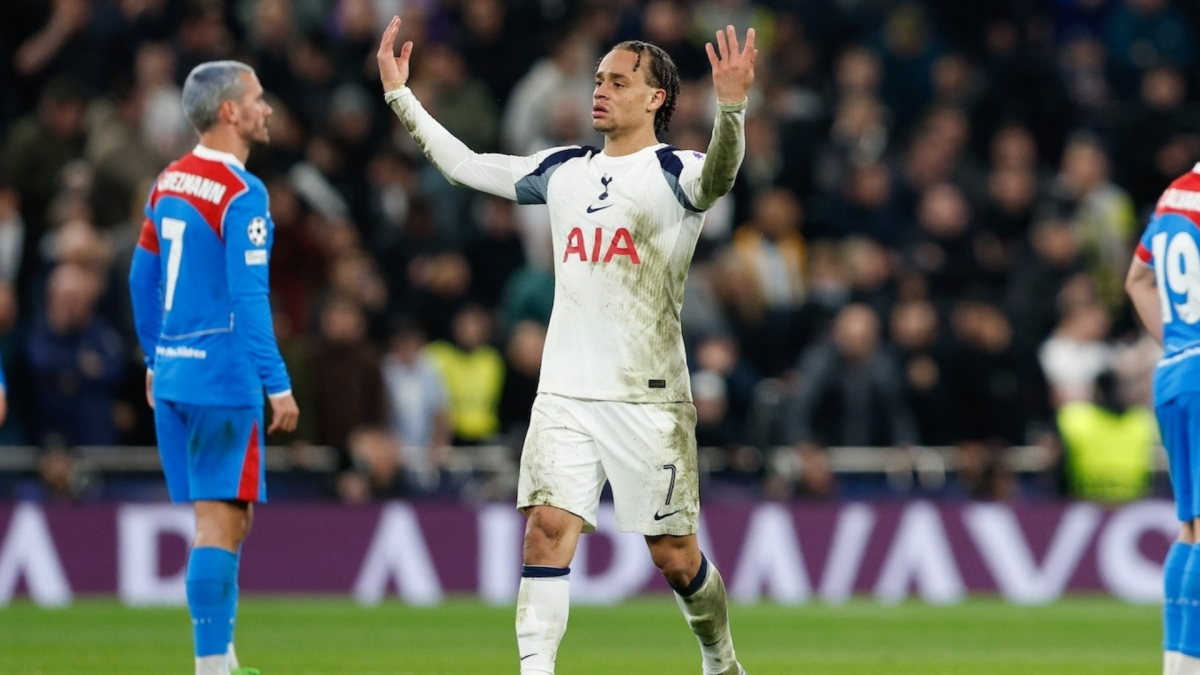
What a chastening eight days for the Premier League. The Champions League round of 16 began with talk of whether all six English representatives might blitz their way into the quarterfinals, but instead four fell by the wayside and in quite brutal fashion. Newcastle United and Chelsea each gave up eight goals on aggregate; Manchester City were blitzed by their old rivals Real Madrid, and Tottenham, well, they got what they needed. They’re free to focus on what really matters, their ongoing involvement in the Premier League.
The other three, though, might just feel that this has been a harsh reaffirmation of their status in Europe’s food chain. And that, really, should be the starting point of any assessment of how the Premier League just fared. In 2026, there is a clearly established pecking order. It’s called the Deloitte Football Money League. And that gives you the clearest indication as to why three Premier League representatives fell short; they got beaten up by the rich kids. Manchester City to Real Madrid, Chelsea to Paris Saint-Germain, particularly Newcastle to Barcelona, the gaps between these sides run into nine figures worth of revenue. Tottenham? Well, I can’t end every paragraph saying, “Lads, it’s Spurs.”
You can pick some issues with the specifics of the Money League in any season, nor should you use it as a guide for footballing quality. Manchester City might have trailed Real Madrid by over $300 million in revenue last season, but in the post-Abu Dhabi age they have been able to commit funds that the LaLiga giants can’t dream of. Then again, Madrid haven’t really needed to pay big transfer fees to get superstars.
There are probably similar cases to be made to balance the equation towards Chelsea and Newcastle, but here’s the fundamental point. When we say that the Premier League’s leading teams have a prohibitive financial advantage over the vast majority of their European counterparts, there are perhaps as few as four teams who sit outside that group, that can afford to recruit and retain the sort of elite playing and coaching talent that would otherwise be hoovered up by the Premier League’s big six (and maybe the rest). They are Real Madrid, Barcelona, Paris Saint-Germain and Bayern Munich. It was the misfortune of Manchester City, Newcastle and Chelsea that they drew three of them. Though with six Premier League teams and those four all in the last 16, somebody was always going to be drawing the short straw.
Say whatever you want about the state of the Premier League, whether the man-to-man press and set-piece meta has spoiled the game, how much of their own Kool Aid these teams have been mainlining of late, you cannot escape the fact that the reason why English teams have been knocked out is that they got some pretty rough draws. If City got Bodo/Glimt while Liverpool and Tottenham had their round of 16 pairings switched, teeth might be being gnashed over whether the Premier League is warping the Champions League. It’s a cup competition, don’t overindex it.
The minutes load
The fact that this is basically a reflection of a rough draw doesn’t mean there aren’t other factors playing against the Premier League. The most widely noted of those is the sheer weight of games on English clubs, given that they and their Portuguese counterparts are the only ones who compete in two domestic cup competitions.
It is pretty indisputable that English clubs play more. Arsenal and Newcastle will reach their half century of games in 2025-26 at the weekend; on average, the Premier League six have just completed their 47th match. None of their opponents has played more than 45, their average at 43.5. Three or four games over the course of eight months might not feel like much, but that is a few extra Wednesdays without any rest, another few hundred minutes in the legs that will really start to show in the spring months. There’s a reason why they call midweek games an Englische Woche in the Bundesliga. I’m going to give you the benefit of the doubt and not translate that for you.
And then there are the demands that each of those games places on players. It is simply the case that the strength in depth of the Premier League is far greater than any other league, whatever measure you use to assess that. In pure financial terms, the worst team in England’s top flight, Wolverhampton Wanderers, are the 29th richest according to Deloitte. They are also the 67th best team in the world according to the Euro Club Index, a pretty feisty matchup for the best teams in England. Their counterparts in Spain, Real Oviedo, are 146th. Were it not for Burnley, the Premier League would have a 20-team division to satisfy TLC. There would be no scrubs.
TruMedia
A basic assessment of each team in the division based on their non-penalty expected goals for and against shows how many teams are hovering not a millions miles away from bang average. There is maybe only one team that profiles as the sort that could back themselves to sweep the Champions League, but there are probably another 16, maybe 18, who’d fancy themselves to make a good fist of the group stages.
And if you’re playing more competitive games, that means much less time to rest. Maybe it’s not that much of a surprise that Malick Thiaw looked a bit leggy in the second half at the Camp Nou, given that the Newcastle center back was already into hour number 66 of his season so far.
CBS Sports
Just to reaffirm. Yes that is every club minute played by players who play in Europe’s top five leagues this season. If you look really closely you’ll spot a few guys on Spanish and German Europa League outfits, the sort who don’t have the luxury of resting in the league that Real Madrid or Bayern Munich might.
Were the English teams that bad?
There you have it then. The Premier League teams got tough games, and their teams are knackered. No wonder they were so abject.
What if they weren’t though? Yes the goal difference looks abysmal. English teams scored 18 and conceded 30 and that’s pretty bad. Dig into the expected goals, though, and something strange happens. The Premier League teams took 184 shots worth 22.3 expected goals. They allowed 137 shots worth 20.2 expected goals.
Now the xG for tally took a pretty big boost in the closing stages of the Tottenham and, particularly, Liverpool games. Then again, you could say the same about how the xG against went to the moon when Barcelona found a way through the Newcastle pressing trap after 135 minutes of football, where the Magpies were probably the better team. If you were to sum up the English experience of the round of 16 in one image, it would probably be Antonin Kinsky being shepherded down the tunnel at the Estadio Metropolitano after the worst 17 minutes of his career. If, however, you were more data inclined, you might be tempted to fire up the shot map from Chelsea’s 3-0 second leg defeat to PSG.
CBS Sports
Now I could show you the shot chart from the first leg, too, but we’re 1200 words in already, now is not the time to repeat myself. Ultimately, across two legs, PSG had eight goals from 2.05 xG and conceded two from 2.83 xG. Even if you’re convinced that there is some outlandish finishing brilliance in Khvicha Kvaratskhelia, Bradley Barcola and company — and there might well be — you would have to acknowledge that this was a tie where the breaks went the way of the Parisians.
This was a round where Manchester City looked pretty frisky at the start of both games, where Spurs and Chelsea probably played their opponents even in most moments of the first leg, bar the ones where their goalkeepers were gifting goals, where the ball didn’t quite go in in the moments Newcastle really needed it to at St. James’ Park. Mistakes happen, but they can just as easily happen to Matvey Safonov as Filip Jorgensen.
So what have we learned from the Premier League’s underwhelming showing in the round of 16? The biggest and richest teams in Europe are more than a match for their counterparts from England (how they fare against Arsenal could yet decide who lifts this trophy in May). English teams play more football than most, and that probably didn’t help over the last weekend. And yet ultimately, but for a few miscues, unfortunate bounces and individual brilliance, even the most gaudy of scorelines might have looked different indeed. So ermm, yikes, not a lot we didn’t already know. Oh, and lads, it’s Tottenham.