Warren Buffett Says This Investment Is “The Best Thing” — and It Could Turn $200 per Month Into $1 Million

The right investment can be life-changing, generating long-term wealth and helping build financial security. And according to Warren Buffett, it’s simpler than many people think to create a robust portfolio.

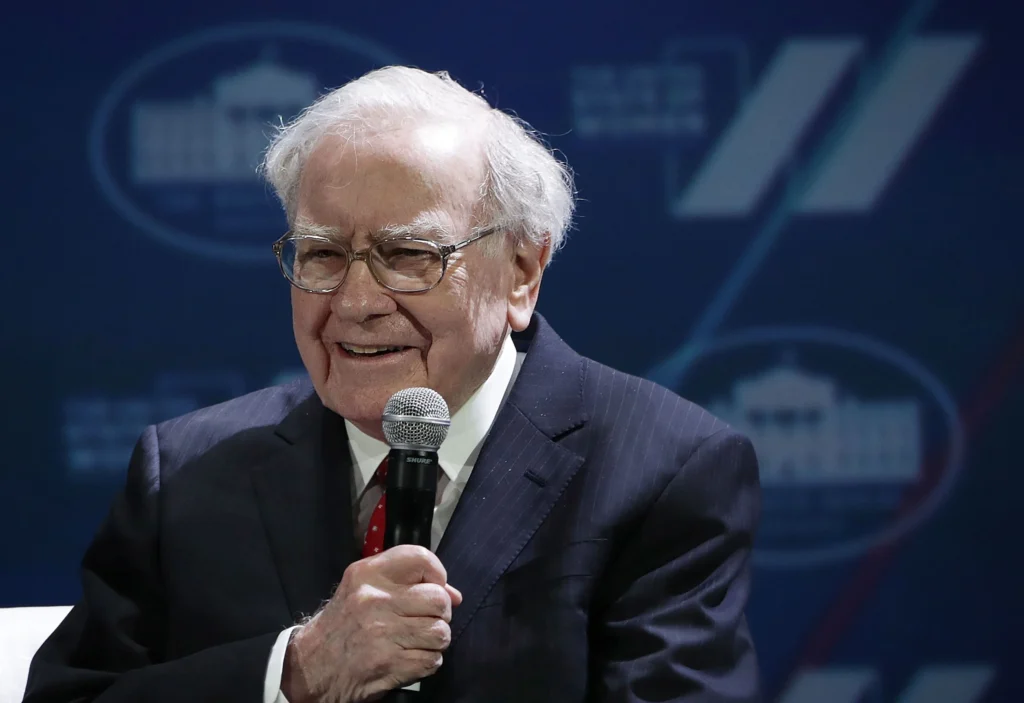
In Berkshire Hathaway‘s 2020 shareholder meeting, the investing legend offered some advice for everyday investors looking to earn more from the stock market.

Will AI create the world’s first trillionaire? Our team just released a report on the one little-known company, called an “Indispensable Monopoly” providing the critical technology Nvidia and Intel both need. Continue »

While everyone’s strategy is different, he noted that “for most people, the best thing to do is to own the S&P 500 index fund.” Here’s how that single fund could turn $200 per month into $1 million or more.

Image source: The Motley Fool.

Why invest in the S&P 500 right now?

Buffett has long recommended the S&P 500 index fund, even arguing that it can outperform actively managed funds — which are often much more expensive to own.

In 2008, he made a million-dollar bet that the S&P 500 (SNPINDEX: ^GSPC) could outperform a group of five actively managed funds over 10 years. His S&P 500 index fund earned total returns of around 126% over that period, while the five actively managed funds averaged total returns of just 36%.

Not only is the S&P 500 index fund a wealth-building powerhouse, but it’s also one of the safer investment options. Holding around 500 large-cap stocks across all market sectors, it offers immediate diversification in a single investment. Because many of the companies in the S&P 500 are industry-leading giants, this fund is also more likely to survive periods of market volatility.

Finally, as a passive investment, the S&P 500 index fund requires next to no effort on your part. You never need to choose individual stocks or decide when to buy or sell, making it ideal for busy investors who don’t have much time to commit to building a portfolio.

How to earn $1 million with an S&P 500 index fund

The S&P 500 index fund is a slow-but-steady type of investment, and it performs best when given several decades of uninterrupted time to grow. The more consistently you can invest and the longer you leave your money alone, the more you could earn over time.

Historically, the S&P 500 itself has earned a compound annual growth rate of around 10%. If you’re investing $200 per month while earning a 10% average annual rate of return, here’s approximately how much you could accumulate over time:

Number of Years

Total Portfolio Value

20

$137,000

25

$236,000

30

$395,000

35

$650,000

40

$1,062,000

Data source: author’s calculations via investor.gov.

While the S&P 500 index fund has plenty of advantages, one significant downside is that it can’t earn above-average returns. This investment is designed to earn returns in line with the market, so it can’t beat the market.

If you have plenty of time to let your money grow, you can still earn $1 million over several decades. But those looking to maximize their earnings in the stock market may prefer growth ETFs or hand-selected individual stocks that have potential for much higher returns than the S&P 500.

There’s no right or wrong answer here, as your investment preferences will depend on your goals and risk tolerance. For investors seeking a hands-off option that can deliver steady earnings over decades, the S&P 500 index fund could be a fantastic choice.

Should you buy stock in S&P 500 Index right now?

Before you buy stock in S&P 500 Index, consider this:

The Motley Fool Stock Advisor analyst team just identified what they believe are the 10 best stocks for investors to buy now… and S&P 500 Index wasn’t one of them. The 10 stocks that made the cut could produce monster returns in the coming years.

Consider when Netflix made this list on December 17, 2004… if you invested $1,000 at the time of our recommendation, you’d have $472,744!* Or when Nvidia made this list on April 15, 2005… if you invested $1,000 at the time of our recommendation, you’d have $1,353,500!*

Now, it’s worth noting Stock Advisor’s total average return is 991% — a market-crushing outperformance compared to 207% for the S&P 500. Don’t miss the latest top 10 list, available with Stock Advisor, and join an investing community built by individual investors for individual investors.

See the 10 stocks »

*Stock Advisor returns as of May 14, 2026.

Katie Brockman has no position in any of the stocks mentioned. The Motley Fool has positions in and recommends Berkshire Hathaway. The Motley Fool has a disclosure policy.

Warren Buffett Says This Investment Is “The Best Thing” — and It Could Turn $200 per Month Into $1 Million was originally published by The Motley Fool

Source link

Visited 1 times, 1 visit(s) today

Related Article

Trumpflation Is Evolving, and There’s a New Twist That Threatens to Sink Stocks

For the better part of the last four years, the stock market has been unstoppable. The artificial intelligence (AI) infrastructure build-out has helped propel the Dow Jones Industrial Average (DJINDICES:^DJI), S&P 500 (SNPINDEX:^GSPC), and Nasdaq Composite (NASDAQINDEX:^IXIC) to several record highs this year. But these gains may prove fleeting, courtesy of Trumpflation — inflation specifically

Old Republic International Earnings: What To Look For From ORI

Old Republic International Earnings: What To Look For From ORI Insurance conglomerate Old Republic International (NYSE:ORI) will be reporting earnings this Thursday before market open. Here’s what investors should know. Old Republic International missed analysts’ revenue expectations last quarter, reporting revenues of $2.33 billion, up 5.2% year on year. It was a softer quarter for

Cathie Wood’s Ark Invest Grew Its Portfolio to $15.4 Billion Last Quarter, With Tesla, AMD, and a New SpaceX Stake Making Up About 18% of ARKK Assets. Is Her Concentrated Bet Paying Off?

Cathie Wood is one of America’s most-watched tech investors, known for her extreme bullishness on Bitcoin and disruptive future technologies like robotics and artificial intelligence (AI). According to her company’s most recent 13F SEC filing, as of the second quarter, Cathie Wood’s Ark Invest portfolio had a total of $15.4 billion of assets under management.

Inflation Is Back. Is A Stock Market Crash Next?

The S&P 500 has gained 12.3% this year. That’s with oil above $100 a barrel, consumer prices climbing 3.7% a year and a 10-year Treasury yielding 5.1%. Stocks are behaving as though none of that counts. So could inflation knock the index down 40%? Can anyone call the market’s next move, whether that’s tomorrow, next

Advice for home sellers: ‘If you’re trying to time the market, you can’t’

Homeowners waiting for a better moment to sell should stop trying to time the market, National Association of Home Builders CEO Jim Tobin said. “If you’re trying to time the market, you can’t do it,” Tobin told Yahoo Finance on Monday. “If you talk to anybody who’s bragged about when they sold their home or

Traders are betting Netflix’s stock drama may be coming to an end

A slumping stock price. C-suit shakeups. Corporate layoffs. A failed takeover bid. It’s not a new drama on Netflix, but rather the drama that has surrounded the streaming giant as it limps into earnings with its stock nearly off 50% from its all time highs. Option traders are betting the drama might be coming to

CEO Elon Musk Just Gave SpaceX Investors Great News

Space Exploration Technologies Corp. (NASDAQ:SPCX) reported its third-quarter earnings after the market closed on Oct. 20, with results that largely topped Wall Street estimates. Here are the key numbers: Missed AI’s “Act 1”? Act 2 Could Be 14x Bigger. Most investors think they missed the AI boat because they didn’t buy Nvidia in 2005. But

2 Dividend Stocks Crushing the Market in 2026 (and Which Ones Can Keep Going)

Broader equities have been fairly resilient this year. However, there remains a very real possibility that macroeconomic problems and geopolitical tensions will eventually lead to a market crash. One way to prepare for that is to invest in dividend stocks with strong underlying businesses. Here are two options investors should consider: Johnson & Johnson (NYSE:

Meta Q3 earnings to test Wall Street’s stomach for AI spending

Meta (META) will kick off Big Tech’s earnings season when it reports its third quarter results after the bell on Wednesday. For the third quarter, Meta is expected to post earnings per share of $3.56 on revenue of $63.3 billion, according to Bloomberg analyst consensus estimates. That’s up from the $1.05 and $51.2 billion the

Prediction: Oct. 21 Will Be a Huge Day for the Stock Market

Artificial intelligence (AI) stocks have led this bull market over the past three years, pushing the S&P 500 to record highs. Investors were eager to get in on this promising technology early on, and in many cases, they’ve already greatly benefited. For example, chip designers such as Nvidia and Advanced Micro Devices, as well as

US Stock Market Today: S&P 500 Futures Climb On Strong Factory And Earnings Hopes

The Morning Bull – US Market Morning Update Tuesday, Oct, 20 2026 US stocks are set for a firmer open, with sentiment leaning risk on as investors focus on a clear upswing in American factory activity. The key driver this morning is stronger than expected industrial and capacity data. Industrial production rose 0.7% month over

President Donald Trump Claims, “We Don’t Have Inflation, and Tariffs Don’t Cause Inflation,” but a New Report Strongly Disagrees

Statistically, the stock market has delivered outsize annual returns under President Donald Trump. During his first non-consecutive term (Jan. 20, 2017-Jan. 20, 2021), the Dow Jones Industrial Average (DJINDICES:^DJI), S&P 500 (SNPINDEX:^GSPC), and Nasdaq Composite (NASDAQINDEX:^IXIC) soared 57%, 70%, and 142%, respectively. All three indexes have delivered an encore performance since the start of his

US housing market likely to stay bleak, Goldman Sachs warns

US housing market conditions are unlikely to change much just because the calendar turns from 2026 to 2027, Goldman Sachs warned. Elevated mortgage rates will keep homeownership out of reach for many Americans and, in turn, weigh on the US economy. “In 2027, we expect the headwind from affordability — reignited by the recent rebound

0
Would love your thoughts, please comment.x
()
x