Multimillion-pound plans for technology needed to defend the UK’s undersea cables and pipelines have been set out by defence chiefs.
The Atlantic Bastion programme, announced as part of the Strategic Defence Review, will combine autonomous vehicles and AI with warships and aircraft to identify threats to underwater structure and to defend them.
The Ministry of Defence (MoD) said it was “in direct response to a resurgence in Russian submarine and underwater activity”, including the spy ship Yantar, which was tracked around UK waters last month.

Russian spy ship on edge of UK waters
The project has attracted a combined investment of £14m from the MoD and industry this year, with hopes the technology can be deployed next year.
A total of 26 firms from the UK and Europe have submitted proposals for the project.
Last week Defence Secretary John Healey visited Portsmouth Naval Base to examine some of the early technology which could be used as part of Atlantic Bastion.
It included the SG-1 Fathom, an underwater glider; Rattler, an unmanned remote-controlled boat; a model of an autonomous anti-submarine helicopter called Proteus; and an uncrewed experimental submarine called Excalibur.

An unmanned surface vehicle called Rattler is demonstrated. Pic: PA
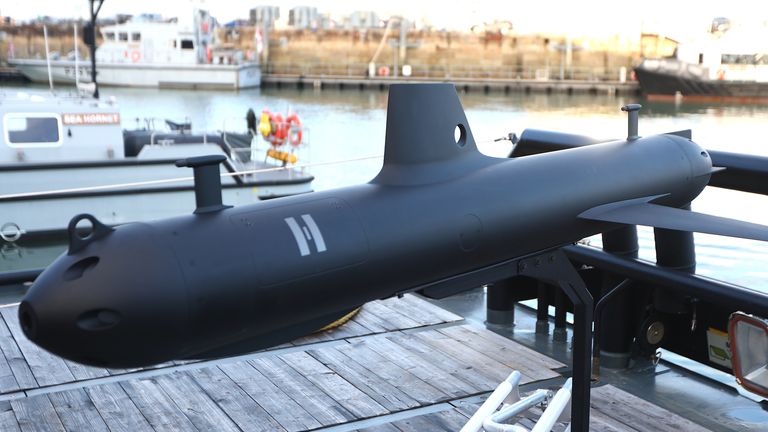
SG-1 Fathom is an autonomous underwater glider. Pic: PA
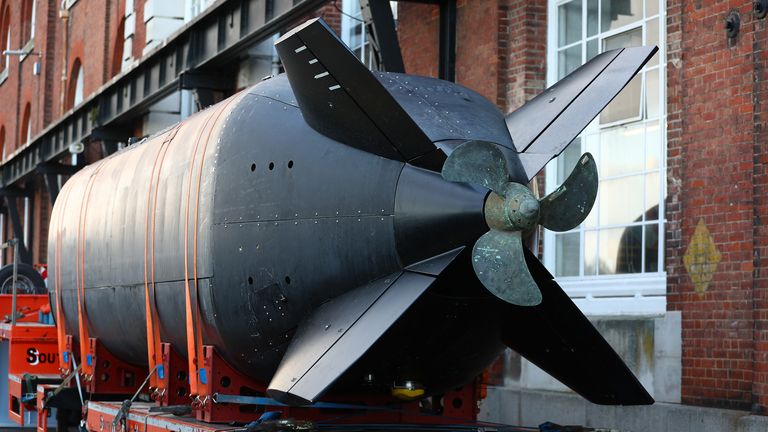
An experimental uncrewed sub called Excalibur is on view at Portsmouth Naval Base. Pic: PA
“People should be in no doubt of the new threats facing the UK and our allies under the sea, where adversaries are targeting infrastructure that is so critical to our way of life,” Mr Healey said.
“This new era of threat demands a new era for defence, and we must rapidly innovate at a wartime pace to maintain the battlefield edge.”
👉 Click here to listen to The Wargame on your podcast app 👈
The launch of Atlantic Bastion coincides with a speech from the First Sea Lord General Sir Gwyn Jenkins at the International Sea Power Conference in London on Monday.
Sir Gwyn is expected to say: “The SDR [Strategic Defence Review] identified the maritime domain as increasingly vulnerable – and that maritime security is a strategic imperative for the UK. It is time to act.
“This begins with Atlantic Bastion – our bold new approach to secure the underwater battlespace against a modernising Russia.”
The MoD spokesman said: “Atlantic Bastion will see ships, submarines, aircraft and unmanned vessels connected through AI-powered acoustic detection technology and integrated into a digital targeting web – a pioneering network of weapons systems that allow battlefield decisions for targeting enemy threats to be made and executed faster.”
Subsea infrastructure is the lifeblood of the UK’s connectivity, carrying 99% of international telecommunications data and vital energy supplies such as electricity, oil and gas.
Read more from Sky News:
Russia warns of war with Europe
UK undersea cables are vulnerable
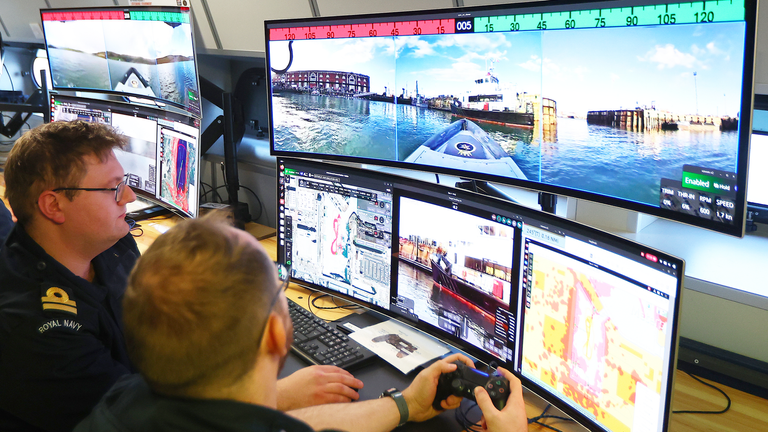
Royal Navy teams monitoring the high-tech military hardware. Pic: PA
On Thursday, the UK and Norway signed a defence agreement allowing their navies to operate a combined fleet of warships.
The pact is aimed at protecting critical undersea cables.