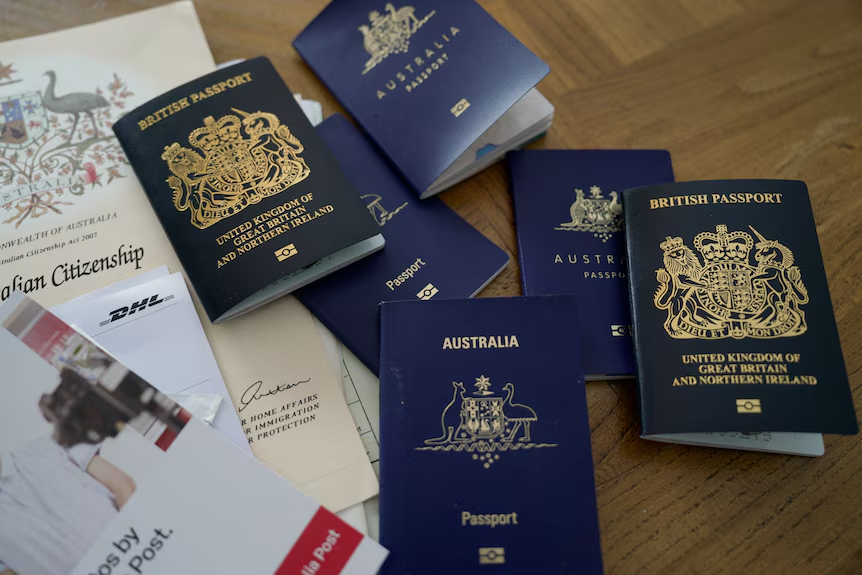
Australian travellers who hold dual British or Irish nationality have just days to adjust to the United Kingdom’s tough new border rules, which take effect on 25 February 2026. Under the ‘no permission, no travel’ policy, airlines, rail operators and ferry companies will refuse carriage to any dual citizen who cannot present a valid British or Irish passport (or a Certificate of Entitlement) at check-in. Traditional entry options—such as using an Australian passport together with an Electronic Travel Authorisation (ETA) or visa—will no longer be accepted at carrier or border control.
The change is part of the UK Home Office’s shift toward a fully digital immigration system built around biometric Entry/Exit recording. While the rules were published in 2025, many Australians only became aware of them in recent weeks, triggering a rush on passport renewals and first-time applications. The British High Commission in Canberra confirms that standard renewals are currently taking three to six weeks, and emergency travel documents are only issued in very limited circumstances.

If you need expert help cutting through the red tape, VisaHQ’s Australian portal (https://www.visahq.com/australia/) offers step-by-step guidance on passport renewals, second passports and up-to-date visa or ETA requirements. Their specialists can handle paperwork, track application progress and flag any additional documents you might need—saving both time and stress for business travellers and holiday-makers alike.
Australia’s Department of Foreign Affairs and Trade (DFAT) has updated its Smartraveller advice warning that hundreds of passengers risk being denied boarding. The Australian Travel Industry Association says travel agencies are fielding “chaos level” inquiries from corporate travel managers and holiday-makers alike. Some dual nationals are considering the costly step of renouncing UK citizenship to avoid future complications, but lawyers caution that the process can take months and may not be approved.
For mobility teams the immediate action is clear: audit all employees and assignees scheduled to enter the UK after 24 February. Anyone who is automatically a UK citizen by descent (including infants who have never held a British passport) must hold a British or Irish travel document before departure. Employers are urged to revise pre-trip check-lists, alert travellers and, where needed, fund expedited passport services to avoid business disruption. Longer-term, companies should update global mobility policies to reflect the UK’s move to digital permission-based travel and the likely introduction of ETAs for non-visa-exempt nationalities later this year.