While trying to keep his options on Iran open, President Donald Trump may be seeing them narrow.
After the third round of talks in Geneva ended with an apparent agreement for another “technical level” meeting in Vienna next week, the White House must assess whether its renewed diplomacy will yield results, or if it must embrace the wildly unpredictable, and likely brutal, step of war.
Militarily, the US signals are clear. This is likely the largest buildup of air and naval power in the region since the invasion of Iraq in 2003. Some refueling and A-10 ground-attack aircraft are parked in the view of tourists landing at civilian airports in Israel and Crete. It is not subtle, and it aims to ensure Tehran sees that Trump is serious and that his limited patience for a negotiated result is backed with substantial force. But that does not give the US president sudden omnipotence.
The United States has chosen diplomacy first. That matters, as its previous bombings of Iran’s nuclear facilities have self-evidently failed to do the trick, regardless of Trump’s assertions last year that the nuclear program had been “obliterated.” Trump apparently believes that Iran is intent on acquiring a nuclear weapon, despite Supreme Leader Ali Khamenei’s declarations to the contrary and a US intelligence community assessment last year.
US Secretary of State Marco Rubio said Wednesday he did not think the Iranians were currently enriching uranium but that “you can see them always trying to rebuild elements of” their program. If the White House believed US forces could bomb away what remains, it is likely it would have chosen to swiftly pursue that option — or asked Israel to — without telegraphing its plans. Instead, the administration probably believes that a diplomatic solution can better achieve its goals: with Iran verifiably without nuclear weapons and accepting the civilian inspections it has had in the past.
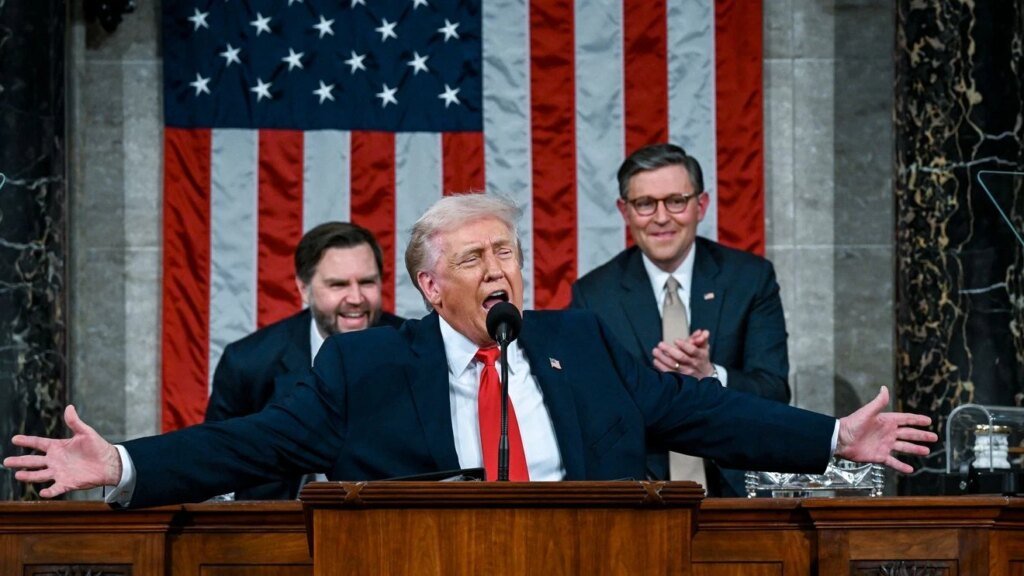
Iran has proven to be a master at delaying and complicating talks. The arrival of Trump’s “armada” may alter its equation and foment a deal faster. But the US position is also complex. It is still very unclear what Washington’s red lines are. Does the US seek just no nuclear weapon, or no enrichment of uranium? Trump’s State of the Union speech did not explicitly demand an end to enrichment, and his officials appear to be patchily briefing the media that they might accept “token” Iranian enrichment, perhaps purely for medical purposes.
Must a deal include limits on the range of Iran’s missiles, which Trump falsely claimed might soon be able to hit the United States? Must Iran also agree to curb its proxies in the region — severely dented by recent Israeli and US military action, and the fall of the Assad regime in Syria in late 2024?
It may play to Trump’s advantage to leave the Iranians guessing how much they must concede to send the armada home. A swift deal is possible: the 2015 Obama-era agreement provides the framework and the infrastructure for inspections. Negotiating teams don’t have to reinvent the wheel here — perhaps a bonus for US envoy Steve Witkoff, who has previously been criticized for a poor grasp of details in talks about Ukraine. Another bonus for Witkoff is the two aircraft carriers hovering in the wings, which surely provide an urgency the Obama-led talks rarely had.
Yet it is Trump’s stick, not this diplomatic carrot, that causes the White House real problems. The force dispatched to the region is large enough to send a signal of real intent and menace, but probably not large enough to sustain a weekslong military offensive. This makes regime change implausible.

There is also no ground component to US assets, and so ousting Ayatollah Khamenei would have to magically occur through a swift and coherent popular uprising, after targeted airstrikes wiping out most of the autocrat’s security structures. That’s a pipe dream.
Pentagon officials have also been warning — in leaks to the media — of their lack of munitions and resources for a large-scale campaign. This, together with reports that US aircraft carriers need servicing, puts Trump in great jeopardy if he orders a sustained, lengthy assault. It would be opening the US up to an Iraq-style quagmire, and doing so amid clear warnings that his troops are going into harm’s way without enough resources. That is politically almost suicidal for any president, however omnipotent they feel.

Trump’s more viable military options resemble something shorter and targeted — a sudden flurry of deterrent might. But that, too, carries strategic risk. Using only a fraction of the force deployed might suggest the limits of Trump’s appetite for conflict and reduce the potency of the US deterrent in the region.
Iran’s hard-line regime may easily endure a night or two of targeted strikes, fire back the token and limited salvos seen in the past, and conclude that the administration’s bluster — and even its armada — are eminently survivable.
Time is also not on Trump’s side. The Pentagon cannot keep such a vast percentage of its assets hovering for months. F-35s idling on tarmacs may be less expensive than the missiles of a hot war, but they still risk American readiness for future conflicts that the United States may not choose.
Trump’s extraordinary display of assets may deter Iran from retaliation after a short US strike, but at the same time it increases American targets for Tehran to hit. After the devastation of the 12-day war with Israel, the risk is not that a diminished Iranian military overwhelms the US in the region. Rather, it is one missile, or drone, slipping through air defenses and causing enough US casualties to force a cycle of retaliation. Then the US could find itself in a war it knows is of choice, against an adversary convinced that its fight is existential.
Ultimately, without a swift deal, Trump’s military options are slimmer by the week. He has not prepared either the American electorate, or his hardware in the region, for a sweeping, crippling onslaught. Another short, sharp strike will likely not erase Iran’s nuclear program indefinitely. But it may expose the limits of Trump’s appetite for war. That would be a self-inflicted strategic fail, albeit a relief for a region on edge.