Donald Trump has warned Keir Starmer that the “US won’t be there to help you any more, just like you weren’t there for us” in his latest extraordinary rant against allies over the Iran war.
The US President told the UK and other countries which did not take part in strikes against Iran, to “get your own oil”, saying they should attempt to reopen the Strait of Hormuz, crucial for the world’s energy supplies, themselves now that the US had “done the hard part”.
He also reignited his row with Sir Keir Starmer, hitting out at the government, which he said “refused to get involved in the decapitation of Iran” and telling it to “start learning how to fight for yourself”.
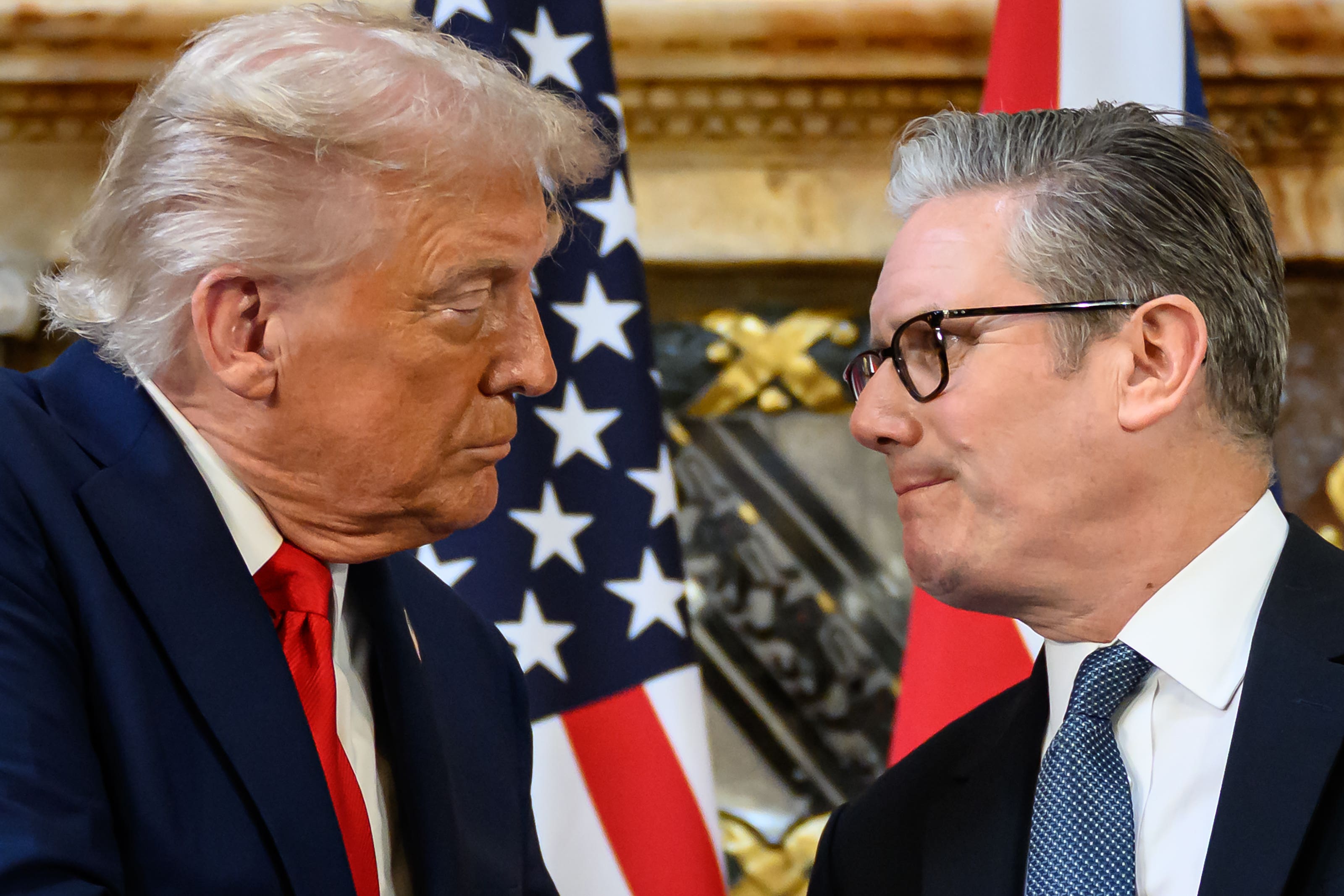
Taking aim at the UK in a post on his Truth Social platform, he wrote: “All of those countries that can’t get jet fuel because of the Strait of Hormuz, like the United Kingdom, which refused to get involved in the decapitation of Iran, I have a suggestion for you: Number 1, buy from the U.S., we have plenty, and Number 2, build up some delayed courage, go to the Strait, and just TAKE IT.
“You’ll have to start learning how to fight for yourself, the U.S.A. won’t be there to help you anymore, just like you weren’t there for us.
“Iran has been, essentially, decimated. The hard part is done. Go get your own oil! President DJT”.
Less than an hour after President Trump’s post, his defence secretary, Pete Hegseth, hit out at the Royal Navy, saying other countries “ought to be prepared to step up on this critical waterway as well”.
He told a press conference: “It is not just the United States Navy. Last time I checked, there was supposed to be a big, bad Royal Navy that could be prepared to do things like that as well.”
He added that the “world ought to pay attention, to be prepared to stand up” as he said that US forces had bombed an ammunition depot in the central Iranian city of Isfahan overnight.
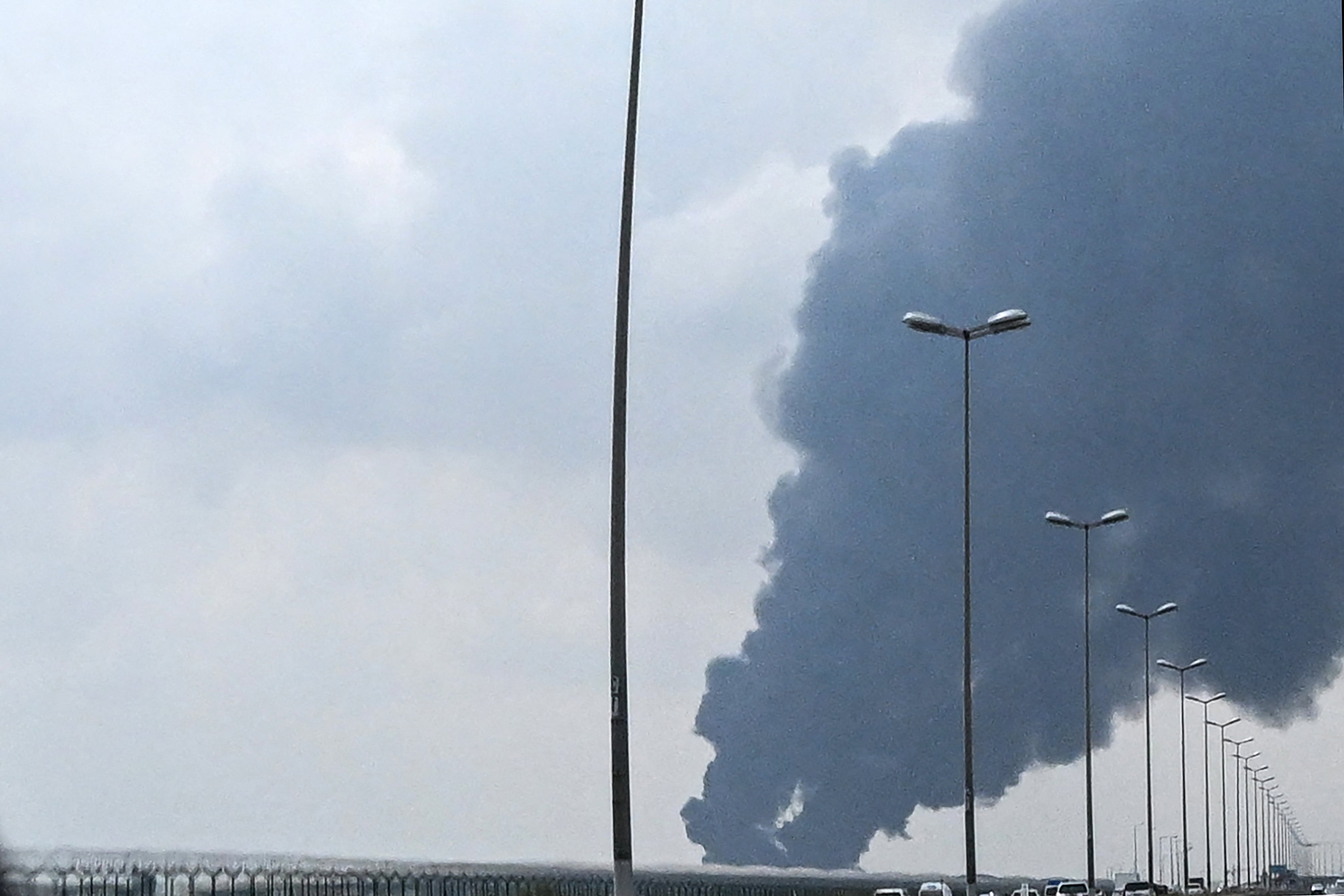
His warning came hours after Iran set alight an oil tanker off the coast of Dubai. The fire, on the Kuwait-flagged Al-Slami, which was carrying two million barrels of oil valued at more than $200m, was brought under control following a drone attack.
In response to President Trump’s rant, Downing Street pointed to Sir Keir’s comments in recent days in which he said his focus was on de-escalation in the war.
The president outburst follows a warning from the International Monetary Fund that the UK is facing one of the largest shocks from the conflict in the Middle East, saying Britain’s economy is “especially exposed” to spiralling prices because of its reliance on gas‑fired power. It comes after reports that the UK is set to receive its last-known shipment of jet fuel from the Middle East this week, and as petrol and diesel prices soar because of supply issues linked to the closure of the Strait.
President Trump has also reportedly told senior aides he is considering withdrawing from the conflict without a plan in place to open the key waterway. That would leave Tehran in control of the vital shipping lane, prolonging economic chaos around the world.
Iran has imposed a de facto blockade on the waterway, upending global oil and gas supplies, which have caused energy prices to surge. The Islamic Republic has allowed some ships to pass through in a “tollbooth” system, where vessels pay as much as $2m per voyage or according to particular political and financial conditions.
But prolonged closure threatens to extend disruption to the world’s energy supplies, with prices per barrel of oil continuing to rise above $100 – the first time since 2022.
Meanwhile, average UK household energy bills are forecast to rise by almost £300 from July, while motorists are already counting the cost of the war, with drivers paying £544 million extra for fuel since the US-Israeli bombing campaign began. Average diesel prices are up 40p a litre, while petrol has gone up 20p.
Households could also soon be paying more for groceries, experts have also warned, as the war drives up the price of synthetic fertiliser.
Sir Keir Starmer will chair a meeting of the Cobra crisis committee on Tuesday to consider the impact on households and the wider economy.
Energy consumers minister Martin McCluskey said: “Tackling the affordability crisis is our number one priority, and I know many families will be thinking about how events in the Middle East might impact the cost of living at home.
“We will continue to fight people’s corner through this crisis and, as the energy secretary (Ed Miliband) has said, if it’s necessary to intervene, we will.”
Costs for homes reliant on heating oil, which are not covered by a broader energy price cap, have already soared, prompting ministers to announce a £53 million package of support for customers.
Sir Keir has previously promised to keep a planned rise in fuel duty from September “under review in light of what’s happening in Iran”.
It is not the first time President Trump and Sir Keir have been at loggerheads during the war. Within days of it starting, the PM dramatically changed his mind to give the Americans permission to use RAF bases to tackle the threat from Iran for the “limited specific defensive purpose” of protecting UK and US allies across the Middle East.
But Sir Keir also warned earlier that the UK would “not be drawn into the wider war”.
Within weeks, President Trump had said he was “not happy” with the UK, saying it “should be involved enthusiastically” in efforts to reopen the Strait.
He also infamously said that Sir Keir was “no Winston Churchill’ and later branded Nato allies, including the UK, “cowards” as he claimed they had failed to help with the waterway.