March 6, 2026, 6:02 a.m. ET
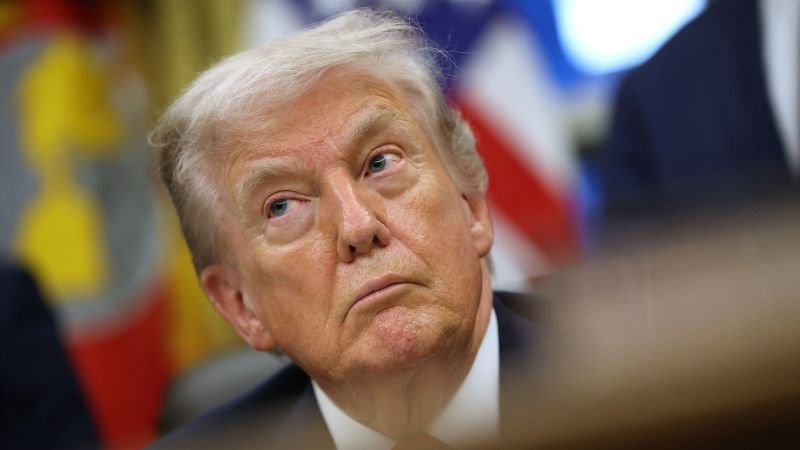
When President Donald Trump’s pardons of five former NFL players were announced in February, White House “pardon czar” Alice Marie Johnson described the decision as evidence of the president’s “continued commitment to second chances.” The pardons were framed as acts of compassion and redemption, reminders that clemency remains one of the most powerful authorities vested in the executive.
Second chances do matter. They change lives. I know this because I served nearly a decade in federal prison for a first-time, nonviolent cannabis offense and was able to rebuild my life after returning home. I understand in personal terms how meaningful the opportunity to start again can be.
But the current use of presidential clemency raises an uncomfortable question: Who is included in this vision of redemption, and who is left out?

While high-profile pardons attract national attention, thousands of people remain incarcerated across the country for cannabis-related offenses. Some are serving decades under sentencing schemes adopted at the height of the drug war.
Many were convicted of conduct that is now legal in much of the United States and regulated as a legitimate, revenue-generating industry. Their continued incarceration does not enhance public safety, nor does it reflect contemporary standards of justice.
A good example is Parker Coleman, who is 40 years old. He has served 15 years of a 60-year federal sentence for cannabis-related offenses. Absent intervention, he could spend the majority of his life in prison for conduct that would not constitute a crime in many states today.
His case is not exceptional. It is representative of a broader policy failure that has yet to be meaningfully addressed.
Biden granted clemency for nonviolent drug offenses. Trump should, too.

At the same time, the legal cannabis industry generates billions of dollars in revenue. States issue licenses, collect taxes and promote economic development tied to conduct that once resulted in mandatory minimum sentences. The law has evolved. Yet many of the people sentenced under prior regimes remain behind bars.
If the premise of clemency is to correct excess and account for changed circumstances, then these cases present a compelling starting point. Clemency exists to address precisely this kind of imbalance, where punishment no longer reflects current law, public consensus or basic proportionality.
There are examples of a path forward. In Maryland, Gov. Wes Moore has issued mass pardons for cannabis convictions, restoring opportunity to more than 181,000 people. Those actions were not dependent on individual fame or political access. They acknowledged that the underlying policy had caused widespread harm and required a broad remedy.
And during his term, President Joe Biden granted clemency to thousands of individuals convicted of cannabis and other nonviolent drug offenses. But there’s still much more work to do.
During my own imprisonment, I watched time strip from me things that cannot be recovered: family milestones missed, parents aging, relationships strained by years of separation. I was permitted to attend my father’s funeral briefly before returning to federal custody that same day.
Today, I work to ensure that people like Coleman – who will leave prison at 85 years of age if he is made to finish his full sentence – are not forgotten.
Pardoning cannabis convictions is popular with Americans
I speak regularly with individuals still serving extreme sentences for cannabis. Their stories are marked not by notoriety but by obscurity. They do not have publicists or political advocates. They have families who wait and children who grow up in their absence.

Second chances should not be rare gestures reserved for the visible and well-connected. The president and governors across the country should use their clemency authority to review and commute excessive cannabis sentences, prioritizing those still serving lengthy terms for conduct that is now legal in much of the country.
This isn’t as unlikely as some might think.
In his first term, Trump moved the Republican Party in the right direction on cannabis clemency. He took executive action to help dozens of individuals, a bold shift from the status quo. On the 2024 campaign trail, Trump said he would end excessive arrests and incarcerations for marijuana possession.
Sticking to that promise would bring much-needed relief to thousands of Americans and likely boost the president’s approval rating.
A 2024 YouGov poll found that 72% of Americans support clearing criminal records for past nonviolent marijuana-related convictions. According to a 2020 American Civil Liberties Union poll, 84% of registered voters support the release of people serving time for crimes that are no longer considered illegal.
A justice system that evolves must also correct itself. The promise of second chances will ring true only when it reaches the people still waiting for it.
Stephanie Shepard is executive director of Last Prisoner Project, a nonprofit working to redress the harms of cannabis criminalization through legal intervention, education and criminal justice reform advocacy. She previously served nine years in prison for a nonviolent, first-time cannabis offense.