Toyota Just Issued a Stark Warning About What China Is Doing to the Car Industry
Photo Courtesy: Autorepublika.
Former Toyota CEO Koji Sato used one of his last major appearances in the role to send a message that sounded less like routine corporate caution and more like an alarm bell. Speaking to about 700 executives from 484 supplier companies at Toyota’s annual supplier gathering on March 25, Sato warned that the industry’s old habits were no longer enough and, according to reports citing his speech, said, “Unless things change, we will not survive.” Just days later, Toyota confirmed that Sato would move to vice chairman and chief industry officer on April 1, with Kenta Kon taking over as president and CEO.
That warning matters because it came from the company that has spent decades setting the global standard for manufacturing discipline. Toyota remained the world’s top-selling automaker in 2025, even as production slipped in some regions and Chinese competition intensified. When a company with Toyota’s scale and reputation starts talking openly about survival, the point is not that collapse is imminent. The point is that the competitive ground underneath the global auto business is moving much faster than many traditional carmakers expected.
Photo Courtesy: BYD.
It is tempting to reduce China’s rise to a price story, but that only captures part of what is happening. BYD sold 4.6 million vehicles in 2025, even though growth slowed sharply and profitability came under pressure from the domestic price war. The company still entered 2026 with a major overseas push underway, first talking about up to 1.6 million exports, then adjusting the target lower before later expressing confidence it could reach 1.5 million overseas sales. That is the scale legacy automakers are now reacting to.
The deeper issue is control over the most important parts of the EV value chain. The IEA says China accounted for about 80% of global battery cell production in 2024, giving its automakers and suppliers an enormous structural advantage. CATL remains the world’s largest EV battery maker, while BYD has become a major force not just in finished vehicles but in batteries and charging technology as well. That is why the Chinese challenge is about far more than sticker price. It is about supply chain control, speed of execution, and the ability to move new technology into production quickly.
China’s auto surge also no longer belongs only to traditional manufacturers. Huawei’s intelligent automotive solutions business grew 72.1% in 2025, while Xiaomi has already become a meaningful EV player after entering the market with the SU7. Reuters has also reported that Chinese EV chassis and software can save global automakers billions of dollars and years of development time. That is a very different competitive threat from the one Western and Japanese brands spent decades preparing for.
Photo Courtesy: Škoda.
Not every established automaker is in the same position. Volkswagen has been trying to localize more aggressively in China while also pushing a new generation of smaller, lower-cost EVs in Europe, including projects like the Cupra Raval and Skoda Epiq. Renault, meanwhile, has leaned into the idea that affordable EVs still matter, reviving models like the Twingo and pushing its overseas expansion at the same time. Those are expensive, complicated transitions, but at least they suggest a clear strategic direction.
The situation looks more uncomfortable for several Japanese automakers. Honda has already scaled back parts of its EV plan to focus more heavily on hybrids. Nissan has moved to end production at its Wuhan plant in China as it restructures. Mitsubishi had already pulled out of vehicle production in China, and even Skoda, a European brand once heavily invested there, is now leaving the Chinese market by mid-2026. Those are not isolated footnotes. They are signs of how quickly China has become a brutally difficult place for slower-moving legacy brands.
Photo Courtesy: Autorepublika.
What makes Sato’s message especially important is that it was not only about Chinese rivals. It was also about Toyota’s own cost structure and habits. Toyota has for years run what it calls “Smart Standard Activity,” a supplier-focused effort to eliminate excessive quality requirements that add cost without adding customer value. In supplier materials, the company has acknowledged that it had been forcing suppliers to scrap parts over cosmetic issues on components customers would never even see. That aligns with reports that Toyota once rejected large numbers of wire harness connectors and other hidden parts over minor appearance flaws with no functional effect.
That is the real subtext of the crisis warning. Toyota is not suddenly abandoning quality. It is admitting that standards, processes, and cost assumptions built for an earlier era can become liabilities if they are not constantly reexamined. In a market now shaped by software speed, battery economics, and relentless Chinese competition, legacy automakers can no longer afford to treat time, cost, and manufacturing complexity as secondary issues.
Europe and the United States still have powerful brands, deep dealer networks, engineering talent, and decades of consumer trust. Those strengths are real. They also are not permanent advantages. If they are not matched by competitive battery technology, faster software development, and products people can actually afford, the gap will keep widening. Toyota’s leadership transition happened on April 1, but the message Sato delivered before stepping aside was larger than one company or one succession plan. If even Toyota believes the industry has entered a survival fight, everyone else should be paying attention.
This article originally appeared on Autorepublika.com and has been republished with permission by Guessing Headlights. AI-assisted translation was used, followed by human editing and review.
The quiet stretch of highway along Interstate 64 in Hampton, Virginia has seen its share of accidents. But few stories cut as deeply as the death of a one-year-old boy named Ma’Khai, a tragedy that has left a family shattered and resurrected hot-button subjects about youth, responsibility, and the deadly consequences of impaired driving. According
BEIJING, April 2 (Reuters) – China on Thursday repeated calls for a ceasefire in the Middle East and safe passage through the Strait of Hormuz in conversations with Western counterparts, widening its diplomatic effort to end the war that has disrupted the global energy market. China’s Foreign Minister Wang Yi discussed the Middle East situation
In 2025, Home Depot was the world’s largest home improvement retailer based on net sales, according to a recent Securities and Exchange Commission (SEC) filing. The retailer reported $164.7 billion in sales at the close of FY2025, up 3.2% from 2024. Because of the company’s sheer size and reach — it serves both DIYers and
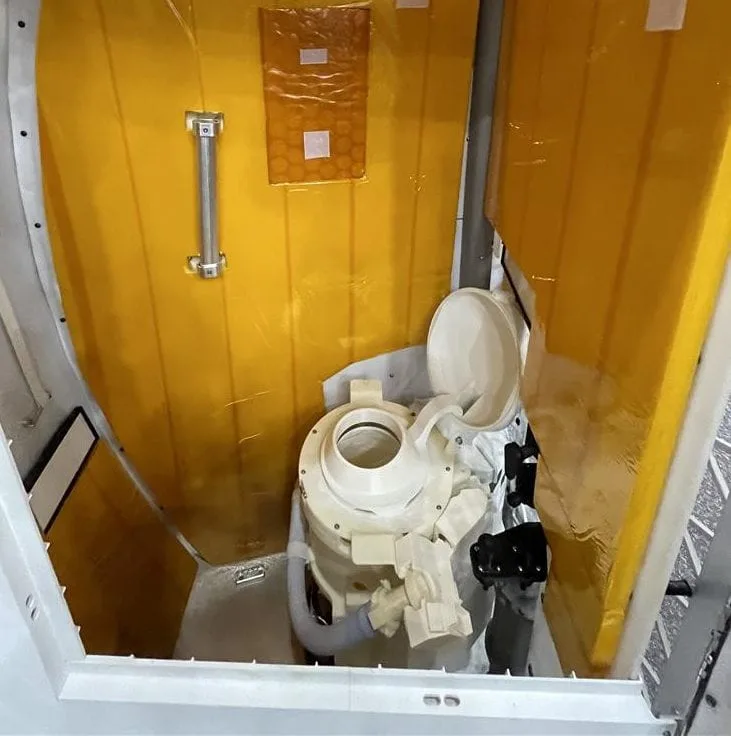
When launching a rocket into space, astronauts must prepare for any number of unforeseen problems, from fuel leaks to faulty sensors. The last issue they might expect at the critical moment is a toilet malfunction – but Nasa astronauts were forced to hold their bladders for the first six hours on board the Orion spacecraft.
XRP exchange reserves dropped from 3.76 billion to roughly 1.66 billion since October 2025, a 57% decline driven by ETF custody, whale cold storage moves, and Korean exchange withdrawals. Despite the outflows, the XRP price has fallen 64% over the same period because overhead selling from underwater holders and macro pressure has overpowered the supply
More than 200 years after being sunk by Adm. Horatio Nelson and the British fleet, a Danish warship and part of a sailor’s jaw have been discovered on the seabed of Copenhagen Harbor by marine archaeologists. Working in thick sediment and almost zero visibility 50 feet beneath the waves, divers are in a race against
A middle school girl in Lee County is recovering at home after a terrifying Tuesday morning at her bus stop on Coconut Road turned into something nobody ever wants to live through. And something her grandparents definitely didn’t sign up for when they started their day. The student was doing everything right. She was standing
VATICAN CITY, April 2 (Reuters) – Pope Leo last May became the first U.S. leader of the global Catholic Church, but for the initial 10 months of his tenure he mostly avoided comment about his home country and never once mentioned President Donald Trump publicly. That era has come to an end. In recent weeks
MOSCOW, April 2 (Reuters) – Russia is ready to contribute to resolving the Iran conflict and President Vladimir Putin is continuing to talk with regional leaders, Kremlin spokesman Dmitry Peskov said on Thursday. “The president is continuing these contacts, and if our services are somehow required, we are, of course, ready to make our contribution
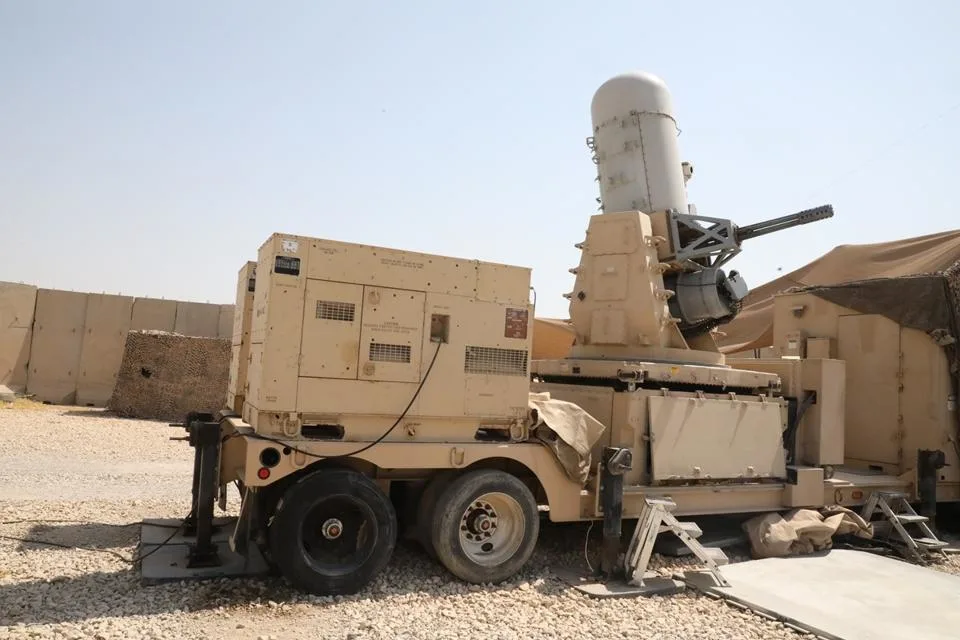
In any discussion of drone defense, Gatling-type guns are often presented as a trump card. These rapid-fire weapons, originally developed to defend U.S. warships against sea-skimming missiles, can easily down bigger and faster threats than a 120 mph Shahed drone. On paper they look devastatingly effective, and news reports speak enthusiastically of their “shredding Iranian
WASHINGTON—President Trump sought to reassure skeptical Americans that the war in Iran is in the national interest, arguing that the operation was necessary to decimate a regime threatening the U.S. and insisting that economic pain would be short-lived. President Trump delivering an address from the White House about the Iran war late Wednesday. In a
The Trump administration on Wednesday lifted sanctions against Venezuela’s interim president, Delcy Rodríguez, easing Washington’s path to deepen cooperation with Caracas to expand oil output and American foreign investment. Venezuela’s interim President Delcy Rodriguez. Her removal from the sanctions list of the U.S. Treasury Office of Foreign Assets Control ends prohibitions barring Americans from doing
After a hiatus of nearly a decade, China is jump-starting its island-building campaign in the South China Sea—and turning a once-obscure reef into what could be its largest military base in the disputed waters. A satellite image of Antelope Reef taken in February. The construction at Antelope Reef could give Beijing another runway, more missile
MOSCOW, April 2 (Reuters) – Students across Russia are being offered large financial incentives to join drone units fighting in Ukraine as operators and engineers, while companies in Russia’s central Ryazan region have been given quotas to sign up workers for the army, documents show. The recruitment effort, which comes as Russian forces continue to
STOCKHOLM, April 2 (Reuters) – Sweden will buy air defence and anti-drone systems worth 8.7 billion Swedish crowns ($916 million) from among others Saab and BAE Systems, the country’s defence minister said on Thursday. “It is more important than ever to invest in air defence capabilities,” Pal Jonson said, in a statement. “Protection against threats
Jen Shah spent some of her time behind bars with convicted sex trafficker Ghislaine Maxwell, but the former reality TV star said they had “limited interactions.” “I worked at recreation, and she would come in to work out,” Shah, 52, said during an interview with People published on Wednesday, April 1. “But her experience there
Russian soldiers at home have been killing, maiming, raping and looting at record rates since the start of the full-scale invasion of Ukraine. Moscow’s garrison military courts have seen a more than tenfold increase in murder cases involving servicemen in the past few years. They received 729 such cases between 2022 and 2025, compared to
Micron (NASDAQ: MU) stock recorded big gains in Wednesday’s trading thanks to bullish catalysts on two important fronts. The memory-chip company’s share price ended the day’s trading up 8.9% amid the backdrop of a 0.7% jump for the S&P 500 and a 1.1% gain for the Nasdaq Composite. The stock had been up as much
The race for control at Gateshead Council is heating up ahead of polling day, May 7 Gateshead Civc Centre(Image: Gateshead Civc Centre) Liberal Democrats in Gateshead say that control of the town is now a straight fight between themselves and Reform UK. At the opposition party’s local election manifesto launch on Tuesday evening, Lib Dem