The Surprises After One Year of ‘Liberation Day’: Neither Stock Market Crash nor Recession

“During the past year, investors have had to make sense of a great deal of noise and uncertainty, in addition to the human impact of global events. Although we would never want to draw major conclusions from a single year of market data, our analysis is interesting, and this period has served to remind us that headlines do not always tell the whole story. Even at a time when markets and geopolitics seem more entangled than ever, the figures can sometimes point to something different. Our main recommendation has been to encourage investors to diversify their equity allocations and, in that sense, it is encouraging to see that markets outside the United States are leading the way at a time of great uncertainty,” notes Ben Ritchie, Head of Developed Markets Equities at Aberdeen Investments, in light of these conclusions.

Economic Resilience

In the opinion of Jon Butcher, Senior U.S. Economist at Aberdeen, one year after “Liberation Day,” the U.S. economy has demonstrated resilience despite a clear cooling of the labor market. “Hiring slowed sharply in the months following the announcement of the tariffs, as companies assessed rising costs and policy uncertainty. Even so, growth held up better than expected, as households continued to spend and business investment accelerated. Tariffs did boost inflation, but the impact has been slower and smaller than the market initially feared,” says Butcher.

In addition, it is noteworthy that trade in 2025 did not contract, despite gloomy forecasts. “Both U.S. imports and Chinese exports reached new highs. Southeast Asia deepened its role in global manufacturing, India gained ground in selected sectors, and Brazil expanded commodity exports to China. Overall, trade grew faster than the global economy, while advanced economies and China reoriented away from geopolitically distant trading partners,” notes the McKinsey Global Institute in its latest report.

However, according to the think tank of McKinsey & Company in its report, tariffs triggered a reshaping of trade, with trade between the U.S. and China falling by around 30%. “The United States replaced approximately two-thirds of that gap with imports from other suppliers, while Chinese exporters of consumer goods, from electric cars to toys, cut prices by an average of 8% to find buyers in new markets. ASEAN prospered, increasing trade with both economies, but the European Union faced a double pressure: more Chinese imports and higher U.S. tariffs,” they add.

Lessons Learned

This episode leaves several lessons learned. First, according to the McKinsey Global Institute, changes in trade point to some lasting trends and, consequently, to the need for resilience in the face of shocks. “AI, the growth of emerging markets, and the evolution of China’s manufacturing approach are not temporary phenomena, nor is the growing role of geopolitics in reshaping trade, a shift that has been evident in the data for nearly a decade. Short-term developments also require a response. Tariff changes in 2025 were abrupt, and 2026 has already brought its own shocks. Companies need a long-term vision combined with agility,” they note.

Second, the Aberdeen economist warns that the political landscape has become even more uncertain: “The Supreme Court ruling on the IEEPA has cast doubt on the future of the tariff regime, and efforts to rebuild parts of it through other policy tools have left companies unsure about what the long-term rules of the game will be. For markets, the greatest risk is the growing perception among global investors that the United States is becoming a less reliable destination for capital. Concerns have increased about political volatility, central bank independence, and fiscal pressure. And although attention has shifted toward the Iran crisis and energy prices, tariffs remain a critical unresolved factor shaping how international capital perceives the United States.”

Finally, Capital Group reminds us that when markets are volatile, it is difficult to resist the temptation to do something, but they recommend staying the course. “What is the lesson of ‘Liberation Day’? Market downturns can be painful, but rather than trying to time when to enter or exit the market, the most sensible approach for investors is to stay the course. To weather market volatility, they should seek diversification across equities and bonds, while periodically assessing their risk tolerance in the face of elevated volatility. Although it may seem that this time is different, markets have proven resilient throughout history when faced with wars, pandemics, and other crises,” they insist.

Source link

Visited 1 times, 1 visit(s) today

Related Article

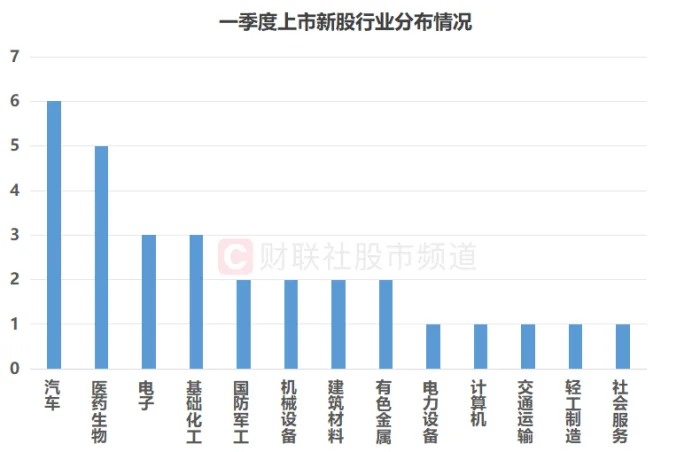
Hong Kong stock market IPO boom marks five-year peak as some major AI stocks surge 400%

An aerial view of Kowloon, Hong Kong Special Administrative Region Photo: VCG The Hong Kong Stock Exchange (HKEX) market delivered an impressive performance in the first quarter of 2026, with initial public offerings (IPOs) generating HK$110 billion ($13.3 billion) in proceeds, a record high for a single quarter since the second quarter of 2021, according

Goldman Sachs Adds 2 Dividend Stocks to Conviction List With Huge Upside Potential

The Goldman Sachs Conviction List is a curated list of stocks that the firm’s research team believes are highly likely to outperform the market. It’s a tool for investors to identify stocks with strong growth potential, frequently updated to reflect changes in market conditions and company performance. The list aims to identify stocks where Goldman

Amkor Technology (AMKR) Gained from Growing AI Packaging Solutions and Recovery Signals

American Century Investments, an investment management company, released its fourth-quarter 2025 investor letter for the “American Century Investments Small Cap Value Fund.” A copy of the letter is available to download here. U.S. stocks advanced during the quarter, with large-cap stocks slightly outperforming small-cap stocks, while both groups did better than mid-cap stocks. Across all market

Why Circle Internet Stock Surged 14.3% Higher Last Month But Is Falling in April

Circle Internet (NYSE: CRCL) stock posted strong gains in March’s trading. The cryptocurrency company’s share price managed to climb 14.3% in the month despite the S&P 500 declining 5.1% and the Nasdaq Composite declining 4.8%. Circle stock continued to move higher last month thanks to continued momentum from the encouraging earnings results it reported near

Jim Cramer Discusses Why Fiber Optic Plays Like Ciena Provided Recent Market Gains

Ciena Corporation (NYSE:CIEN) is among the stocks in focus as Jim Cramer reviewed the S&P 500’s top performers and the Nasdaq 100’s biggest laggards for the first quarter. Cramer mentioned the stock during the episode and said: Going further down the list, the eighth-best performer, Ciena, is, it’s in the same boat. It’s another fiber

Jim Cramer Discusses CoStar Group’s Stock Decline and the Threat of AI

CoStar Group, Inc. (NASDAQ:CSGP) is among the stocks in focus as Jim Cramer reviewed the S&P 500’s top performers and the Nasdaq 100’s biggest laggards for the first quarter. Third-worst was one I really wasn’t that familiar. It’s called CoStar Group, down 40%. Now, you can think of it as kind of a Zillow of

Middle Eastern Market Opportunities: Amanat Holdings PJSC And 2 Other Promising Penny Stocks

The Middle Eastern stock markets have recently shown mixed results, influenced by geopolitical tensions and economic uncertainties. Despite these challenges, the region continues to offer intriguing investment opportunities, particularly in smaller or less-established companies often referred to as penny stocks. While the term may seem outdated, these stocks can still represent significant growth potential when

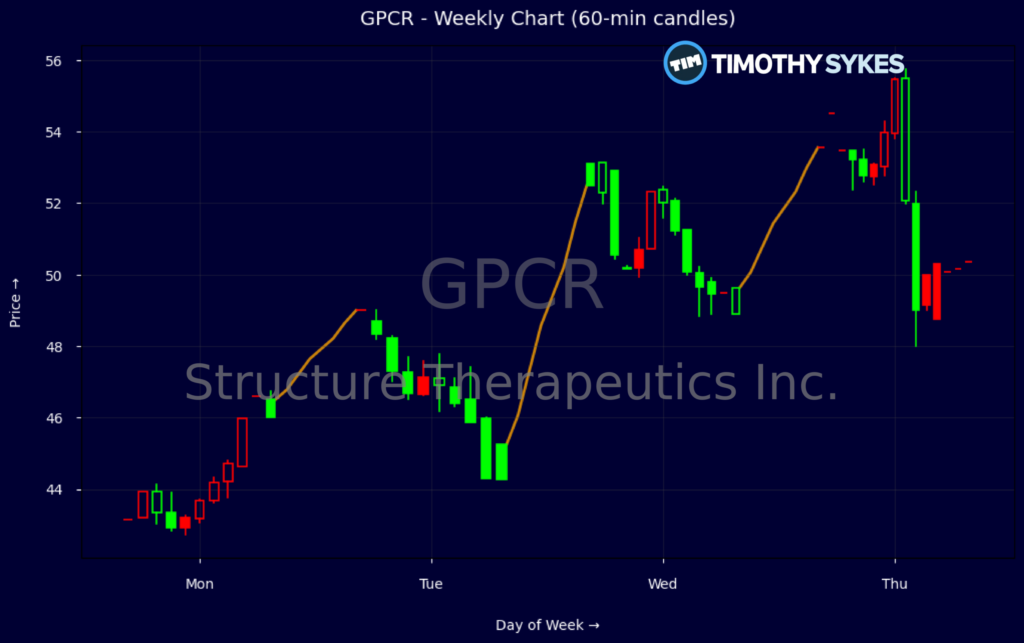
Aleniglipron Trials Fuel GPCR’s Rising Market Prospects

Structure Therapeutics Inc.’s stocks have been trading up by 6.74% amid positive sentiment from promising clinical trial results. Weekly Update Mar 30 – Apr 03, 2026: On Sunday, April 05, 2026 Structure Therapeutics Inc. stock [NASDAQ: GPCR] is trending up by 6.74%! Discover the key drivers behind this movement as well as our expert analysis

Why Some Investors Are Moving to Cash in 2026: Is That a Mistake?

With the S&P 500 and Treasury bonds moving sharply lower in March, investors have been shifting over to cash for safety. As of the end of February, there was approximately $8.25 trillion sitting in money market funds, a new all-time record high. It’s also a sharp increase from the roughly $5 trillion parked in these

4 Tech Stocks With More Potential Than Any Cryptocurrency

One of the most appealing narratives about cryptocurrencies is their purported sky-high potential. Bitcoin has seen multiple years in which the coin gained more than 200%. Ethereum and XRP shareholders also saw mammoth 12-month increases in recent years. But investing in cryptocurrency also means accepting massive volatility. The digital currencies often trade on market sentiment

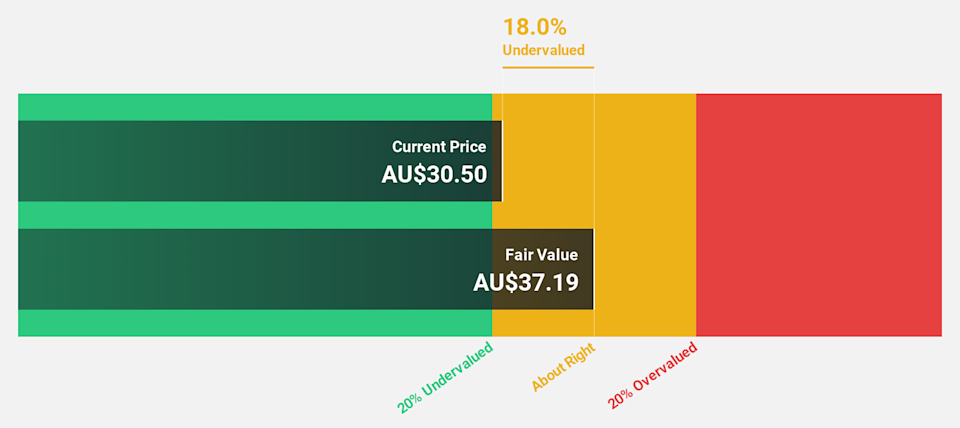
ASX Value Picks Featuring James Hardie Industries And 2 Other Stocks Trading Below Estimated Worth

As the Australian stock market experiences a positive shift, buoyed by optimism surrounding geopolitical developments and economic normalization, investors are keenly observing potential opportunities in undervalued stocks. In this environment, identifying companies trading below their estimated worth can be a strategic move for those looking to capitalize on market inefficiencies and long-term growth potential. Name

Most Investors Build Their Portfolio Backwards. Here’s the Right Order.

A lot of people build their portfolios without a real structure or strategy in mind. They often buy what feels right in the moment, usually because it’s performing pretty well. What that usually creates is a collection of stocks and funds, not a portfolio that’s built to function as a singular unit. Portfolio construction should

0
Would love your thoughts, please comment.x
()
x