
Journalist, Lianhe Zaobao
Rising numbers of young mainland-origin professionals and even Hong Kongers live in Shenzhen for bigger homes at half the price, using high-speed rail to keep Hong Kong jobs — boosting quality of life amid sky-high rents. Lianhe Zaobao journalist Tai Hing Shing takes a look at the good and the bad of this greater integration between Hong Kong and mainland China.
(Edited and refined by Josephine Hong, with the assistance of AI translation.)
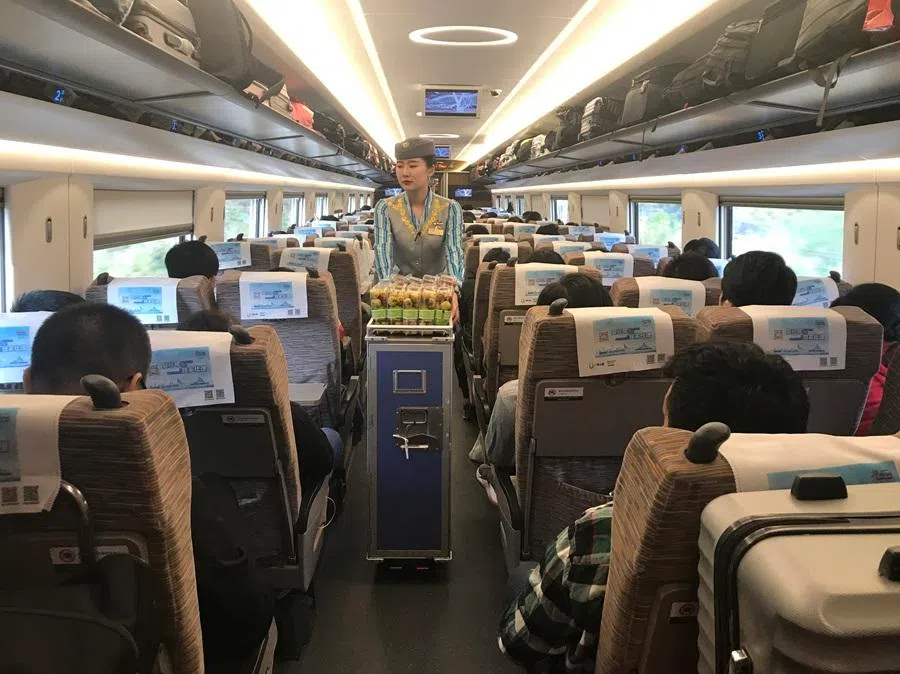
Wang Heng, a 24-year-old finance professional in Hong Kong, is originally from mainland China. He went to Hong Kong six years ago to pursue his studies, and after graduating last year, he chose to stay and work. In 2026, he adopted a cross-border commuting lifestyle, residing in Shenzhen and taking the high-speed rail to Hong Kong for work every day.
Reflecting on his early years in Hong Kong, Wang told Lianhe Zaobao about renting a cramped 70-square-metre apartment with two friends, which left him with little personal space. In contrast, now living in Shenzhen, he enjoys a much larger living space at half the rent of Hong Kong.
Despite spending over HK$2,000 (US$255) on transportation every month and two to three hours daily commuting between Hong Kong and Shenzhen, Wang finds this fast-paced lifestyle worthwhile.
“Shenzhen not only offers more space but also has a wide variety of food and excellent services. It’s ideal for young people and the middle class who value a good quality of life but don’t want to bear the high rent of Hong Kong,” he shared.
Since the Hong Kong high-speed rail opened on 23 September 2018, travel time between West Kowloon Station and Shenzhen Futian Station can be as quick as 14 minutes, while travel to Shenzhen North Station can take as little as 18 minutes.
Wang observed that during the morning rush hours, many high-speed rail passengers travelling from Shenzhen to Hong Kong are dressed in work attire, just like him. He shared, “Half of them are likely living in Shenzhen and working in Hong Kong. Most of these passengers are young, with the majority being mainlanders living in Hong Kong, while a small proportion are local Hong Kong residents.”
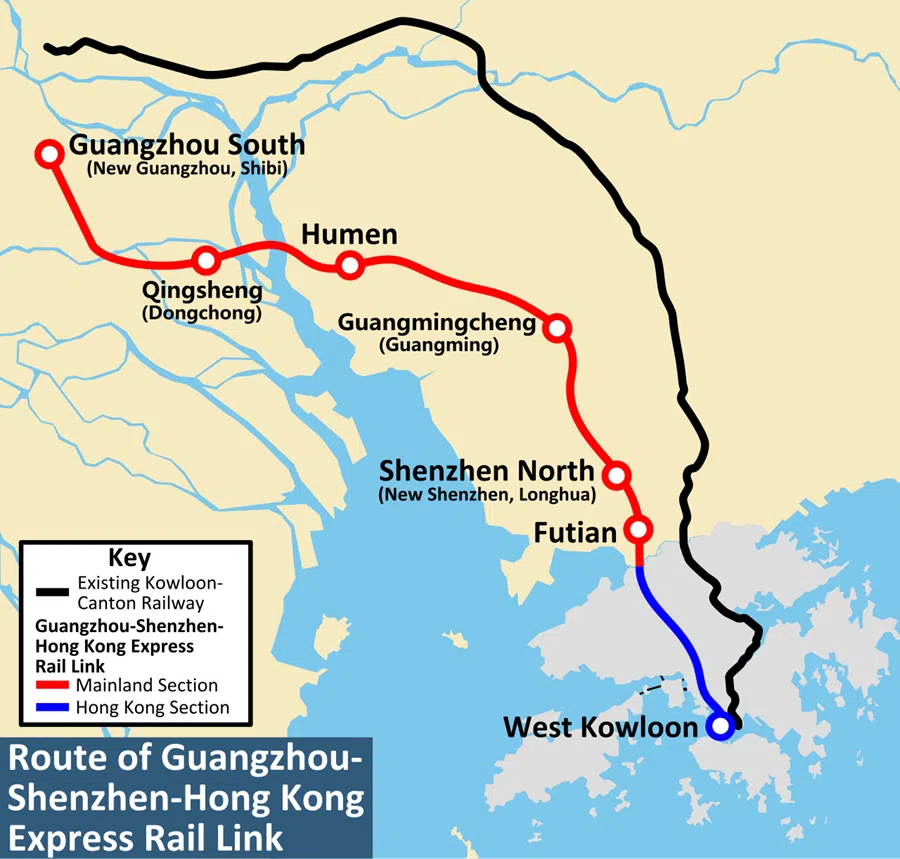
The Hong Kong section of the high-speed rail, known as the Guangzhou-Shenzhen-Hong Kong Express Rail Link, connects Hong Kong’s West Kowloon Station to the Shenzhen border. It spans 26 kilometres and integrates seamlessly into China’s extensive national high-speed rail network.
In 2004, China’s State Council reviewed and approved the “Mid- and Long-Term Railway Network Plan”, which outlined the future development of the country’s railway system. Over the past 20 years, high-speed rail has advanced rapidly in China. Given its proximity to Shenzhen, Hong Kong also decided to implement its own high-speed rail project, linking the city to mainland China and integrating into the national network.
When the Covid-19 pandemic hit in early 2020, the Hong Kong high-speed rail ceased operations until January 2023. During the 35-month hiatus, passenger numbers were zero.
Controversies in finance, land acquisition and design
However, when the Hong Kong government pushed forward with the high-speed rail project, it sparked significant controversy. Issues related to financial expenditures, land acquisition, station locations and design, as well as the jurisdiction of the mainland border area led to strong opposition from pro-democracy factions, making the development of the Hong Kong section of the rail a long and bumpy process.
In October 2009, the Hong Kong Executive Council approved the high-speed rail project. In January of the following year, the Legislative Council of Hong Kong approved the funding, signalling the official start of construction and temporarily ending the debate.
After the implementation of the Hong Kong National Security Law in recent years, opposition groups in Hong Kong dissolved and controversies regarding the high-speed rail project gradually subsided. However, with the Hong Kong high-speed rail project costing HK$84.5 billion, some still question whether the estimated passenger numbers and return on investment were overly optimistic.
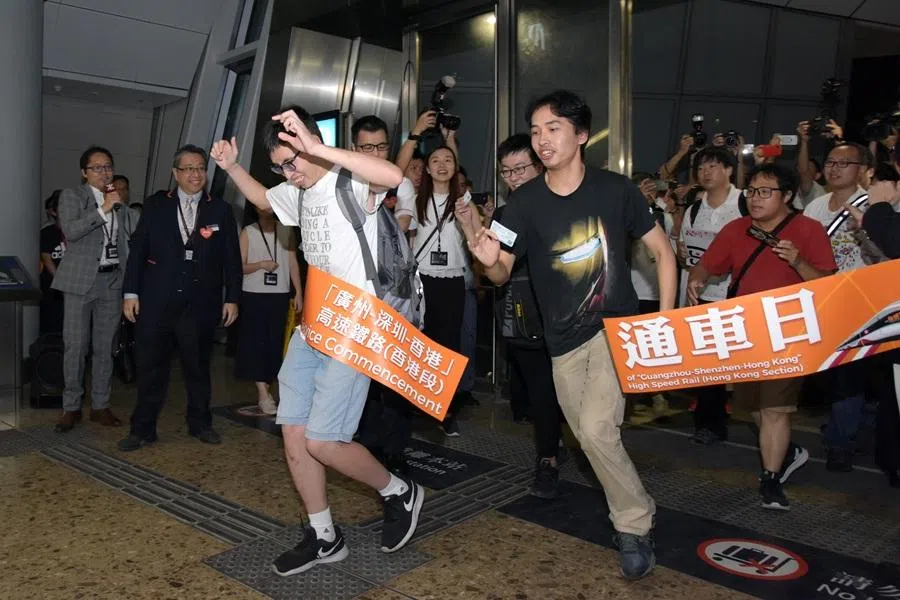
In August 2018, one month before the rail’s opening, the Hong Kong Transport and Housing Bureau submitted a report to the Legislative Council, forecasting an initial daily passenger volume of 80,100, with expectations to reach 95,000 by 2021. However, the actual ridership in the early stages fell far short of these projections.
When the Covid-19 pandemic hit in early 2020, the Hong Kong high-speed rail ceased operations until January 2023. During the 35-month hiatus, passenger numbers were zero. Legislative Council member Michael Tien estimated that for every year the high-speed rail was closed, the government had to subsidise around HK$370 million, totalling HK$1.11 billion over the three years.
Starting 26 January this year, 16 major cities and tourist destinations in east China, including Nanjing and Hefei, were added, bringing the total number of direct destinations from West Kowloon Station to 110.
100 million passengers and 110 new stations
By 2023, as travel between Hong Kong and the mainland resumed after the pandemic, the number of cross-border commuters like Wang Heng continued to rise. The Hong Kong MTR Corporation announced on 14 January this year that the cumulative ridership on the Hong Kong high-speed rail since its opening in 2018 had exceeded 100 million, making it one of the most crucial transportation links between Hong Kong and the mainland.
The MTR Corporation reported that last year was a bumper year for the Hong Kong high-speed rail, with over 30 million passengers, marking a nearly 17% year-on-year increase. This brought the average daily ridership to 82,000, achieving the government’s original target.
The MTR Corporation also announced plans to expand the coverage of the high-speed rail network. Starting 26 January this year, 16 major cities and tourist destinations in east China, including Nanjing and Hefei, were added, bringing the total number of direct destinations from West Kowloon Station to 110. This expansion further strengthens the transport links between Hong Kong and the mainland.
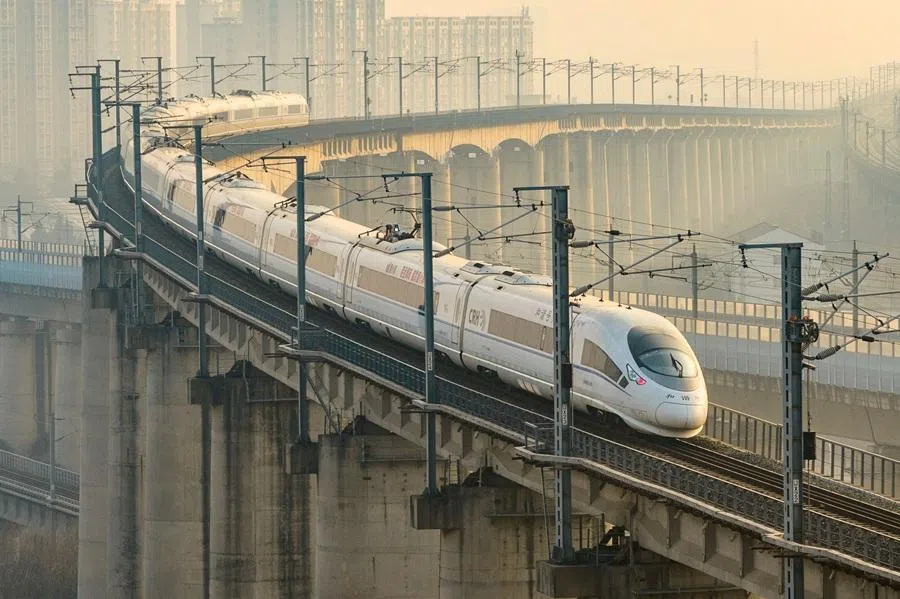
As Hong Kong continues to deepen its integration with the mainland, high-speed rail travel has gradually become a regular part of daily life for many Hong Kong residents.
Hong Kong residents account for 47% of passengers
Paul Wong, MTR Corporation’s chief of cross boundary segment, pointed out that Hong Kong residents now make up 47% of the total passenger traffic on the high-speed rail, a significant increase from the initial 30%. The remaining passengers are from mainland China and overseas. West Kowloon Station has become the most popular land entry point for mainland visitors.
A survey by the MTR Corporation revealed that around 70% of high-speed rail passengers travel for leisure or tourism. Regardless of the distance of their trip, the convenience of the high-speed rail is widely appreciated. Short-distance routes within a three-hour train ride from Hong Kong are the most popular, making up 80% of passengers’ travel.
Freddy Yip, chairman of the Hong Kong Travel Agent Owners Association, told Lianhe Zaobao that before the high-speed rail, in order to save on cost, many Hong Kong travel agencies would gather their customers in Shenzhen before taking a bus or flight to mainland destinations. He said, “Now, many agencies prefer to take the high-speed rail directly. High-speed rail travel has become the mainstream model in the Hong Kong tourism industry.”
… as an important transport infrastructure connecting mainland China and Hong Kong, the Hong Kong high-speed rail should not be evaluated like a typical business venture… Its value should be measured by its broader social impact. — Choi Sze Hang, Lecturer, Office University of General Education, The Chinese University of Hong Kong
He also noted that in recent years, many Hong Kong residents are travelling to mainland China more frequently because of the high-speed rail. “Previously, clients might travel to Europe two or three times a year. Now, they’re shifting those travel funds to mainland China, which has inadvertently resulted in greater awareness and understanding of the mainland,” Yip added.
Seamless ‘one country, two inspections’ system
Choi Sze Hang, a lecturer at The Chinese University of Hong Kong’s Office University of General Education, pointed out that passenger numbers for the Hong Kong high-speed rail were initially lower than expected, coupled with its suspension during the pandemic, and the project has yet to recover the several tens of billions of Hong Kong dollars in construction costs. However, he believes that as an important transport infrastructure connecting mainland China and Hong Kong, the Hong Kong high-speed rail should not be evaluated like a typical business venture, whereby a simple profit-to-expense ratio is used to calculate break-even. Its value should be measured by its broader social impact.
He explained that before the high-speed rail, cross-border interactions were largely one-sided, with mainland residents visiting Hong Kong for shopping and tourism. With the opening of the high-speed rail, and after enduring challenges such as the 2019 social unrest and the pandemic, cross-border exchanges have shifted from a one-way flow to a “two-way” movement, largely thanks to the high-speed rail.
Choi also emphasised that the “one country, two inspections” system implemented at Hong Kong’s high-speed rail stations facilitates a seamless integration with the mainland. It has created a new, convenient travel channel that has boosted demand for short-term travel to central and southwestern China, benefiting the integration of the two regions and enhancing the overall happiness of residents.
Need for long-term investment in infrastructure
When interviewed, long-time observer of logistics supply chain, Simon Yuen, a senior lecturer at The Hong Kong Polytechnic University (PolyU)’s College of Professional and Continuing Education, highlighted that the return on investment for major infrastructure projects like the high-speed rail takes time, and should not only be considered in terms of ticket revenue, but also includes depreciation, financing costs as well as operating and maintenance costs. Profitability should not be assessed merely by the first few years of operation. Medium- to long-term profit growth should be considered, as well as the economic factors of related industries and surrounding regions.
He stressed that the high-speed rail has significantly reduced travel time and improved convenience, enhancing connectivity between Hong Kong and cities in the Greater Bay Area. This will promote the flow of people and goods between the two places, and foster growth in Hong Kong’s industries such as tourism, conventions, cross-border employment and education.
… the influx of travellers through the high-speed rail has placed higher demands on border management, transport connections and community infrastructure. This has resulted in overcrowding in popular tourist areas. —Simon Yuen, Senior Lecturer, College of Professional and Continuing Education, The Hong Kong Polytechnic University (PolyU)
Adjusting to changes in tourism patterns
Over the seven-plus years since its launch, the Hong Kong high-speed rail has evolved from being a mere cross-border transportation infrastructure into a vital “super link” that drives people-to-people exchanges and economic interconnection within the Guangdong-Hong Kong-Macau Greater Bay Area.
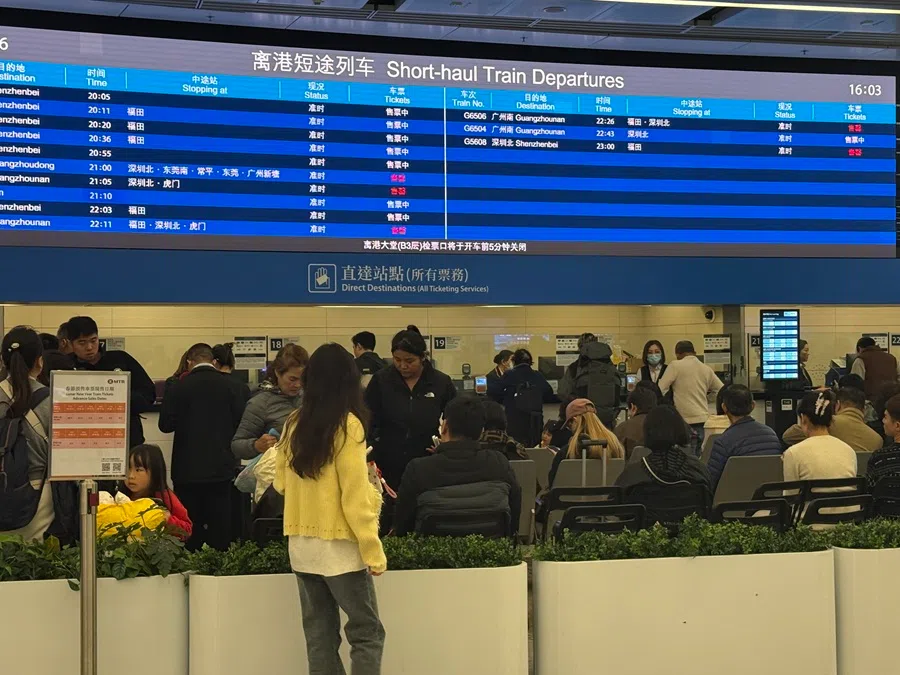
Despite its positive impacts, there are some criticisms. The customs procedures at Hong Kong’s high-speed rail stations are relatively complex, with passengers passing through multiple checkpoints between their arrival at the station and customs inspection and boarding the train. This can take 30 to 45 minutes, which detracts from the convenience of high-speed rail travel.
Yuen also noted that the influx of travellers through the high-speed rail has placed higher demands on border management, transport connections and community infrastructure. This has resulted in overcrowding in popular tourist areas. Furthermore, with the convenience of the high-speed rail, mainland visitors now prefer to do a day trip to Hong Kong to shop and sightsee, rather than staying overnight.
According to Hong Kong Travel Agent Owners Association’s Yip, the opening of the Hong Kong section of the high-speed rail has indeed had a direct impact on both the aviation and hotel industries.
He explained that long-haul travellers still tend to choose to stay in Hong Kong hotels. However, short-haul travellers may choose to spend the day sightseeing in Hong Kong and return to Shenzhen at night. He said, “After all, three nights in a local hotel there costs about the same as one night in Hong Kong.”
However, he added that overall, the high-speed rail has also brought benefits to Hong Kong’s hotel industry, as it helps increase the overall number of visitors.
… the MTR Corporation will actively promote an integrated “high-speed rail + aviation” travel model. This includes partnering with travel agencies and airlines to promote deals combining train and airplane tickets, creating a two-way “fly via Hong Kong” option.
MTR’s three major development priorities this year
The MTR Corporation identified three key areas of development for Hong Kong’s high-speed rail in 2026.
The first priority is to further expand tourism-related services. The MTR Corporation will continue working with the tourism industry to promote high-speed rail travel and explore potential connections with mainland China’s themed tourist trains. Meanwhile, the MTR Corporation will actively promote an integrated “high-speed rail + aviation” travel model. This includes partnering with travel agencies and airlines to promote deals combining train and airplane tickets, creating a two-way “fly via Hong Kong” option. This arrangement would not only make it easier for mainland travellers to transit through Hong Kong for overseas flights, but also makes it more convenient for international travellers to transfer through Hong Kong and take the high-speed rail into mainland China.
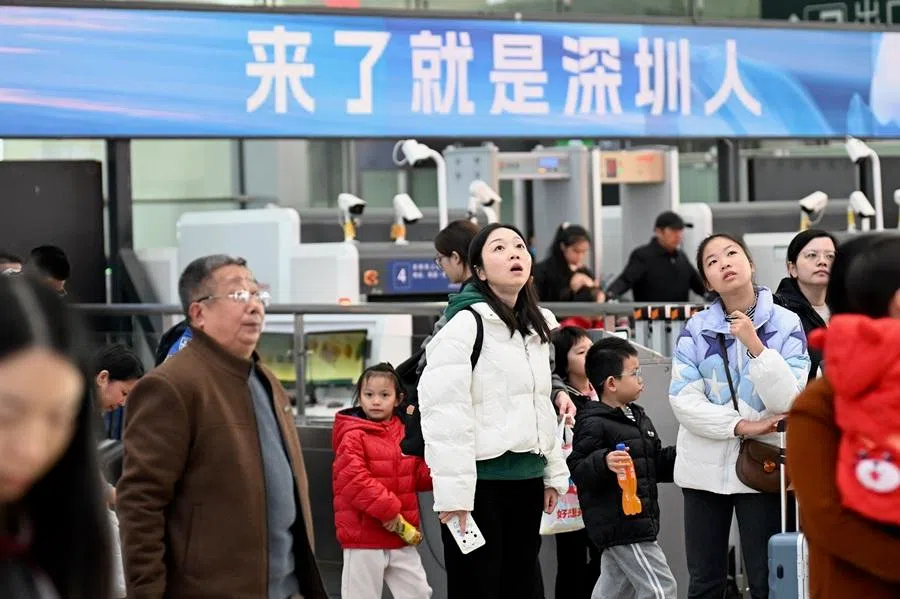
The second priority is to continue upgrading station facilities and improving service quality, to further enrich passengers’ overall travel experience.
The third is to continue expanding network coverage, enhancing flexibility for short-distance travel and unlocking the potential of a “one-hour living circle”.
Building a multi-entry/exit network to improve efficiency
Transportation links between Hong Kong and mainland China rely mainly on land routes. In recent years, apart from the high-speed rail, Hong Kong and the mainland have also strengthened integration across other transportation networks, with the aim of building a one-hour living circle within the Guangdong-Hong Kong-Macau Greater Bay Area.
For instance, the Hong Kong-Zhuhai-Macau Bridge — widely described as a “super project” of the Greater Bay Area — officially opened on 23 October 2018. It connects Hong Kong, Zhuhai and Macau, reducing travel time between the cities from three hours to around 45 minutes.
According to data released by the bridge’s border inspection station, nearly 18 million Hong Kong and Macau residents crossed the border via the Hong Kong-Zhuhai-Macau Bridge last year, representing an increase of nearly 300% compared with 2019.
Meanwhile, other land border crossings between Hong Kong and Shenzhen have also been undergoing smart customs clearance upgrades.
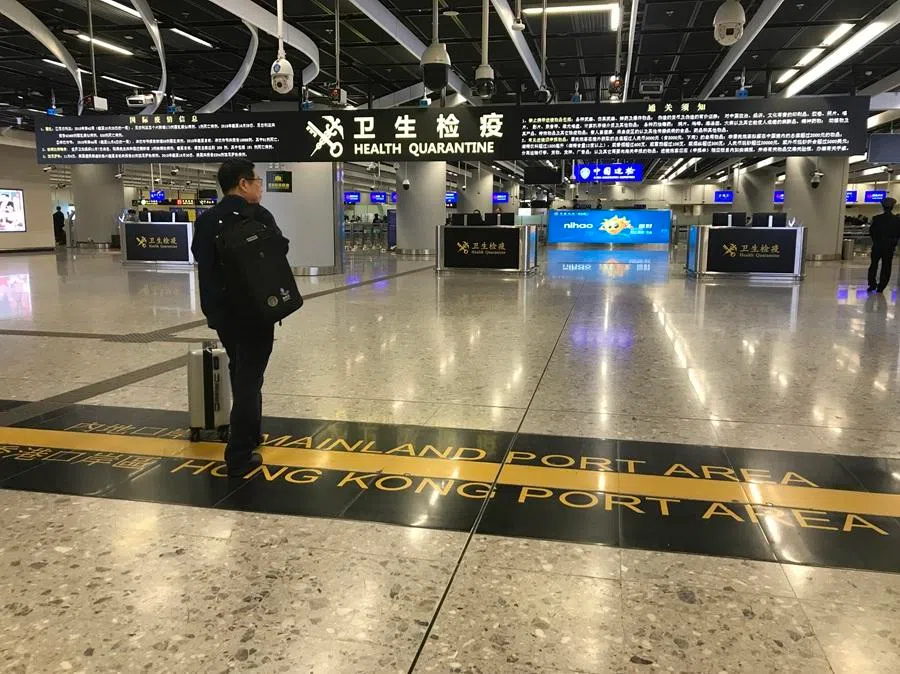
In 2024, Shenzhen Bay Port became the first to pilot “document-free” clearance lanes. Eligible travellers can clear immigration by simply using facial recognition and fingerprint scanning, reducing clearance time to around ten seconds. The measure was extended to other land ports in Shenzhen in November last year.
The new Huanggang Port has been undergoing reconstruction in recent years. It is expected to reopen later this year and will adopt a “co‑operative inspection for one‑check release” arrangement, cutting customs clearance time from 30 minutes to just five minutes.
“… it should highlight its strengths through culture, creativity, education and scientific research, while preserving local community character and quality of life. Only by doing so can Hong Kong maintain its long-term competitiveness.” — Yuen
Upgrading industries while preserving strengths
PolyU’s Yuen noted that in recent years, cross-border transport corridors between Hong Kong and the mainland have become increasingly integrated. This has strengthened the resilience of both passenger and cargo flows, and has gradually formed a “multi-entry, multi-exit” network. Such a network has significantly improved the efficiency of cross-border business activity and strengthened connectivity within the broader living circle.
However, he also cautioned that Hong Kong will face intensifying competition from mainland China. To respond effectively, Hong Kong must strengthen regional integration and accelerate industrial upgrading, while also preserving its own distinct characteristics.
Yuen said, “Hong Kong must build on its advantage as a place where Eastern and Western cultures meet, and further develop the strong brand reputation of ‘Made in Hong Kong’. It should provide a business environment that is simple and convenient. At the same time, it should highlight its strengths through culture, creativity, education and scientific research, while preserving local community character and quality of life. Only by doing so can Hong Kong maintain its long-term competitiveness.”