On April 1, British Prime Minister Keir Starmer made an address to his nation about the ongoing war in West Asia. His message could not have been clearer. “This is not our war. We will not be drawn into the conflict. That is not in our national interest”, he said. Many other European head of states have echoed similar sentiments.

Starmer might not have intended it. But his remarks came exactly 44 years after another war when Britain and US took, unlike today, aligned, positions. On April 2, 1982, after Argentina invaded the Falkland Islands in South America, Britain fought a ten-week undeclared war with Argentina to reclaim what it believed was its rightful territory. The US, under Ronald Reagan, first tried a mediation, but 28 days into the war, it declared outright support for Britain.
Hosting US President Ronald Reagan in 10, Downing Street, on June 8, 1982, after UK had won the war, British Prime Minister Margret Thatcher was unequivocal in expressing her gratitude to Reagan and the US.
“Much has been said and written over the years, Mr. President, about the relations between our two countries. And there’s no need for me to add to the generalities on the subject today, because we’ve had before our eyes in recent weeks the most concrete expression of what, in practice, our friendship means. I refer to your awareness of our readiness to resist aggression in the Falklands even at great sacrifice and to our awareness of your readiness to give support to us even at considerable costs to American interests…Believe me, Mr. President, we don’t take it for granted. We are grateful from the depth of our national being for your tremendous efforts in our support”, Thatcher said.
The 40-year interregnum between Britain expressing its gratitude to the US for supporting it in a war in the Americas, reciprocating the favour by supporting the US in many wars it has fought since then, and, now, disassociating itself with a war the US is fighting currently, is a story, not just of military incongruence between the US and Britain. What it represents is a larger political economy rupture between the US and its European satellites (Sir Starmer and his European peers might scoff at the term, but more on that later).
The roots of this political economy rupture are best described by a quote from Abraham Lincoln’s 1863 speech after the Battle of Gettysburg, which Thatcher used in her toast for Reagan in June 1982.
“The world will little note nor long remember what we say here, but it can never forget what they did here. It is for us the living to be dedicated here to the unfinished work that they who fought here have thus far so nobly advanced”, Lincoln said in his tribute to the soldiers who turned the fate of the US Civil war against the Confederates for good (the pun is intended).
At its peak, the Thatcher-Reagan bonhomie, and by extension, the UK-US relationship, represented a massive political ideological accomplishment for capitalism: the triumph of neoliberalism over the interventionist welfare state model of capitalism that had dominated since the aftermath of the Second World War. The powers that be in US and UK were absolutely on the same page on the neoliberalism pitch under Thatcher and Reagan – free markets were made a virtue of, welfare beneficiaries were looked down upon, almost denigrated and those opposing this coup d’état were dubbed anti-freedom communists and crushed brutally.
A part of the working class actually bought this pitch. The neoliberals won elections. Reagan and Thatcher were not just darlings of capital or its ideologues. They were also extremely popular politicians at their peak.
The political economy implications of this change in political fortunes and the ideological change which followed the neoliberal victory were profound.
In an extremely important revisionist take on the issue, historian Fritz Bartel argues in his 2022 book The Triumph of Broken Promises: The End of the Cold War and the Rise of Neoliberalism that a neoliberal reneging on welfare and workers’ rights in the US and UK allowed the capitalist camp to survive the economic pain from the supply shocks in the 1970s. This was unlike the Soviet Union led socialist camp which could not inflict a similar pain on its citizens and ended up imploding under the growing economic weight of its commitments.
The political fruits of neoliberalism’s success lasted pretty long. Despite the fact that the working class experienced a steady decline in economic fortunes due to a double whammy: weakening bargaining power with domestic capital, resulting from attacks on trade unions and an emaciated domestic economy caused by outsourcing manufacturing and services to countries like China and India. How was this achieved?
The gradual economic haemorrhaging of the working class was sustained politically by the proverbial steroid of cheap finance (read things such as low interest rates and sub-prime lending for homes in the US). But this strategy ultimately delivered a near fatal anaphylactic shock to the global economy in the form of the 2008 global financial crisis.
Trump-Brexit and its later right-populist versions are essentially the after-effects of the Western underclass’s anger. This anger was channelled by a political dispensation which, in a tactical masterstroke, prepared a potent narrative of schadenfreude against two categories. First is the socially woke managerial-intellectual elite which benefited the most from the neoliberal ascent in the Western bloc. The second is the part-imagined part-real campaign against migrants, most of whom were poor rather than rich. The first were described as laying the groundwork for a cultural/economic invasion by the second. As can be seen from the political success for the likes of Trump, this was an extremely seductive political narrative. But it can do nothing to achieve a structural reversal in the fortunes of the underclass in the western world, because the top echelons of capital continue to be wedded to the current regime.
To be sure, all this need not have broken the US-UK bonhomie. If Trump championed and gained from this line in the US, Nigel Farage—his counterpart—was almost seen as the political tide’s beneficiary in Britain. Every other major European country has had its variant of this politics with varying degrees of success. So far, so good. Political seduction however does not guarantee economic stability. The neo-right revolution of Trump et al was bound to run into a fundamental problem: the US declaring a force majeure on its responsibilities as the global capitalist leader. Ideological flavour aside, a global capitalist leader it is the oxygen of any open economy capitalism.
Tangibly, this meant the US closing its export markets to the rest of the world, which is what Trump did with his Liberation Day tariffs. They were followed by multiple threats to impose tariffs on anyone who would not agree wholeheartedly, regardless of whether the demands related to trade. It also meant the US asking that other NATO allies – a military alliance built to contain the Soviet Union’s ideological, not just territorial threat in Europe—to foot more of the military bill and reduce US’s costs of maintaining the security umbrella.
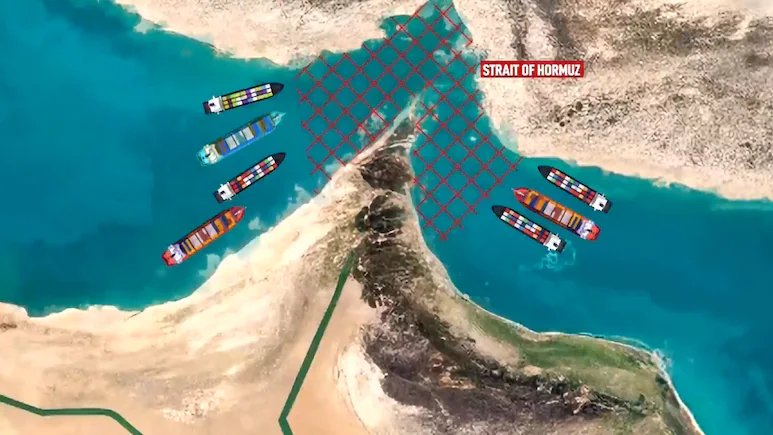
While the (Greenland) ice was already cracking on the Trans-Atlantic US-Europe neoliberal alliance with tariffs and outlandish threats of a military annexation of allies’ territories, US’s invasion of Iran, and the energy shock which has followed thanks to the Strait of Hormuz being closed, has proved to be the proverbial last straw which can break the (European economy) camel’s back.
With their economies still deeply scarred by the post-pandemic inflation pain, fiscal capacity struggling to balance political legitimacy and sound finance at a time when AI and Chinese manufacturing post existential threats to the future of work and even its white-collared working class, Europe is petrified about the prospects of living in an age of crude oil above $100/barrel. That Trump is flaunting the fact that the US is now an energy exporter rather than an importer unlike in the oil shocks of 1970s and 1980s, only adds insult to what is bound to be a grievous injury.
To come back to the Lincoln quote, Thatcher used in her speech welcoming Reagan, “the living” (US and European leaders) cannot be “dedicated here to the unfinished work that they who fought here have thus far so nobly advanced (the neoliberal consensus)”.
The US now wants to be a bully, exploiting its economic-military advantage to do so, rather than acting as a disciplined and altruistic keeper of the global economic strategic order.
The rest of world, especially its economically-strategically weaker European peers, have no option but to bail out right now. What Trump is asking them to do by supporting the war in Iran is nothing less than shoot themselves in the economic foot. Make no mistake. These countries are pressing eject from the US led gravy train without a robust parachute. They will not land with serious economic or strategic damage. As far as their principles were concerned, there are none. Only a few weeks ago, German Chancellor was talking about letting the US and Israel finish the “dirty job”.
The powers that be, as far as capitalism is concerned, might or might not be impressed with this precarious assertion which is actually more helplessness. “We should all hope that … we win this thing and clean up the straits and that Iran is no longer a threat to everybody,” JP Morgan chief Jamie Dimon said earlier this week. “The markets will be concerned until it’s over…It’s much more important that this be successfully completed than what the market does”, he added.
Capital, or its largest voices, have chosen the side of the bigger bully rather than some had-been mutually beneficial trans-Atlantic club of neoliberal architects. To paraphrase Bartel, the latest broken promises of this transatlantic club—seen in the decoupling of how Europe and the US view the current war, indicate that the original triumph of the original broken promise of welfare state and rise of neoliberalism was long but not eternal.
What now? History never ends. We are at a moment when its tectonic plates are shifting. Whether the shift will be for good or bad, it too early to say.