At the fourth plenary session of the 20th Communist Party of China Central Committee in 2025, China”s leadership highlighted the importance of building a Digital China and integrating technology into all aspects of society. In the cultural sphere, this national strategy envisions a fusion of cultural development and technological innovation, with digitization as a catalyst for preserving and rejuvenating the country’s heritage.
In recent years, initiatives in big data, cloud computing, and artificial intelligence have provided new opportunities for museums to engage the public. Traditional exhibitions are being reimagined through interactive and visually striking digital methods that appeal to the younger generations. The result is a cultural-technology boom, with museums evolving into dynamic spaces where history meets high tech.
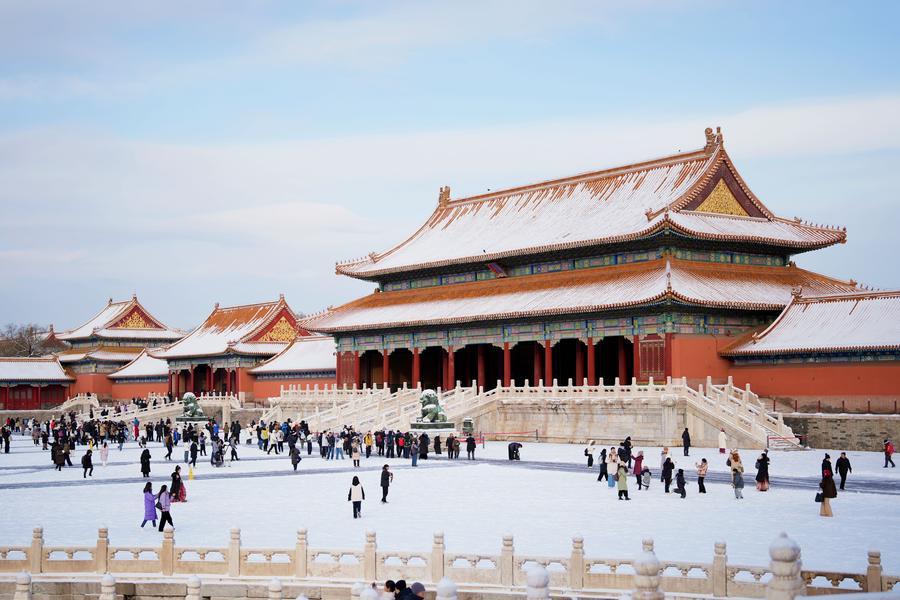
One emblematic case of this fusion is the Palace Museum in Beijing’s Forbidden City. Home to over a million artifacts, the Forbidden City traditionally could display only a fraction of its treasures at any given time. Now, digital technology is unlocking its vaults for the world. The museum has partnered with technology firms to create immersive virtual tours and extensive digital archives. When the COVID-19 pandemic temporarily emptied the museum’s courtyards, it became an opportunity to accelerate digitization of the collection. Advanced 3D modeling, panoramic photography, and cloud platforms have since been employed to virtually recreate the 600-year-old palace.
As early as 2003, the Forbidden City launched its first virtual reality experience, which let visitors soar like birds above the vermilion halls and golden roofs of the ancient compound. Today, anyone with an internet connection can explore the palace’s ornate chambers and view cultural relics in stunning detail online. Through a collaboration with tech giant Tencent, the Palace Museum is digitally preserving around 100,000 relics using AI and cloud technology. Interactive mobile apps allow users to zoom classical paintings up to 40 times their original size, revealing details invisible to the naked eye. Such innovations bring imperial history to life on-screen, sparking fresh interest in traditional culture among tech-savvy youth.
Far to the west in Gansu province, another cultural treasure is undergoing a high-tech revival. The Mogao Caves in Dunhuang, home to Buddhist murals and sculptures dating back more than a millennium, have long faced threats from sand, humidity and crowds of tourists. China’s answer has been Digital Dunhuang, an ambitious project to digitally document and conserve this UNESCO World Heritage Site. Over the past decades, specialists have captured high-resolution images of the cave paintings and built detailed 3D models of fragile statues. By 2022, hundreds of grottoes had been recorded, and dozens of them were made accessible online in panoramic format. Now virtual visitors from across the globe can journey through Dunhuang’s painted chambers with a click, experiencing the splendor of ancient art without any risk to the originals. The digital archive, available in multiple languages, has already attracted millions of viewers worldwide.
In the Mogao visitor center, immersive VR installations allow tourists to “travel” back over a millennium to witness the murals in their original splendor, vividly illustrating how digital technology serves a dual purpose: protecting irreplaceable relics while sharing them more broadly than ever before.
Importantly, these digital museum initiatives are not isolated cases but part of a broader transformation sweeping China’s cultural institutions. From the renowned terracotta warriors in Xi’an to small municipal museums, curators across the country are embracing technology to extend their reach. In 2021 alone, virtual exhibitions and training sessions launched by Chinese museums garnered about 4.1 billion online views. Museums are experimenting with augmented reality exhibits, holographic displays, and even metaverse-style platforms to engage audiences beyond their physical walls. This nationwide push reflects the government’s call to innovate cultural presentation and boost creative industries. It also speaks to an increasingly digital-native public eager to connect with the past through modern means.
China’s melding of culture and tech is yielding dividends not just within the country, but also internationally. Digital platforms have made the country’s heritage more accessible to global audiences than ever before. An art aficionado in Paris or a student in Nairobi can take a virtual tour of the Forbidden City or study Dunhuang’s ancient cave murals online as easily as a visitor in Beijing or Gansu. By putting treasures of Chinese civilization onto the cloud, these projects are turning cultural heritage into a shared resource for humanity. As Liu Shuguang, president of the Chinese Museums Association, observed, museums can act as cultural diplomats, and digital transformation is a powerful tool to share China’s stories with the world.
International collaborations are also part of this effort: the Digital Dunhuang project, for instance, has worked with universities and foundations in the United States and Europe to refine preservation techniques. Such cooperation underscores how preserving antiquity can be a unifying endeavor across borders.
Ultimately, China’s digital museum drive is about more than showcasing ancient artifacts with modern flair — it represents a philosophy of openness and innovation in cultural stewardship. By leveraging cutting-edge technology to safeguard history, China is ensuring that its past lives on for future generations. Equally important, by sharing that history through digital channels, it invites the world to celebrate and learn from one of the oldest continuous civilizations on the planet. In this new chapter, a museum is no longer just a building filled with relics; it is a platform for cultural dialogue, creativity and connection. Indeed, the fusion of technology and culture is breathing new life into China’s millennia-old heritage — and in the process, turning these cultural riches into a global public good.
The author is a professor at the School of Journalism and Communication of Wuhan University.
The views don’t necessarily reflect those of China Daily.
If you have a specific expertise, or would like to share your thought about our stories, then send us your writings at opinion@chinadaily.com.cn, and comment@chinadaily.com.cn.