Taiwan and China are preparing for a summit, of sorts
HISTORY CASTS a long shadow over relations between the Chinese Communist Party and the Kuomintang (KMT), which ruled China until Mao Zedong’s Red Army forced it to flee to Taiwan in 1949. The two parties remained sworn enemies for decades afterwards as the KMT fortified its island refuge with American weapons. Only in 1991, as Taiwan democratised, did the KMT formally renounce its goal to retake China by force. And yet, in one of the stranger ironies of present-day geopolitics, China now sees the KMT—the biggest opposition party in Taiwan’s current parliament—as its best hope of peacefully uniting the island with the mainland.
Chinese and Taiwanese flags are seen in this illustration. (Reuters)
Hence the hoopla surrounding a planned visit to China by Cheng Li-wun, the new KMT chairwoman, between April 7th and 12th. Ms Cheng is expected to meet China’s president, Xi Jinping, on the first visit there by a KMT leader in a decade. But her trip is not only dividing public opinion in Taiwan. It is deepening American doubts about Ms Cheng, who is blocking the government’s proposed $40bn increase in defence spending, mostly on American weapons. And it is widening a rift between Ms Cheng and a rival KMT faction that leans closer to America.
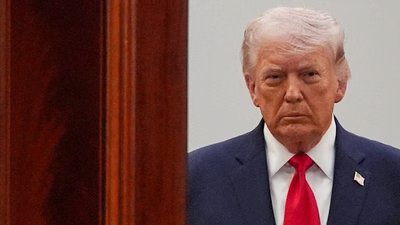
The timing makes the visit even more controversial. It comes about a month before a planned summit between Mr Xi and his American counterpart, Donald Trump. At it, Mr Xi is expected to try to persuade Mr Trump to dilute America’s verbal support for Taiwan and to delay or reduce American arms sales. Chinese officials have already tried to drive a wedge between Mr Trump and Taiwan’s president, Lai Ching-te, by portraying him as a separatist who could drag America into a war over the island. Mr Xi may try to argue that Ms Cheng, whose party and its allies currently control parliament, represent the majority of Taiwan’s people.
Much therefore depends on what Ms Cheng says during her visit to Shanghai, Nanjing and Beijing, and especially in her meeting with Mr Xi, which is expected to take place on April 10th. She may avoid expressing views on unification given the sensitivity of the subject back home. But if she repeats her frequent assertions that Taiwanese people are Chinese or that both sides of the Taiwan Strait are part of “one China”, mainland authorities are likely to exploit those comments in their propaganda and diplomacy. For Mr Xi, “by shaping this kind of atmosphere and manipulating public perception, the main goal is of course to influence President Trump,” says Chen Shih-min of National Taiwan University.
American angst was evident when a bipartisan delegation of its senators visited Taiwan at the end of March. They urged Taiwan’s political parties to come together to approve the increase in military spending. “That deterrence is the most important thing we can build on to prevent a conflict that would be devastating for the region and for the world,” said Jeanne Shaheen, a Democratic Party senator and co-leader of the group. Asked about Ms Cheng’s trip, she said dialogue was a “good thing” but China should be open to talking to other Taiwanese politicians.
Taiwan’s government, meanwhile, warned the KMT not to fall for China’s “divide-and-rule strategy”. Meeting China’s leadership would not induce it to abandon its goal of annexing Taiwan, while accepting China’s political narratives would “deepen divisions within Taiwan, undermine public morale and send the wrong message to the international community”, said Chiu Chui-cheng, the head of Taiwan’s Mainland Affairs Council. He also cited a Taiwanese law that forbids unauthorised people from making political agreements with China.
When the KMT was last in power, from 2008 to 2016, China expanded trade, tourism and transport links with Taiwan. But it shuns President Lai’s Democratic Progressive Party (DPP), which maintains that Taiwan is already an independent sovereign nation. China particularly resents the DPP’s rejection of the “1992 consensus” whereby China and Taiwan’s KMT government agreed that both sides of the Taiwan Strait are part of “one China” while allowing for different interpretations of what that means.
Mr Xi is thus hoping that the KMT and its allies will dominate local elections in Taiwan in November and win the next presidential poll in 2028. If they do regain power, Mr Xi might be able to revive economic and other exchanges enough to convince him that peaceful unification can still be achieved, if not within his own lifetime, then by the centenary of Communist rule in 2049, his deadline for “national rejuvenation”. Another DPP victory, however, could cause him to lose patience and turn to military options.
China, like Ms Cheng, portrays her visit as a peace mission. Zhang Han, a spokeswoman for the mainland’s Taiwan Affairs Office, said that enhanced dialogue with the KMT would advance the “peaceful development” of relations across the Taiwan Strait. Chinese scholars suggested that it would reinforce a shared commitment to the 1992 consensus and opposition to Taiwan’s independence. Ms Cheng’s visit to Nanjing, once the KMT government’s capital, would highlight the party’s historic links to the mainland, while her trip to Shanghai would showcase economic opportunities, said Wang Yong of Peking University.
The snag for both Mr Xi and Ms Cheng is that closer cross-strait ties hold little appeal for many Taiwanese voters. Opinion polls consistently show that a majority of them distrust China’s government, have little appetite for unification and consider themselves Taiwanese rather than Chinese. They also suggest that a majority back the proposed increase in defence spending. One poll conducted in March showed that 56% thought that the disadvantages of Ms Cheng meeting Mr Xi outweighed the advantages.
Ms Cheng believes that such views will change as people become more worried about the risk of war and less sure of America’s security guarantees under Mr Trump. Many people on the island “feel that America is abandoning Taiwan”, she told The Economist in January. But her strategy is divisive even within her own party. Some prominent KMT figures worry that her remarks about Chinese identity, her outreach to Mr Xi and her position on military spending may cost the party votes in the coming elections.
One of her main rivals is Lu Shiow-yen, the mayor of Taichung city and a frontrunner to be the KMT’s presidential candidate in 2028. (The nominee is usually chosen through primaries or by committee a few months before the election.) Ms Lu visited America in March and spent much of her time there trying to convince American politicians and officials that the KMT was not opposed to increasing military spending. The KMT has proposed a much smaller supplementary defence budget of about $12bn. But on March 30th Ms Lu proposed a bigger rise of between $25bn and $31bn (which Mrs Shaheen noted approvingly), though it is still smaller than the one proposed by the DPP-led government.
That tussle is now seen as part of a broader struggle between one KMT faction that favours closer ties with China and another that leans more towards America, says Hsiao Yi-ching of Taiwan’s National Chengchi University. The challenge for Ms Cheng, he says, is to stress the need for peace and dialogue without appearing to be subservient or to echo China’s talking points. The civil war on the mainland may be long over. But the one within the KMT’s own ranks will shape Taiwan’s future.
President Trump hailed the rescue of the two U.S. airmen at a news conference on Monday, and he deserves his share of the credit. God knows he’d have been blamed had the high-risk mission failed. Involving more than 150 aircraft, this was “one of the largest, most complex, most harrowing combat searches” ever attempted, Mr.
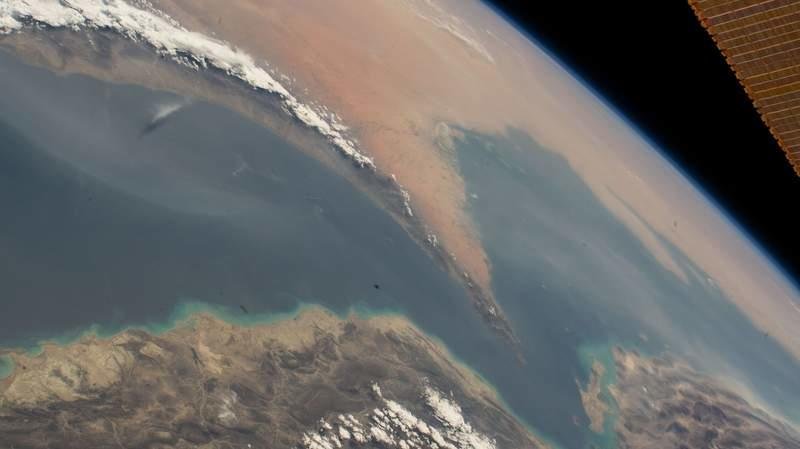
A satellite image, captured by NASA, shows the Strait of Hormuz, which connects the Gulf of Oman (L) with the Persian Gulf (R) and separates Iran (below) from the countries of the Arabian Peninsula—Oman, the United Arab Emirates, and Qatar. -/Nasa/dpa Russia is generating billions in revenues from its commodity exports due to the effective
ROME, April 7 (Reuters) – The Iran war has put U.S. global leadership on the line, Italy’s Defence Minister Guido Crosetto said, expressing fear about the “madness” of nuclear escalation. Like some other NATO allies reluctant to join U.S. President Donald Trump’s attacks on Iran, Italy last week denied permission for U.S. military aircraft to
Amazon.com, Inc. (NASDAQ:AMZN) is included among the 15 Best S&P 500 Stocks to Buy Right Now. Amazon.com (AMZN) Price Target Raised by $1 christian-wiediger-rymh7EZPqRs-unsplash Amazon.com, Inc. (NASDAQ:AMZN) provides a broad selection, value, and convenience across a range of customer experiences, including online shopping, cloud computing, streaming entertainment, consumer electronic devices, advertising, healthcare, AI services, and
FOR THE first month of their war on Iran, America and Israel mostly spared civilian infrastructure. In March bombers painstakingly picked around oil terminals and ports while attacking Kharg Island, an energy entrepot. A week later Donald Trump told Israel to stand down after its strikes on South Pars, a gasfield, provoked Iranian retaliation against
By Tom Balmforth and John Irish LONDON/PARIS, April 7 (Reuters) – Russian satellites have made dozens of detailed imagery surveys of military facilities and critical sites across the Middle East to help Iran strike U.S. forces and other targets, according to a Ukrainian intelligence assessment. The conclusions, reviewed by Reuters, also found that Russian and
US President Donald Trump said on Monday he would push the journalist who first reported the rescue of an airman in Iran to reveal their source and also warned that they could face jail if they refused. Trump said the report had put the ongoing effort to recover the second airman at risk, although that
DUBAI, United Arab Emirates (AP) — Zahra Arghavan and Mehdi Alishir stood on their balcony, watching the sun set over Tehran and bracing for the sound of airstrikes. As time ticks down on U.S. President Donald Trump’s latest ultimatum, their thoughts were clouded by new fears: How long will the power be out if plants
HANOI, Vietnam (AP) — Vietnam unanimously elected Communist Party General Secretary To Lam as president for a five-year term, consolidating his control over both the party and the state. The move departs from Vietnam’s tradition of shared leadership, in which the jobs have typically been held by different people, and echoes power structures in China
The global energy crisis caused by the closure of the Strait of Hormuz is only the beginning of the economic cost of the war with Iran. I study how institutions affect businesses and supply chains, and I expect food prices to rise next, with high prices lasting even after whatever point hostilities end. Along with
Rapper Offset was shot near a Hollywood, Florida hotel on Monday night, according to multiple reports. A representative for the rapper, whose real name is Kiari Cephus, shared a statement with multiple outlets confirming that the rapper suffered a gunshot wound. Reports say the shooting happened near the Seminole Hard Rock Hotel and Casino. [DOWNLOAD:
Police in Vallejo are investigating a fatal shooting at an apartment complex early Saturday morning that left a 21-year-old woman dead, as her family calls for answers and justice. Damon Whitehead Sr. said he learned of his daughter Demonie Whitehead’s death when her friends came to his door. “I found out through her friends. Woke
While the number can change from day to day, there are currently 12 companies with a market cap of $1 trillion or more, but only one is a member of the prestigious $4 trillion club: Nvidia. The company supplies the graphics processing units (GPUs) that kick-started the artificial intelligence (AI) revolution, but some investors are
Howard Stern’s former assistant is suing the famed radio personality and his wife for allegedly subjecting her to a hostile work environment while employed at their 20,000-square-foot Hamptons estate, according to court filings reviewed by The Independent. In a state lawsuit filed Sunday, Leslie Kuhn, who began working for Stern in 2022 as his office
The New Hampshire Attorney General is revealing new details about an officer-involved shooting earlier this morning in Northfield. At around 12:12 a.m. on Monday, police received a call from an apartment on Vine Street for a report of a domestic disturbance of one adult female resident striking another with a fire extinguisher. The caller told
Once again, it’s Monday. Of course. I swear, it feels like it doesn’t matter what we do these days — Monday is always here to spread its Monday-ness all over the place. Gross. But I guess that’s what soap is for, huh? While we all scrub down and exfoliate this Monday off of us, at
By Nandita Bose and Gram Slattery WASHINGTON, April 6 (Reuters) – U.S. President Donald Trump said on Monday he would demand that the journalist who first reported that an airman in Iran had been rescued reveal how they got that information, and threatened to jail them if they refused. Trump’s remarks at a White House press
Hundreds of construction workers are on the job around the clock building Georgia’s energy future at Plant Yates, where they’re expanding a former 1950s coal power plant into a state-of-the-art natural gas powerhouse. Georgia Power says it’s part of a massive multi-year expansion that will help them meet a surging energy demand as new data
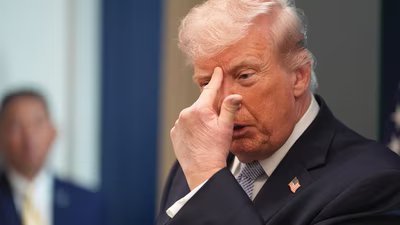
Donald Trump is facing growing scrutiny over his health. Doctor raises dementia concerns as Trump’s Iran post sparks backlash. (Reuters) The issue began on Easter Sunday when Donald Trump posted a message on Truth Social that included strong language and a threat toward Iran. “Tuesday will be Power Plant Day, and Bridge Day, all wrapped
UN Resident and Humanitarian Coordinator Denise Brown has returned to the city with a core team, marking a renewed commitment to reaching those in need. This comes as more than 1.6 million people have recently returned to the capital, despite the persistent threat of damaged infrastructure and explosive remnants of war. UN Spokesperson Stéphane Dujarric