Switzerland is emerging as a pivotal hub in a new generation of luxury and overnight rail ventures that link Italy, the United Kingdom and France, as operators race to capture growing demand for high‑end, low‑carbon journeys across Europe.
Get the latest news straight to your inbox!
Golden Age Revival Puts Switzerland at the Center
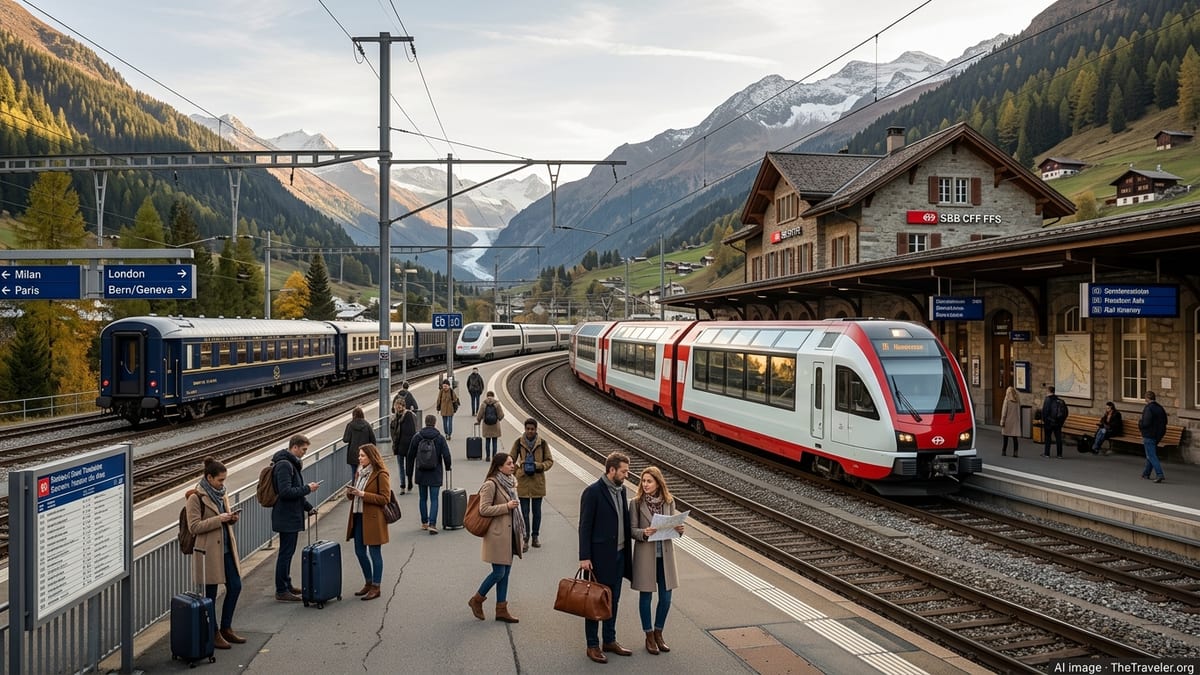
Published coverage on European rail developments indicates that Switzerland is increasingly central to premium cross‑border services, both planned and operating. Long established scenic routes such as the Glacier Express and Bernina Express have given the country global recognition among affluent rail travelers, and new projects are now building on that foundation to connect Switzerland with Italy, France and the United Kingdom in more integrated ways.
Industry reports for 2026 describe what some analysts call a new golden age for long distance train travel, driven by a mix of climate awareness, airport congestion and resurgent interest in slow, experiential journeys. Luxury and overnight trains are a visible part of this shift, with operators positioning Switzerland as a gateway between northern Europe, the Mediterranean and major French cultural centers.
While many projects are still in the ramp‑up or certification phase, timetables and investment plans suggest that Swiss Federal Railways and partner networks in neighboring countries view high‑end tourism and premium night trains as a strategic growth segment. This is particularly evident along historic corridors such as the Simplon route between Switzerland and Italy, and long‑discussed expansions that would knit the UK and France more tightly to Swiss hubs.
New Night Trains Link Switzerland, Italy and Northern Europe
One of the most closely watched developments is the expansion of overnight services that combine practical transport with upgraded comfort. Publicly available information on European Sleeper, the cooperative night train operator based in the Benelux region, shows plans to extend its network from Brussels and Amsterdam to Milan via Switzerland, following the classic Simplon axis through cities such as Cologne, Bern and Brig. This overnight route is positioned as a convenient way for travelers from northern Europe to reach both the Swiss Alps and northern Italy without flying.
Travel media in the United Kingdom have highlighted how new sleeper links through Switzerland and into Italy create alternatives to short haul flights for British holidaymakers. These reports emphasize that passengers can board in the Low Countries or western Germany, sleep through the night, and wake up close to Swiss resorts or northern Italian lakes, effectively adding the country as a scenic pivot point in pan‑European itineraries.
Although these services are often marketed as mid to upper tier rather than ultra‑luxury, operators are introducing higher class compartments, improved dining and carefully curated on board experiences to appeal to travelers willing to pay more for comfort and sustainability. For Switzerland and Italy, the overnight corridor provides a platform to feed guests into established luxury products such as five star mountain hotels, spa resorts and heritage rail excursions.
Italy’s Luxury Trains Reach Toward the Alps and France
Italy is simultaneously advancing its own luxury rail portfolio, with new high‑end tourist trains designed to crisscross the peninsula and approach Alpine gateways. Projects such as La Dolce Vita Orient Express, backed by hospitality and rail partners, are set to operate multi day itineraries that showcase Rome, Venice, the Italian Alps and coastal destinations, using refurbished historic carriages and elevated onboard service. Industry commentary notes that some of these routes are expected to intersect with or approach key junctions that connect toward Switzerland and France.
Separate Italian investment in international high speed and long distance rail, including state rail company initiatives, is also oriented toward stronger links with France and, indirectly, Switzerland. Studies and tender plans for future rolling stock reference operations through the Alps and along transalpine corridors, reinforcing the vision of a more continuous luxury and premium network that allows travelers to combine Italian itineraries with Swiss scenic segments and French cultural stops on a single grand tour.
Tourism strategists point out that this creates fertile ground for joint marketing between Italian luxury train brands, Swiss scenic lines and French heritage routes. Packages that combine a few days on a high style Italian train with transfers to Switzerland’s panoramic services, followed by a French Belle Époque style circuit, are increasingly referenced in trade materials as a way to revive the spirit of the historic Grand Tour for contemporary travelers.
French Belle Époque Journeys and Swiss Connections
France is reinforcing its long association with luxury rail through new and planned products that evoke the Belle Époque. Specialist operators highlight a forthcoming multi day train known as Le Grand Tour, which is expected to offer a six day circuit showcasing French regions with historic style carriages and fine dining. Although this train is designed as an internal French journey, it complements revived Orient Express projects and other high end offerings that together create a dense cluster of luxury options west of Switzerland.
Analysts note that the geographic proximity of these French luxury routes to Swiss high speed and scenic lines makes combined itineraries increasingly viable. Travelers arriving from the United Kingdom or Benelux countries could, for example, cross France by high speed train, board a heritage style luxury service for a circuit within France, then transfer into Switzerland for Alpine panoramas, before continuing on to Italy by day or night.
French rail investment documents also underline continued modernization of high speed corridors that link Paris with German, Swiss and Italian networks. While not luxury products in themselves, these lines provide the fast, reliable backbone that allows tour operators to stitch together slower, high touch segments into a coherent international product. For high net worth travelers, the appeal lies in being able to move efficiently between hubs and then linger in comfort on the more scenic stretches.
United Kingdom Eyes Direct Links to Switzerland and Beyond
The United Kingdom, long connected to continental Europe through the Channel Tunnel, is now the focus of new proposals to extend direct rail services deeper into the continent. Coverage in British and European media shows that Eurostar has signaled interest in long term expansion toward destinations such as Geneva and other Swiss hubs, framing this as part of a broader push to meet strong demand for sustainable international travel.
At the same time, infrastructure and station management entities linked to London St Pancras have publicized agreements aimed at growing international connectivity, including routes that would reach Germany, Switzerland and France. These initiatives are at varying stages, with timelines stretching into the early 2030s, but they underpin a strategic ambition to reposition the UK as a starting point for complex, rail based European itineraries that could combine day high speed services with overnight or luxury legs on the continent.
For the luxury segment, the key opportunity lies in the ability to market seamless journeys beginning in London, passing through France on high speed lines, traversing Switzerland’s mountain landscapes on panoramic trains, and continuing to Italy on either night trains or dedicated luxury services. Travel companies are already testing such concepts in brochures and online content, even where some components remain in development, anticipating future demand from travelers eager to avoid short haul flights.
Across Switzerland, Italy, the UK and France, the emerging picture is one of complementary investments rather than a single integrated project. National operators and private companies are moving at different speeds, but together they are laying the groundwork for an interconnected web of premium and luxury rail experiences that could redefine how affluent visitors explore Europe in the coming decade.