Shares rocket higher as oil prices fall, inflation unchanged
FTSE 100 Live: Shares rocket higher as oil prices fall, inflation unchanged Proactive uses images sourced from Shutterstock
After just over an hour of trading, the FTSE has lost some of its early head of steam but is still up over 1%.
Gains in Europe are also strong, with benchmarks in Frankfurt, Paris, Milan and Madrid all up around 1.3-1.5%.
In London, Asos is one of the big risers, up 15% on the back of its update earlier.
RS Group, the former Electrocomponents, is down 4% as full-year profits marginally ahead of analyst expectations were mostly ignored as investors focused on a steeper-than-expected drop in revenues.
Markets are higher this morning as optimism is growing around a potential resolution to the Middle East conflict, says market analyst Matt Britzman at Hargreaves Lansdown.
Washington has reportedly sent Tehran a rehashed 15-point proposal aimed at resolving tensions, while Israeli media indicate that the US is pushing for a one-month ceasefire to allow negotiations to take place.
But, as per the update below, comments coming out of Iran are not positive. On the plus side, Iran said “non-hostile” vessels could use the crucial Strait of Hormuz shipping route.
Oil prices have moved lower, which Britzman says offers some relief to equities that had been weighed down by worries over inflation and the knock-on impact for interest rates.
“It’s still a highly fluid situation, trying to call how the rest of the week plays out would be unwise, but there are now clearer signs that we are on a path toward de‑escalation.”
Energy prices are still sitting at elevated levels, “and it will likely take a full reopening of the Strait of Hormuz to drive any meaningful and sustained move lower from here”, he adds.
US futures have also edged higher this morning, with the three main indices all pointing to gains of around 0.9%.
Average mortgage rates have jumped sharply since the Middle East conflict intensified, with more than 1,700 products withdrawn from the market since 9 March, according to Moneyfacts.
The average two-year fixed rate has risen from 4.85% to 5.56%, with lenders pricing in several Bank of England base rate increases.
Analyst Caitlyn Eastell warned that borrowers rolling off low five-year fixed deals face monthly repayments rising by more than £380 on a typical £250,000 loan, while those on tracker mortgages could see costs jump by around £430 a year from even a single 0.25% rate rise.
Oil prices are continuing to fall, with de-escalation in the Middle East key to the market mood this morning.
Brent crude has dropped to $98.2 a barrel.
“Hopes are rising that there could be a month-long ceasefire while a long-term peace plan is negotiated between the US and Iran. This is boosting market sentiment, but the situation remains fluid,” says market analyst Kathleen Brooks at XTB.
An Iranian spokesperson has dashed hopes that peace talks were taking place and said that the US is “negotiating with itself”.
A spokesperson for the Islamic Revolutionary Guard Corps said in a video message: “There will be no news of your investments in the region, nor will you see the previous prices of energy and oil, until you understand: stability in the region is guaranteed by the powerful hand of our armed forces.”
A spokesperson for the Iranian Foreign Ministry dismissed US claim of seeking talks: “Iran is under constant bombardment and missiles by the US and Israel. So their claim of diplomacy and mediation is not credible. Because they have started this war and they are continuing to attack Iran. So can anyone possibly believe that their claim [of] mediation is credible?” he said.
Brooks said more statements and denials should be expected, “as negotiating a long-term peace with the Iranian regime is a complex task.
“Thus, although the war is in a different stage compared to last week, this is still a news driven market, and traders are cautious until we get concrete plans of what the next steps to peace look like, and what happens as Israel continues to strike Iran.”
The FTSE 100 has rocketed higher at the open, soaring 154 points to 10,048.
Miners, financials, housebuilders and airlines are driving the rebound, with Fresnillo, Anglo American and Endeavour all up around 3.5%.
Barclays, Rolls-Royce, Melrose Industries, Barratt Redrow, Antofagasta and IAG are all up over 2.5%.
Guinness owner Diageo is selling Royal Challengers Bengaluru, one of the most popular cricket franchises in the Indian Premier League, for around £1.3 billion – nearly 16 times what was paid for it less than two decades ago.
United Spirits Limited (USL), the FTSE 100 drinks giant’s Indian subsidiary, has agreed to sell its 100% stake in the franchise, which was originally bought for $111.6 million in 2008 by liquor tycoon Vijay Mallya, with Diageo taking control of United Spirits and in 2012-13, with Mallya eventually exiting the board around 2016 amid legal and financial troubles.
The sale comes after the team won its first IPL title in 2025, in the tournament’s 18th edition.
The deal concludes a strategic review launched by USL in November 2025, with Diageo describing the franchise as non-core to its drinks business.
ASOS has reported a near-50% jump in underlying profits for the first half of its financial year, as the online fashion retailer’s turnaround continues to gain momentum.
The improvement was driven by a higher gross margin, which rose to 48.5%, alongside lower return rates and tighter cost control. The full-year margin target is 48-50%.
Sales, however, remain under pressure, with the total value of goods sold falling 9% year on year, though the rate of decline improved from the 12% in the past full year.
Chief executive José Antonio Ramos Calamonte said: “We are seeing improvements in new customer growth and strong performance in our womenswear business, both of which are encouraging lead indicators for sales growth.”
On the February inflation data, collected before the outbreak of the war in the Middle East, ONS chief economist Grant Fitzner said the largest upwards driver was the price of clothing, which rose this time but fell a year ago.
“This was offset by falls in petrol costs, with prices collected before the start of the conflict in the Middle East and subsequent rise in crude oil prices.
“A fall in the cost of alcoholic drinks due to promotional activity, compared with a rise last year, was also a downward driver, while little change in food prices, again compared with a small rise this time last year, added further downward pressure.”
But the inflation outlook for the UK has “completely changed” following the outbreak of the Gulf conflict, says economist Nicolas Crittenden at the National Institute of Economic and Social Research.
“We expect inflation to rise beyond this latest figure and remain well above target at least for the rest of this year, largely due to elevated energy prices stemming from the conflict.
“The current crisis is different compared to the last energy price shock in 2022. The labour market is weaker than it was four years ago and real interest rates remain positive.
“Inflation expectations will rise, but workers’ ability to bargain for higher wages is likely to be diminished by the overall lack of demand for employment.
“This should allow the Bank of England to look through the shock for now while avoiding a wage-price spiral.
“As it stands, a rate raise at the next meeting in April should be off the table, despite the notable signalling towards a response last week. Clear communication on future policy, and setting clear conditions for possible rate hikes, should be the priority for the Bank now.”
The FTSE 100 has been called higher on Wednesday, as oil prices dropped and UK inflation remained unchanged last month.
On the futures market, London’s blue-chip index is pointing around 55 points higher, after yesterday adding 71 points to close at just over 9,965.
Fresh data this morning showed the UK consumer prices index rose 3.0% in the year to February, unchanged from January as various price movements offset each other. The data has become almost meaningless since the outbreak of the war in the Middle East, which has sent energy prices soaring.
Overnight, US stocks decline, led by the tech-heavy Nasdaq, which slid 0.8%, while the S&P 500 and the Dow Jones fell 0.4% and 0.2%, respectively.
Asian stocks are all in green again this morning, led by Japan’s Nikkei and India’s Sensex, both up over 2%.
Brent crude oil futures are down 4.75% this morning at $99.6 a barrel, with US WTI down 3.8% at $88.8.
ISTANBUL, March 25 (Reuters) – Turkey “is playing a role passing messages” between Iran and the U.S. to encourage de-escalation and direct negotiations, Harun Armagan, vice chair of foreign affairs for President Tayyip Erdogan’s ruling party, told Reuters on Wednesday. He did not elaborate on the messages but said they were also being conveyed to
March 25 (Reuters) – Countries across Asia are weighing up work-from-home policies and stimulus measures enforced during the COVID pandemic, as they scramble to respond to global fuel shortages triggered by the Iran war. Asia is at the frontline of the fuel crisis, buying more than 80% of the crude that transits the Strait of
CHICAGO — In one of our kitchens, we just approached the end of Ramadan and the celebration of Eid al-Fitr. In another, we are scouring for wayward crumbs and grains ahead of the start of Passover. Our Christian neighbors, meanwhile, are observing Lent in the lead-up to Holy Week and Easter. There is a lot
MOSCOW, March 25 (Reuters) – Russia remains in contact with the United States on a possible settlement of the conflict in Ukraine and hopes Washington will continue its mediation efforts, Kremlin spokesman Dmitry Peskov said on Wednesday. “Moscow continues to maintain contact with the Americans through existing channels. We are receiving updates on the situation.
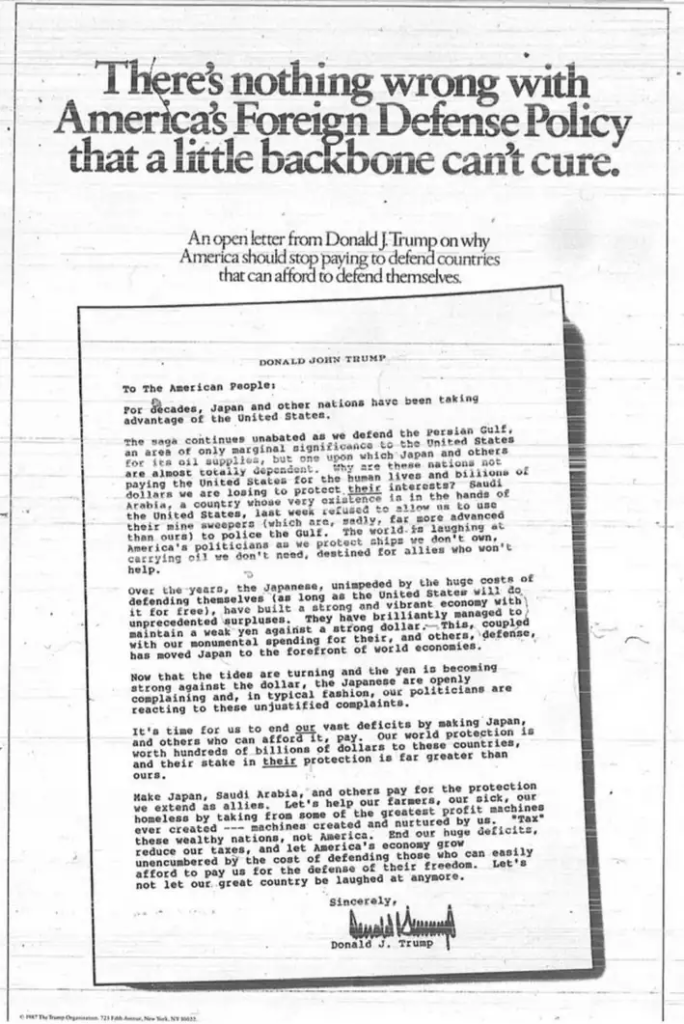
Washington: An ultimatum to Iran’s Supreme Leader. A warning to seize Iran’s oil facilities. And above all, a conviction that the United States’ one major blow could force Tehran to bow — these might look like pointers from Donald Trump’s 2026 Iran battle playbook, but the excerpt is from an advertisement published around four decades
Iran has reportedly informed the Donald Trump administration in the United States that it is not keen on holding talks with his West Asia envoy Steve Witkoff or the president’s son-in-law Jared Kushner. Instead, Tehran would prefer to engage with vice president JD Vance, according to a report. This comes amid reports that the American
The Iran war has laid bare a paradox: Gulf money is helping underwrite America’s effort to win the artificial intelligence race, and now the US has started a conflict that could destabilize those investments. Some estimates have projected $2 trillion in long-term pledges from Middle Eastern nations to the AI boom, money that now looks
Donald Trump says he is talking to Iran’s leaders about ending his bombing campaign; Iran says he is not. But what he certainly is doing is preparing an alternative, should a negotiated end to hostilities prove elusive. Two amphibious units of US Marines are on their way to the Gulf, one from Japan and the
Washington: US President Donald Trump has said that Iran has given America a “present” worth a “tremendous amount of money”, related to the Strait of Hormuz, the crucial waterway that has remained virtually closed since the US-Israeli strikes that started the war on February 28, causing global oil and gas prices to soar. The US
TAIPEI, March 25 (Reuters) – The United States has “quite a high” sense of urgency in helping Taiwan strengthen its military capabilities and is working to help speed up delayed weapons deliveries, the island’s Defence Minister Wellington Koo said on Wednesday. Taiwan, which faces a rising military threat from China, has complained of repeated delays
New York : The supply shockwaves from the US and Israel’s war in Iran are spreading across the global economy, raising concerns about an inflation hit to companies and consumers that will require policymakers to raise borrowing costs. The release of the film ‘Toxic’, starring Yash, has been postponed to June for fear of missing
The sheriff involved in the search for Nancy Guthrie believe that “something occurred” on Jan. 11, three weeks before she disappeared from her Tucson, Ariz. home. Authorities say they cannot share any evidence indicating the date’s importance to their investigation. Savannah Guthrie asked her followers for any information they may have about key dates in
UNITED NATIONS (AP) — A U.N. Security Council resolution calling for countries to use “all necessary means” to keep the Strait of Hormuz open is facing some opposition for raising the possibility of U.N.-backed military action against Iran, according to three council diplomats. Bahrain put forward the proposal, which was obtained by The Associated Press
LONDON, March 24 (Reuters) – Hundreds of British families will test social media bans, curfews and app time limits to see how they impact children’s sleep, family life and schoolwork, the government said. Britain, like other governments, is considering restricting access to social media for children. Nothing is off the table, it has said, including
NEED TO KNOW Jeremy Meeks, who first gained widespread fame when his mugshot went viral years ago, says strangers took his visitor slots in jail, preventing his family from seeing him Meeks, 42, said during an episode on Matthew Cox’s podcast “Inside True Crime” that he received hundreds of letters daily, including money orders and
PARIS, March 24 (Reuters) – French media tycoon Vincent Bolloré told lawmakers on Tuesday that he had become the “perfect scapegoat” for what he described as a hostile elite, rejecting accusations that his conservative media empire was waging a political war. The hearing forms part of a parliamentary investigation into France’s public broadcaster, an inquiry
new video loaded: Iranian Missile Attack Damages Residential Buildings in Tel Aviv 1:30 An Iranian missile attack on Tel Aviv damaged residential buildings and injured several people, Israel’s national emergency service said. By Axel Boada March 24, 2026 Trump Delays Deadline for Strikes on Iranian Energy Infrastructure 1:00 Iranians Respond to Trump’s Threats to Hit
If you want to advance your career, you’ll need to build a strong network. The statistics make the case: 54% of people report getting their job through a connection, according to a 2025 survey by MyPerfectResume. Despite this, just 10% of people reach out to contacts during their job search. This is why networking in
The Detroit Tigers organization is once again under the microscope after a troubling new report raised questions about how internal concerns are handled. A report from The Athletic detailed a situation involving a longtime employee of Ilitch Sports and Entertainment (IS+E) who claims he was effectively pushed out after speaking up about workplace issues, despite
WASHINGTON (AP) — Secretary of State Marco Rubio will travel to France this week to try to sell America’s skeptical Group of Seven allies on the strategy of the Iran war that has sent global fuel prices soaring, the State Department said Tuesday. Rubio will attend a G7 foreign ministers meeting near Versailles outside of