When Max Allegri was a boy, his grandfather used to take him to the Caprilli horse track in Livorno. A passion for racing has never left him.
One day, he fancied placing a bet on a horse called Minnesota. The bookie laughed at him. “Minnesota”, he said, “had as much chance of winning the race as Allegri did of making it as a coach in Serie A.” Allegri lumped on and guess which nag made it first past the post? Picture the trademark grin as he collected his winnings.
The story is worth trotting out because it perhaps explains Allegri best. Take Sunday’s Derby della Madonnina, for example.
Allegri made a single change to his starting line-up from last weekend’s 2-0 win against Cremonese. Pervis Estupinan came in for Davide Bartesaghi. The Ecuadorian has, broadly, disappointed since his move from Brighton in the summer. Sent off against Napoli in September, the €17million (£14.7m, $19.6m) signing lost his place to Bartesaghi, who unexpectedly established himself in the first team after Milan Futuro, the club’s Under-23 development squad, suffered relegation to Italy’s fourth tier in 2025.
Bartesaghi became a favourite among fans and media alike, and seemed unmovable until, to borrow Allegri’s phrase, “he went off at exactly the right time” in Cremona. It was the last minute of normal time at the Zini. The game was still tied, and the first touch of his replacement, Estupinan, was to set up the Luka Modric cross that opened the scoring. It sent the away end delirious.
Football is often about moments and while that moment wasn’t enough on its own for a Panini rep to thrust the Serie A Player of the Match award into Estupinan’s hands, he was cracking a smile and posing for photos with one of the ingots in his hands on Sunday night, as the only goal of a crucial derby came from an emphatic swing of his left foot.
“It’s the biggest goal of my career,” Estupinan told DAZN. And it arrived just as Milan’s executives in San Siro’s Tribuna d’Onore feared they were about to go behind.
Estupinan scores the winner against Inter in the derby (Stefano Rellandini / AFP via Getty Images)
Seconds earlier, Estupinan’s team-mate Fikayo Tomori had been caught out of position. Inter’s cerebral midfielder Henrikh Mkhitaryan bore down on goal and Milan’s defence parted like the waves, as their remaining centre-backs got pulled out of position by clever runs from Ange-Yoan Bonny and Nicolo Barella.
Italians have a saying for what happened next. “Gol mangiato. Gol subito.” Miss a chance and you will almost immediately concede.
That was the fate Inter befell.
Not for the first time this season, Milan’s captain Mike Maignan made a momentum-shifting save. While DAZN’s commentators blabbed about the hobbling Adrien Rabiot’s ability to continue, they missed Estupinan’s run behind Inter’s wing-back Luis Henrique. He galloped onto Youssouf Fofana’s pass like one of Allegri’s beloved horses and boom.
Call it luck or intuition, these are the attributes, more than any style or system, with which we have come to associate Allegri. That, and being a winner.
Bartesaghi tweaking his hip flexor turned out unfortunate for him and, at the same time, fortunate for Estupinan and the team. But you also make your own luck. Allegri and his coaching staff had noticed Henrique going to sleep in Inter’s 3-2 win against Juventus last month, specifically on Andrea Cambiaso’s goal. “We worked hard on the move all week,” Estupinan acknowledged. “The Mister told me to attack him and I did at the right moment.”
Before the game, Allegri had been considering the stakes. If Inter were to win, they’d go 13 points clear, title race over. A draw would keep the gap at 10, title race over. Statistical models gave Milan a 2.5 per cent chance of winning the Scudetto from this far back.
“You have a horse that’s 10 furlongs ahead of you, 200m from the finish line. It’s going to be hard to catch it,” Allegri told DAZN.
Few would bet on them doing it. And yet Milan just might be Milansota.
All of a sudden, the title race seems on again.
Inter had not lost in the league since the last derby in November, 15 games ago. Almost perfect in the meantime, they dropped just two points, which meant Milan, who went unbeaten in Serie A from late August until a fortnight ago, still couldn’t hang with them, regrettably drawing a few too many games against the likes of Pisa, Sassuolo and a historically bad Fiorentina.
Sunday’s derby was the last chance Serie A had of a title race.
Inter, it must be said, went into it without Hakan Calhanoglu and their first-choice strike partnership of Marcus Thuram and skipper Lautaro Martinez. Once again, Denzel Dumfries wasn’t fit enough to start.
The first leg of the Coppa Italia semi-final away to Como last Tuesday, a 0-0, had largely been managed with backups but still figured as an extra game that hadn’t, for instance, been on Milan’s calendar. They’d been knocked out by Lazio in the round of 16 and haven’t had to contend with European football this season.
Mkhitaryan’s chance aside, Inter, in fairness, could still have come away from the derby with a point in a game of few clear-cut opportunities.
At the start of the second half, Barella stole possession high and crossed to the far post. Mkhitaryan brought the ball under control and squared it to Federico Dimarco, the most in-form player in the league and favourite to be named MVP. Of all the feet a chance might fall to, there was none better at the moment than his sweet left foot. But it soured on Dimarco, who scooped a shot over the bar when he perhaps should have left it for Francesco Pio Esposito, who was in more space next to him.
The wunderkind hyped to the heavens by Gazzetta dello Sport and subject to a series of ‘Pio Esiste’ headlines (a riff on ‘God Exists’) had a night for the atheists.
The service to him and Ange-Yoan Bonny was poor. Crosses like the one Esposito headed in against Juventus were few and far between.
“Today we had a couple of kids up front who were playing together for the first time,” Cristian Chivu said. “The aggressiveness with which Milan played (in defence) perhaps came from them seeing they had two youngsters ahead of them.”
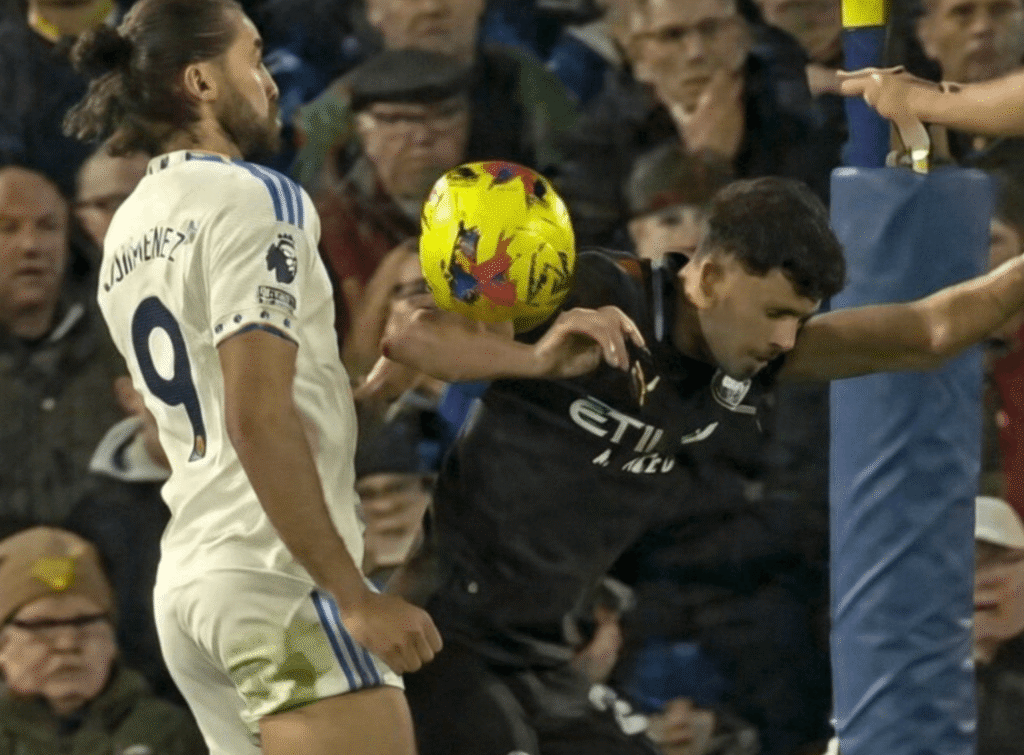
Inter wanted a penalty at the end when Milan’s Samuele Ricci inadvertently handled, his arm close enough to his body to persuade the referee to wave play-on. It brought up painful memories for Interisti. Yann Bisseck, their own centre-back, had seen one given against him in the 2-2 draw with Lazio in May last season, a result that contributed to Inter losing the title on the final day.
Perplexed that the VAR did not call the referee to the monitor for an on-field review, Dimarco still tried to look on the bright side.
“At the start of the season, they said we wouldn’t finish top four,” he told Sky Italia. “But we’re in March and seven points clear.”
There’s no doubt, Inter feel held to a higher standard than the other clubs in Serie A. They have been the team of the decade so far in Italy without winning as much or getting the credit they deserve. Many considered their cycle over after last season’s Champions League final, and yet a league and cup double is still on the cards for a younger team.
Chivu is also in his first full season, not only at Inter but at this level and if he were to end it with a couple of trophies, then chapeau.
For now, though, his big game record has left a lot to be desired. He has a couple of defeats in the Madonnina and historically, in this rivalry, it’s not a great look. The last Inter coach to lose his first two outings against Milan was Giuseppe Chiappella half a century ago. Milan had not done the double over their cousins since 2011 either.

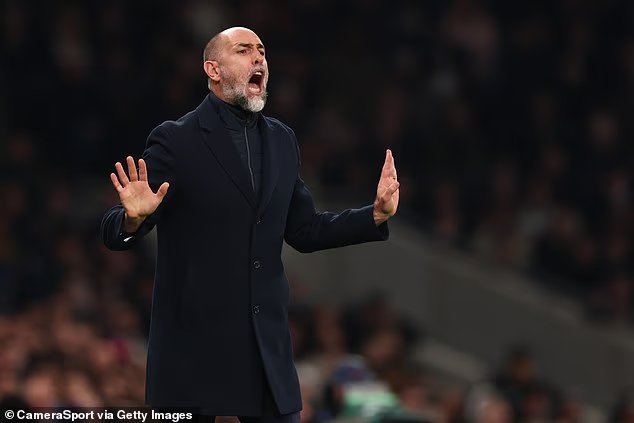
Chivu has lost his first two derbies as Inter coach (Alessio Morgese/NurPhoto via Getty Images)
A dash from Alexandre Pato, the hero of a 3-0 win that year, memorably got the last man sent off. Chivu was Inter’s last man.
A guest of the club on Sunday, Pato embraced Allegri before the game and shared memories of those victories. Both came in Allegri’s first spell at the club and were very significant in the first of his six league titles as a coach.
The 58-year-old’s stock has dramatically rebounded this season and Milan’s results have been used in the calcio culture wars by editors and columnists to argue that some coaches and their ideas, no matter how archaic they may appear, never go out of fashion. Corriere dello Sport, a paper edited by an Allegri-ista, linked him with the vacancy at Real Madrid last week, a job he famously and perhaps unwisely turned down in 2021.
Allegri, lest we forget, has never left Italy, even at his absolute peak. His Livornese dialect is better than his Italian and his Italian better than his English.
His strength — a timelessness unbound to a philosophy or fashion — has been a weakness when the modern owner of a Premier League club has expected a sales deck with catchy buzzwords evocative of tactical innovation.
And so, whenever rumours about his future begin to swirl, as they have done recently, it is worth remembering how, unlike Antonio Conte, his great contemporary, Allegri has always gone back on himself: back to Juve, back to Milan, rather than forward. Never abroad.
In the afterglow of another win in the derby and a 16-point swing from this time last year, Milan may still end the season in the Champions League but empty-handed.
“Inter remain the best team in the league,” Allegri insisted on Sunday. “We did well. We could have been more composed in the final third. We’re up to 60 points and kept Juventus 10 points back, and Como and Roma nine points back. We’ve worked six or seven months to get to March in the best nick.”
Psychologically, Allegri was managing expectations. He wanted everyone, including the owner Gerry Cardinale, who congratulated the players in the dressing room afterwards, to keep their feet on the ground. Finishing top four remains this season’s priority.
But Milan exist to win, and they chased down a seven-point lead with fewer games remaining in 1999.
Can Allegri and Milansota defy the odds?