May 14, 2026, 12:23 p.m. ET
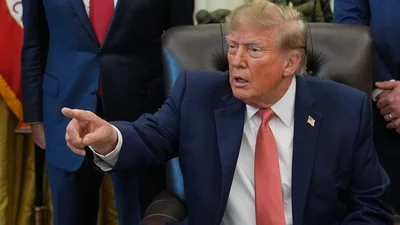
During day two of President Donald Trump’s trip to discuss foreign relations with Chinese President Xi Jinping, the world leaders are hosting a state banquet.
Trump’s schedule on Thursday, May 14 included a bilateral meeting with China’s president, as well as the banquet later that night, per his schedule, which the White House shared with USA TODAY via email.
“The two sides discussed ways to enhance economic cooperation between countries, including expanding market access for American businesses into China and increasing Chinese investment,” the White House shared on X on May 14. “Leaders from many of the United States’ largest companies joined a portion of the meeting.”
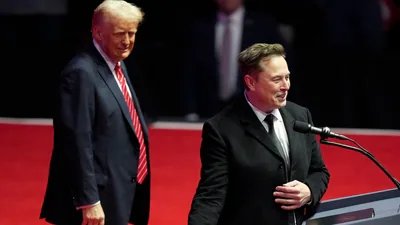
Trump is traveling with multiple entrepreneurs and business executives, including Elon Musk of X, SpaceX and Tesla, and Tim Cook of Apple.
Here’s what else the president has been up to in Beijing, and what’s to come during this trip there.

Trump’s schedule for Thursday, May 14
China is 12 hours ahead of Eastern Standard Time in the U.S., so 11 a.m. ET Thursday is 11 p.m. Thursday China Standard Time. So by publication of this story, Thursday has already happened in China.
Traveling with the president are journalists from outlets such as Fox, Reuters, the New York Times, the New York Post and NPR. Throughout his time in China, the president has executive time scheduled, or unstructured time, per The Guardian and Politico.
On May 14, the president’s day began at 8 a.m. China Standard Time, per the schedule.
His Thursday consisted of:
- 8 a.m. – Executive time (closed press)
- 10 a.m. – Greeting with China’s president (pre-credentialed media allowed)
- 10:15 a.m. – Bilateral meeting with China’s president (with journalists traveling alongside the president)
- 6 p.m. – State banquet with China’s president and U.S. businessmen/women traveling with Trump (with journalists traveling alongside the president)

Trump’s schedule for Friday, May 15
Per the White House, Trump’s plans for Friday include:
- 8 a.m. – Executive time (closed press)
- 11:30 a.m. – Greeting and friendship photo with China’s president (with journalists traveling alongside the president)
- 11:40 a.m. – Bilateral tea with China’s president (with journalists traveling alongside the president)
- 12:15 p.m. – Bilateral lunch with China’s president (closed press)
- No time specified – Departs Beijing, China and heads to the White House (with pre-credentialed media)
- No time specified – Arrives at the White House (open press)
Leaders say no to Iran having a nuclear weapon
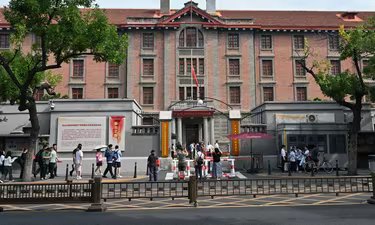
During Thursday’s bilateral meeting at the Great Hall of the People in Beijing, Xi welcomed Trump back to the country and said “the whole world is watching our meeting.”
He added that the world is constantly changing, and internationally, affairs are “fluid and turbulent.”
“Can China and the United States overcome the Thucydides trap and create a new paradigm of major country relations?” Xi asked.
The trap Xi referred to, Thucydides trap, is Harvard Professor Graham Allison’s theory that when a rising power threatens to displace one already established, the outcome could be war.
As Trump looked on, nodding, Xi added that China and the U.S. have more common goals than differences.
When it was his turn to speak, Trump said his relationship with the president is longstanding and “an honor.”
“There are those that say this is the biggest summit ever,” Trump said. “The relationship between China and the USA is going to be better than ever before.”
He later said at the state banquet dinner that he had “extremely positive and productive conversations and meetings today with the Chinese delegation.”
He also invited the president and his wife to visit the White House on Sept. 24.
The Strait of Hormuz was also a topic of discussion on May 14. As the U.S.-Israeli war on Iran has carried on, it has caused damage in the Middle East, halted maritime traffic in the Strait of Hormuz and hiked up global energy costs. The U.S. has previously expressed a desire to reopen the Strait, which plays a vital role in shipping.
After the day wrapped up, the White House posted on X that both presidents agree the Strait of Hormuz needs to stay open to “support the free flow of energy.” China’s president showed interest in buying more American oil to reduce his country’s reliance on the Strait, the White House posted on X.
Both presidents are against Iran having a nuclear weapon, the post said.
Contributing: James Powel and Francesca Chambers, USA TODAY
Saleen Martin is a reporter on USA TODAY’s trending team. She is from Norfolk, Virginia – the 757. Email her atsdmartin@usatoday.com.