Rivian’s Georgia Plant Is Finally Taking Shape—But Behind the Scenes, Bigger Moves Are Already Happening
Rivian’s Georgia Plant Is Finally Taking Shape—But Behind the Scenes, Bigger Moves Are Already Happening
For a project this big, silence usually means delays. But at Rivian’s massive Georgia site, things are starting to move in a way that’s hard to ignore. Not finished, not even close, but definitely shifting gears.
Vertical construction at the long-anticipated Rivian plant near Social Circle is now expected to begin before the end of the year. That might sound like a routine update, but it’s actually a turning point. Up until now, most of what’s happened out there has been groundwork, infrastructure, the kind of progress that’s easy to overlook unless you’re standing on the dirt.
That’s where things change.
Because once vertical construction begins, the project stops being theoretical. It becomes visible. Steel, concrete, actual buildings rising out of the site. And for a company like Rivian, which has been under pressure to deliver on future models and scale production, that shift matters more than it sounds.
Right now, the site still feels early. Signs at both entrances announce what’s coming, with messaging about building the future in Georgia. Drive a little further in, and you’ll see construction trailers, heavy equipment, and trucks moving in and out. Utility work is already underway across the acreage, setting the foundation for what’s supposed to become a major electric vehicle manufacturing hub.
It’s not nothing. But it’s also not the factory yet.
Ground was officially broken back in September, and since then, progress has been steady but mostly behind the scenes. Local officials have already started reviewing some of the plans tied to the project, which suggests things are far enough along to start getting into the real details.
And that’s where it gets a little more complicated.
At a recent meeting of the Joint Development Authority, the group overseeing aspects of the project made a key decision. Instead of handling plan reviews internally through legal counsel, they voted to bring in an outside engineering firm, Thomas and Hutton, to take over that responsibility.
On the surface, that sounds like a technical adjustment. In reality, it’s a quiet acknowledgment that this project has outgrown the initial setup.
The engineering firm will be paid about $50,000 to review Rivian’s plans, looking for potential issues or red flags. Half of that cost will come from the authority’s own funds, with the rest covered by grant money. It’s not a massive number in the context of a multibillion-dollar project, but it signals something important.
The work is getting serious enough that it needs the right expertise.
Previously, the responsibility had been tied to legal counsel, which raised concerns about whether the right skill set was in place. Moving that responsibility to an engineering firm isn’t just a procedural change. It’s a course correction.
And it comes at a time when everything else around the project is starting to ramp up.
The facility itself is expected to eventually produce Rivian’s upcoming R2, a midsize electric SUV aimed at a much broader market than the company’s current lineup. Pricing is expected to land just under $60,000, with a lower-cost version around $45,000 planned later. That’s a clear move toward volume, not just niche appeal.
Beyond that, the plant is also slated to build the R3, a smaller crossover with an anticipated starting price near $37,000. That’s where Rivian starts pushing into more competitive territory, going head-to-head with other electric vehicles that are already fighting for attention in that price range.
Here’s the part that matters.
This Georgia facility isn’t just another factory. It’s the backbone of Rivian’s next phase. The current R1 models sit closer to $80,000, which limits how many buyers can realistically step in. The R2 and R3 are meant to change that, but only if production can scale properly.
And that depends entirely on this site.
The timeline currently points to production starting in 2028. That might feel far off, but in manufacturing terms, it’s right around the corner. Every delay now pushes everything else back later. Every adjustment matters.
There’s also the financial side, which adds another layer to the story.
Rivian secured a $6.6 billion loan from the Department of Energy toward the end of the previous administration. That funding is expected to play a major role in getting the Georgia plant fully built and operational. The company is anticipated to start drawing from that loan before construction wraps up and production begins.
But even that isn’t entirely straightforward.
During the same meeting, it came out that the Joint Development Authority will be responsible for some legal costs tied to that loan. That detail caught some members off guard. It’s not unusual for large projects to come with unexpected expenses, but it does highlight how complex the financial structure behind this plant really is.
Big projects bring big layers.
You’ve got local authorities, federal funding, engineering reviews, infrastructure work, and long-term production goals all overlapping at once. It’s not a simple build. It’s a coordinated effort that has to stay aligned over several years.
And that’s where the pressure builds.
Because Rivian isn’t just building a factory. It’s trying to prove it can scale, compete, and deliver vehicles at prices that reach more buyers. The Georgia plant is central to that plan, and every decision being made right now feeds into whether that plan works or falls apart.
For now, the signs are still up, the trucks are still moving, and the real structure hasn’t started rising yet. But that’s about to change.
Once vertical construction begins, there’s no hiding the progress anymore. It either moves forward or it doesn’t.
And for Rivian, there’s not much room left for anything in between.
Authorities in Martin County issued an arrest warrant for Alexandra Delacaridad Gonzalez, a bookkeeper accused of embezzling large sums from multiple HOAs she supervised. The Criminal Investigations Division of the Martin County Sheriff’s Office reports that Gonzalez, an employee of Avant-Garde Property Management, is charged with numerous offenses. These include two counts of fraud over
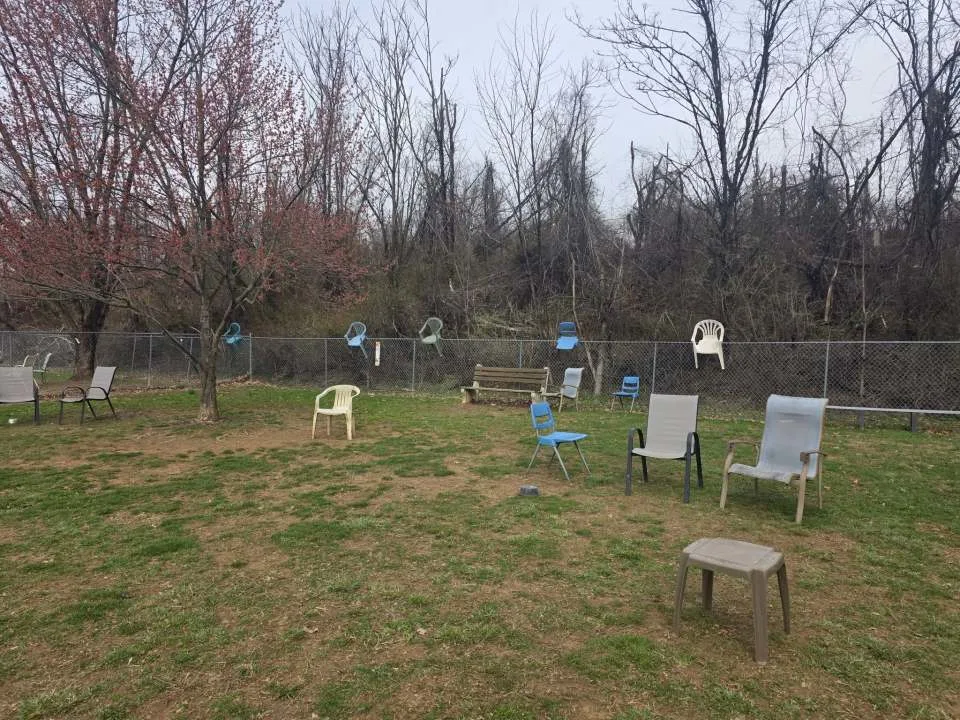
LOWER PAXTON TOWNSHIP, Pa. (WHTM) – A local township is asking residents to remove chairs that have “taken over” a park. Lower Paxton Township Parks and Rec says residents who have brought and left chairs at Happy Tails Dog Park need to remove them. Close Thanks for signing up! Watch for us in your inbox.
Police are working to find a 25-year-old man wanted in connection with a weekend shooting in Taylor that left one person wounded. Officers found a male suffering from a gunshot wound around 8:50 p.m. Sunday on 15000 block of Pond Village Drive, the Taylor Police Department said in a statement. He was transported to an
US President Donald Trump asserts that Americans desire the return of their troops from Iran, despite his preference for initiating a mission to capture the nation’s oil. This indicates a significant shift towards moderating his ambitious goals in favor of a ceasefire. President Trump acknowledges American desire for troop withdrawal from Iran. Photographer: Aaron Schwartz/CNP/Bloomberg
NEED TO KNOW Bride-to-be Micaela Rodriguez shared a video on TikTok recounting how a man wearing a ski mask and gloves broke into the Nashville Airbnb she and her friends were staying at while celebrating her bachelorette trip The man rattled the bedroom doorknob of one of the guests, prompting police to be called The
UiPath Inc. (NYSE: PATH) is one of the worst-performing agentic AI stocks so far in 2026. Based on its January 2, 2026 close of $16.59 and its April 2, 2026 close of $11.24, the stock was down about 32.2% year to date as of the latest close. The latest company-specific development came on March 25,
Home News World will face oil shortage: Irans sharp reply to Trump on Power Plant Day warning sparks concerns Iran has responded to Donald Trump’s warning regarding the opening of the Strait of Hormuz. The reply hinted at the possibility of 2026 being the Oil & Gas Shortage Year in the World. Scroll down to
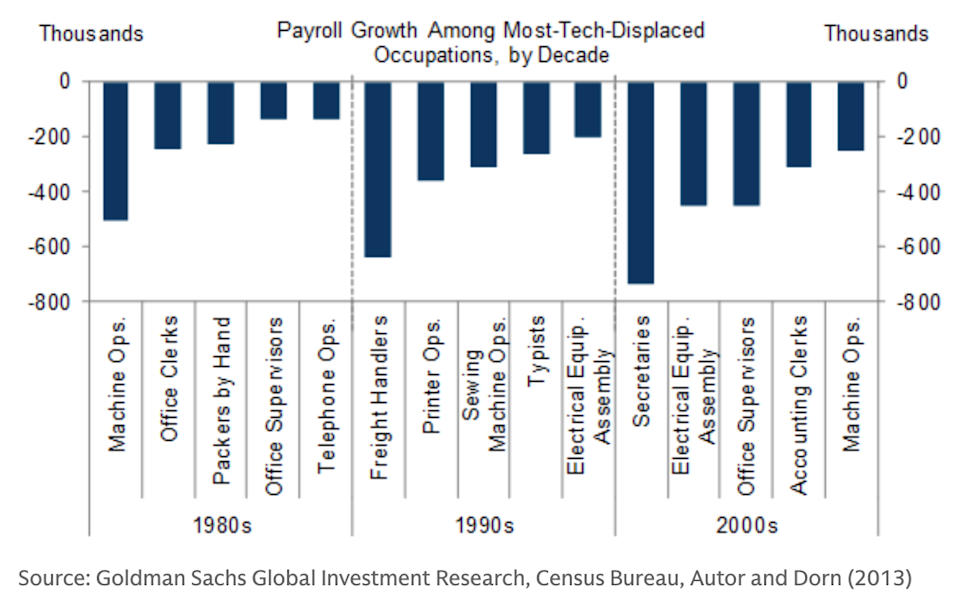
Goldman Sachs is out with a blunt take for tech workers being displaced by AI: Expect a lengthy search to secure a job that will probably pay less than your previous gig. “Workers displaced from technology-disrupted occupations face more difficult short-run transitions back into employment,” Goldman Sachs strategist Pierfrancesco Mei wrote in a new note
NEED TO KNOW Melissa Gilbert is speaking out amid her husband Timothy Busfield’s legal issues Busfield was indicted by a grand jury on four counts of criminal sexual contact of a minor (child under 13), all of which are third-degree felonies, in February Gilbert spoke out on during an interview with Good Morning America, in
Meta is still trimming its workforce. The tech company co-founded by Mark Zuckerberg will lay off nearly 200 of its Silicon Valley workers. This will lead to 124 jobs in Burlingame and 74 in Sunnyvale being eliminated, according to filings with the Employment Development Department in California, the San Francisco Chronicle reports. The layoffs are set
Regularly toppings national lists, a Northumberland market town is home to a rich and magical history steeped in local legend and even holds a ‘curse’. Although Alnwick was this year sadly pipped to the post by Whickham as the North East ‘best place to live.’ But despite the result the town has much to offer,
The majority of reported crimes in San Francisco continued their downward trajectory in the first three months of the year, building on historic declines over the last two years. But homicides have spiked. So far, there have been 14 killings, compared to just four this time last year. In a presentation to the police commission,
ZANJAN, Iran (AP) — A black banner hangs over the border crossing and portraits of Iran’s slain Supreme Leader Ayatollah Ali Khamenei stare down, promising vengeance against the United States and Israel. But on the 12-hour drive south to the capital, Tehran, daily life continued, with only occasional signs of the ongoing war, including a
MADRID, April 6 (Reuters) – Spain’s ruling Socialist Party has gained voter support amid Prime Minister Pedro Sanchez’s staunch opposition to the U.S.-Israeli war on Iran, while far-right Vox, which supports the offensive, has seen a decline, two surveys published on Monday showed. Sanchez has emerged as one of the most vocal Western leaders criticising
At least 26 people were killed in three separate attacks over the Easter weekend in northern Nigeria, according to the Nigerian military and local officials.The deadliest attack took place on Saturday in the Mbalom community in the Gwer West area of Benue State, where at least 17 people were killed, reported AP. Governor Hyacinth Alia
It’s easy to forget how much our location influences our health. Aside from genetics and behavior, where someone lives can be the biggest determinant to their overall well-being. Access to nutritious food and recreational facilities, as well as healthcare costs and the condition of parks, play a role in health. In this way, a city
MOSCOW, April 6 (Reuters) – The Kremlin on Monday said that the Iran war was escalating in both geography and economic impact, and that the whole Middle East region was “on fire” due to the U.S. and Israeli attacks on the Islamic Republic. U.S. President Donald Trump, in an expletive-laden Easter Sunday social media post,
DUBAI, April 6 (Reuters) – Iran has formulated its positions and demands in response to recent ceasefire proposals conveyed via intermediaries, a foreign ministry spokesperson said on Monday, adding that negotiations were “incompatible with ultimatums and threats to commit war crimes.” Spokesperson Esmaeil Baghaei said Tehran had a set of requirements based on its national
THE SUEZ crisis, the Vietnam war, the invasion of Iraq: non-European wars have a way of tearing at the fabric of NATO. Now America’s air campaign (alongside Israel) against Iran may rip the alliance apart. Donald Trump has grown increasingly hostile towards European allies, furious at their refusal to help America re-open the Strait of
At least eight people were injured, including two children, during Ukrainian drone attacks on the Black Sea port city of Novorossiysk, with a number of residential houses sustaining damage, Russian authorities on Monday. Smoke and flames rise following a drone attack in Novorossiysk, Russia, in this screengrab obtained from a video released on April 5, 2026. (Reuters)