 AFP via Getty Images
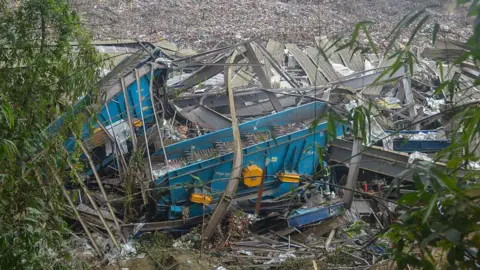
Rescue workers are racing to find dozens of people still missing following a landslide at a landfill site in the central Philippines earlier this week, an official has said.
Mayor Nestor Archival said on Saturday that signs of life had been detected at the site in Cebu City, two days after the incident.
Four people have been confirmed dead so far, Archival said, while 12 others have been taken to hospital.
Conditions for emergency services working at the site are challenging, the mayor added, with hazards such as unstable debris and crew waiting for better equipment to arrive.
The privately-owned Binaliw landfill collapsed on Thursday while 110 workers were on site, officials said.
In a Facebook post on Saturday morning local time, Archival said: “Authorities confirmed the presence of detected signs of life in specific areas, requiring continued careful excavation and the deployment of a more advanced 50-ton crane.”
Conditions for rescue workers at the site are difficult, with the wreckage still unstable.
Relatives of those missing have been waiting anxiously for any news of their whereabouts. More than 30 people, all workers at the landfill, are thought to be missing.
“We are just hoping that we can get someone alive… We are racing against time, that’s why our deployment is 24/7,” Cebu City councillor Dave Tumulak, chairman of the city’s disaster council, told AFP news agency.
 AFP via Getty Images
Jerahmey Espinoza, whose husband is missing, told Reuters news agency at the site on Saturday: “They haven’t seen him or located him ever since the disaster happened. We’re still hopeful that he’s alive.”
The cause of the collapse is still unclear, but Cebu City councillor Joel Garganera previously said it was likely the result of poor waste management practices.
Operators had been cutting into the mountain, mining the soil, and then piling garbage to form another mountain of waste, Garganera told local newspaper The Freeman on Friday.
The Binaliw landfill is about 15 hectares (37 acres).
Landfills are common in major Philippine cities like Cebu, which is the trading centre and transportation gateway of the Visayas, the archipelago nation’s central islands.