As the Hong Kong International Cultural Summit returns on 22-23 March, cultural leaders from 14 countries and regions will gather in the West Kowloon Cultural District (WestK) to debate one central question: how can cultural institutions reimagine their relationship with communities?
Bringing together museum directors, performing arts leaders and district-scale cultural planners, the summit reflects the rapid evolution of Hong Kong’s cultural landscape — and the growing global relevance of the district itself. We spoke to three of its key figures: Suhanya Raffel, Museum Director of M+; Louis Ng, Museum Director of the Hong Kong Palace Museum; and Betty Fung, CEO of the West Kowloon Cultural District Authority.
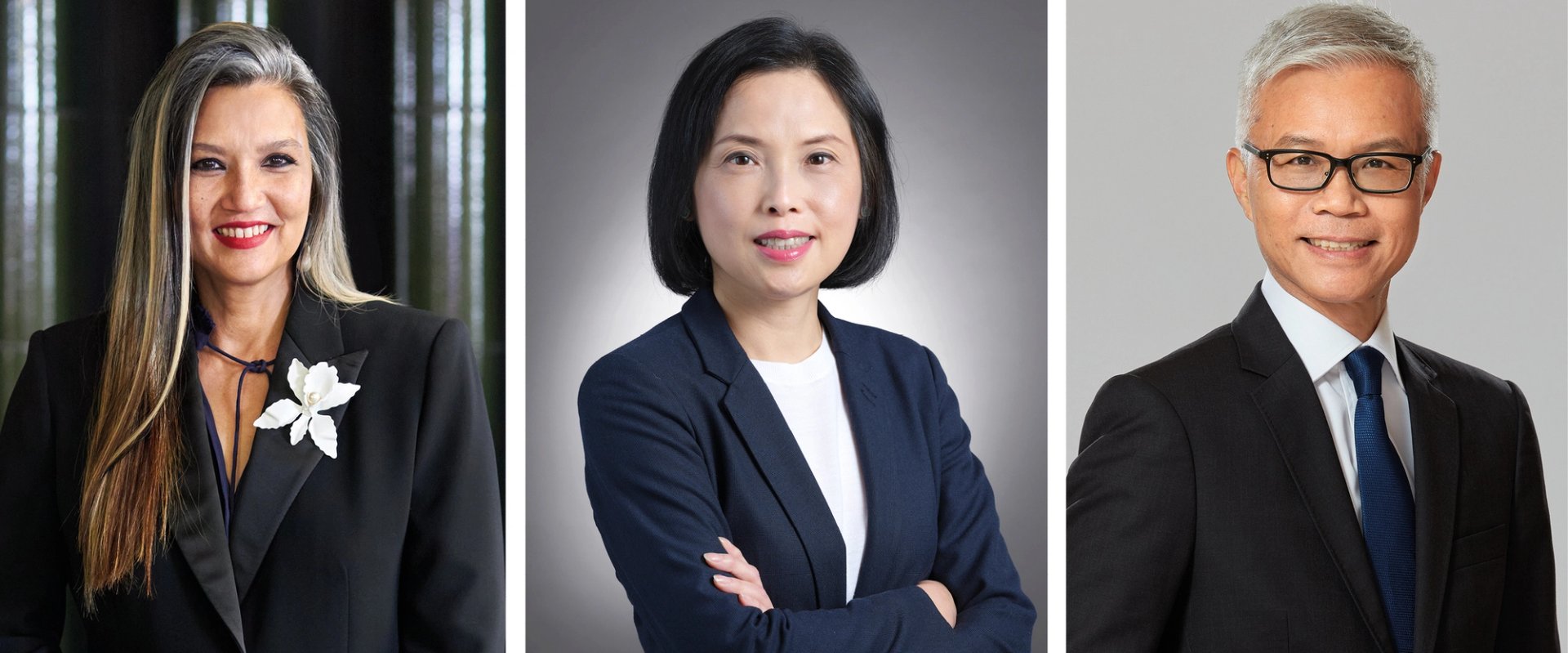
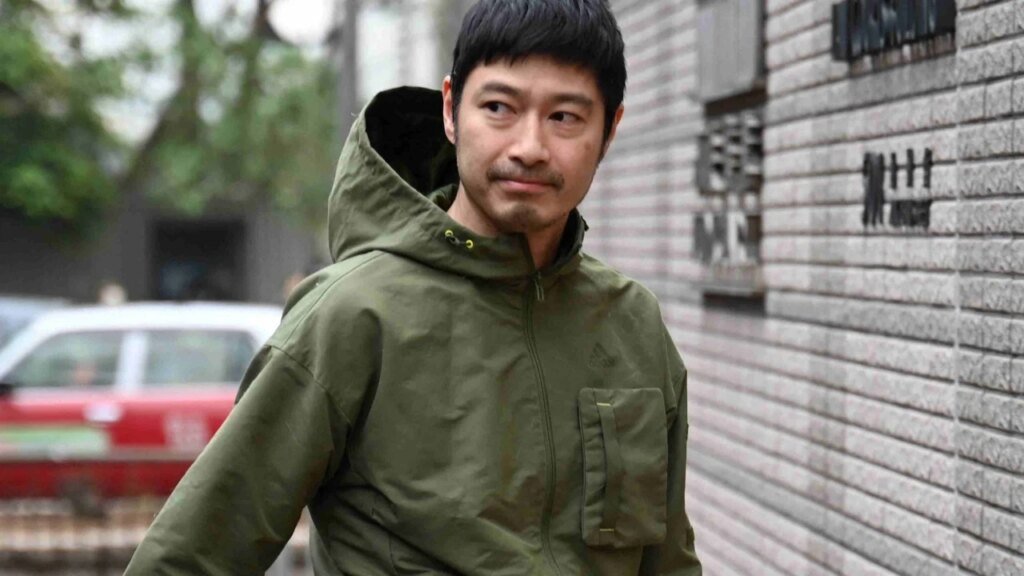
Suhanya Raffel, Museum Director, M+; Betty Fung, CEO, West Kowloon Cultural District Authority; Dr Louis Ng, Museum Director, Hong Kong Palace Museum Photos: Winnie Yeung @ Visual Voices. Courtesy of West Kowloon Cultural District Authority
Community is central to this year’s summit theme. How has that idea shaped M+?
Suhanya Raffel: Communities make museums and museums make communities. Part of the establishment of M+ was a public consultation where people were asked what kind of museums they wanted. The recommendation was not to build lots of little museums, but to create a big museum that was cross-disciplinary, unburdened by labels like “modern” or “contemporary”. It was to be a museum plus more, and that was how we became M+. We are interested in decentring the established canonical views on the history of art and visual culture and complexifying them through dialogues and collisions with views from our region.
This is what we are discussing in our two panels at M+. We have speakers from Senegal, from the United Arab Emirates, from Brazil, who have very different relationships to community. It will be very interesting to see how that evolution has taken place, how that conversation has grown, what are the similarities and differences. It is something we should all be looking at, especially as museums have grown from being very closed, research-based keepers of collections, to being much more engaged with audiences, communities, stakeholders and learning.
How does being in part of a cultural district in West Kowloon affect that?
Raffel: We have the huge privilege of having the Hong Kong Palace Museum that looks at archaeology and the pre-modern, and we have performing arts, including experimental performance and dance. It is fantastic to have that cross-disciplinary engagement across WestK on one hand, and then within the institution at M+ on the other.
A unique thing in Hong Kong is that cultural institutions across the board—from auction houses to galleries, right through to museums and performing arts groups—are extremely collegial. I have never encountered that kind of collegiality where you sit around a table and share what you are doing. We try very hard to make it as rich an experience as possible for the visitors.
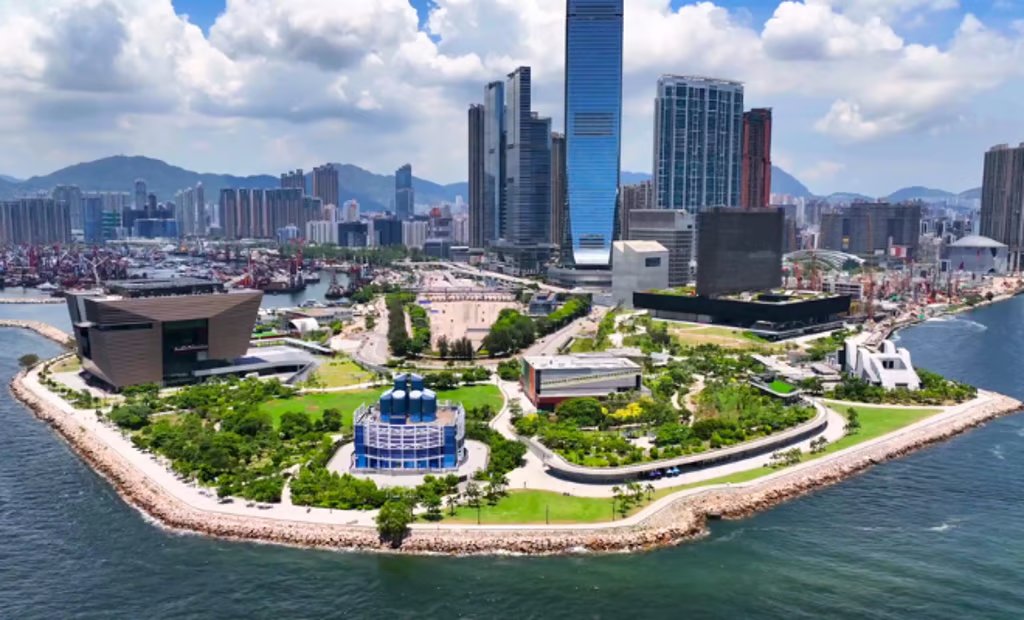
Louis Ng: WestK provides a total experience. People can go to M+, to the Hong Kong Palace Museum, or to see WestK’s performing arts programmes. Then we have a very beautiful Art Park and a beautiful city landscape. People can appreciate art and culture in a different way.
What do your audiences look like today?
Raffel: Opening M+ during Covid, when Hong Kong was closed [to people outside the city], we didn’t know what to expect. But it was a good decision to go ahead with the opening because it was so uplifting for people—here was an institution that was going to bring the world to them. The museum’s raison d’etre was made so visible.
We’ve welcomed over 10.8 million visitors since opening, including 2.6 million last year. More than eighty-four per cent are between 18 and 44—so it is a very young audience. Around 30–35 per cent are local Hong Kong residents, with 60–70 per cent visiting from outside the city.
And our outreach is really important. In 2025, we had over 176,000 participants through school tours and workshops and we have engaged with over half of the secondary schools in Hong Kong. We are very aware we need to build that young local audience as much as tourist visitors.
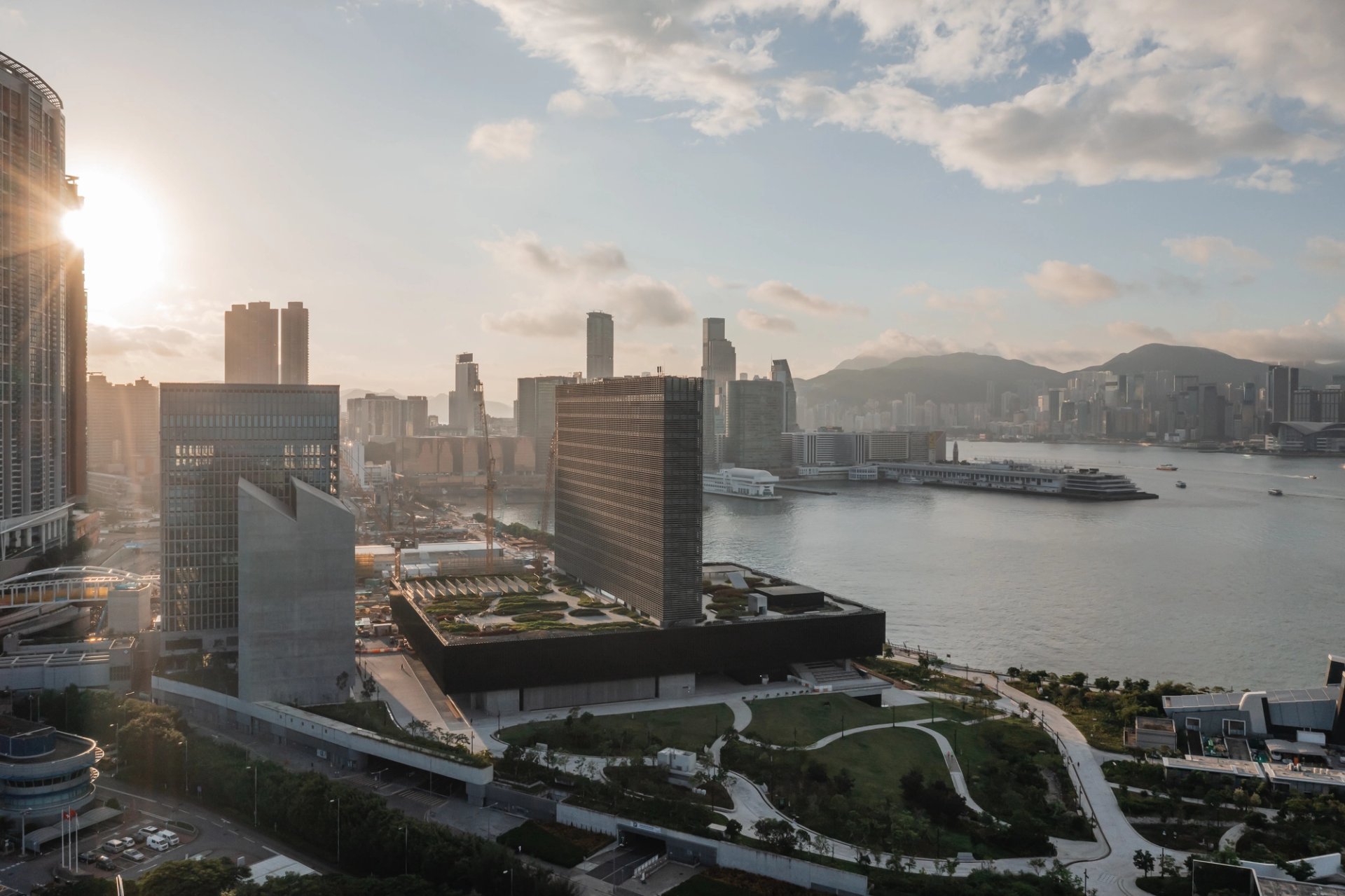
M+ opened during the Covid-19 pandemic Photo: Kevin Mak © Kevin Mak. Courtesy of Herzog & de Meuron
What else are you doing to extend your audience beyond the traditional museum-goer?
Raffel: We do not have a traditional audience because M+ is very new. The decision to make the museum transdisciplinary, with design, architecture, art, moving image, all together: that was a new experience for audiences here. There is no institution like this in all of Asia. We haven’t had to break silos because they weren’t there to begin with. And that has been a very energising experience for all of us.
Louis, the Hong Kong Palace Museum has a different remit. How does community figure in your vision?
Louis Ng: Because I have worked in museums for over 30 years, I have seen how the audiences have changed. The average age of our audience at the Hong Kong Palace Museum is 33 years old. That is quite a surprise, because people think that art from the past attracts older people. But no, we see a lot of young people coming. Then I also observe that the time they spend in the museum is longer than before. For example we have a very popular Egyptian exhibition and people are spending one and a half to two hours in there.
In the past people would say not to write the labels too long because people will not read them—we had to limit our text panels to 150 words. But nowadays that is not the case. People want more and more information.
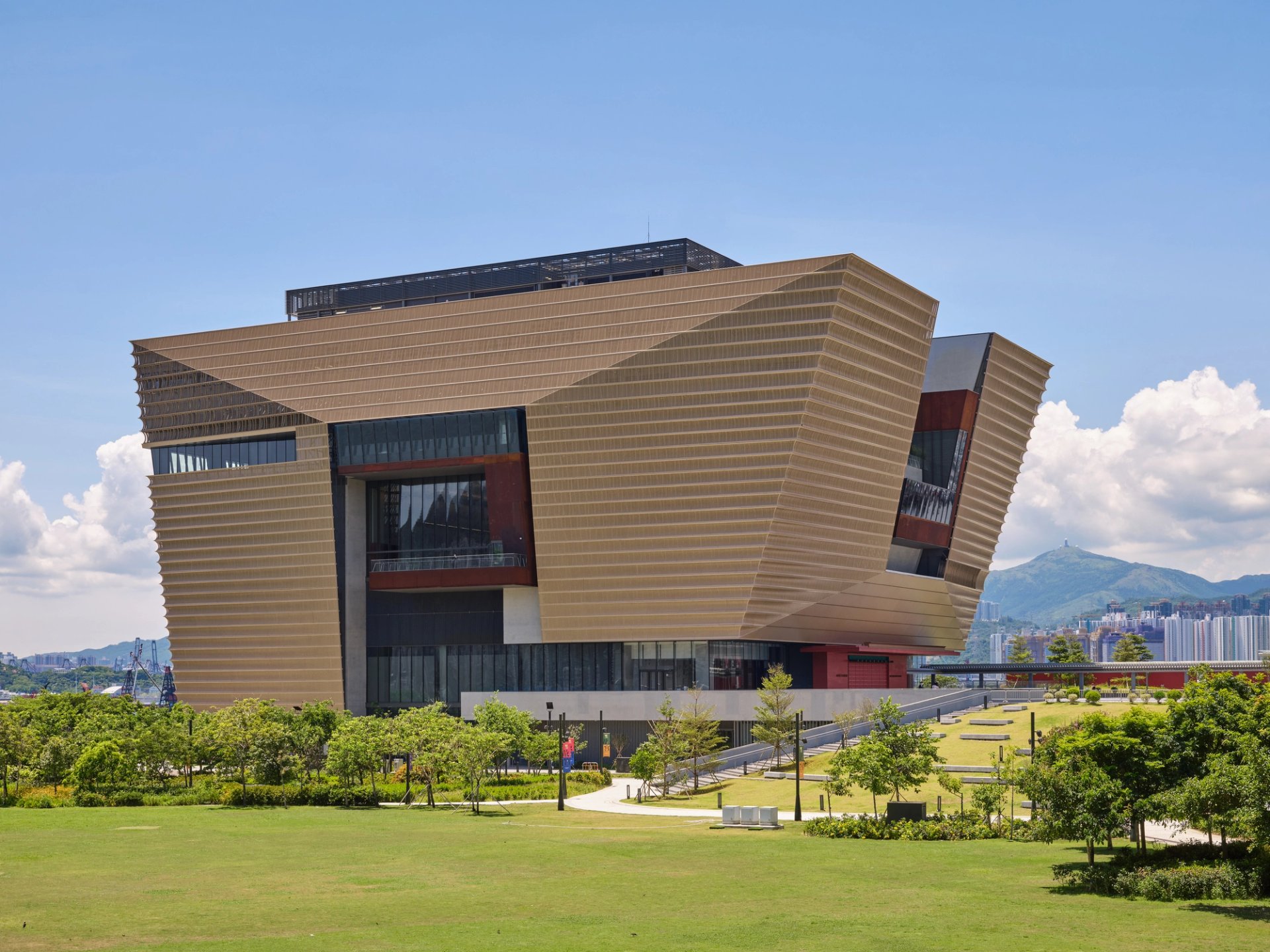
The Hong Kong Palace Museum opened in 2022 Photo: © Hong Kong Palace Museum
How are you responding to those shifts?
Ng: We need to think about how we can better interact with our audience, we need to know more about their interests and background to better to communicate with them.
For example, as an international museum we have two primary languages, English and Chinese, and we are expanding the wall text for some of our exhibitions to include Korean, Japanese and Arabic. We need to study whether technology like AI can help to provide multiple languages to our visitors. AI could also help visitors of different ages, different interests, different backgrounds plan for their visits. We are looking at how to personalise the experience for visitors.
Betty, your panel looks at cultural districts rather than individual venues. What makes West Kowloon Cultural District (WestK) distinctive?
Betty Fung: WestK is much more than a collection of venues—it is a holistic cultural ecosystem. We have museums and performing arts venues, open space, retail, dining and entertainment facilities, as well as commercial facilities like hotels, offices and residential. With these elements we’ve created a unique placemaking model that allows us to engage the community in far more creative and organic ways.
Our Art Park is a perfect example. With 11 hectares of open space, it serves as the city’s cultural living room. People come for the harbour view, for outdoor installations, for music concerts, for playful and participatory festivals of performances such as FunFest and Jazz Fest, as well as for workshops and interactive activities. We even run a structured street performance scheme with training and support to nurture local buskers.
We are not confined to traditional forms of community engagement—whether you come for a specific show or just a walk by the promenade, WestK offers a cultural encounter for everyone.
What are the district’s biggest challenges?
Fung: Our biggest challenge compared to many European institutions is that we do not have government funding on a recurring basis. We received a one-off endowment which was mainly used for building costs and operational costs in the first few years. So our longer-term funding needs to come from our commercial development.
Yet, one of the significant competitive advantages is our proximity to the other cities in the Greater Bay Area. This region, encompassing nine cities and 86 million people, provides a massive cultural hinterland. With a growing number of tourists coming regularly from the other cities in the Greater Bay Area, we are establishing a more diversified and sustainable source of audience and income.
Talent is another challenge. In Hong Kong, there is not yet a ready supply of professionals with expertise in disciplines such as exhibition curation or conservation. This year we have set up the WestK Academy to cultivate a new generation of local young talents to join the cultural industry.
What do you each hope the summit will achieve?
Raffel: It is always wonderful to gather, to come together, to share. We can learn so much from our peers about the very different situations and experiences of each of us. Asia has been late to make museums in the way that Europe and North America and Australia have done. So when we gather our colleagues from this part of the world with the more established cities, it is great to learn but to also realise that we can teach in a way that we had not thought that we could.
Ng: We want to establish more partnership projects. When we opened the Hong Kong Palace Museum we had a very strong vision to advance the dialogue amongst world civilisations. Since we opened we have organised exhibitions with 14 international partners, including the Louvre, National Gallery London, the Victoria and Albert Museum, the Palace of Versailles and the Museum of Islamic Art in Doha. Such partnerships are very important in particular for Hong Kong as an international cultural world city.
Fung: Many leaders attending the summit have mentioned they have never visited Hong Kong. So now WestK and the Hong Kong International Cultural Summit give them a compelling reason to come. It is a platform for exchange, especially for those in the West who want to connect with people from Hong Kong and the Chinese Mainland. WestK aspires to be a true East-meets-West platform.
I am also keen that something concrete comes out of the summit. We ensure that every Memorandum of Understanding (MOU) comes with collaboration programmes, such as a touring exhibition or a professional talent exchange. Just within two years, we have already seen a lot of fruitful outcomes from the 21 MOUs signed with leading arts and cultural institutions worldwide from the first edition of the Summit in 2024. We look forward to seeing this platform continue to bridge cultures and realise even more transformative partnerships.
2nd Hong Kong International Cultural Summit at WestK, 22-23 March, www.culturalsummit.hk