Oil prices surged past $100 a barrel for the first time in almost four years as more major Middle East producers cut production, the Strait of Hormuz remained largely closed, and the United States warned it could deepen a conflict that has already shaken global energy markets.

Several Asian stock markets fell sharply on Monday as oil prices climbed by more than 20 per cent and the US-Israeli war against Iran entered its second week with no sign of easing.
ALSO READ | Rupee faces record low at open as $117 oil deepens deficit fears
Latest oil prices
For the first time in nearly four years, the global oil benchmark Brent rose above $100 a barrel, The New York Times reported. Oil prices are now about 50 percent higher than they were before the United States and Israel launched attacks on Iran on February 28.
Brent crude, the international benchmark, climbed past $114 a barrel when trading resumed on the Chicago Mercantile Exchange. This is a 23% jump from its Friday closing price of $92.69.
West Texas Intermediate, the light, sweet crude produced in the United States, was also trading at around $114 a barrel. This is a 25% rise from its Friday close of $90.90.
Trump on oil prices
US President Donald Trump tried to reassure consumers as oil prices crossed $100 per barrel for the first time in more than three and a half years.
“Short term oil prices, which will drop rapidly when the destruction of the Iran nuclear threat is over, is a very small price to pay for U.S.A., and World, Safety and Peace,” Trump said in a social media post. “ONLY FOOLS WOULD THINK DIFFERENTLY.”
Oil prices surge
The surge comes after US crude prices jumped 36% and Brent crude rose 28% last week.
Oil prices have climbed sharply as the war, now entering its second week, has pulled in countries and locations that play a major role in the production and transport of oil and gas from the Persian Gulf.
About 15 million barrels of crude oil, roughly 20% of the global supply, normally pass each day through the Strait of Hormuz, according to independent research firm Rystad Energy. The risk of missile and drone strikes from Iran has nearly halted tanker movement through the strait.
The waterway lies along Iran’s northern coast and carries oil and gas from Saudi Arabia, Kuwait, Iraq, Qatar, Bahrain, the United Arab Emirates and Iran.
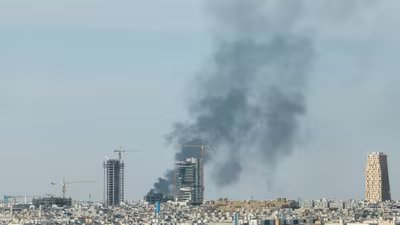
Iraq, Kuwait and the United Arab Emirates have reduced oil production as storage tanks fill up due to limited exports. Notably, Iran, Israel and the United States have also struck oil and gas facilities since the war began, raising concerns about supply.
The last time Brent and US crude futures were close to current levels was in 2022, after Russia launched its invasion of Ukraine.
With inputs from agencies