Air travel across Asia faced fresh disruption this week as more than 70 flights were cancelled on regional routes, affecting services operated by Malaysia Airlines, Batik Air, Singapore Airlines and other major carriers on busy corridors linking Jakarta, Bali, Kuala Lumpur, Ho Chi Minh City, Taipei and Hong Kong.
Get the latest news straight to your inbox!
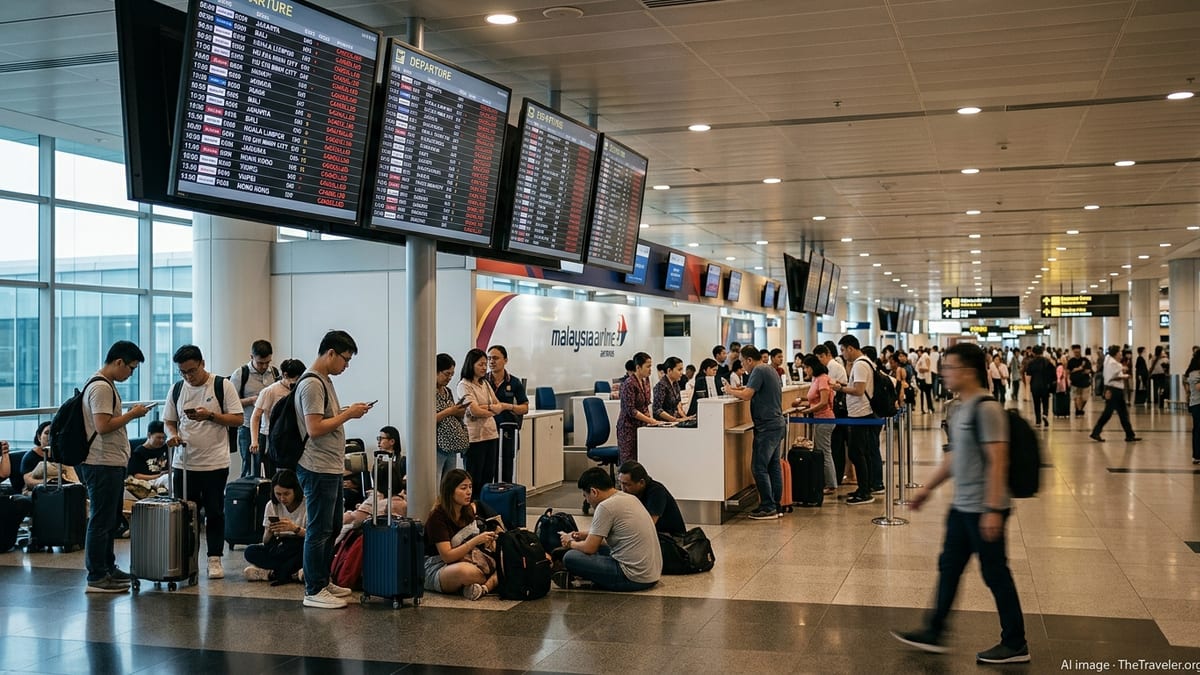
Broad Regional Impact From Clustered Cancellations
Published reports and airline advisories indicate that the latest wave of cancellations is concentrated on short and medium-haul routes within Southeast and East Asia, with Indonesia, Malaysia, Vietnam, Taiwan and Hong Kong among the most affected markets. The disruptions span both full-service and low-cost operators and are hitting some of the region’s most heavily trafficked leisure and business destinations.
Routes linking Jakarta and Bali with Kuala Lumpur and Singapore appear to be particularly affected, alongside connections between Kuala Lumpur and Ho Chi Minh City and between Taipei and Hong Kong. Flight schedules show multiple frequencies withdrawn or consolidated, with many affected services falling in peak evening and late-night departure banks that are popular with regional travelers making tight connections.
While the total number of affected services continues to evolve, schedule data and media coverage point to more than 70 newly cancelled flights over a short window, compounding earlier disruptions tied to operational challenges and shifting airspace constraints. The result is a patchwork of last-minute changes that is proving difficult for passengers to anticipate and for airlines to absorb into already complex regional networks.
Airlines Adjust Networks Amid Operational Pressures
Malaysia Airlines, Batik Air and Singapore Airlines are among the most visible carriers in the latest round of cancellations, together with several regional partners and codeshare operators. Publicly available timetable updates suggest these airlines are trimming select rotations, swapping aircraft types and rerouting some services in response to a confluence of capacity, crew and airspace pressures.
Malaysia Airlines has long relied on Kuala Lumpur as a key hub for flows between Southeast Asia and North Asia, including high-demand routes to Jakarta, Bali and Ho Chi Minh City. Any reduction in daily frequencies on these sectors can quickly reverberate through connecting banks, increasing the likelihood of missed onward flights and forcing rebooking through alternative hubs.
Batik Air, which has been expanding in regional markets with services from Indonesia and Malaysia, is also listed in recent schedule changes affecting flights to and from Indonesia and Vietnam. Even modest cuts in its operations can have an outsized impact at secondary airports, where travelers may have fewer alternative options if a flight is withdrawn or heavily delayed.
Singapore Airlines and its regional partners play a central role on trunk routes linking Singapore to Kuala Lumpur, Jakarta, Bali and Ho Chi Minh City, as well as on connections feeding into Taipei and Hong Kong. Adjustments to these services, including tactical cancellations and consolidations, reduce redundancy in what are typically resilient high-frequency corridors.
Key Hubs From Jakarta to Hong Kong Face Knock-On Effects
The impact of the cancellations is radiating outward from several key hubs. In Indonesia, Jakarta’s Soekarno Hatta International Airport and Bali’s Ngurah Rai International Airport are experiencing schedule changes that affect both inbound tourists and domestic transfer passengers connecting to smaller Indonesian cities.
In Malaysia, Kuala Lumpur International Airport is seeing a concentration of cancellations on short-haul regional services, which can have a cascading effect on long-haul departures when inbound feeder traffic from neighboring countries is disrupted. Similar patterns are evident in Ho Chi Minh City, where schedule changes on regional links may affect overseas connections, particularly for travelers heading to or from other parts of Southeast Asia.
Further north, Taipei and Hong Kong remain vital gateways between Southeast Asia and Northeast Asia. Cancellations on flights linking these cities to Jakarta, Bali, Kuala Lumpur and Ho Chi Minh City can complicate itineraries for travelers using them as intermediate hubs to Japan, Korea or mainland China, leading to extended layovers and, in some cases, overnight stays.
Traveler Experience: Longer Journeys and Limited Alternatives
The immediate consequence for many passengers is a combination of extended travel times, more complex routings and a shortage of same-day alternatives. With popular routes already operating near capacity in the current travel season, the removal of even a single frequency can mean that rebooking options are limited or require significant detours via other hubs.
Reports from airline customer channels and travel forums describe travelers facing last-minute schedule changes, including cancellations notified within 24 hours of departure. In several instances, passengers have been rebooked on indirect routings or shifted to flights departing a day later, extending journeys well beyond original plans.
Flexible ticket policies and voluntary change options are helping some travelers adapt, but many lower-fare tickets come with restrictions that can complicate refunds or reissues. Travel agents and online booking platforms are playing a larger role in helping passengers piece together alternative itineraries when direct options are withdrawn.
What Passengers Can Do As Disruptions Continue
Given the fluid situation, industry observers suggest that travelers flying into or within Asia in the coming days pay close attention to airline communications, including schedule updates in mobile apps and email notifications, and allow extra buffer time for connections through affected hubs such as Jakarta, Bali, Kuala Lumpur, Ho Chi Minh City, Taipei and Hong Kong.
Monitoring flight status in the 24 hours before departure can provide an early indication of potential disruption. When cancellations do occur, passengers are typically offered rebooking on the next available service on the same carrier, or in some cases on partner airlines, subject to seat availability. Travelers with fixed schedules may need to consider alternative routings or different departure dates if immediate options are limited.
As airlines across the region recalibrate their operations, the pattern of cancellations may continue to shift. For now, the latest wave of more than 70 newly cancelled flights underlines how interconnected Asia’s air network has become, and how quickly disruptions in a handful of key markets can ripple across the broader region.