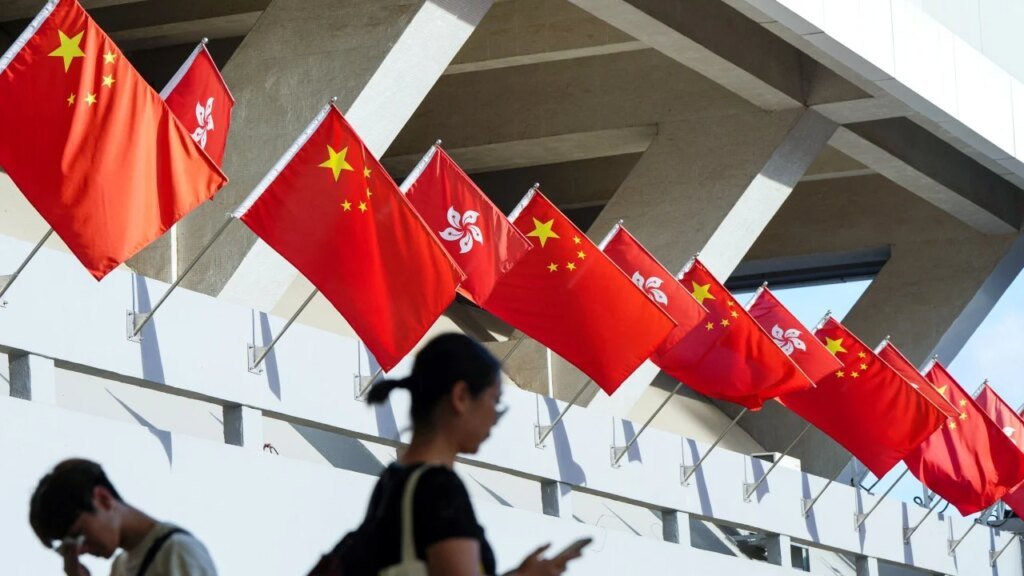
Ever since the handover of Hong Kong from the UK to mainland China in 1997, one word has been high on the Chinese authorities’ list of priorities for the territory: integration. Greater political assimilation with the Chinese mainland was to be expected, but efforts have also been made in finance and culture, infrastructure and travel—for example, with the construction of the Hong Kong-Macao-Zhuhai bridge, flights from a greater number of mainland cities and the extension to Hong Kong of the high-speed rail network.
The governmental push has largely focused on the expansion of Hong Kong’s university campuses into what is geographically known as the Pearl River Delta. From a political perspective, this region, the richest in China, is now referred to as the Greater Bay Area (GBA) and encompasses Hong Kong and Macao, as well as nine cities in Guangdong province, including the capital, Guangzhou, and the financial hub, Shenzhen. But since the pandemic, cultural exchanges between Hong Kong and the mainland have also been developing organically, without major governmental intervention.
New museums
While still in an embryonic stage, the entire region has become home to numerous art ecosystems. Private museums, including the Guangdong Times Museum in Guangzhou, designed by Rem Koolhaas, have become important regional players, while the Tadao Ando-designed He Art Museum in Foshan, which opened in 2020 at the height of the pandemic, has become increasingly active, staging conferences and exhibitions by both mainland Chinese and Hong Kong artists.
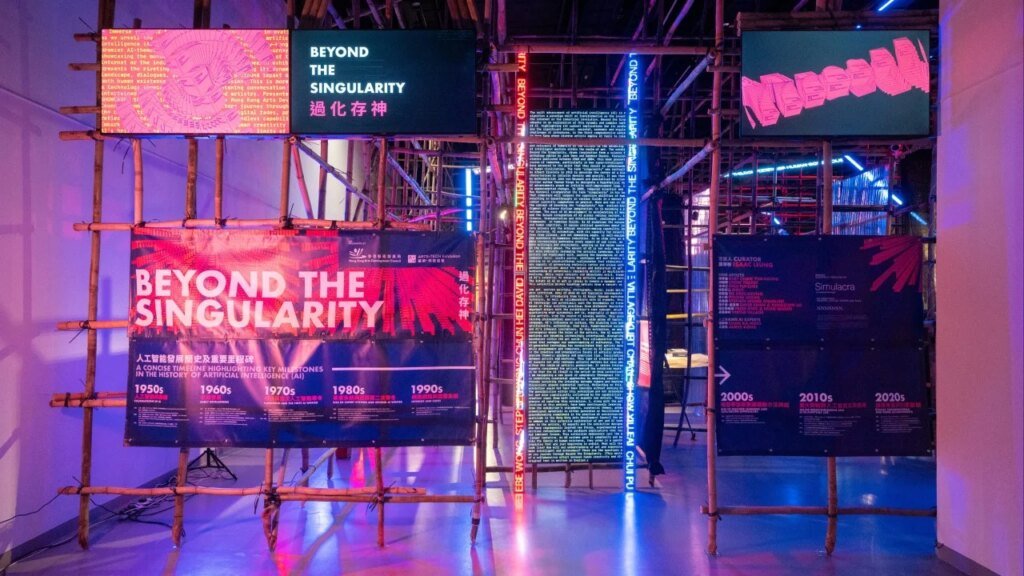
Two new museums are now due to open in Shenzhen. Tencent, a major Chinese tech company, has hired Pi Li, the former curator of the Sigg Collection at Hong Kong’s M+ and the head of art at the Tai Kwun cultural centre, to head up the Róng Museum, which will explore the relationship of art with technology.
Nearby, one of China’s biggest online shopping platforms, JD.com, is due to open JD Museum in 2027 with Robin Peckham, the former director of Taipei Dangdai Art & Ideas, as its executive director. The museum will be housed in JD.com’s new headquarters in Shenzhen, which, by government design, is consolidating its position as the leading high-tech hub in the country. As such, the museum will become “part of a tech ecosystem, with vertical density in terms of talent”, Peckham says, “looking at how tech exists for society and levelling up the cultural facilities of Shenzhen”.
Weiwei Wang, the curator of exhibitions and collections at the Centre for Heritage Arts and Textile (Chat) in Hong Kong, says: “I always feel excited by the opening of new spaces, but it only depends on what kind of systems they are able to build up, in particular if it can become a mature system to support artists and curators.” For Wang, what remains to be seen is whether these new ventures, are “part of a growing sense of corporate responsibility, or if these companies use art as soft power”.
Chris Wan Feng, the head of gallery and exhibitions at Asia Society Hong Kong Center, says: “All the cities in the GBA are different from one another. And while we can see a difference between Guangzhou and Shenzhen, Hong Kong has always been unique. Of course, it is part of the GBA, but it has a deeply unique character”.
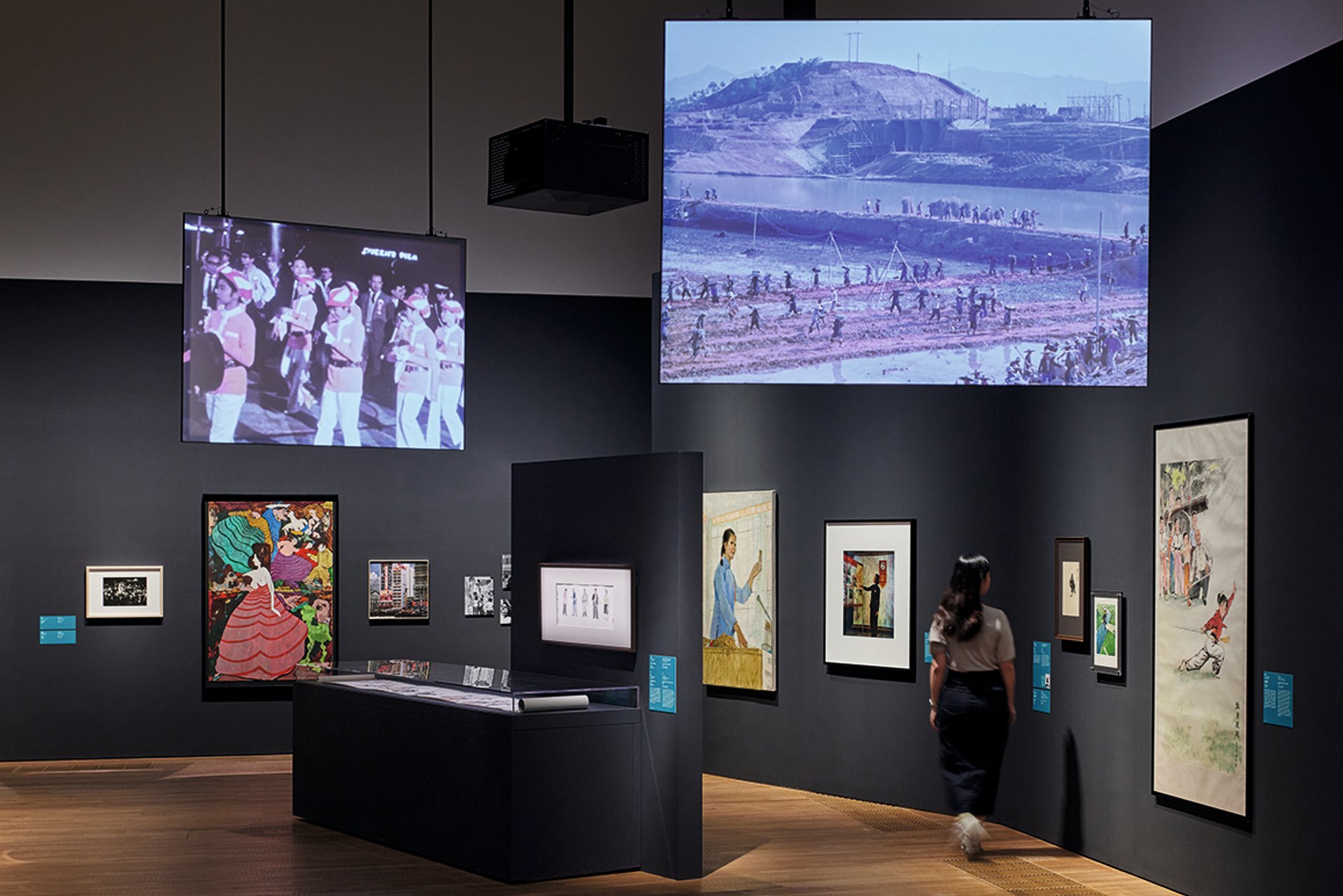
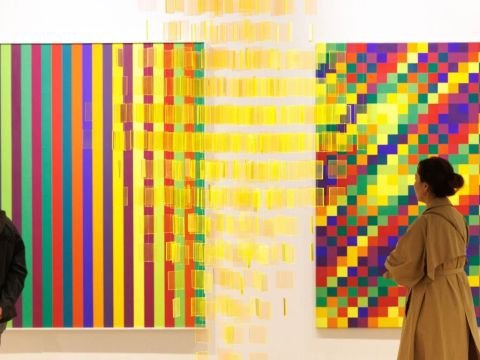
An installation view of the exhibition Canton Modern: Art and Visual Culture, 1900s–1970s, which ran last year at the M+ Museum in Hong Kong
© M+
Audiences across the region are becoming more interspersed and travel between the major cities of the GBA is highly accessible. While mainland Chinese visitors have long been a large source of tourism to Hong Kong, there is a growing number of people travelling from the Special Administrative Region to Guangdong province to take advantage of its cheaper medical facilities, food and entertainment, and also, increasingly, to visit its art institutions.
“It is still not fully integrated, of course,” Wan says, “but in the past two years Shenzhen has been organising its own Art Week, just before Art Basel Hong Kong, trying to bring content and special exhibitions to the city. The main visitors so far have been Chinese collectors and arts professionals on their way to Hong Kong, but it has become quite interesting and impactful”.
The political shifts over the past decade‚ however, have reverberated into the cultural sphere as well. “It was quite difficult for people in Shenzhen or Guangzhou and Hong Kong to even trust each other,” Wan says. “This was seen also in artistic exchanges, but it is changing”.
Last summer, the M+ museum in Hong Kong staged Canton Modern:Art and Visual Culture, 1900s-1970s, an exhibition exploring the cultural and artistic exchange in the Pearl River Delta, and Hong Kong’s unique role during that period. The city was a centre for artistic production, sheltering artists and influencing visual culture across
the region.
That rich history of Cantonese interaction has a chance now to flourish again, and, going forward, perhaps on more balanced terms.