Time, they say, waits for no man. It also doesn’t hesitate to start chipping away at your adult form.
One minute, you’re in your 20s and your body and brain are seemingly impervious to the clock and any debauched lifestyle choices you may be making.
The next, you’ve tipped over into your 30s and everything changes. Fat begins to cling on due to you consuming more calories than you’re burning. Your bone density starts declining faster than you can rebuild it.
But, says the prosaically titled 2004 paper ‘Muscle tissue changes with ageing’ in the journal Current Opinion In Clinical Nutrition And Metabolic Care, “One of the most striking effects of age is the involuntary loss of muscle mass, strength and function, termed sarcopenia. Muscle mass decreases approximately 3 to 8 per cent per decade after the age of 30 and this rate of decline is even higher after the age of 60.”
So what should you do? Roll over and accept your inevitable deterioration? Of course not. Here are some easy nutritional, physical, psychological and sociological ideas to help you be your best self… for a little bit longer, at least.
1. Eat more fibre

Fibre is so potent it’s practically magic. Eating enough roughage can help you stave off heart disease, diabetes and keep your guts in good nick.
And the data is pretty conclusive. A 2019 study in The Lancet, which involved “135-million person-years of data from 185 prospective studies and 58 clinical trials with 4,635 adults”, suggested those eating sufficient fibre reduced their chances of conditions like type 2 diabetes, while strokes plummeted by 15-50 per cent.
“Fibre also lowers the level of inflammation in the gut,” says Peter Cronin of the University of Limerick, who’s an expert on gut health.
“Inflammation is an important factor in common intestinal diseases, such as colorectal cancer or inflammatory bowel disease. So, fibre has a protective effect against the development of these diseases.”
In fact, a 2015 analysis published in the American Journal Of Epidemiology showed that every 10g fibre consumed cut mortality risk by 10 per cent.
Why will fibre transform your health?
Fibre is a type of complex carbohydrate that the body can’t break down. Fibre was once thought of as a major tool in keeping your stools regularly deposited and well-formed, but now scientists have discovered that there are further benefits to filling up on fibre.
“Just like any living organism, the gut microbiota need nutrients to survive,” Cronin explains. “Certain species of bacteria thrive in the presence of fibre as they’ve evolved to break down and use it as a nutrient source. Increased fibre intake leads to higher levels of these bacteria and lower levels of other species that are unable to use fibre as a nutrient source.”
The benefits to the body are many, says Cronin. “When bacteria break down fibre in the gut, they produce short-chain fatty acids. This family of molecules [short-chain fatty acids] has a beneficial effect on metabolism by lowering the level of lipids – cholesterol, for example – and glucose in the blood. These factors are associated with many diseases like obesity.”
By lowering the amount of ‘bad’ cholesterol in your blood, which can block blood vessels, you’ll have a happy heart and reduce your chances of a stroke.
How much fibre do you need to eat?
You should aim for around 30g fibre each day. This is even more important as you grow older because of the increased risk of the diseases mentioned above.
As you’ve probably predicted, processed foods are a no-no as the grain-refining process removes the outer coat (bran) from the grain, lowering its fibre content.
“Instead, go for porridge oats, nuts, seeds, fruit and vegetables,” says Cronin. “Fibres come in many forms, so mixing up different sources is best for gut bacteria health.”
What does 30g look like? Well, consume one avocado (6.7g), a cup of lentils (13.1g) and 100g of popcorn (14.4g) and you’d have more than covered your daily intake. But refrain from mixing together.
Read more about healthy diets:
2. Stretch and Strengthen

Fact: cranking up your cardiovascular system bolsters health. But while walking, running and cycling are to be applauded, there’s a powerful age-related case for stretching and strengthening.
In fact, the American College of Sports Medicine and the American Heart Association recommend “muscular strengthening and flexibility activities at least two days per week for the maintenance of physical independence and health.”
Why stretch and stretching is so important?
As we age, we lose muscle mass, which then kills off muscle fibres. Research has shown that the vastus medialis muscle in your thigh contains around 800,000 fibres when you’re 20; by 60, it has 250,000. On average, we lose 8 per cent of our muscle fibres between 40 and 50, but that deterioration often starts earlier.
That’s especially true of ‘fast-twitch’ muscle fibres that are responsible for generating power (you also have ‘slow-twitch’ fibres that are more about endurance) and is why the fastest sprinters tend to be under 30.
Similar to sleep, your hormones are important here, especially testosterone, which preserves and increases lean muscle mass. Testosterone also improves cognitive function and increases bone density. The problem is, from the age of around 30, your testosterone levels begin to drop.
That’s where weight training comes in. It’s an anabolic activity, meaning it generates higher levels of testosterone, which will counteract the natural drop as you age.
Flexibility is important, too. A paper in the journal Sports Medicine And Health Science investigated the association between flexibility and “the development of functional limitation” (the growing struggle to perform daily tasks).
Out of the 1,318 adults studied, the 491 that undertook regular stretching exercises and the 122 that performed bodyweight exercises “were associated with 24 and 38 per cent decreased odds of incident functional limitation as they aged.”
How can you get enough strength and flexibility?
You don’t need to morph into Dwayne Johnson or the She-Hulk. It’s hard to be too prescriptive, but a couple of strength and stretching efforts each week is a good start.
Just note that when it comes to strength training, squats are the ideal. They work a large range of muscles, including the gluteus maximus (your backside), one of the biggest muscles in your body. The bigger the muscle you work, the greater the testosterone hit.
As for stretching, dynamic stretches are regarded as being better than static ones for boosting strength and flexibility as they raise the temperature of the blood. Dynamic stretches are active movements where joints and muscles go through a full range of motion, while static ones are where you hold a stretch. You can do both types easily at home.
Read more about the science of exercise:
3. Master your sleep with a few easy tips

Sleep is the best medicine. It boosts physical and mental health, and is so important that Tour de France winners are the ones deemed to have slept best over the 21 stages and 3,500km of racing. Which is a shame for those over 30…
Over the last four decades, the average age of parents having their first child has risen to 33.2 years for men and 30.3 years for women. Another way to put it is over the past 40 years, human beings have delayed the spectre of relentless sleepless nights.
You see, a 2019 study in the journal Sleep found that new parents faced up to six years of sleep deprivation.
The cumulative long-term effects of a lack of both sleep quality and quantity is associated with a wide range of health consequences, including an increased risk of hypertension, diabetes, obesity, depression, heart attack and stroke.
“It also lowers your immune system and is detrimental to mood and cognitive ability,” says Prof Shona Halson from the Australian Catholic University.
Why is sleep so important?
Many of the sleep-impaired physiological issues are due to hormones. Take human growth hormone (HGH). This repairs muscles by stimulating the liver and other tissues to make a protein called ‘insulin-like growth factor 1’.
Lack of sleep equals lack of HGH production equals restricted muscle growth. (Alcohol has long been known to stall your secretion of HGH, with a study from 1980 showing alcohol decreased HGH secretion by 25 per cent.)
“Sleep also affects your eating habits by affecting the hormones that control eating behaviour,” adds Halson.
For instance, rising levels of a hormone called ghrelin signal that it’s time to start eating, while increased levels of the hormone leptin tell you that you’re full.
A German study, published in the Journal Of Sleep Research, showed that just one night’s broken sleep significantly raises ghrelin levels, explaining why you crave a tube of Pringles when you’re tired. They also showed that two nights or more poor sleep reduces leptin levels.
How can you get more sleep?
Strangely, babies aren’t receptive to a tête-a-tête about their erratic sleep patterns. So, if it’s an option, work with them not against them.
“Napping can be important if you’re sleep deprived,” says Halson. “A recent review of all the available napping literature found that the optimal nap duration was 20 to 90 minutes between 1pm and 4pm.”
Whether you have kids or not, keep as consistent a bedtime as possible, avoid caffeine in the afternoon and banish your smartphone from your bedroom.
“For people who are stressed or anxious, apps focused on relaxation or breathing may be useful, too,” says Halson.
“And you could try tryptophan-rich foods like milk. There’s evidence – albeit sometimes conflicting – that this amino acid can help you sleep.” Finally, don’t go to bed full or having drunk a pint of water, as you’ll wake up needing a wee.
Read more about how to get better sleep:
4. Don’t stop moving

It’s irrefutable – for a longer life, get moving. That was the message from a 2019 study in the British Medical Journal that showed 25 minutes per day of moderate exercise, like brisk walking, boosted the subjects’ chances of living. The most sedentary group were 60 per cent more likely to die prematurely than the most active group.
This isn’t wonderful news, as, according to a 2015 study co-commissioned by Public Health England, British people sit for an average 8.9 hours each day. Further research that same year in the British Journal Of Sports Medicine suggested there’s a 5 per cent increased risk of premature death with each additional hour off your feet.
Why is sitting for long periods bad for you?
“That’s okay,” you might be thinking. “I have been manacled to a desk for the last 10 years, but I’ve just bought a standing one, so I’m all good.” But hold your horses…
“There’s evidence for some benefits of standing versus sitting at work for metabolic health, particularly how your body deals with sugar in your blood, which is an important factor in risk for diabetes and heart disease,” says Dr Richard Pulsford, senior lecturer in physical activity and public health at Exeter University.
“However, these benefits tend to be noticeable in those who don’t live active lives or who are in poorer health.”
Plus, while there is evidence that standing desks can help back pain, standing too long with a hunchback posture will only accentuate the symptoms.“It’s inescapable,” says Pulsford, “you need to move more.”
“Movement’s an important component of healthy ageing,” he continues. “Ageing affects our metabolic processes and cardiovascular health, so anything we can do to support them – from exercising and keeping fit, through to moving little and often during otherwise inactive days – is beneficial.”
How can you reverse the impact of prolonged sitting?
This doesn’t mean you need to mimic Eliud Kipchoge and start running sub-two-hour marathons. Dancing, gardening, swimming… anything that gets you moving counters the effects of sitting for long periods, no matter how insignificant.
“[The benefits of] breaking up your day with bouts of walking are certainly more pronounced than simply standing,” says Pulsford.
“In a recent study we found that intermittent slow walking, of two minutes every 20 minutes, reduced insulin demand and improved glucose uptake [both favourable metabolic changes for better health]. In the same study, intermittent standing didn’t seem to make a difference.
“Exercising helps channel glucose from our blood – where it can cause damage if levels are too high – to our muscles and other tissues, where we can store it and use it later. The more we use in our muscles, the better.”
Read more about how to reverse a sedentary lifestyle:
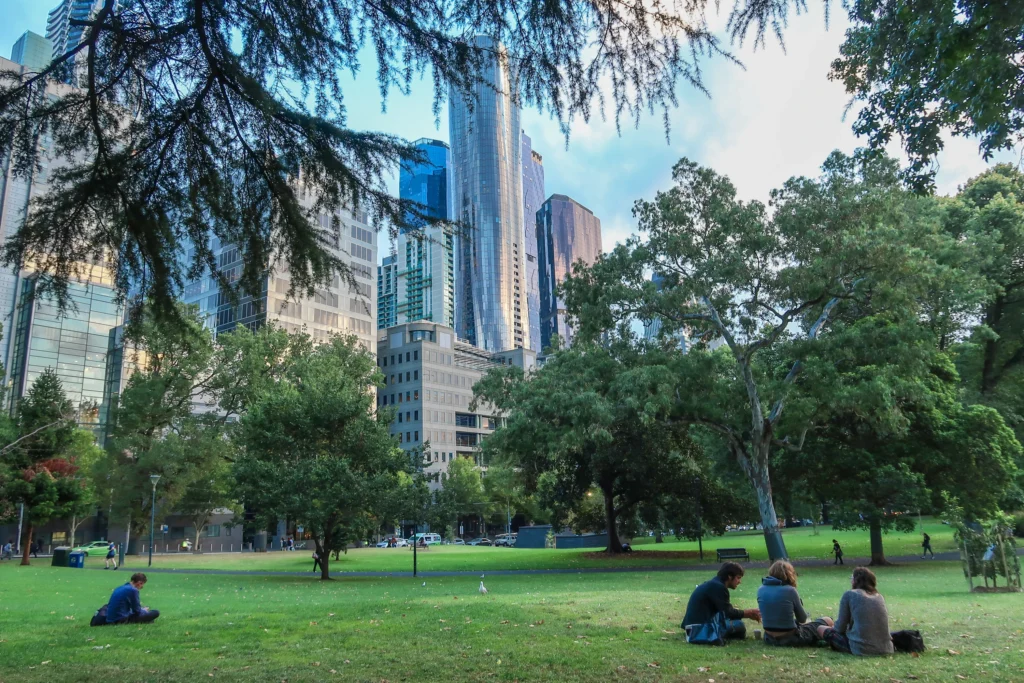
5. Get out of the house and into nature

If you’re happy and you know it, clap your hands… and keep them clapping, as a study in Proceedings Of The National Academy Of Sciences found that people who had higher levels of optimism had a longer lifespan and were likelier to live past 85 in a healthy, joyous state. That’s the good news.
Now for the bad. A 2010 survey by relationship-support charity Relate showed that people between 35 and 44 felt more depressed than any other age group.
Long work hours, arguments and division of household chores were cited equally by men and women as the most common causes of problems. But there is a solution: head outdoors.
Why does getting outdoors boost your boost?
“Using data from nearly 20,000 people in England, we saw that those who spent more than two hours a week in nature showed consistently higher health and wellbeing than people who never visited,” explains Dr Mathew White, an environmental psychologist at Exeter University.
These benefits are numerous and include six key mechanisms, says White. “Reducing exposure to environmental pollution, thanks to better air quality in places with more trees; exposing us to ‘good’ microbiota for healthy immune and gut function; encouraging ‘capacity-building behaviours’, such as promoting physical activity that’s good for health; promoting social cohesion and good relationships, as nature seems to bring people together in positive ways; helping us to manage everyday stress by giving us less demanding contexts in which to collect our thoughts and restore depleted cognitive and emotional capacities; and building ‘place attachment’, which is important for people to orient themselves and find a place in the world.”
How often do you need to be outdoors?
You don’t have to go all Bear Grylls and camp out on a deserted island to enjoy nature’s benefits. But, according to White, being beside a waterway – a sea, river or lake – confers the best of both worlds: green and blue space.
“However, in our studies we’ve also seen the benefits of house plants and even virtual experiences via the television. Some studies also show the benefits of urban parks are strongest for those in more deprived communities, who may also have less access to more remote places due to costs and time.”
6. Stay connected to others

Loneliness is no laughing matter. But, once again, it appears longevity is, with a 2010 meta analysis showing that social support increases survival by up to 50 per cent, with research going back to the early 20th Century.
A more recent study by the Loneliness Commission, part of the Jo Cox Foundation, showed that men in particular are most likely to hit “peak loneliness” at 35 years old.
This could be down to numerous factors, including unemployment, relationship break-ups, bereavement or moving away from family and friends. All of which are far from ideal, as a landmark study in the journal Science showed that lack of social connection is a greater detriment to health than obesity, smoking and high blood pressure.
Why can loneliness impact my health?
Research has linked loneliness to greater risks of a number of physical and mental conditions, including high blood pressure, obesity, heart disease, depression, Alzheimer’s disease and even death.
The physiological, psychological and biological mechanisms at play are varied, but are rooted in the idea that loneliness alters the tendency of cells in the immune system to promote inflammation. Inflammation that lasts for significant periods of time increases the risk of chronic diseases.
This makes sense. Human beings are social creatures and, as a 2017 paper in the American Journal Of Lifestyle Medicine so acutely put it, “Social connection is a pillar of lifestyle medicine.”
The paper continued, “From psychological theories to recent research, there’s significant evidence that social support and feeling connected can help people maintain a healthy body mass index, control blood sugars, improve cancer survival, decrease cardiovascular mortality, decrease depressive symptoms, mitigate post-traumatic stress disorder symptoms and improve overall mental health.”
How can you easily stay connected?
Clearly there are many ways to connect, but the paper’s authors suggest that, “It’s safe to say that connecting with friends and family, with whom a person has a good relationship, is recommended on a daily, or at least weekly, basis. This could be a phone call, a Skype call or face-to-face interaction.”
Experiencing a sense of belonging to a group is also beneficial, the study continues, and engaging in group activities once a week, or at least once a month, is an excellent place to start.
Read more about the science of loneliness: