The S&P 500 (^GSPC 1.51%) has dipped by 4.95% since the beginning of the year, as of this writing, while the tech-heavy Nasdaq Composite (^IXIC 2.01%) has slipped 6.86% in that time.
If you’re starting to feel nervous about the future of the market, you’re not alone. Recession fears are ramping up, and even many seasoned investors feel unnerved during periods of volatility.
While the bad news is that nobody knows what will happen in the coming months, the good news is that the market’s long-term future is always promising. Here’s how long-term investors can prepare, regardless of what’s on the horizon.
Image source: Getty Images.
What history says about the future of the market
No recession or bear market is exactly the same, so if we’re headed for a downturn, there’s no telling how long it might last or how severe it might be. Historically, though, the good times last far longer than the bad.
The average S&P 500 bear market since 1929 has lasted 286 days, according to analysis from Bespoke Investment Group, or around nine months. Meanwhile, the average bull market has lasted more than 1,000 days — or close to three years.
Of course, some of those bear markets were still brutal in the short term. Many investors remember the Great Recession and the dot-com bubble burst. At the time, those recessions seemed as if they would last an eternity. But even they were only temporary, and the market eventually went on to earn record-breaking returns.
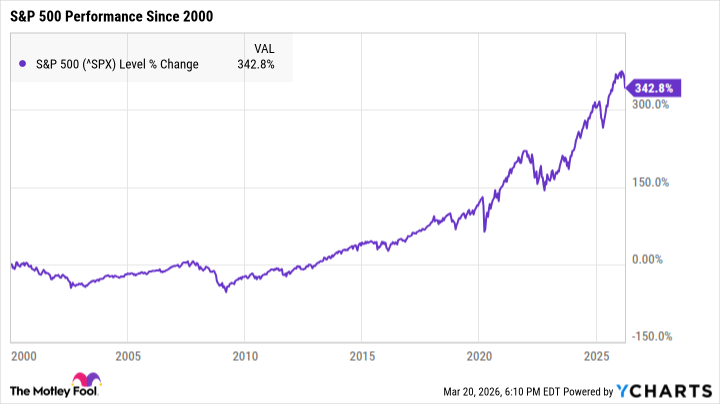
In fact, since 2000, the S&P 500 has earned total returns of nearly 343%. If you’d invested $10,000 in an S&P 500 ETF or index fund back then, you’d have more than $44,000 today — even without making any additional contributions.
The secret to thriving despite volatility
Staying focused on the long term is key to protecting your finances against volatility. The market will face turbulence at times, and those downturns can be severe. But its long-term potential is far more important than its short-term fluctuations.
Perhaps the best move you can make right now is to remain level-headed in your decision-making. It’s all too easy to make knee-jerk decisions out of panic, like selling off your investments or avoiding the market altogether. But investors who remain calm and keep their focus on the horizon will reap the rewards.
This is often easier said than done, as even the most experienced investors often feel their stomachs drop when they check their account balance after a market correction. But keep in mind that your portfolio is only losing value, which is temporary. By staying invested through the rough patches, you’ll be setting your investments up to thrive over the long haul.