Updated Feb. 16, 2026, 2:00 p.m. CT
- A YouGov poll found President Donald Trump received the highest share of “poor” ratings among 20 U.S. presidents.
- The poll showed that Abraham Lincoln, John F. Kennedy, and George Washington were the most positively rated presidents.
- Partisanship significantly influenced ratings, with recent presidents like Trump, Joe Biden and Barack Obama showing strong divides along party lines.
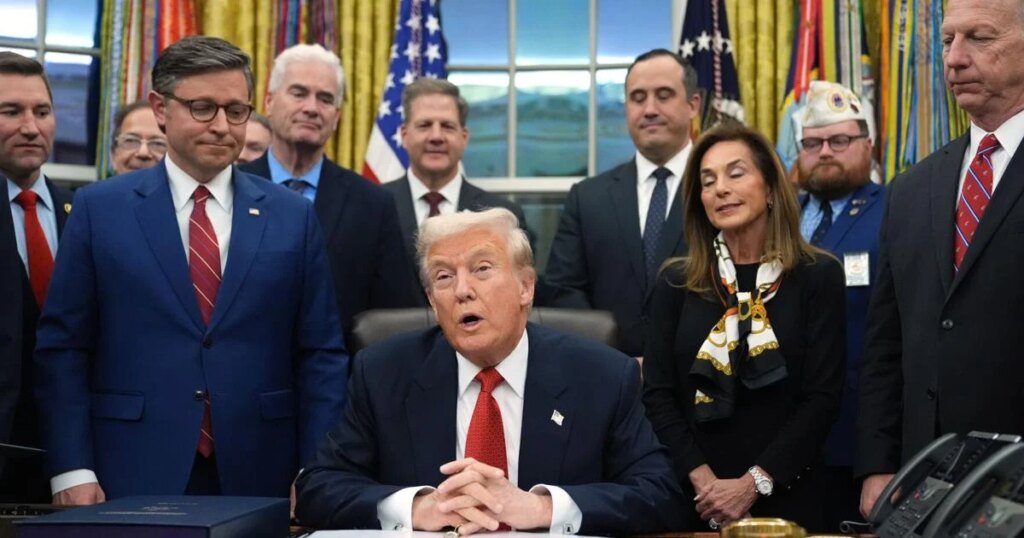
President Donald Trump has received the highest share of “poor” ratings among all presidents, according to a new survey which asked Americans to rate 20 U.S. presidents on a scale ranging from outstanding to poor.
The poll was conducted online by the international research and analytics firm YouGov, surveying 2,255 adult citizens across two field periods, Feb. 2–5 and Feb. 3–5, using a stratified, randomly selected sample based on gender, age, race, education, region, and voter registration.
With the midterm elections approaching in November, Trump faces significant political stakes, with control of 435 House seats, 35 Senate seats, 39 governorships, and the direction of the country for the final two years of his term on the line.
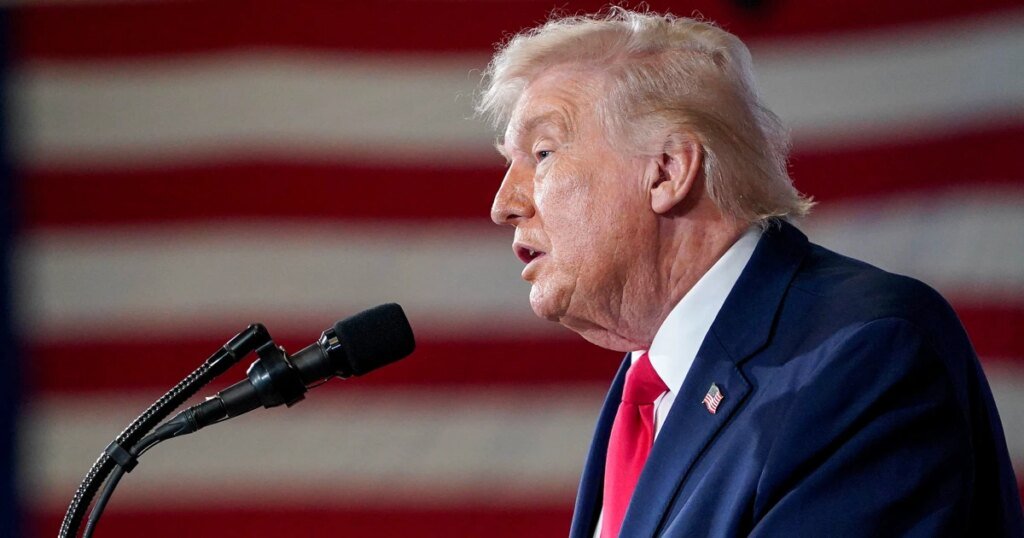
“If we lose the midterms, you’ll lose so many of the things that we’re talking about, so many of the assets that we’re talking about, so many of the tax cuts that we’re talking about, and it would lead to very bad things,” Trump told supporters at a rally in Iowa launching his election‑year campaign.
“We have got to win the midterms.”
According to USA TODAY, his approval rating stands at 36% in the Associated Press/NORC poll conducted Feb. 5–8, a level that, if it continues, would mark a seven‑decade low for a president heading into midterms and a serious warning sign for the GOP.
How Americans view U.S. presidents
The poll found Abraham Lincoln, John F. Kennedy, and George Washington rated most positively, while more recent presidents tended to receive lower marks overall, in part because fewer Americans feel unsure about them.
Majorities rated Trump (55%), Joe Biden (50%), and Richard Nixon (48%) as below average or poor, and net ratings, which compare positive to negative views, showed 11 of the 20 presidents with positive scores, including Ronald Reagan, Jimmy Carter, and Barack Obama.
Six of the presidents with negative net ratings served within the past 50 years, including Lyndon B. Johnson, George H.W. Bush, Bill Clinton, Trump, and Biden.
Partisanship played a major role. Democrats rated recent Democratic presidents far more favorably than Republicans did, while Republicans rated figures like Richard Nixon, Ronald Reagan, and Trump much higher than Democrats.
Views were far less polarized for earlier presidents such as George Washington, John Adams, Abraham Lincoln, Theodore Roosevelt, Franklin D. Roosevelt, and John F. Kennedy.
How Andrew Jackson ranked
Andrew Jackson also appeared among the earlier presidents whose ratings were less politically polarized.
Republicans tended to view him more favorably, placing him among the presidents they rated higher, while he generated less partisan division compared with modern political figures.
Jackson was the seventh U.S. president and the first president from Tennessee, serving from 1829 to 1837. A towering figure of the early 19th century, he rose from poverty to become a lawyer, Tennessee’s first congressman, a state supreme court justice, and a national war hero, according to the Tennessee Historical Society.
Jackson settled in Middle Tennessee, purchasing The Hermitage plantation near Nashville in 1804, where he lived for most of his adult life and to which he returned after his presidency.
Republicans tended to favor George Washington, Ronald Reagan, Trump, Thomas Jefferson, John Adams, James Madison, Jackson, George H.W. Bush, George W. Bush, and Richard Nixon, while Democrats rated presidents such as Obama, Franklin D. Roosevelt, Jimmy Carter, Joe Biden, Bill Clinton, and Lyndon B. Johnson more highly.
A small group, Abraham Lincoln, John F. Kennedy, Theodore Roosevelt, and Woodrow Wilson, received similar ratings from both parties.
What about James K. Polk, Andrew Johnson?
James K. Polk and Andrew Johnson were not included in the sample of 20 U.S. presidents.
Polk, the 11th U.S. president, was a North Carolina native who built a major political career in Tennessee, where he served in the state legislature representing Maury County, completed one term as governor, and became a close ally and loyal supporter of Andrew Jackson.
Before his presidency, Polk served seven terms in Congress and spent four years as Speaker of the U.S. House of Representatives, according to the Tennessee Encyclopedia.
Johnson, the 17th president, also had deep Tennessee roots, having moved to Greeneville as a young man and rising through the state’s political ranks to become governor, U.S. senator, and later vice president before assuming the presidency after Lincoln’s assassination.
How Americans view first ladies
When it comes to first ladies, Jacqueline Kennedy Onassis and Michelle Obama emerged as the most well‑regarded, receiving outstanding or above‑average ratings from 60% and 51% of respondents, respectively.
Melania Trump (46%) and Hillary Clinton (44%) were the most likely to be rated poor or below average.
Net ratings show a similar pattern. Kennedy Onassis remains the overwhelming favorite at +56, followed by Rosalynn Carter, Nancy Reagan, Lady Bird Johnson, Barbara Bush, Michelle Obama, and Laura Bush, while Hillary Clinton, Melania Trump, and Jill Biden receive negative net scores.
Overall, the 11 first ladies tend to be viewed more favorably than their husbands, with the largest gaps seen in comparisons such as Laura vs. George W. Bush, Pat vs. Richard Nixon, Barbara vs. George H.W. Bush, Rosalynn vs. Jimmy Carter, and Lady Bird vs. Lyndon B. Johnson.
Hillary Clinton is the only first lady rated significantly lower than her spouse. Some couples, including Kennedy Onassis and John F. Kennedy, Nancy and Ronald Reagan, Michelle and Barack Obama, and Melania and Donald Trump, received similar net ratings.
Views of first ladies also tend to follow partisan lines, with Democrats rating Michelle Obama, Jill Biden, Rosalynn Carter, Hillary Clinton, and Lady Bird Johnson most highly, while Republicans give higher marks to Nancy Reagan, Melania Trump, and Laura Bush.
A few, including Jacqueline Kennedy Onassis, Barbara Bush, and Pat Nixon, received similar ratings across party lines.
Methodology
Results were weighted by demographics, past voting behavior, party identification, and current registration status. At the time of weighting, the 2024 presidential vote was estimated at 48% for Harris and 50% for Trump.
Demographic targets came from the 2019 American Community Survey, and party ID was weighted to its estimated November 2024 distribution (31% Democratic, 33% Republican). The poll’s overall margin of error is about 3 percentage points.
Contributing: USA TODAY
Diana Leyva covers trending news and service journalism for the Tennessean. Contact her at Dleyva@gannett.com or follow her on X at @_leyvadiana