After 40 days of combat, the Iran war has reached a restive calm.
On April 8, Iran and the U.S. announced a two-week ceasefire aimed at enabling negotiations to end the war. There has been no shortage of ongoing issues — the Strait of Hormuz remains largely blocked, while Israel continues to bombard Iran’s ally Hezbollah in Lebanon. But the pace of the conflict has decreased markedly since the announcement.
Those in Iran itself, however, have seen little change. The rate of strikes may have slowed but the regime’s iron hand remains in place, with little sign of wavering.
Leila is a 40-year-old physician from a small city in northern Iran, near the Caspian Sea. Speaking to CBC via VPN-enabled voice messages, she said that the crackdown on communications in the country is so severe that few risk even messaging their close friends.
“There are almost no options for communication except for SMS messages and phone calls, and those are closely monitored by the regime,” Leila said. “There’s almost no internet connection except through Starlink, and access is very expensive. I didn’t see any of my friends until almost three weeks into the war, because we were so afraid to text each other under this surveillance.”
CBC has withheld Leila’s last name and exact location out of concern for her safety, owing to threats by the Iranian government against citizens speaking to foreign media.
Iranian authorities launched a full internet blackout during protests in January and the brutal repression that ended them. This was lifted somewhat in the weeks that followed, only to be reimposed in full following the war’s start on Feb. 28. Internet traffic in Iran dropped 98 per cent as a result, shattering income streams for many web-dependent businesses and entrepreneurs.

What little internet access is available these days mostly comes through Starlink terminals, of which there may be as many as 100,000 in the country. Locals who find someone with a terminal purchase data at exorbitant prices: one gigabyte reportedly goes for 10 million Iranian rials (roughly $10.50 Cdn), in a country where the monthly minimum wage is 166 million rials ($175).
The Iranian government has criminalized possession of the Starlink terminals and is actively hunting for them.
The result has been a near-total information blackout. The paucity of information means many Iranians didn’t learn about the scale of the January massacres until weeks later — in a country nearly the size of Western Europe, there is little way for news to spread by word of mouth.

Fiery images of anti-regime protests are emerging from Iran despite the government cutting phone and internet services. U.S. President Donald Trump has threatened action against the regime if it starts killing people, while human rights groups say dozens have already died.
The course of events during the current war has been similarly obscured. The Islamic Republic has filled the void with propaganda, telling the populace about grand “victories” over U.S. and Israeli enemies — claims that few take seriously.
“The regime sends SMS messages to people every day, declaring that they are defeating the Americans and destroying the Zionist entity,” Leila said, using a common Iranian government pejorative for Israel.
“All the television stations are about this, too, and it doesn’t stop there. There are regular checkpoints in the street, where Basij [paramilitaries] play patriotic music about the heroic Islamic resistance. I don’t know anyone who pays attention to this anymore.”
Speaking to foreign media a crime
The regime’s attempts to control communications and messaging do not end at the country’s borders.
Yasmin, a dentist in Tehran, has seen her work grind to a halt since the war began, with nearly all non-emergency medical care facilities closed. On March 18, she decided to cross to Turkey for a short escape from the war. The authorities noticed.
“The [Iranian] border guards told us that any interview with foreign media agencies would be treated as a crime,” Yasmin said, speaking via WhatsApp message. “Once we crossed the border, there were some foreign reporters waiting there, but I didn’t dare to speak to them.”
The Iranian leadership has been decimated by the war, which opened with the assassination of ayatollah Ali Khamenei. Other key security figures, such as former parliament speaker Ali Larijani and Islamic Guards Revolutionary Corps (IRGC) intelligence chief Majed Khademi, have also been killed in targeted airstrikes.

Despite this, the regime has not fallen, as U.S. President Donald Trump and Israeli Prime Minister Benjamin Netanyahu had hoped. Its grip on the country remains as strong as ever — something that has come as a surprise to Leila and others.
“When America and Israel attacked [on Feb. 28], some people thought the regime would change very quickly,” Leila said. “But this didn’t happen. We saw that the regime has many layers, many different leaders: one is killed, and another takes his place. I myself was surprised by the stubbornness, the persistence of this regime.”
Discontent with the regime has grown steadily in recent years, peaking with the January protests, which were only suppressed when security forces killed an estimated 20,000 people. Many Iranians harboured hopes the decapitation strikes at the start of the war would bring the government down.
Six weeks on, the regime’s evident staying power has eroded faith it will fall anytime soon.

“As the war has gone on, many people have become disappointed and pessimistic that the regime will ever fall,” Leila said. “From the start, there were those who said that no regime in the world has ever been overthrown by airstrikes. Some people now refer to [the] Vietnam [War], where the United States was forced to make a ceasefire with a government similar to the Islamic Republic.”
Meanwhile, every day of war brings the very real risk of death, for civilians as well as regime figures. Leila has been lucky enough to have avoided the war’s direct impact, because she lives in a smaller, provincial city that has not been targeted.
Narrow escape
Yasmin had a very different experience.
In late March, she crossed the Turkish border back into Iran. She arrived at a train station and messaged a friend outside the country, sharing her location. A few minutes later, Israel announced a wave of airstrikes against Iran’s railway network, warning people to evacuate them — a warning few inside the country, amid the internet blackout, could see.
By sheer luck, Yasmin’s friend saw the notification and managed to message her to leave the train station. She grabbed her bags and dashed away. A few minutes later, the station was bombed.
The January protests and the current war have spurred a wave of confidence among Iran’s large diaspora that the regime would soon be toppled. As one of the few Iranians in the country with access to international news, Leila says she was surprised by this, calling such hopes “naive.”

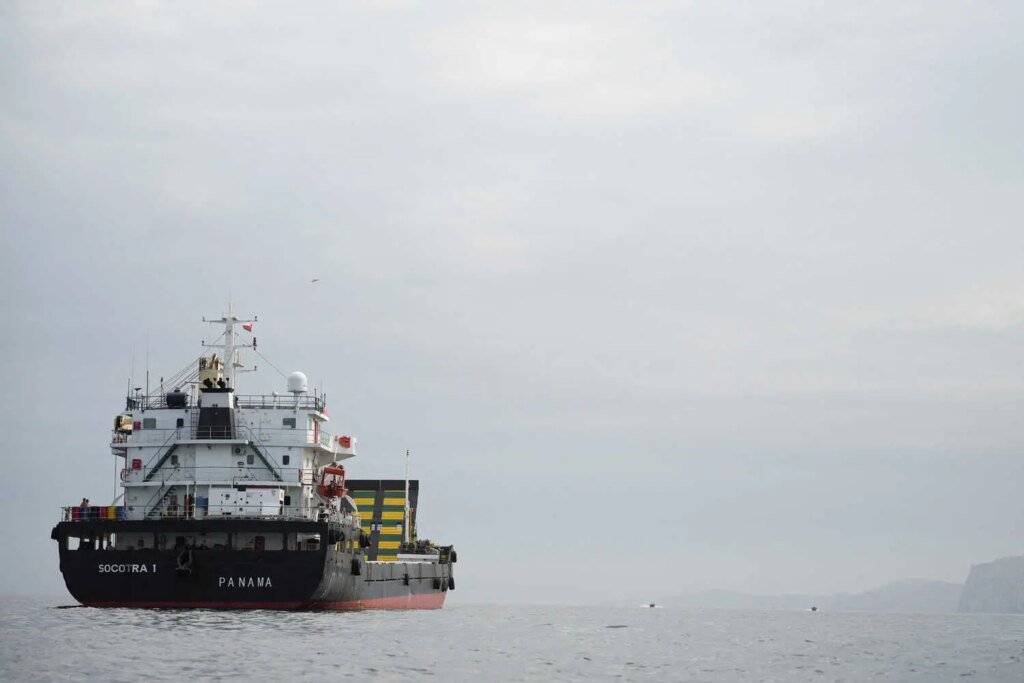
With Iran blockading the Strait of Hormuz and the U.S. threatening its own blockade of major Iranian ports, China’s massive need for oil could be caught in the middle, says Janice Stein of the Munk School of Global Affairs & Public Policy. ‘This is a dance. A dangerous one.’
“I managed to watch some of the Persian-language news channels outside of Iran, and I was very surprised,” she said. “They have this sense of optimism that is at odds with the reality here. This is especially the case for those who have been outside the country for a long time: they clearly have little connection with Iranian society and their perception of Iran seems frozen at whatever time they left.”
“They do not understand what this regime will do to remain in power,” she said.
U.S. and Iranian negotiators met in Pakistan over the weekend in the highest-level direct talks between the two sides in decades, but a marathon 24-hour discussion session failed to produce results. On Sunday, Trump posted that the U.S. would launch a full blockade of the Strait of Hormuz, sharply increasing the chance of renewed war.
For Leila, this was the expected outcome.
“In my opinion, this war has just begun,” she said. “All three sides — the Islamic Republic, Israel and the United States — are all losers. No one has gotten what they wanted. The Islamic Republic has spent 47 years operating under this fanatical Islamic fundamentalism and preparing to resist America in just this kind of war. They will never give the U.S. what they want, and so the war will continue.”