Three-minute read
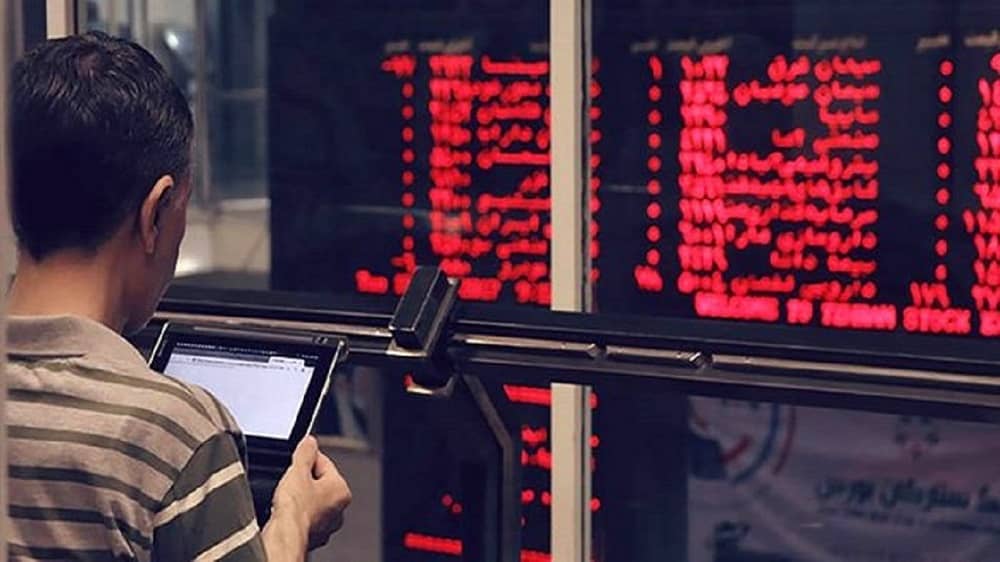
Following the death of Iranian regime president Ebrahim Raisi, the Tehran Stock Exchange has shut down until further notice, according to official government sources. This closure comes in the wake of significant financial instability and a sharp decline in the stock market, which the regime appears to be attributing to Raisi’s death and the associated political upheaval.
Reports from various state media outlets indicate that the stock market was experiencing a dramatic downturn before the market shutdown. Data suggest that the rate of government bonds, or “akhza,” had surged significantly before Raisi’s death, raising concerns about market manipulation.
The financial turmoil intensified as the value of the Iranian rial plummeted. On Monday, May 20, the state-run Khabar Online reported, “Since the announcement of the helicopter crash involving Raisi, the exchange rate in the open market, which had been falling to 56,000 tomans, suddenly rose in Telegram channels to 61,000 tomans.”
Furthermore, the state-run ISNA news agency highlighted, “All transactions in the Tehran Stock Exchange, Iran Fara Bourse, and commodity exchange-based securities will be suspended today due to Raisi’s death.”
Financial experts have noted that before Raisi’s death, there had been a 40 percent increase in the bond rate, attributed to deliberate manipulations within the stock market. This was seen as an effort by the government to print and sell related bonds, ostensibly to cover the budget deficit. These actions were reportedly ordered directly by the head of Iran’s Plan and Budget Organization, aiming to issue 4 trillion tomans in bonds from the capital market.
This financial strategy, aimed at addressing the significant budget shortfall, was implemented early in the fiscal year to avoid end-of-year financial crises. However, the death of Raisi disrupted these plans.
Mohammad Ali Dehghan Dehnavi, president of the Securities and Exchange Organization, recently admitted that the regime has supplied a large part of its budget deficit from profits made through the manipulation of the stock market.#Iran#Corruptionhttps://t.co/9pANG0Og0u
— People’s Mojahedin Organization of Iran (PMOI/MEK) (@Mojahedineng) April 21, 2021
Additionally, there have been reports of other manipulations within the stock market, including canceling tax exemptions for stock market companies. Along with issuing government bonds, this move was part of Raisi’s administration’s interventionist policies.
The impact of these financial policies has been profound. Numerous companies, including major firms like Zagros Petrochemical, Tabriz Oil Refining, Bandar Abbas Oil Refining, and Esfahan Steel, have reached alarming levels of losses. The increased rates of government debt securities have competed with the stock market, causing investors to withdraw from the stock exchange.
In recent months, Raisi’s government had pressured the stock market by manipulating the rates of feedstock and treasury bonds. The rise in debt securities has historically rivaled the stock market, prompting investors to exit the equity market in favor of more secure bonds.
The broader economic policies of the Raisi administration, including a reduction of profit rates to 18 percent in the last quarter, had already sounded alarm bells within the stock market. These financial maneuvers resulted in successful and competitive petrochemicals, steel, and pharmaceutical companies reaching the brink of insolvency.
The prolonged closure has sparked outrage among investors and brokers, who view the stock market as a critical indicator of the country’s economic health. Protests have erupted in major trading halls in Tabriz and Isfahan, with brokers expressing their frustration. In Shiraz, the stock exchange hall has joined the protests by shutting down its systems.
#Iran’s #StockMarket Bubble
What miracle has happened in Iran’s #economy that the #Tehran Stock EXCHANGE has risen by 250 percent compared to the rest of the world? https://t.co/U7sCLyCsjS— NCRI-FAC (@iran_policy) May 31, 2020
Despite the market’s closure, the turmoil has continued with significant losses. On May 26, 96% of stock symbols and indices were in the red. The main stock index plummeted by 20,730 points, reaching 2,077,000. The equal-weighted index dropped by 0.6%, falling to 685,513. The over-the-counter (OTC) index also declined by 263 points, landing at 22,582.
Out of all the indices, only 33 were positive, while 763 were negative. Reports suggest that these few positive symbols were artificially maintained to present a less bleak picture.
From March 20 to May 26, individual investors withdrew a staggering 7,240 billion tomans from the market. The pace of withdrawals has intensified recently, with 655 billion tomans pulled out on May 26. To counteract the market’s decline, the government injected 386 billion tomans into the stock market on the same day.
Additionally, the value of sell orders reached 2,200 billion tomans on May 26, leading state-run media to dub the day “Black Sunday.”
With Raisi’s demise, Supreme Leader Ali Khamenei appointed his close aide, Mohammad Mokhber, as the acting president. This move was intended to stabilize the financial situation through intra-government financial transfers. However, due to political rivalries that will most certainly arise in the new parliament and the intensification of factional feud amid the presidential sham elections, Iran’s financial market is headed toward anything but stability and certainty.